Table of Contents
Laser welding is a vital metal joining technology in modern manufacturing, characterized by high precision, rapid speed, and exceptional flexibility. Its diverse technical forms find extensive application across industries such as electronics, automotive, and metal processing. This article will explore different types of laser welding to assist engineers and procurement personnel in selecting the appropriate welding process.
What Are the Different Types of Laser Welding?
Laser welding is a high-precision technology widely used in industries such as automotive manufacturing, electronics, and metalworking. It involves using a focused laser beam to melt and join materials, offering benefits like reduced heat-affected zones, cleaner welds, and greater control over the welding process. There are several types of laser welding methods available today, but the most commonly used ones are Fiber Laser Welding, CO2 Laser Welding, and Diode Laser Welding. Each of these methods has unique characteristics, advantages, and specific use cases. In this article, we’ll explore these three main types of laser welding and help you understand their key differences and applications.
1. Fiber Laser Welding: High Precision and Efficiency
Fiber Laser Welding is one of the most advanced and widely used types of laser welding. It uses a solid-state laser source that is fiber-optic based. Fiber lasers offer excellent energy efficiency and high beam quality, which results in precise and fast welds. They are particularly favored for applications requiring fine, intricate welds and deep penetration with minimal heat distortion.
Keyhole (Deep Penetration) Welding
Keyhole welding, also known as deep penetration welding, utilizes a high-power density laser beam to heat the metal material. Instead of just melting the surface, the intense laser energy actually vaporizes the metal, forming a narrow, vapor-filled cavity or capillary. This critical phenomenon is what engineers refer to as a keyhole. If you want to dive deeper into how this vapor cavity is generated and its stabilization physics, you can read our comprehensive guide on What Is A Keyhole In Laser Welding. The keyhole acts as an energy absorber, allowing the laser beam to penetrate deeply into the joint, resulting in welds with a high depth-to-width ratio, minimal heat-affected zones (HAZ), and exceptional structural strength.
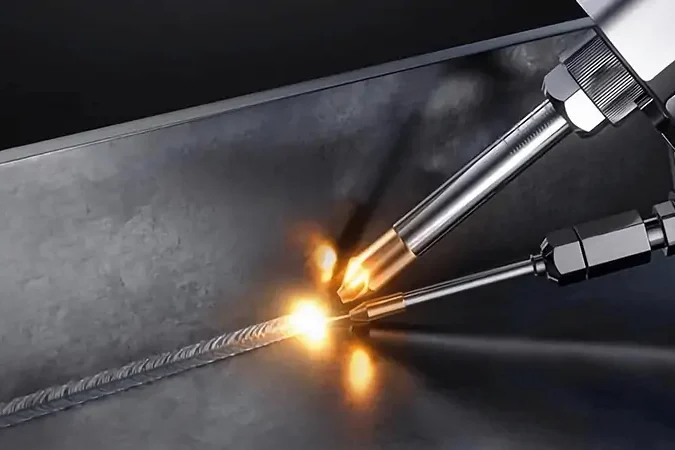
Features of Fiber Laser Welding:
- High Precision: Suitable for small parts and fine detailing.
- Efficiency: More energy-efficient than other laser sources.
- Versatility: Can weld a wide range of materials such as stainless steel, aluminum, and copper.
Common Applications:
Fiber laser welding is often used in electronics manufacturing, medical device production, aerospace, and automotive industries, where high-quality, precise welding is required for thin and thick materials alike.
2. CO2 Laser Welding: Powerful for Thick Materials
CO2 Laser Welding is one of the oldest and most established laser welding methods. This technique uses a gas laser, typically emitting infrared light. CO2 lasers are known for their high power output, making them suitable for welding thick materials and heavy-duty applications. However, CO2 lasers require a more complex optical system and regular maintenance.
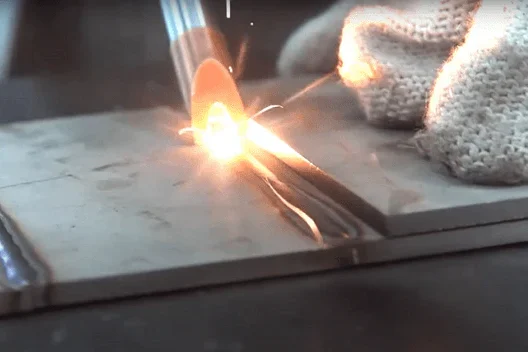
Features of CO2 Laser Welding:
- Deep Penetration: Ideal for welding thicker materials.
- High Power: Provides more energy for deep welds.
- Cost-Effective: Generally less expensive than fiber laser systems.
Common Applications:
CO2 laser welding is commonly used for heavy-duty welding applications, such as in automotive production, metal fabrication, and aerospace. Its high power makes it suitable for welding large workpieces and thicker metals like steel and aluminum.
3. Diode Laser Welding: Compact and Energy Efficient
Diode Laser Welding utilizes semiconductor diode lasers, which generate laser beams that are generally lower in power compared to CO2 and fiber lasers. While they are less powerful, diode lasers are more compact and energy-efficient, making them suitable for small-scale welding operations or precision work. The low power output of diode lasers limits their application to thinner materials but excels in high-precision, small welds.
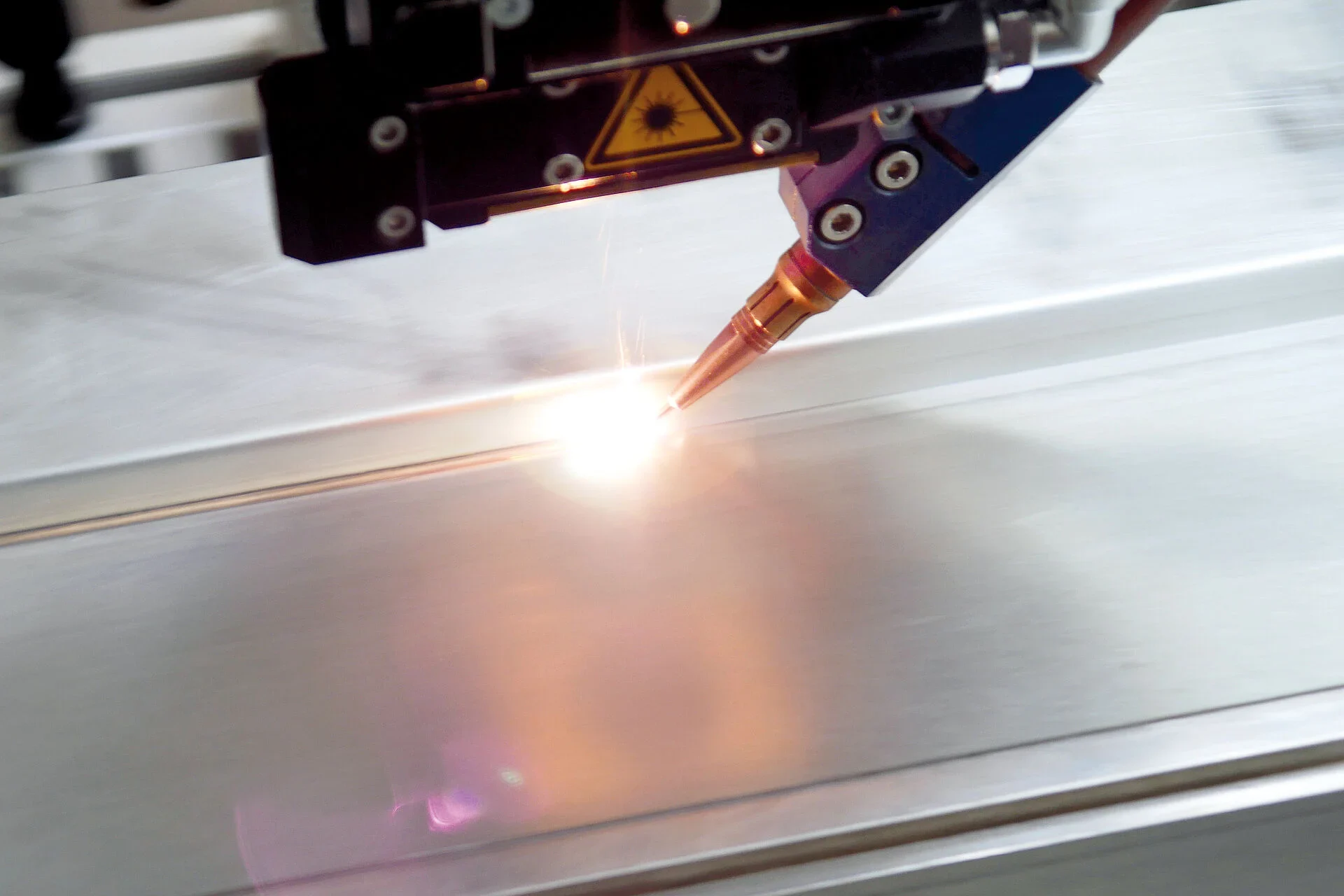
Features of Diode Laser Welding:
- Compact Design: Small, flexible, and easy to integrate into robotic systems.
- Energy Efficiency: Consumes less power, lowering operational costs.
- Moderate Power: Best suited for thinner materials and small-scale operations.
Common Applications:
Diode laser welding is used in industries like electronics, small parts manufacturing, and jewelry production, where small, precise welds are needed. It’s also ideal for automated systems due to its compact size and flexibility.
Comparison of Fiber, CO2, and Diode Laser Welding
| Feature | Fiber Laser Welding | CO2 Laser Welding | Diode Laser Welding |
|---|---|---|---|
| Power | High, suitable for 0.1mm~12mm thin and thick materials | High, ideal for 1mm~20mm thick materials | Moderate, suitable for 0.1mm~5mm thin materials |
| Precision | Very high, excellent for fine welds | Good for deep welds, less precise | High, ideal for small and precise jobs |
| Energy Efficiency | Very efficient | Less efficient, higher maintenance | Highly energy-efficient |
| Versatility | Suitable for various metals | Best for thicker materials | Best for small-scale, precise welding |
| Cost | Higher initial cost, low operational cost | Lower initial cost, higher maintenance | Lower cost, ideal for small jobs |
Want to learn more about the fundamentals and technical principles of laser welding? Please see our detailed article: What Is Laser Welding and How Does It Work? – A Comprehensive Guide
Factors Affecting Laser Welding Machine Price
The price of a laser welding machine depends on several key factors. Below, we will explore how laser power, material type and thickness, welding speed, customization, and geographic location impact the overall cost of laser welding equipment.
1. Laser Power
Laser power is one of the most significant factors determining the cost of a laser welding machine. High-power machines ranging from 1500 to 4000 watts are typically used for welding thicker materials and offer faster welding speeds. Higher-powered lasers can achieve deeper welds and accommodate a wider range of materials, but they also come at a higher price.
2. Material Type and Thickness
Different materials and their thicknesses affect the cost of welding machines. Thicker metals, such as stainless steel or aluminum, require more powerful lasers and advanced cooling systems, leading to higher costs. Additionally, materials with special welding requirements, like copper or brass, may incur extra expenses due to necessary custom configurations or additional features.
3. Welding Speed
Welding speed directly impacts machine cost. Faster speeds enhance production efficiency, particularly in high-volume manufacturing environments. However, achieving high-speed welding typically requires advanced capabilities like increased laser power, sophisticated control systems, and efficient cooling solutions—all of which elevate the machine’s price. While high-speed welders command a premium, they offer greater efficiency and long-term benefits for industries reliant on rapid turnaround and mass production.
4. Customization and Features
Customization and additional features significantly impact laser welding machine costs. Custom machines may incorporate specific focal lengths, robotic integration, advanced control systems, or specialized cooling methods. While these features enhance welding quality, speed, and precision, they typically increase overall expenses.
5. Geographic Location and Market Demand
Laser welding machine pricing is also influenced by local markets and geographic location. For instance, prices in the United States may vary due to factors like local labor costs, taxes, and transportation expenses.
How to Choose the Right Laser Welding Type
Selecting the appropriate laser welding type depends on multiple factors, including industry requirements, material type, thickness, production volume, and budget. Different laser welding methods, such as fiber laser welding, CO₂ laser welding, and diode laser welding, vary in performance and applicability. Below is Kempson’s guide to selecting laser welding types:
Industry Requirements:
- Precision Welding: Opt for fiber laser welding, suitable for electronics, medical devices, and similar industries requiring high precision and intricate welds.
- Heavy-Duty Welding: Choose CO₂ laser welding, ideal for automotive, heavy industry, and applications involving thicker materials.
Material Type and Thickness:
- Thin Materials (e.g., electronic components): Select fiber laser welding or diode laser welding, better suited for delicate and thin material welding.
- Thick Materials (e.g., steel plates, aluminum): Opt for CO₂ laser welding, suitable for thicker metals with deeper penetration.
Production Volume:
- Small Batches/Custom Production: Choose fiber laser welding or diode laser welding for high precision and flexibility.
- Mass Production: Opt for CO₂ laser welding or high-power fiber laser welding, delivering higher production efficiency for high-volume requirements.
Budget:
- High Budget: Choose efficient and precise fiber laser welding, suitable for industries demanding high accuracy.
- Limited Budget: Opt for cost-effective CO₂ laser welding or diode laser welding to meet basic welding needs.
Conclusion
In summary, fiber laser welding is suitable for thin to medium-thickness materials, CO₂ laser welding is better suited for thick materials, while diode laser welding offers advantages in precision and cost. Different welding methods cater to diverse industry needs, such as automotive, aerospace, and heavy industry.
Choosing the right laser welding technology requires considering several factors, including material type, welding speed, power requirements, and weld quality. If you are interested in learning more about laser welding technology, it is recommended to refer to authoritative resources for detailed information, such as the relevant chapters in the Laser Welding Handbook (Source).
As a leader in thick-plate laser welding technology, Kempson offers professional solutions to help you select the most suitable laser welding equipment. If you have any questions, contact our experts, and we will recommend the optimal solution based on your requirements.
Discover the Kempson Brand Story
As a leader in thick-plate laser welding technology, Kempson is committed to enhancing lifecycle value through innovation. Our brand positioning extends beyond delivering high-quality welding solutions, we are driving the industry forward.
Click here to explore our brand story and learn how we continuously advance thick-plate welding technology while creating maximum value for our customers.
FAQ
What are the main types of laser welding processes?
The two primary modes are Heat Conduction Welding, suitable for thin materials and aesthetic joints, and Deep Penetration (Keyhole) Welding, ideal for high-strength, deep-seam industrial applications.
What is the difference between pulsed and continuous wave laser welding?
Pulsed laser welding delivers energy in discrete bursts, minimizing heat input for delicate parts. Continuous wave (CW) laser welding provides a steady beam for high-speed, high-volume production on thicker materials.
Which type of laser welding is best for aluminum?
Fiber laser welding, particularly using wobble or pulsed modes, is highly effective for aluminum due to its high reflectivity and thermal conductivity, ensuring stable penetration and reduced porosity.