Table of Contents
Introduction
Choosing between an air-cooled and a water-cooled laser welding machine can directly affect your production efficiency, operating costs, and long-term return on investment. While both systems use advanced fiber laser technology to deliver precise, high-speed welding, their cooling methods significantly affect power capacity, stability, maintenance requirements, and overall cost.
In this guide, we will break down the key differences between air-cooled and water cooled laser welding machines, compare their price ranges, analyze performance and application scenarios, and provide practical selection advice for industrial buyers. Keep reading to discover which solution best fits your business.
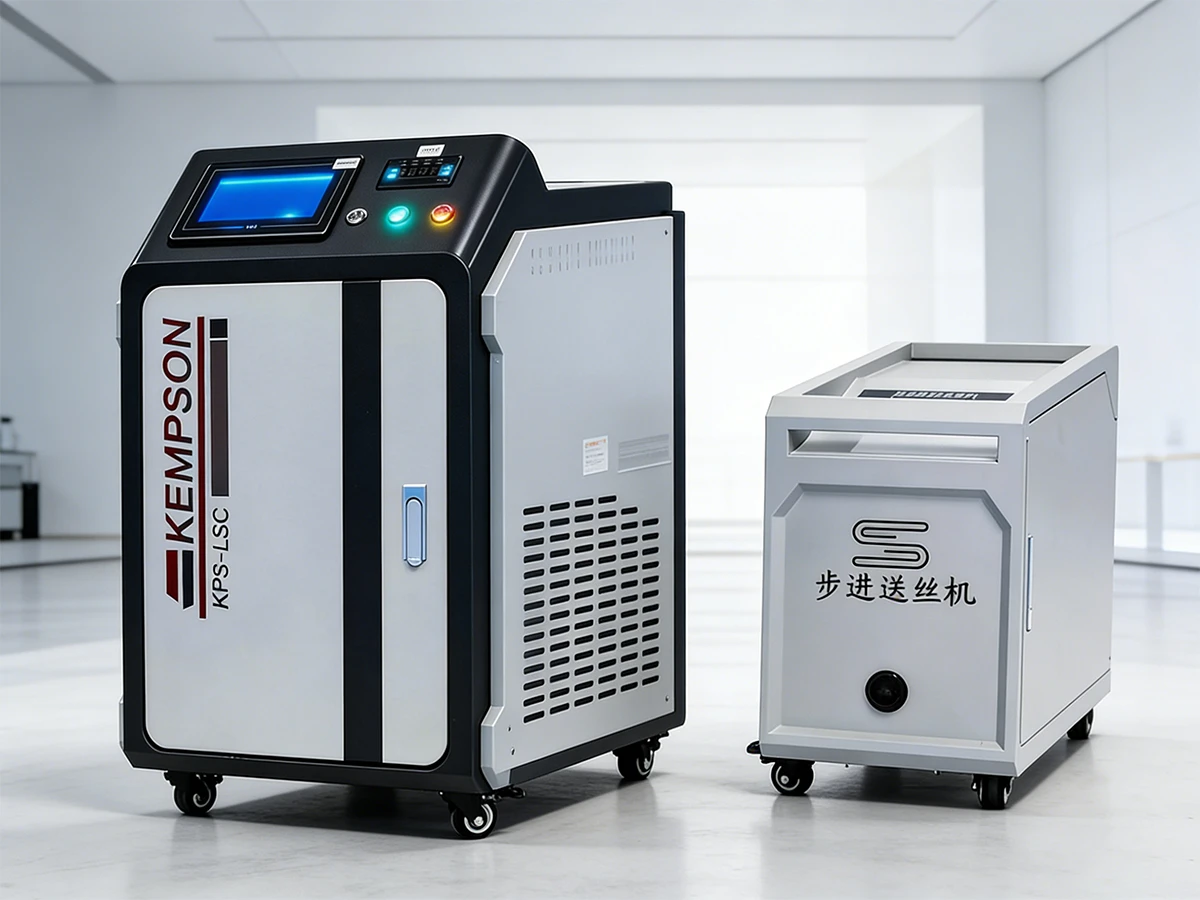
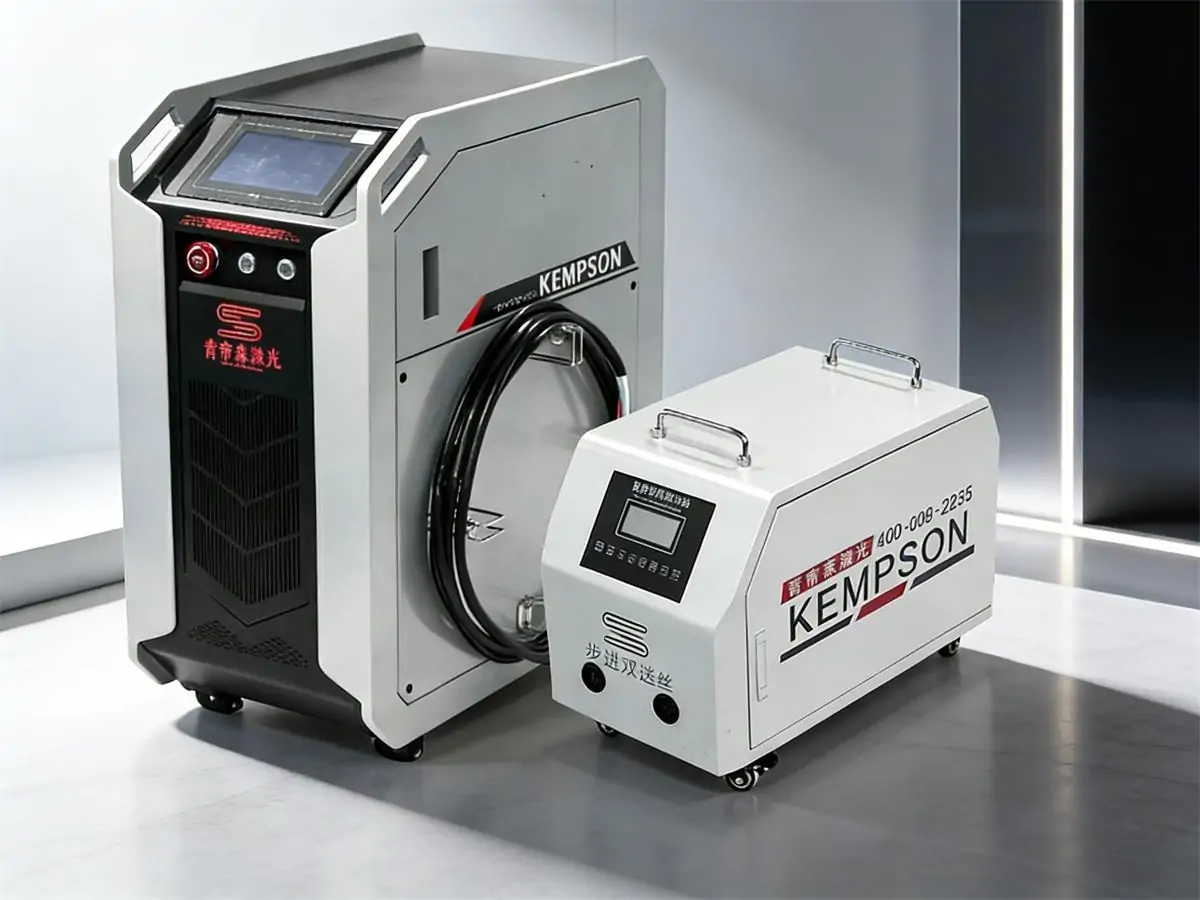
Air-Cooled vs Water-Cooled Laser Welding Machine: Working Principle & Features
To clearly understand the difference between air-cooled and water-cooled laser welding machines, we need to separate two aspects: how they dissipate heat (working principle) and what advantages or limitations this creates (key features).
Air-Cooled Laser Welding Machine
Working Principle
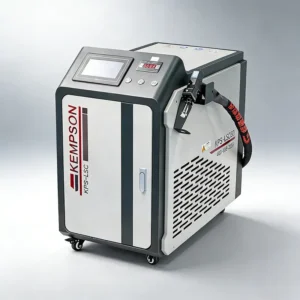
Air-cooled laser welding machines remove heat by using internal fans to force ambient air to flow across heat-generating components such as the laser source and welding head. The moving air absorbs the heat and transfers it directly into the surrounding environment. Some models incorporate enlarged aluminum heat sinks to improve thermal exchange efficiency.
This system relies entirely on air circulation, without any liquid coolant or external cooling equipment.
Features
- Simple mechanical structure with fewer components
- No water tank, chiller, or coolant required
- Compact and lightweight design, ideal for handheld models
- Fast installation with plug-and-play operation
- Low maintenance and no coolant replacement cost
- Suitable for low to medium power applications
- Best for intermittent welding or mobile operations
Air cooling emphasizes simplicity, mobility, and lower initial investment, making it a practical choice for small workshops or on-site fabrication.
Water-Cooled Laser Welding Machine
Working Principle
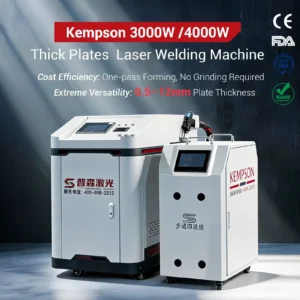
Water-cooled laser welding machines use water or industrial coolant as a heat transfer medium. The liquid circulates through internal cooling channels around high-temperature components. After absorbing heat, the heated liquid flows into a chiller unit where the heat is dissipated, then returns to the system to repeat the cycle.
This creates a closed-loop cooling system with controlled temperature regulation.
Features
- High thermal management efficiency
- Stable temperature control during long working hours
- Supports higher laser power output
- Requires an external chiller and additional installation space
- Needs periodic inspection of water quality and cooling system
- Designed for continuous industrial production
Water cooling focuses on thermal stability and high-power performance, making it ideal for heavy-duty manufacturing and 24/7 production environments.
Compare Air-Cooled and Water-Cooled Laser Welding Machines
The table below provides a clear side-by-side comparison of air-cooled and water-cooled laser welding machines across key factors such as cooling efficiency, operational stability, investment cost, and maintenance requirements—helping you quickly identify the core differences and select the right solution.
| Feature | Air-Cooled Laser Welder | Water-Cooled Laser Welder |
| Cooling Efficiency | Moderate; best for low-to-medium power. | High; rapidly dissipates heat for high-power use. |
| Temperature Control | Accuracy within ±5°C; higher fluctuations. | Precision up to ±0.1°C; highly stable. |
| Power Range | 1500W-2000W | 1000W-4000W+ |
| Duty Cycle | Intermittent use (up to 6-8 hours/day). | 24/7 continuous high-load operation. |
| Initial Cost | Higher machine price (specialized laser). | Lower machine price (requires external chiller). |
| Maintenance | Low; basic dust cleaning required. | High; requires coolant changes and pipe cleaning. |
| Form Factor | Compact, lightweight, and portable. | Large; requires space for an external chiller. |
| Failure Rate | Low; simple fan-based cooling. | Moderate; risk of leaks or water blockage. |
| Environmental Suitability | Avoid dusty areas; best for room temp. | More dust-resistant; requires antifreeze in winter. |
Price Comparison: Air-Cooled vs Water-Cooled Laser Welding Machines
Air-cooled laser welding machines feature relatively simple structures with heat dissipation achieved through fans and chassis ventilation, making equipment maintenance more convenient. Consequently, their individual procurement costs are typically lower, making them suitable for lighter loads or intermittent welding applications. Water-cooled laser welding machines, equipped with water pumps, water tanks, cooling circulation systems, and higher power configurations, offer superior cooling efficiency and are ideal for prolonged, high-power operations. However, their overall manufacturing costs and post-sales maintenance expenses are also higher.
Below is a price comparison table for air-cooled laser welding machines (Air-Cooled) and water-cooled laser welding machines (Water-Cooled), helping you quickly understand the cost differences between the two:
Price Comparison Table
| Laser Welding Machine Type | Laser Power Range | Typical Price Range (USD) | Suitable Applications |
|---|---|---|---|
| Air-Cooled Laser Welding Machine | 800W–2000W | $2,929–$5,500 | Light industrial and medium-duty fabrication work, small-batch welding |
| Water-Cooled Laser Welding Machine | 1000W–4000W | $3,357–$22,286 | Continuous operation, industrial production, heavy-duty manufacturing, high-power, large-scale industrial welding |
How to Choose Between Air-Cooled and Water-Cooled Laser Welding Machines
When selecting a laser welding machine, the key is to match the cooling method to your production intensity. Use the three checkpoints below to make a fast and accurate decision. Match the Cooling System to Your Laser Power:
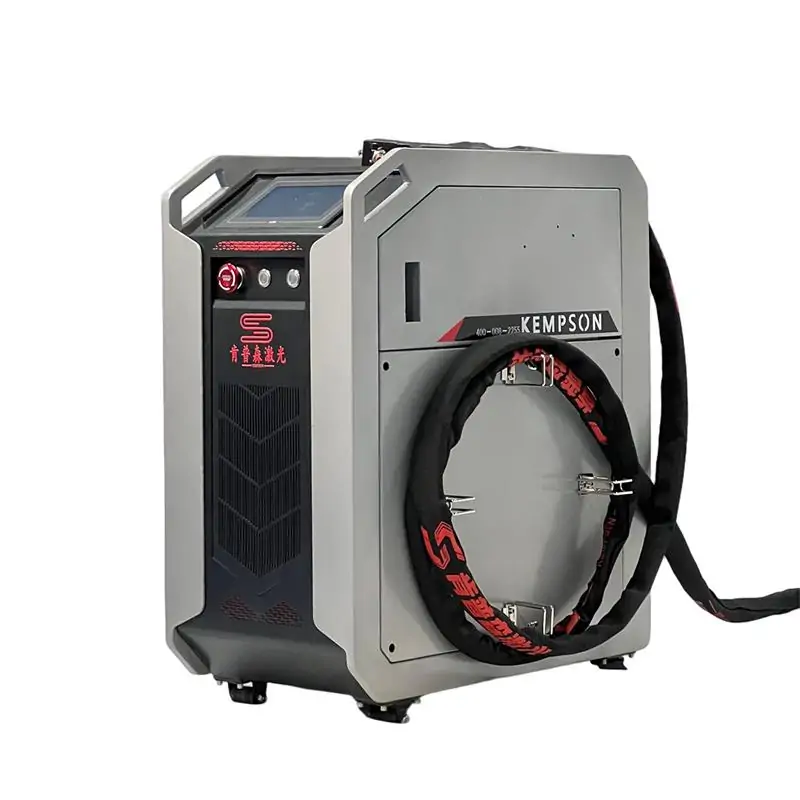
Choose an Air-Cooled Laser Welding Machine If:
- Laser power is ≤ 800W–1000W
- Mainly weld thin sheet metal (≤1 mm)
- Jobs are short-cycle, sample-based, or small batch
- Mobility and portable
Air-cooled systems are ideal for light fabrication, precision electronics, jewelry repair, and stainless steel products. They deliver stable welding performance for low-to-medium power applications without complex installation.
Choose a Water-Cooled Laser Welding Machine If:
- Laser power is ≥ 1000W
- Weld thick plates (≥2 mm)
- Production runs are continuous or high volume
- Thermal stability directly impacts product quality
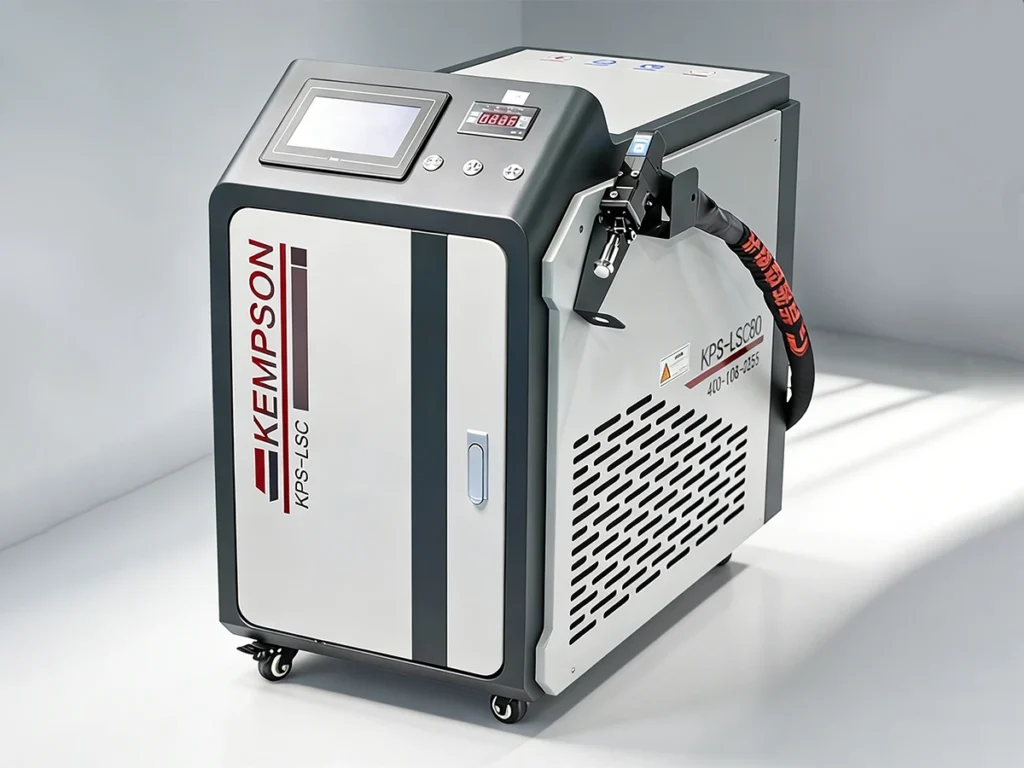
Water-cooled systems maintain consistent output under heavy workloads, making them essential for automotive parts, battery packs, and structural metal fabrication.
Consider Your Working Environment
Air-Cooled Is Better When:
- Space is limited
- Equipment needs to be moved frequently
- Work is done on-site or outdoors
- Daily operation is under 8 hours
These systems are plug-and-play and require no external chiller, making them perfect for flexible operations.
Water-Cooled Is Better When:
- Installed in automated production lines
- Running 24/7
- Downtime must be minimized
For factories operating at full capacity, stable liquid cooling protects the laser source and ensures consistent weld penetration.
FAQS
1. Does a water-cooled laser welder require specialized coolant?
Yes. To maintain peak performance and longevity, always use deionized water or a dedicated laser coolant. Standard tap water contains minerals that cause scale buildup, which can clog internal pipes and lead to overheating.
- Pro Tip: In environments dropping below 0°C (32°F), you must add industrial-grade antifreeze to prevent the cooling pipes from freezing and cracking.
2. Can an air-cooled laser welder run 24/7 continuously?
While high-end air-cooled models feature optimized airflow for 6–8 hours of daily use, they are not recommended for 24/7 high-load industrial cycles.
- Best Practice: For small-to-medium batch production, we recommend a “cool-down” break of 10–15 minutes after every 2–3 hours of continuous operation. This preserves weld quality and significantly extends the lifespan of the air-cooling fans.
3. Are there high-power (3000W+) options for air-cooled laser welders?
Currently, no. Air-cooling technology is most efficient for low-to-medium power loads (typically under 2000W). Because 3000W+ fiber lasers generate extreme heat, they require the high-thermal-conductivity of water-cooling systems to prevent hardware failure. If your project demands high-penetration welding at 3kW or above, a water-cooled system is your only reliable choice.
4. Which cooling system is better for outdoor or mobile welding?
Air-cooled laser welders are the superior choice for mobile or on-site welding. Since they do not require an external bulky chiller or water hoses, they are more compact and portable. However, ensure the work environment is relatively dust-free, as heavy dust accumulation on the heat sinks can reduce cooling efficiency. For stationary factory lines with high dust levels, a sealed water-cooled system is often more durable.
Conclusion
The fundamental difference between air-cooled and water-cooled laser welding machines lies in their cooling methods and the production environments for which they are designed.
Air-cooled laser welding systems offer advantages such as portability, low maintenance costs, quiet operation, and rapid deployment. They are particularly well-suited for low-to-medium power applications, intermittent welding tasks, mobile operations, and small-to-medium batch production. For laboratories, field service providers, and small manufacturing workshops, air-cooled laser welders typically strike the optimal balance between performance and cost-effectiveness.
Water-cooled systems are engineered for stability and precise temperature control. They are the preferred choice for high-power welding, thick material welding, and continuous large-scale industrial production demanding exceptional output stability and long-term reliability.
For most small to medium-sized manufacturers, air-cooled systems deliver greater overall value and offer more convenient integration solutions. Ultimately, the right choice isn’t about which system is more advanced, but selecting the cooling method that aligns with your power requirements, production intensity, and business model to maximize operational efficiency and return on investment.
About Kempson
As a laser welding machine manufacturer and supplier, Kempson delivers reliable thin-to-thick sheet welding solutions and technical support. To learn more about our innovative approach and commitment to quality, explore the “EverLens Weld 1 + n” brand story and contact our team for selection guidance and quotations.