Table of Contents
Introduction
In modern manufacturing, welding aluminum with fiber lasers is becoming a critical process in the automotive, new energy, battery, and precision manufacturing sectors. Compared to traditional TIG/MIG welding, fiber laser welding offers advantages such as high efficiency, minimal distortion, and ease of automation. However, aluminum’s high reflectivity and thermal conductivity make it prone to issues such as energy loss, porosity, and cracks during the welding process, making it one of the most challenging materials for laser welding.
This article will explore best practices for laser welding aluminum. It will systematically analyze how fiber laser oscillation welding technology can effectively address reflection and defect issues in aluminum laser welding through appropriate parameter settings, thereby providing practical solutions for buyers.
Can Weld Aluminum with a Fiber Laser?
Fiber laser welding can be used for aluminum, and it has become one of the preferred solutions for an increasing number of manufacturing companies. Fiber lasers offer advantages in terms of energy concentration and process control, enabling precise weld bead formation and high production efficiency.
However, in practical applications, welding aluminum cannot simply rely on standard laser processes; instead, it places higher demands on equipment configuration and process stability. Particularly in mass production scenarios, it is often necessary to incorporate a wobble welding head to expand the melt pool, ensure uniform heat input, and improve weld consistency and yield rates.
At the same time, by appropriately matching power (e.g., 1500W–3000W) with welding modes, a wide range of application needs can be met, from thin sheets to medium- and thick-gauge plates (0.5–10 mm).
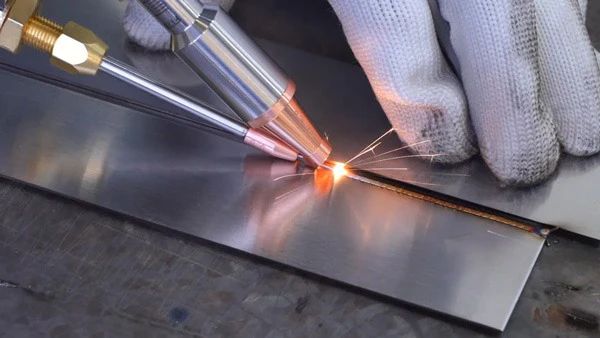
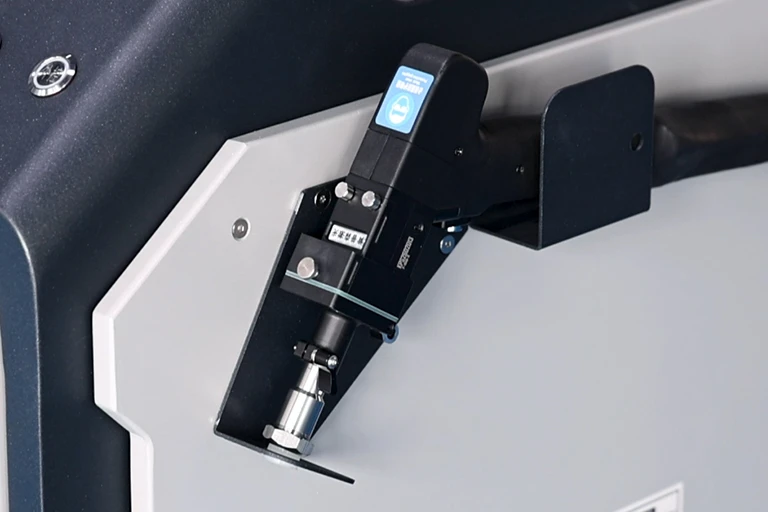
Overall, fiber lasers are not only capable of welding aluminum but, when paired with appropriate process solutions, are particularly well-suited for industrial production environments that demand high levels of efficiency and quality.
Problems with aluminum welding have always existed, but they are not inevitable. For common issues and solutions in fiber laser welding, see the article: Fiber Laser Welding Aluminum: Challenges and Solutions
Due to the reflective properties of aluminum, for details on the thickness and power requirements for laser welding aluminum, please refer to: Laser Welding Aluminum Thickness Guide: Power Selection and Welding Limits
Why is aluminum difficult for Laser Welding?
In actual production, many companies find that when attempting fiber laser aluminium welding, the process stability is significantly lower than that of stainless steel or carbon steel. This is due to the inherent properties of aluminium.
- Aluminum has high reflectivity; when the laser begins to act, a significant amount of energy is reflected, making it difficult to establish the molten pool quickly.
- Aluminum has excellent thermal conductivity; heat dissipates rapidly, making it difficult to maintain a stable temperature in the weld zone, which affects penetration depth and weld continuity.
- The melting point of the oxide layer on the aluminum surface is much higher than that of the base material; if not properly treated, this can easily lead to welding defects.
When these factors combine, they often lead to a series of practical issues, such as porosity, cracks, spatter, and unstable welds. Therefore, in laser welding applications involving aluminum, it is typically necessary to optimize energy distribution by introducing a wobble welding head and, in conjunction with appropriate parameter settings, achieve stable and reliable welding results.
Aluminum is a highly reflective material, and various defects can occur during the welding process. For specific issues and how to prevent them, see the article: Aluminum Laser Welding Problems: Porosity, Cracks & Solutions
For detailed process parameters on laser welding of aluminum, see the article: “Laser Welding Aluminum: Process, Parameters & Best Practices”
What is a Wobble Welding Head?
The wobble welding head is a device used in laser welding that causes the laser spot to oscillate at high speed along a predetermined trajectory (such as a circle or an ellipse). Compared to traditional welding methods with a fixed spot, it dynamically distributes laser energy. This dynamic movement creates a wider weld seam, enhances penetration depth and heat distribution, while minimizing defects.
Reduced Reflection and Increased Energy Absorption: By oscillating the spot, the laser no longer concentrates on a single point but continuously acts on a larger area, helping to form a stable molten pool more quickly and reducing energy loss caused by initial reflection from aluminum materials.
Stable Molten Pool and Reduced Welding Defects: The oscillating motion ensures uniform heat input, avoiding localized overheating or underheating, effectively reducing issues such as porosity, cracks, and spatter, and improving weld consistency.
Wider weld width and improved tolerance: Compared to linear welding, fiber laser wobble welding produces wider welds, offering greater adaptability to assembly gaps and accommodating tolerance fluctuations in actual production.
Improved weld bead formation and appearance: By controlling the wobble frequency and amplitude, weld bead morphology can be optimized, resulting in a more uniform and aesthetically pleasing weld.
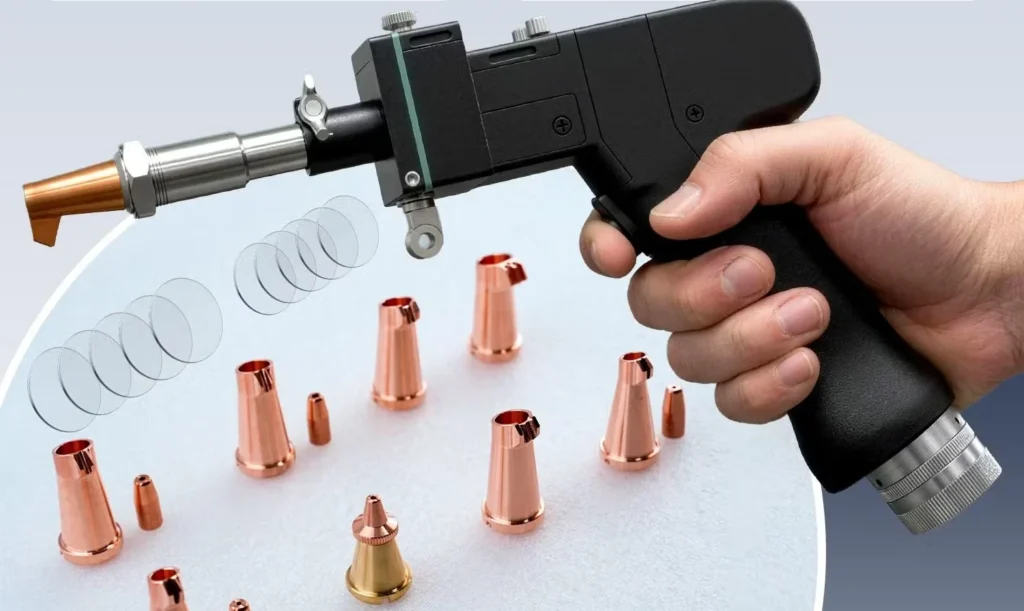
For more information on the Wobble Welding Head, see: Wobble Welding Head: How It Works, Patterns & Applications
Wobble Welding Head vs Traditional Laser Welding
When welding aluminum using fiber lasers, oscillating laser welding offers advantages over traditional fixed-spot laser welding in several respects, making it particularly well-suited for addressing welding challenges associated with aluminum, such as high reflectivity and high thermal conductivity.
| Comparison Dimension | Traditional Laser Welding | Fiber Laser Wobble Welding | Advantage Description |
|---|---|---|---|
| Reflection Control | Reduces the instability of the molten pool caused by reflection | Beam oscillates along a set trajectory, distributing energy and improving absorption | Uniform heat input ensures a stable temperature distribution |
| Molten Pool Stability | A concentrated laser, with high reflectivity of aluminum causes energy loss | Local overheating or rapid cooling leads to an unstable molten pool | Improves weld continuity and quality |
| Cracks & Defects | High occurrence of porosity, cracks, and spatter | Reduces cracks, porosity, and spatter | Improves yield and reduces rework |
| Weld Width | Narrow, low tolerance for gaps | Adjustable width with uniform weld seam | Better adaptability to assembly gaps, suitable for mass production |
| Process Adaptability | Sensitive to variations in thickness and joint gaps | Adapts to different thicknesses and complex aluminum structures | Enhances production flexibility |
| Surface Quality | Prone to undercut or burn-through | Smooth and uniform weld surface | Improves appearance and reduces post-processing |
| Energy Utilization | High initial energy loss | More uniform utilization of laser energy | Reduces energy consumption and improves cost efficiency |
| Thin Sheet Capability | Prone to burn-through or deformation | Precise heat input control reduces deformation | Suitable for welding 0.5–10 mm aluminum sheets |
| Process Optimization Flexibility | Limited, difficult to adjust beam shape | Adjustable oscillation path, amplitude, and frequency | Flexible for different welding requirements |
| Safety | Concentrated energy may cause localized spatter | Distributed energy reduces spatter risk | A concentrated laser, with high reflectivity of aluminum, causes energy loss |
When it comes to laser welding of aluminum, the wobble welding head outperforms traditional laser welding in terms of reflection control, melt pool stability, weld quality, and safety, making it the standard configuration for industrial aluminum welding.
Best Ways to Weld Aluminum with Fiber Laser
In actual production, achieving stable, high-quality aluminum welding results depends primarily on the comprehensive optimization of process control and equipment configuration. The following are best practices for improving the quality of aluminum laser welding, including:
Surface pretreatment: Before welding, the oxide layer, oil, and moisture on the surface of the aluminum must be removed to improve laser absorption and reduce porosity defects.
Appropriate laser power selection: Match the power range to the material thickness. Typically, 1500W–3000W fiber lasers are suitable for welding 0.5–10mm aluminum, ensuring adequate penetration while avoiding burn-through.
Use fiber laser wobble welding: By oscillating the spot to expand the melt pool, this technique ensures uniform heat input and effectively reduces instability caused by reflection, making it a key configuration for aluminum welding.
Optimize welding parameters: This includes welding speed, focal position, and pulse modulation. Control the welding speed to match the heat input, preventing lack of penetration or overheating. At the same time, appropriate negative focus can improve welding stability, while pulse modulation helps reduce spatter and cracks.
Shielding gas control: Use inert gases such as argon to protect the welding area, preventing oxidation and improving weld quality.
Overall, fiber laser welding aluminum involves the coordination of equipment (fiber laser and wobble welding head), parameters (pulse settings, etc.), and process techniques. Only through the synergy of these three elements can stable and efficient industrial welding results be achieved.
To learn about aluminum welding methods and characteristics, see the article: “How to Weld Aluminum: Methods, Parameters & Laser Welding Guide”
Fiber Laser vs TIG/MIG Welding for Aluminum
In the field of aluminum processing, most companies are beginning to transition from traditional TIG/MIG processes to fiber laser welding equipment. Compared to TIG/MIG welding methods, fiber laser welding machines offer advantages in terms of efficiency, quality, and automation.
Fiber lasers deliver higher energy density, enabling faster welding speeds (typically 3–5 times faster), while producing a smaller heat-affected zone, which effectively reduces aluminum deformation. Furthermore, when paired with a wobble welding head, they enhance weld stability and reduce defects such as porosity and cracks—aspects that are difficult to control consistently with traditional TIG/MIG welding.
We know that traditional TIG/MIG welding relies on manual operation, resulting in lower efficiency and significant variations in consistency, whereas fiber laser welding is well-suited for automated production lines, enabling continuous and stable production. Although the initial investment in laser equipment is higher, the long-term total cost is more advantageous due to increased efficiency, reduced labor requirements, and lower rework rates.
Overall, in most application scenarios, fiber laser welding is clearly superior to traditional welding methods and has become the mainstream solution for aluminum processing.
Common methods for welding aluminum include TIG, MIG, and laser welding, each with its own advantages. For more details, see: TIG vs. MIG vs. Laser Welding for Aluminum: Which Is Better?
Real Industrial Case Studies
A supplier specializing in the automotive parts industry primarily manufactures aluminum alloy floors for refrigerated trucks. Initially, the company used traditional welding equipment to weld the aluminum floors, but faced challenges such as an inability to precisely control weld width and significant thermal deformation, which severely impacted production efficiency.
After introducing the aluminum laser welder, these issues were easily resolved: weld width could be precisely controlled, sealing defects were eliminated, and post-welding grinding was no longer required, thereby improving production efficiency.
How to Choose the Right Aluminum Laser Welding Machine
When choosing the most suitable aluminum laser welding equipment, a comprehensive evaluation of both equipment configuration and process parameters is necessary, with a focus on the following key factors:
Power Matching: Select the appropriate power based on the thickness of the aluminum material; 1500W is suitable for thin sheets, while 2000–3000W is suitable for medium-to-thick sheets. Selecting the appropriate power is fundamental to ensuring adequate penetration depth and welding stability.
Fiber Laser Wobbling: Prioritize a wobble welding head, which optimizes energy distribution through spot wobbling, reduces the impact of reflections, and stabilizes the molten pool—a critical process configuration for laser welding aluminum.
Pulse and Process Parameters: Equipment supporting pulse modulation or power waveform control is better suited for aluminum welding, as it effectively reduces spatter and cracks. These settings must be matched with welding speed and focal position to achieve stable heat input.
Welding Configuration (Handheld or Automation): Select the equipment type based on requirements. Handheld devices are suitable for flexible processing and multi-variety production, while automated systems are better suited for batch manufacturing.
Wire Feeding System: Select single-wire or multi-wire configurations based on welding requirements; multi-wire systems are better suited for applications with larger gaps or high strength requirements.
Cooling & Stability: In continuous production environments, water-cooling systems are recommended to ensure long-term stable operation of the equipment and improve overall production efficiency.
When welding aluminum with significant width and depth, it is necessary to use filler wire of the appropriate size. For information on how to select the type and size of filler wire, see: Aluminum Laser Welding Filler Wire: Alloy Selection and Diameter Guide
FAQ
Can fiber lasers weld all aluminum alloys?
No. While they can weld most aluminum alloys, they are not suitable for all types. Parameter optimization and the use of a wobbling welding head are recommended for better results.
Do I need shielding gas for aluminum laser welding?
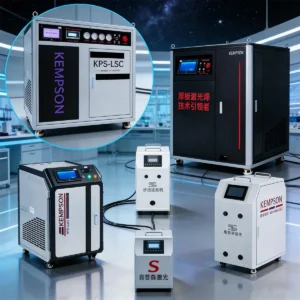
Yes—inert gas such as argon is recommended to prevent oxidation. Some systems, such as those in the Kempson range, feature self-generated inert gas solutions to ensure stable weld zones.
How do I reduce reflectivity during welding?
Use a pulsed or modulated beam, ensure surface cleanliness, maintain proper focus, and consider using a wobble head to distribute energy and minimize back-reflection into the laser source.
What is the biggest challenge in laser welding of aluminum?
The core challenge lies in energy control issues caused by the combination of high reflectivity and high thermal conductivity. The laser is easily reflected, resulting in low energy utilization. At the same time, heat spreads rapidly, making it difficult to stabilize the molten pool, which can easily lead to defects such as porosity, cracks, and lack of fusion.
How does a wobble welding head work?
The function of the wobble welding head is achieved through process control, with the core lying in parameter coordination and path design:
- Set the wobble trajectory: Select circular, linear, or “∞”-shaped trajectories based on the weld seam configuration to ensure uniform laser scanning across the weld area
- Adjusting the wobble amplitude: By increasing or decreasing the wobble width, the coverage of the molten pool and the weld width are controlled.
- Matching the wobble frequency: Synchronizing the wobble frequency with the welding speed ensures continuous energy input and prevents localized overheating.
- Coordinating power/pulse parameters: Combining continuous or pulsed output optimizes the energy input rhythm and stabilizes the molten pool.
- Integrating the wire feeding system: Synchronizing wire feeding during the wobble process ensures that the filler material enters the molten pool uniformly.
Conclusion
In the modern manufacturing sector, using laser welding on aluminum has become a key technology for efficient production. Furthermore, by incorporating a wobble welding head and optimizing parameter settings, it is possible to effectively address the challenges posed by aluminum’s high reflectivity and welding defects, thereby achieving stable, high-quality welds.
If you need to select the best laser welding aluminum suited to your needs, contact our team today to receive expert guidance and a laser solution tailored to your materials, production goals, and budget.