Table of Contents
Introduction
An increasing number of factories are adopting handheld laser welding equipment, significantly boosting production efficiency. However, this also places higher demands on laser welding safety. Since fiber lasers typically fall under Class 4, the safety risks are significantly higher than those associated with traditional welding methods. Inadequate safety measures can easily lead to personal injury and production hazards.
The article will focus on the safety standards of handheld laser welding machines, highlighting the importance of PPE, interlocking systems, and international compliance (CE/UL) for factories, to help businesses establish actionable safety protocols.
Is Handheld Laser Welding Safe?
Handheld laser welding is safe when conducted within a comprehensive safety system. These lasers are typically Class 4 lasers, which are high-energy devices and inherently carry certain risks. Without proper protective measures, they may cause eye injuries, skin burns, or harm from reflected light. It is essential to strictly adhere to laser welding safety standards, including:
A complete and standardized Class 4 laser protection system
Standardized PPE for laser welding operators
Equipment safety design, such as interlocks, emergency stop buttons, and automatic protection functions
Compliance with international standards (e.g., OSHA, CE marking, UL)
The equipment itself is not the issue; welding risks are manageable. The key lies in using it according to standards. As long as proper protective measures are in place, handheld laser welding machines can operate stably and safely.
Why Laser Welding Safety Is Critical?
For buyers, welding safety systems directly impact production stability and overall costs. Inadequate safety measures can easily lead to equipment downtime (affecting 20–40% of production), personal injury, and additional repair and compensation expenses, thereby reducing production line efficiency. Moreover, these hidden costs often far exceed the price of the equipment itself.
At the same time, safety is critical to equipment compliance and market applicability. For example, entering European or North American markets typically requires compliance with certification requirements such as CE marking and UL. Equipment that meets laser protection standards and features comprehensive safety designs—such as interlock systems and protective structures—is more likely to pass audits, thereby reducing risks and enhancing stability during long-term operation. From a procurement perspective, safety is not an optional extra but a core factor determining the equipment’s long-term usability.
Understanding Class 4 Laser Risks in Real Production
The primary risks associated with Class 4 lasers stem from the combination of high energy density and invisible laser beams. Furthermore, multiple risk factors can overlap in production environments. To ensure operator safety, it is essential to identify the main sources of danger and implement systematic protective measures.
Direct laser radiation: Laser beams can cause instantaneous eye damage or skin burns, representing the most direct risk.
Note: Operators must wear safety goggles and protective clothing appropriate for the wavelength and power level.
Reflected Light: Highly reflective materials such as aluminum and stainless steel can produce uncontrolled reflected light, which may bypass the line of sight and enter hazardous areas.
Note: Use anti-reflective designs or enclosed work environments to control the reflection path.
Fumes and Harmful Gases: Welding releases metal fumes and harmful gases; prolonged inhalation can affect the respiratory system.
Note: Install effective fume extraction or filtration systems to ensure a safe working environment and protect personnel’s health.
High Temperatures and Fire Hazards: The welding pool and spatter can cause localized high temperatures and may ignite fires in the presence of flammable materials.
Note: Use protective gear made of heat-resistant, flame-retardant materials; keep the work area clean and free of flammable materials; and implement fire prevention measures.
Class 4 lasers pose diverse risks, and a single protective measure is insufficient to address all hazards. Safe and stable production can only be achieved through comprehensive control measures, including PPE, protective structures, interlock systems, and operating procedures.
Laser Welding Safety Requirements Checklist
For buyers, laser equipment must comply with laser welding safety standards, and the completeness of its laser protection standards must be thoroughly evaluated. Based on practical applications, the following provides a brief analysis of key configurations:
Basic Personal Protective Equipment (PPE)
Laser Safety Goggles: Select the appropriate optical density (OD) rating based on the equipment’s wavelength (e.g., 1064 nm) to effectively block laser radiation.
Protective Gloves and Coveralls: Prevent burns caused by high-temperature molten pools and spatter, while reducing the direct impact of reflected light on the skin.
Respiratory Protection (as required by working conditions): Use masks or filtration systems to reduce the inhalation of harmful gases.
Equipment Safety Design
Interlock System: Automatically shuts off the laser when the safety door is open or the equipment malfunctions, preventing risks caused by accidental triggering or misoperation.
Emergency Stop (E-stop): Allows for rapid shutdown of the equipment in emergencies; this is an essential safety control measure that must be present on-site.
Automatic Protection Against Temperature/Power Abnormalities: Automatically shuts down the equipment when it overheats or experiences power abnormalities, preventing equipment damage or safety incidents.
Work Environment and Auxiliary Systems
Fume Extraction or Filtration System: Used to handle metal fumes generated during welding, preventing long-term inhalation from affecting operator health.
Work Area Isolation (Barriers/Warning Signs): Restricts access by unauthorized personnel through physical barriers or signage, reducing the risk of reflected light and accidental contact.
Compliance Certifications
CE Marking: The equipment complies with the EU Safety and Machinery Directives, which is a prerequisite for entering the European market.
UL Laser Equipment Certification: Verifies that the equipment meets North American standards for electrical and safety requirements, enhancing market recognition.
Compliance with U.S. Laser Safety Standards / OSHA: The equipment and operating environment comply with U.S. occupational safety requirements.
Training and Operating Procedures
Operator Training: Operators must understand the risks associated with the equipment, proper usage methods, and emergency response procedures.
Standard Operating Procedures (SOP): Standardize operational steps to reduce human error and improve consistency and safety in operations.
We must ensure the safety of laser welding, and all of the above aspects require systematic evaluation and inspection to effectively mitigate long-term risks.
Common PPE Mistakes in Laser Welding
In practice, many safety issues arise not from a lack of PPE but from incorrect usage. The following are common misconceptions:
- Using standard safety goggles instead of laser safety goggles: These cannot block lasers of specific wavelengths, posing serious safety risks.
- Mismatch between PPE and equipment power: Lower-level protection cannot handle high-power equipment, rendering the protective effect ineffective.
- Ignoring the risk of reflected light: Focusing only on direct light while ignoring reflections is a common mistake on-site.
- Inconsistent protective equipment: Different operators using different standards can easily create safety vulnerabilities.
- Neglecting respiratory protection during prolonged work: The accumulation of dust and fumes has a significant impact on health, but is often overlooked.
Machine Safety Design: Open vs Enclosed Systems
In practical applications, the equipment’s design directly impacts operator safety and is a key factor in selecting a Class 4 laser protection solution. Different designs vary in terms of protective capabilities, usage methods, and compliance:
| Comparison Dimension | Open Welding | Semi-Enclosed | Fully Enclosed |
|---|---|---|---|
| Laser Protection Method | Relies on PPE and operating procedures | Reduces direct and reflected exposure through partial shielding | Fully isolates the laser through the enclosed structure |
| Reflected Light Control | No structural control, relies on operator awareness | Partially blocks reflection paths | Controls reflections within an enclosed space |
| Personnel Exposure | Operators are directly exposed to the working area | Operators are partially isolated | Operators are completely isolated from the laser |
| Operational Flexibility | Portable, suitable for multi-scenario applications | Some limitations | Fixed workstation or automated operation |
| Automation Compatibility | Mainly manual operation | Can integrate with partial automation | Easy to integrate into automated production lines |
| Safety Control Method | Primarily human-based control | Combination of human and structural control | Primarily structural and system-based control |
| Compliance Difficulty | Requires additional measures to meet standards | Easier to meet standard requirements | Easier to comply with CE/UL certifications |
| Application Scenarios | Maintenance, on-site work, small-batch production | Standard workshop operations | Mass production, continuous operation |
Selection Recommendations:
Open-type units are suitable for flexible operations but require strict management.
Semi-enclosed units are suitable for most factory applications.
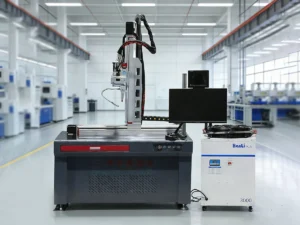
Fully enclosed units are better suited for high-power and automated production environments.
Global Compliance Guide: USA vs Europe vs Others
Different markets have varying requirements for Class 4 laser safety standards in factories, so buyers and sellers should be aware of the compliance requirements for equipment in each market.
| Region | Standard / Organization | Key Requirements | Impact on Procurement |
|---|---|---|---|
| United States (USA) | OSHA | Focus on operational safety, working environment, and personnel protection standards | Equipment and the workplace must comply with safety requirements, it may affect usage and inspections |
| North America Market | UL | Electrical safety and overall equipment safety certification | Equipment without UL certification is difficult to enter the market or be accepted by customers |
| Europe (EU) | CE Marking | Emphasizes equipment compliance, risk assessment, and machinery safety directives | Products without CE marking cannot be sold or exported to the EU |
| International (Others) | ISO Standards | Provide general safety guidelines and design references | Helps improve equipment versatility and international recognition |
Recommendations:
For the U.S. market: Focus on U.S. laser safety standards and OSHA regulations.
For the European market: Compliance with CE laser safety standards is mandatory.
For global customers, it is recommended to meet both CE and UL standards to expand the scope of applicability.
Common Safety Mistakes Buyers Must Avoid
In actual factory applications, laser welding safety issues stem from multiple factors, severely impacting production efficiency and operational safety. The following are common real-world problems:
Focusing solely on price while neglecting safety: Most purchasers focus only on equipment power and quotes, overlooking whether the equipment features a comprehensive safety design (optical path isolation, emergency stop systems, and interlock mechanisms). The result is that while the equipment may be operational, the risks associated with long-term operation remain uncontrolled, leading to high costs for retrofitting later on.
Over-reliance on PPE while neglecting system-level protection: A common misconception is that wearing safety goggles ensures safety. However, in a Class 4 laser environment, PPE serves as the last line of defense. Without structural isolation or optical path control, reflected light and operator errors can still cause injury.
Failure to account for differences in material reflectivity risks: Materials such as aluminum, stainless steel, and galvanized sheet metal exhibit different reflective behaviors during actual welding and require distinct evaluations. In scenarios involving highly reflective materials, risks increase significantly without parameter optimization or anti-reflection design.
Neglecting certification: Some buyers view certification merely as an export document, but CE marking and UL certification essentially constitute systematic verification of structural, electrical, and safety logic. The absence of certification often indicates that the equipment design itself has not undergone comprehensive safety verification and may pose risks.
Neglecting on-site training and standardized operating procedures: Many factories assume that equipment is ready for operation upon delivery, but laser welding is highly sensitive to operator habits (focal length, angle, scanning method). A lack of training may lead to quality fluctuations and safety hazards.
Neglecting on-site training and standardized operating procedures: Many factories assume that equipment is ready for operation upon delivery, but laser welding is highly sensitive to operator habits (focal length, angle, scanning method). A lack of training may lead to quality fluctuations and safety hazards.
Underestimating the impact of maintenance on safety: Issues such as contamination of optical lenses, damage to protective lenses, and instability in the cooling system can gradually reduce safety margins. The fact that equipment remains operational does not guarantee safety, and the cost of purchasing new equipment is far higher than the cost of maintenance.
Best Practices for Safe Operation
Complete system-level safety checks before startup: Before each startup, verify that the emergency stop button, interlock switches, and protective covers are in proper working order, and ensure there is no risk of abnormal reflection in the optical path to prevent operational failures.
Strictly control the work area: The laser work area must have clearly defined safety boundaries; non-operators must not enter the processing area to reduce the occurrence of safety incidents.
Set process parameters appropriately: Parameters such as power, frequency, and oscillation mode must be used within the specified process range; avoid adjusting settings based solely on experience. Uncontrolled parameters often result in burns, spatter, and uneven welds.
Regularly inspect the optical system and protective lenses: Contamination or ablation of protective lenses can cause abnormal energy reflection or attenuation, affecting both safety and quality.
Inspect Cooling and Fume Extraction Systems: Insufficient cooling can cause light source malfunctions, while dust accumulation can obstruct the laser beam path—these hidden risks are easily overlooked.
Standardized Operator Training: Training should cover focal length control, scanning methods, material identification, and emergency shutdown procedures to enhance operational safety.
Maintain Equipment Operation Logs and Maintenance Records: Documenting power usage, lens replacement intervals, and alarm events helps identify equipment degradation trends early and prevent sudden failures.
Conclusion
In modern manufacturing, laser welding safety is a core competitive advantage. By establishing a comprehensive Class 4 laser protection system that meets global compliance standards, companies can safeguard operator safety, ensure the long-term stable operation of equipment, and achieve a genuine return on investment (ROI).
If you are looking for safety-certified laser welding solutions, contact a Kempson supplier with a proven safety system to reduce long-term operational risks.
FAQS
Q: What is Class 4 laser protection?
A: Class 4 laser protection is a safety system designed for high-power laser equipment. Lasers of this class can cause direct exposure injuries and pose a risk to the eyes and skin through reflected or scattered light. Protection typically includes isolation of the work area, protective covers or safety barriers, interlock protection systems, warning signs, and laser safety goggles matched to the laser wavelength. Essentially, Class 4 laser protection is a comprehensive system of safety management and technical safeguards.
Q: What OD rating laser safety glasses do I need for fiber laser welding?
A: The selection of safety glasses must be based on the laser wavelength (typically 1064 nm) and power rating (1000 W–6000 W+). If the safety glasses are not matched to the correct wavelength or power rating, there is a risk.
Q: Can a handheld laser welding machine be used in a standard workshop?
A: Yes, but basic safety requirements must be met, such as designating a laser work area, posting warning signs, and preventing unauthorized personnel from entering the work zone. Management must be strictly enforced in standard workshops.
Q: What kind of training is required for laser welding operators?
A: Operators typically need to master laser focal length control, welding parameter adjustment, material identification, and emergency shutdown procedures. For industrial applications, we recommend standardized pre-employment training.
Q: Can aluminum and stainless steel be safely laser-welded?
A: Yes, but additional safety and process controls are required because aluminum and stainless steel are highly reflective materials: laser reflections may occur, necessitating parameter adjustments and control of reflection paths. We recommend using a wobble welding head to reduce the risk of concentrated reflections.
Q: How often should a laser welding machine be maintained for safety?
A: We recommend periodic maintenance based on usage intensity, generally including daily lens inspections, weekly optical path cleaning, and regular system checks to ensure stable laser output and effective safety controls.
Q: How to choose between portable and enclosed laser welding machines for safety?
A: For flexible repairs or small-batch operations, a portable machine is suitable; for mass production or extended operation, an enclosed machine is the superior choice in terms of safety and stability.