Table of Contents
What is Handheld Laser Welding Machine?
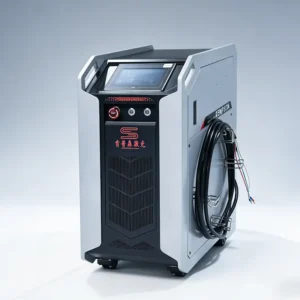
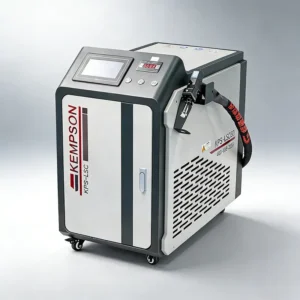
The handheld fiber laser welding machine features a compact, portable design that enables precise, high-speed welding, revolutionizing the metal fabrication industry. Unlike traditional welding methods such as MIG or TIG welding, handheld laser welding offers advantages including minimal thermal distortion, deeper penetration, and cleaner welds, making it an ideal choice for automotive components, stainless steel products, and electronic assembly.
This article defines the handheld fiber laser welding machine, highlights its distinctions from conventional welding technologies, details its structural advantages, and explains the fiber laser technology driving these devices. By reading this article, you will understand why the handheld fiber laser welding machine is the ideal choice for small-batch, high-precision welding tasks, versatile, efficient, and modern.
How Does a Handheld Laser Welder Work?
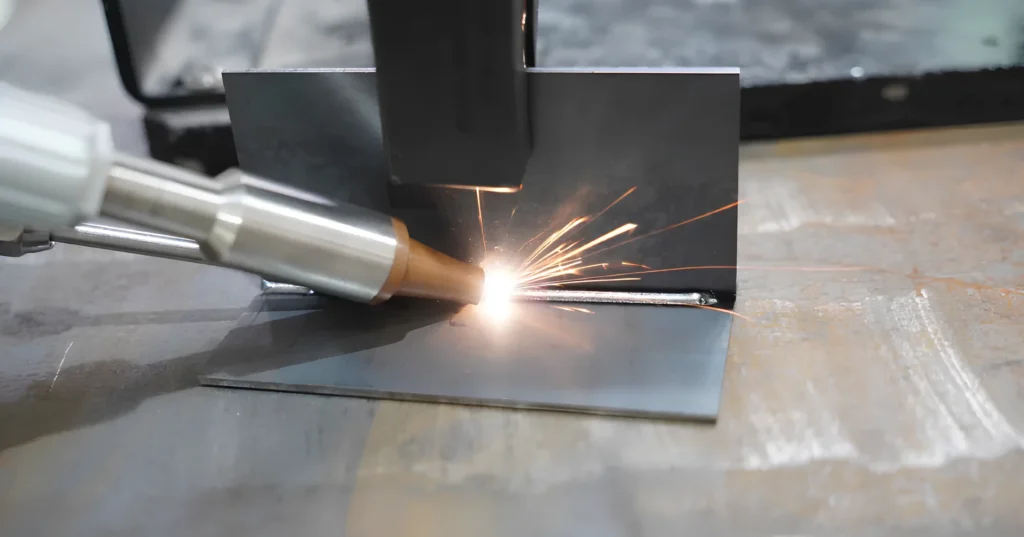
A handheld laser welder works by generating a high-energy laser beam through a fiber laser source, which is transmitted via a flexible fiber optic cable to the handheld welding gun. The focused laser beam is precisely directed onto the workpiece, instantly melting and fusing the material to create a narrow, deep, and clean weld seam with minimal heat-affected zone and low distortion.
To ensure stable and continuous operation, the system is equipped with an efficient cooling system—air-cooled or water-cooled, to regulate internal temperatures. For applications requiring enhanced joint strength or gap filling, an optional automatic wire feeding system can be integrated, enabling consistent filler material supply and improving weld quality across various metal thicknesses and joint types.
To better understand the core principles behind laser welding technology, you can read our detailed guide: How Does a Laser Welding Machine Work.
Components of a Handheld Laser Welding System
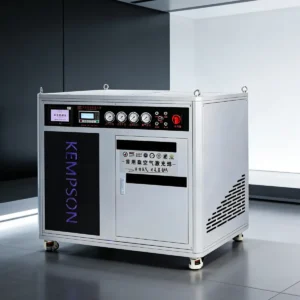
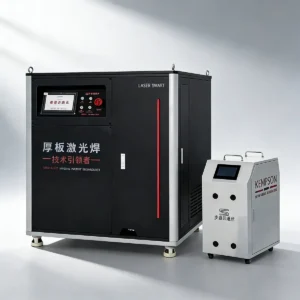
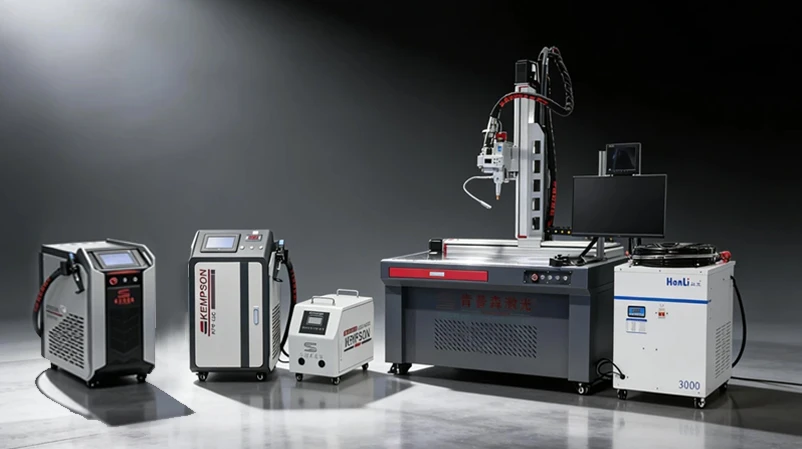
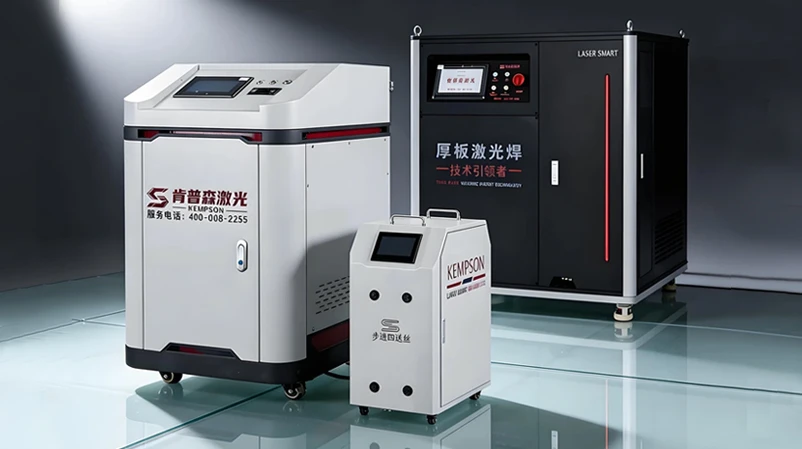
A handheld laser welding system is primarily composed of a fiber laser source, a handheld welding gun, a cooling unit (air-cooled or water-cooled), an intelligent control system, and a gas protection system. These components work together to deliver stable laser output, precise beam control, and consistent welding performance across various metal materials and joint configurations.
The fiber laser source provides high-efficiency, stable, and concentrated laser energy for deep penetration and minimal heat distortion.
The welding gun integrates beam focusing optics in a lightweight, ergonomic design for flexible and accurate manual operation.
The cooling unit regulates internal temperature to ensure long-term stability and protect core components.
The control system enables precise adjustment of power, frequency, and welding modes for different applications.
The gas protection system supplies shielding gas to prevent oxidation, improve weld appearance, and enhance joint strength.
Handheld laser welding machines offer a modern alternative to traditional welding methods by combining speed, precision, and operational flexibility. Designed for industrial efficiency, they significantly improve productivity while reducing heat impact, labor intensity, and overall production costs, making them ideal for sheet metal fabrication, metal processing, and on-site repair applications.
Advantages of Handheld Laser Welding Machines
- Faster than TIG welding: Welding speed can be 2–4 times higher than traditional TIG welding, greatly improving production efficiency.
- Minimal heat distortion: Concentrated laser energy creates a small heat-affected zone, reducing deformation and material damage.
- Clean weld seams: Smooth and uniform weld appearance with minimal spatter and discoloration.
- Easy to learn: User-friendly operation allows beginners to master basic welding skills in a short time.
- Low post-processing cost: Reduced need for grinding or polishing lowers labor and finishing expenses.
- High energy efficiency: Fiber laser systems convert electrical energy efficiently, reducing power consumption.
- Strong and stable weld quality: Consistent penetration depth and reliable joint strength across various metals.
- Flexible and portable: Compact design supports on-site welding and complex joint applications.
Applications of Handheld Laser Welding Machines
Handheld laser welding machines are widely used across multiple industries due to their speed, precision, and low heat distortion. Their flexibility makes them especially popular in US fabrication shops, Southeast Asia workshops, and Middle East metal industries, where manufacturers demand efficient production, clean weld seams, and reduced labor costs.
Applications of Handheld Laser Welding Machines:
- Metal Fabrication: Ideal for sheet metal joining, structural frames, cabinets, and custom metal components requiring fast and precise welding.
- Stainless Steel Products: Perfect for thin to medium stainless steel welding with clean seams and minimal discoloration.
- Aluminum Welding: Provides stable and low-spatter welding performance for aluminum sheets and profiles.
- Kitchen Equipment Manufacturing: Ensures hygienic, smooth weld finishes for sinks, countertops, and commercial kitchen assemblies.
- Automotive Parts: Suitable for brackets, exhaust components, and lightweight structural parts requiring strength and accuracy.
- Advertising Signage: Enables efficient welding of stainless steel and aluminum letter frames, light boxes, and decorative metal structures.
For information on aluminum welding, please see this article: Can You Laser Weld Aluminum?
Handheld Laser Welding vs TIG/MIG Welding
Compared to traditional TIG welding and gas metal arc welding, handheld laser welding technology offers higher welding speeds, lower heat input, and cleaner welds. While TIG and GMAW remain widely used in manufacturing, handheld laser welding systems provide significant advantages in efficiency, ease of operation, and reduced post-processing, making them particularly suitable for welding thin to medium-thickness metals.
Handheld Laser Welding vs TIG/MIG Welding
| Comparison Item | Handheld Laser Welding | TIG Welding | MIG Welding |
|---|---|---|---|
| Welding Speed | 2–4× faster than TIG | Slower, manual process | Moderate speed |
| Heat Input | Very low, concentrated beam | Moderate heat input | Higher heat input |
| Heat Distortion | Minimal deformation | Possible distortion | More noticeable distortion |
| Weld Appearance | Clean, smooth, minimal spatter | Clean but slower to achieve | More spatter, requires cleaning |
| Post-Processing | Little to no grinding required | Often requires polishing | Usually requires spatter removal |
| Ease of Learning | Beginner-friendly, easy to operate | Requires skilled welder | Moderate skill required |
| Energy Efficiency | High electrical-to-laser conversion efficiency | Lower efficiency | Moderate efficiency |
| Maintenance | Low consumable usage | Tungsten electrode maintenance | Regular wire and consumable replacement |
| Best For | Thin to medium metals, precision work | High-quality precision welds | Thick materials and high-deposition tasks |
Air-Cooled vs Water-Cooled Handheld Laser Welders
Handheld laser welders are typically available in air-cooled and water-cooled configurations, each designed to meet different power levels and production requirements. Air-cooled laser welding machine features a compact structure, lower maintenance needs, and easier installation, making them ideal for light-duty applications and mobile workshop use.
In contrast, water-cooled handheld laser welders provide more efficient heat dissipation, enabling stable operation at higher power outputs and supporting long-duration, heavy-duty industrial welding tasks. Choosing the right cooling method depends on material thickness, daily workload, and operating environment. For a detailed technical comparison, please refer to our in-depth guide: Air-Cooled vs Water-Cooled Handheld Laser Welders.
Is a Handheld Laser Welding Machine Right for Your Business?
Deciding whether a handheld laser welding machine is suitable for your business depends on several key operational factors. If your production volume is moderate and requires precise, high-quality welds, a handheld system can deliver faster results than traditional welding while reducing heat distortion. For thinner to medium-thickness materials, it provides clean seams with minimal post-processing, while its portability supports mobile or on-site fabrication.
However, if your operation involves fully automated production lines or very high-volume welding of thick materials, integrating handheld units alongside automated or stationary laser systems may offer the best balance of flexibility and efficiency.
Handheld Laser Welding Machine Selection Guide
| Decision Factor | Recommended Consideration | Notes |
|---|---|---|
| Annual Production Volume | Moderate to low–medium | Ideal for shops with batch production or flexible manufacturing. High-volume lines may require automated laser systems. |
| Material Thickness | Thin to medium metals (0.5–8 mm) | Provides clean, precise welds with minimal heat distortion. Thicker materials may need higher-power or stationary lasers. |
| Mobility Requirements | On-site or mobile operations | Handheld design allows easy movement between workstations or field applications. |
| Automation Level | Semi-automated or manual lines | Works well for manual welding tasks; for fully automated production, handheld units can complement robotic systems. |
| Weld Quality & Finish | High precision and minimal post-processing | Produces smooth seams with low spatter, reducing finishing costs. |
| Material Type | Stainless steel, aluminum, copper alloys, and other metals | Suitable for a wide range of metals commonly used in fabrication, automotive, and signage industries. |
FAQ
How thick metal can a handheld laser welder weld?
A high-quality handheld fiber laser welding machine can weld metals ranging from 0.5 mm up to 12 mm thick, depending on the laser power and material type. For industrial applications requiring thicker metals, consult Kempson to select the appropriate power model.
Is handheld laser welding safe?
Yes, handheld laser welding is safe when operated correctly. All laser welding machines of Kempson come with protective housings, interlocks, and safety goggles. Always follow operator guidelines to prevent laser exposure and ensure a secure working environment.
How long does a fiber laser welding machine last?
A well-maintained handheld fiber laser welding machine typically lasts 50,000–100,000 operating hours. Regular maintenance, such as lens cleaning and system calibration, significantly extends its service life.
What gas is required for laser welding?
Nitrogen, argon, or a mixture of both is commonly used as shielding gas in laser welding. The choice depends on the material: nitrogen works well for stainless steel, while argon is preferred for aluminum and other non-ferrous metals.
Can it weld aluminum and stainless steel?
Yes, handheld laser welders are suitable for welding both aluminum and stainless steel. Their precise heat control minimizes distortion, making them ideal for automotive, aerospace, and manufacturing applications.
What is the maintenance cost of a handheld laser welding machine?
Maintenance costs are relatively low compared to traditional welding machines. Typical expenses include periodic lens cleaning, fiber inspection, and gas supply. Annual servicing ensures optimal performance and prolongs equipment life.