Introduction
Laser welding and TIG welding are two widely used metal joining technologies in modern manufacturing, each offering distinct advantages in terms of precision, speed, cost, and range of applications. Laser welding(handheld lasers and robotic lasers) is renowned for its high efficiency, minimal thermal distortion, and high degree of automation, while TIG welding (Tungsten Inert Gas welding) remains a reliable choice for high-quality, manual operations and small-batch production.
In this guide, we will compare laser welding vs TIG welding based on key factors such as operating principles, weld quality, speed, cost, skill requirements, and typical industrial applications. This will help you clearly understand the differences between the two and make an informed decision.
What is Laser Welding?
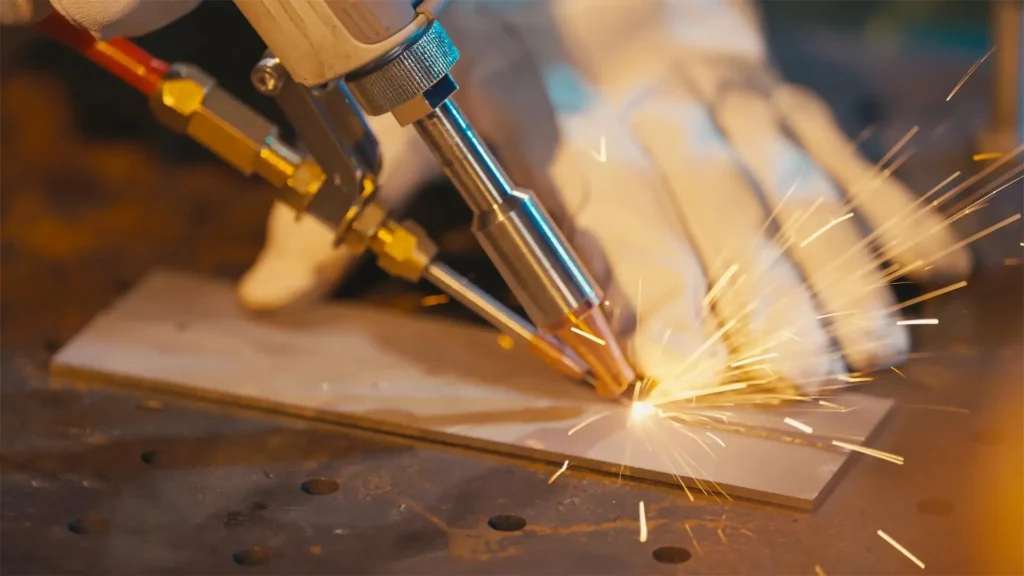
Laser welding is a high-precision joining process that uses a focused laser beam to melt and fuse materials, typically metals, with exceptional accuracy and minimal deformation. It is widely used in industries such as automotive, electronics, aerospace, and metal fabrication where speed, consistency, and weld quality are critical.
How Laser Welding Works?
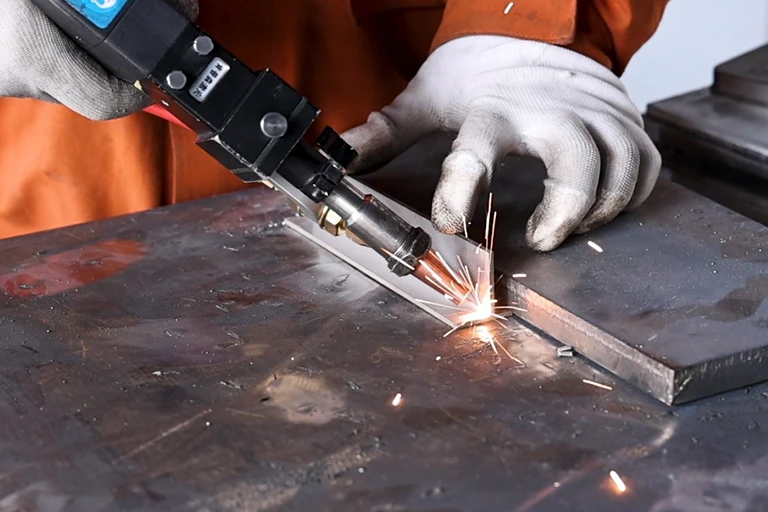
Laser welding operates by concentrating a high-energy laser beam onto a small area of the workpiece. The intense energy rapidly heats the material to its melting point, forming a molten pool. As the laser moves along the joint, the materials solidifies quickly, creating a strong and clean weld seam with minimal thermal distortion. For details, please refer to this article: What Is Laser Welding and How Does It Work?
Advantages of Laser Welding
- High Speed: Enables fast processing, significantly improving production efficiency.
- Low Heat-Affected Zone: Reduces material deformation and preserves surrounding properties.
- Easy Automation: Well-suited for integration with robotic systems and automated production lines.
Limitations of Laser Welding
- High Initial Cost: Equipment and setup investment are relatively expensive.
- High Assembly Precision Required: Tight joint fit-up and alignment are necessary to ensure weld quality.
What is TIG Welding?
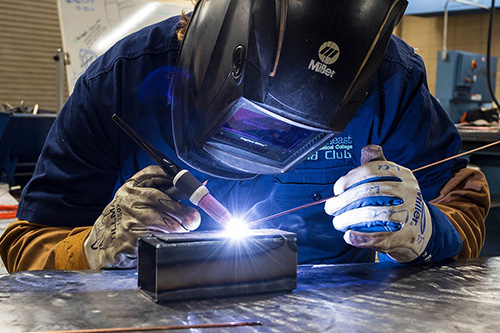
TIG welding (Tungsten Inert Gas welding) is a precise arc welding process that uses a non-consumable tungsten electrode and inert shielding gas to produce high-quality, clean welds. It is widely applied in industries requiring superior weld appearance and control, such as aerospace, automotive, and precision fabrication.
How TIG Welding Works?
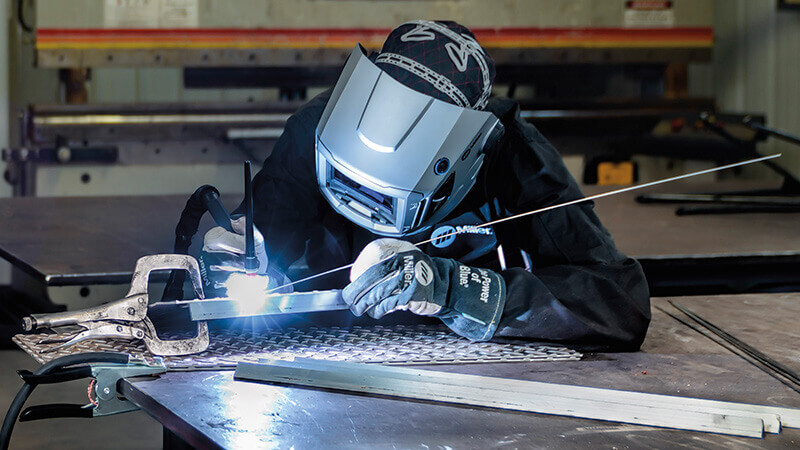
TIG welding generates an electric arc between a tungsten electrode and the workpiece. An inert gas (such as argon) shields the weld area from contamination, while filler material can be added manually if needed. The process is typically performed manually or semi-automatically, allowing precise control over the weld pool.
Advantages of TIG Welding
High Weld Quality: Produces clean, strong, and aesthetically superior welds.
High Flexibility: Suitable for a wide range of metals and thicknesses.
Ideal for Complex Structures: Enables precise control for intricate or detailed welding tasks.
Limitations of TIG Welding
Low Speed: Slower than many other welding methods, reducing productivity.
High Labor Dependency: Requires skilled operators, leading to higher labor costs.
Why Compare These Two Technologies?
In the welding industry, TIG welding has been the mainstream choice for thin-plate welding for the past few decades. The smooth weld seam and flexible process of TIG welding make it a mainstay in countless workshops. Nowadays, efficiency and precision are becoming the primary criteria for an increasing number of clients. They no longer demand “the ability to weld,” but “welding that is fast, smooth, and consistent.”
Meanwhile, a limitation of TIG welding has emerged – it relies heavily on human skill. Among all conventional welding processes, TIG welding demands the highest skill level from operators and is most affected by individual experience. Skilled TIG welders are increasingly difficult to recruit and retain, driving up costs and putting delivery timelines under pressure.
In comparison, laser welding, with its low labor dependency, high speed, and high consistency, is gradually replacing TIG welding and becoming a new choice for thin plate welding. It can weld 5-10 times faster than TIG welding, while producing seams so clean that grinding and polishing are often unnecessary.
That is why this article compares laser welding and TIG welding. To do so, it will focus on the following four aspects of greatest concern to clients:
- Technical: Laser Welding vs. TIG Welding: What’s the Real Difference?
- Cost: Cost Analysis and ROI Comparison
- Application: Materials and Thickness: What Can Laser Welding and TIG Welding Weld?
- Selection Guide: Selection Guide and Case Studies
Laser Welding vs TIG Welding: Key Differences
From a technical aspect, what is the difference between laser welding and TIG welding? This can be considered from the following three perspectives: Heat Source, Weld Pool, Energy Distribution.
Heat Source
Laser welding is a photophysical process that converts light into heat. High-energy photons directly bombard the metal surface. The high-frequency oscillatory friction of free electrons within the metal converts light energy into thermal energy. This is an almost instantaneous and extremely nonlinear energy conversion, with power densities reaching 10⁶ W/cm² or more.
TIG welding is an electrothermal process that converts electricity into heat. An electric current passes through ionized gas, forming a conductive path. The arc functions as a variable resistor, converting electrical energy into heat and light through the excitation, ionization, and recombination of gas atoms. Its power density is typically only around 10⁴W/cm².
The power density of TIG welding is two orders of magnitude lower than laser welding, which is the fundamental reason why laser welding is 5-10 times faster than TIG welding.
Weld Pool
The weld pool in Laser Welding is driven by vapor recoil pressure and surface tension. The metal on the front wall is pushed backwards by the high-pressure vapor, forming a strong circulation. This helps gases escape from the pool bottom, reduces porosity, and creates a denser weld structure
The weld pool in TIG Welding is driven by surface tension gradients, along with electromagnetic forces and plasma jet shear forces. These multiple forces make the weld pool flow highly intricate and challenging to precisely control.
The above are the technical reasons why laser welding can achieve higher precision and better consistency.
Energy Distribution
Laser Welding allows precise control over energy distribution. By adjusting the optical mode, heat can be applied more uniformly to the weld seam area. The result is a smooth, flat bead, gentle transitions, and a narrow, uniform heat-affected zone.
TIG Welding is different. Its arc temperature is highest at the center and decreases rapidly toward the edges. This results in distinct fish scale patterns and surface oxidation of the weld. Therefore, TIG welds almost always need grinding and polishing.
This explains why laser welding does not require grinding and polishing, whereas TIG welding often involves an additional grinding process.
Laser welding and TIG welding differ in three fundamental ways: heat source, weld pool, and energy distribution. These differences lead to higher welding efficiency, greater precision, and better consistency when comparing laser welding to TIG welding. Due to its excellent precision and consistency, laser welding also eliminates the necessary grinding and polishing steps required for TIG welding.
Cost Analysis and ROI Comparison
These technical differences ultimately come down to cost. From a technical perspective, laser welding has some advantages over TIG welding. How much money can these advantages save? Let’s conduct a specific analysis from three dimensions: Equipment, Labor, and Operation.
Equipment Cost
On equipment price alone, TIG equipment is cheaper and more advantageous. However, the price differential between laser and TIG welding systems has narrowed considerably in recent years. The price of high-end TIG equipment has approached that of handheld laser welding equipment.
More importantly, what truly affects corporate profits is the ongoing cost that accumulates after the equipment is installed.
Labor Cost
The difference in labor costs is the key factor that leads to the significant cost gap between laser welding and TIG welding.
TIG Welding vs. Laser Welding
| Comparison | TIG Welding | Laser Welding |
|---|---|---|
| Training Cycle | A grinding and polishing team is required | 0.5 to 2 hours to get started |
| Skill Dependency | Highly dependent on individual experience and technique | Parameters are preset in the equipment; consistent results regardless of the operator |
| Recruitment | Skilled welders increasingly hard to find | Operable by general workers, easy to find |
| Staff Salary | Among the highest-earning groups in the welding industry | Only the average wage level is required |
| Welding Speed | 3–5 minutes per meter | 30–60 seconds per meter (5–10x faster) |
| Grinding & Polishing | Parameters are preset in the equipment; consistent results regardless of operator | No grinding and polishing is required |
Welding speed and grinding requirements directly impact labor costs; more welding time and more grinding mean higher wages paid to welders.
Operational Cost
1.Shielding Gas:
Shielding Gas Consumption Comparison
| Gas Flow Rate | Welding Speed | Consumption | |
| TIG Welding | 10-15 L/min | 0.1-0.3 m/min | 40-80 L/meter |
| Laser Welding | 15-25 L/min | 1.5-3.0 m/min | 10-20 L/meter |
Laser welding consumes more shielding gas per unit of time. However, due to the high speed of laser welding, the overall gas consumption for laser welding is lower than that for TIG welding.
2. Filler Material
TIG welding typically requires filler wire, with costs accumulating over time. Laser welding, on the other hand, can be used for self-melting welding (without wire filling) for thin plate welding, saving both materials and maintenance of the wire feeding system.
3.Post-Weld Processing
TIG welds require grinding and polishing to remove fish-scale patterns and surface oxidation, which will result in:
- Labor cost for polishing
- Consumable costs, such as polishing wheels
- Cost of dust collection equipment, etc
- Laser Welding, in comparison, does not incur the above costs.
Therefore, TIG welding has a lower equipment cost than laser welding. However, in terms of the ongoing labor and operational costs in the later stages, laser welding has a lower cost and thus holds a greater advantage. For a company with stable orders, a focus on efficiency and long-term returns in the later stages, laser welding is the better choice.
Materials and Thickness: What Can Laser Welding and TIG Welding Weld?
When selecting between laser welding and TIG welding, one of the most critical considerations is the type of material and its thickness. Different welding processes respond differently to material properties such as reflectivity, thermal conductivity, and melting behavior. At the same time, thickness directly impacts weld penetration, heat input, and overall joint quality. Understanding these factors helps determine which process can deliver optimal performance, efficiency, and weld integrity for your specific application. The following breakdowns how laser welding and TIG welding perform across various materials and thickness ranges.
Applicable Materials
Laser welding exhibits a wide range of material adaptability. The table below compares the performance of laser welding and TIG welding on major materials:
| Material | Laser Welding | TIG Welding |
| Stainless Steel, Carbon Steel, Titanium Alloy | Low Efficiency, Polishing Needed | Low Efficiency,Polishing Needed |
| Dissimilar Metal Welding | High Efficiency, No Polishing Needed | Extremely Difficult, Requiring Special Procedures |
| Welding of Thin Plates | Low Heat Input, High Precision, Faster | High Heat Input, Prone to Distortion |
| Thick Plate Welding | High-Power Equipment | Multi-Layer Welding |
The advantages of laser welding are especially evident in dissimilar material applications. Whether it is thin or thick plates, laser welding can achieve reliable connections, and the entire process is controlled by parameters, not dependent on welder’s experience.
Applicable Thickness
Both the laser welding machine and TIG Welding equipment can handle plates of different thicknesses. However, there are still significant differences between the two types of equipment.
| Thickness | Laser Welding | TIG Welding |
| <0.5mm | Applicable | Prone to burn-through and deformation |
| 0.5-6mm | Applicable, High Precision & Faster | Applicable |
| 6-12mm+ | High-Power Equipment | Multi-Layer Welding |
Laser welding demonstrates significant advantages in thin and medium plate applications, particularly within the 0.5–6mm thickness range, where its speed and deformation control far exceed those of TIG welding. For plates thicker than 6mm, high-power laser welding equipment can be employed.
Based on the comparisons above, the following observations can be made. For applications involving dissimilar metals or a need to reduce reliance on skilled labor, laser welding offers certain advantages. Even for thick plates, high-power laser welding equipment can be applied.
How to Choose Between Laser and TIG Welding
Choosing between laser welding and TIG welding depends on your specific application requirements, including material type, thickness, production scale, and budget. Each method has its own strengths, so the right choice should align with your production goals and quality expectations.
Based on Material Type
Laser welding performs best on clean, well-prepared metals such as stainless steel, carbon steel, aluminum, and certain alloys, especially in standardized production. TIG welding, on the other hand, offers greater flexibility and is suitable for a wider range of materials and more complex or sensitive components.
Based on Thickness
For thin to medium-thickness materials, laser welding provides fast speed and minimal distortion. TIG welding is more suitable for thicker sections or applications requiring precise control of heat input and weld pool, particularly when dealing with intricate joints.
Based on Production Volume
Laser welding is ideal for high-volume manufacturing due to its speed, consistency, and ease of automation. TIG welding is better suited for low-volume, custom, or repair work where manual control and adaptability are essential.
Based on the budget
If initial investment is a key concern, TIG welding is more cost-effective to start with. However, for long-term, large-scale production, laser welding can offer better overall cost efficiency by reducing labor and increasing throughput.
In summary, laser welding is the preferred choice for high-efficiency, automated production, while TIG welding remains valuable for precision, flexibility, and specialized tasks.
Not sure which welding method fits your project? Contact us for expert recommendations and customized solutions from Kempson.
Selection Guide and Case Studies
The previous analysis has conducted a comparison across three dimensions: technology, cost, and material, clearly demonstrating the differences between laser welding and TIG welding. The advantages of laser welding are key considerations for users when making their choice. Laser welding is particularly suitable for the following four types of needs:
- Pursue High Efficiency: reduce working hours and enhance production capacity
- Reduce Labor Costs: decrease reliance on welders
- Improve Yield Rate: better weld consistency and less rework
- Flexible Adaptability to Materials – supports a wide range of materials, and the equipment remains stable when switching between thin and thick plates
The following cases, based on actual client applications, will verify the objectivity of the points mentioned above.
Kempson Cases Show
A manufacturer, a Carbon Steel components producer, initially relied on TIG welding, with a cycle time of 50 minutes per part and a weld pass rate of just 85%. After introducing laser welding, the problems were easily solved: welding efficiency was greatly improved, labor costs were significantly reduced, and the yield rate was also greatly increased. [View The Case]
Conclusion
Both laser welding and TIG welding have their own strengths, and the right choice ultimately depends on your specific production needs, budget, and application scenarios. Laser welding stands out for its speed, precision, and automation potential, making it ideal for high-efficiency, large-scale manufacturing. In contrast, TIG welding remains a dependable solution for applications that require flexibility, fine control, and high-quality manual craftsmanship.
If you’re considering upgrading your welding process or are unsure which solution best fits your project, our team is here to help. Contact us today for expert advice and customized welding solutions tailored to your specific requirements.
FAQ
1. Is laser welding stronger than TIG welding?
Both processes can achieve high-strength welds. Laser welding offers deeper penetration and consistent quality in automated production, while TIG welding provides excellent control, making it ideal for precision and high-integrity joints.
2. Which is cheaper, laser or TIG welding?
TIG welding has lower initial equipment costs but higher labor costs due to slower speed and manual operation. Laser welding requires higher upfront investment but reduces long-term costs in high-volume, automated production.
3. Can laser welding replace TIG welding?
Not entirely. Laser welding is ideal for high-speed, automated, and thin-to-medium thickness applications, while TIG welding remains preferable for complex geometries, low-volume production, and situations requiring manual control.
4. What materials are suitable for laser welding?
Laser welding is suitable for stainless steel, carbon steel, aluminum, copper, and certain alloys. It performs best on clean, well-prepared materials with tight fit-up.
5. Is TIG welding still relevant today?
Yes. TIG welding is still widely used for applications requiring superior weld appearance, precision, and flexibility, especially in aerospace, piping, and custom fabrication.
6. Which welding method is better for automation?
Laser welding is better suited for automation due to its high speed, repeatability, and compatibility with robotic systems, making it ideal for mass production environments.