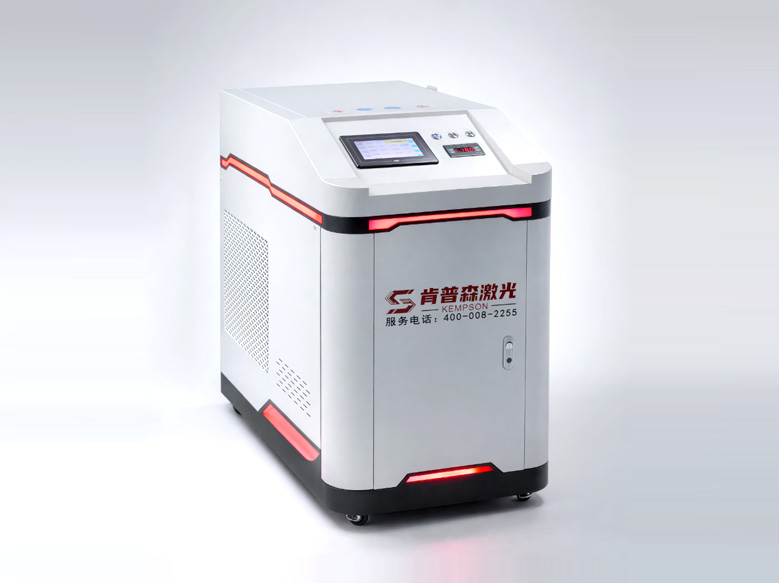
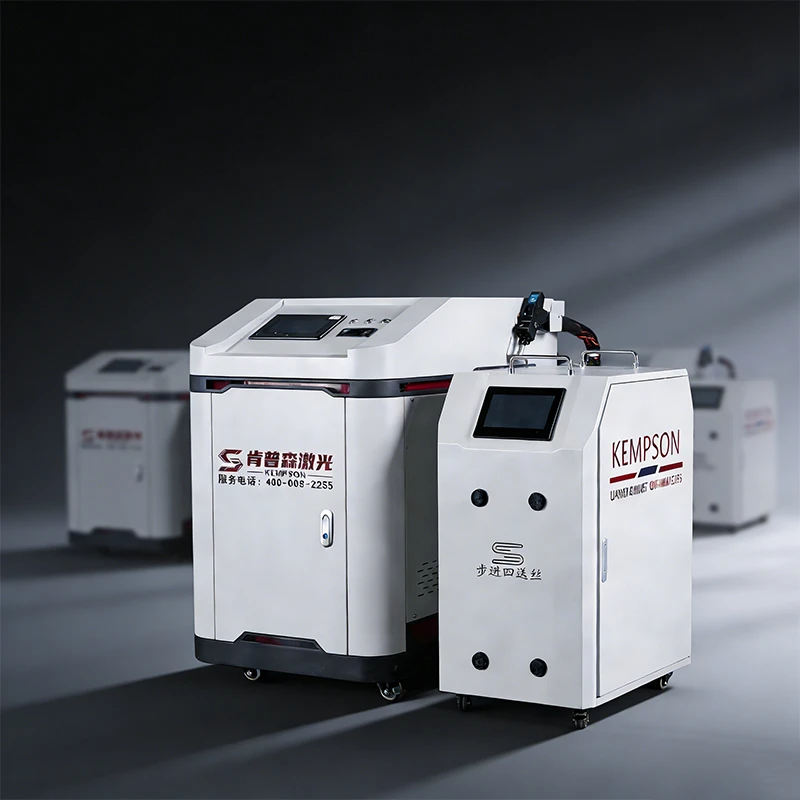
The handheld laser cleaning machine is a highly efficient cleaning device designed for industrial surface treatment, suitable for a wide range of applications from precision cleaning to heavy-duty rust removal. Using a portable handheld cleaning gun enables non-contact, consumable-free cleaning and can quickly remove rust, oil, oxidation layers, and coatings. Compared to traditional sandblasting, grinding, or chemical cleaning, it effectively addresses industry pain points, including severe pollution, low efficiency, and significant damage to workpieces.
If you are looking for a portable laser cleaner, choosing the right power range and laser type is critical. This series of portable laser cleaning machines offers a variety of configurations, including continuous-wave models (2000W/3000W) and pulsed models (50W–2500W). They support both air-cooling and water-cooling systems and come in various form factors (backpack-style, cabinet-style), balancing high-efficiency cleaning of large areas with precision, non-destructive processing to meet diverse operational requirements.
Kempson is a leading Chinese manufacturer of laser cleaning equipment, offering a full range of fiber laser cleaning machines designed for rust removal, paint stripping, and industrial maintenance. We can flexibly customize laser power, cooling methods, control systems, and equipment configurations to meet your specific application needs.
If you need a lightweight handheld unit for outdoor cleaning, contact us today to receive handheld laser cleaning solutions, free sample cleaning tests, and a detailed quote.
A handheld laser cleaning machine is an advanced device that uses a high-energy-density laser beam to remove contaminants from material surfaces; it is also known as a laser rust removal machine or fiber laser cleaning machine. By instantly releasing energy through the laser, the machine causes contaminants to thermally expand, vaporize, or peel away, while the base material absorbs almost no energy. It offers advantages such as portability, non-contact operation, non-destructive cleaning, and zero pollution.
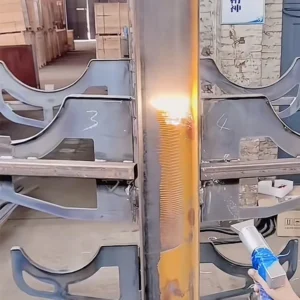
This type of equipment can efficiently remove rust, oil stains, and coatings in complex or confined spaces. It is suitable for on-site rust removal, equipment maintenance, and flexible operations across various scenarios, and is widely used in industries such as metal processing, ship repair, automotive manufacturing, and steel structure treatment.
For details, please refer to this article: What Is a Laser Cleaning Machine?
Handheld laser cleaning machines are widely used for rust removal, paint stripping, surface preparation, and precision cleaning across industries such as manufacturing, automotive, and metal processing.
Kempson offers a range of handheld laser cleaning machines designed for various materials, contamination types, and working conditions.
Handheld laser cleaning machines are mainly divided into two types: Multi-Configuration Pulse Laser Cleaning Machines, ideal for delicate and controlled cleaning tasks, and Handheld Continuous Laser Cleaning Machines, designed for high-efficiency, large-area cleaning.
The multi-configuration laser cleaning machine is specifically designed for diverse applications, including outdoor mobile operations, workshop batch production, and precision component processing. Utilizing short-pulse laser technology in conjunction with single-mode or multi-mode fiber lasers, it achieves high scanning speeds (up to 30,000 mm/s) to perform non-contact cleaning without damaging the substrate. It features a range of configurations, including backpack-style units for outdoor operations, suitcase-style units for portable transport, and cabinet-style units for mass production, making it widely applicable in aerospace, automotive manufacturing, cultural relic restoration, and industrial production.
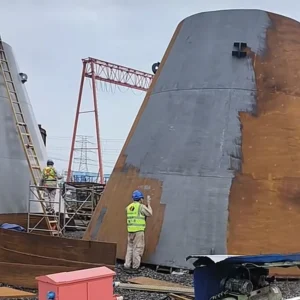
The portable continuous laser cleaner is specifically designed for cleaning and decontaminating metal and non-metal surfaces in heavy industry. With an adjustable cleaning width of 5–30 cm and a cleaning rate of 1.2 square meters per minute, it can remove contaminants down to the sub-nanometer level, delivering high-quality results. It is capable of cleaning hard-to-reach areas and operates with zero emissions. Ideal for ship rust removal, anti-corrosion pretreatment of steel structures, heavy industrial equipment refurbishment, and thick coating removal.
A handheld laser cleaning machine is designed for a wide range of applications and can efficiently remove rust, oil, and coatings from the surfaces of various materials without causing any damage to the substrate. Cleaning performance primarily depends on the device’s power and laser type; higher power is suitable for removing thicker contaminants and results in greater cleaning efficiency. Pulsed devices, on the other hand, are better suited for high-precision, fine cleaning applications that require no heat-affected zone.
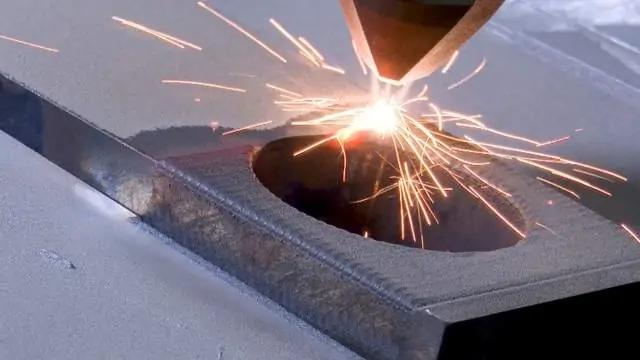
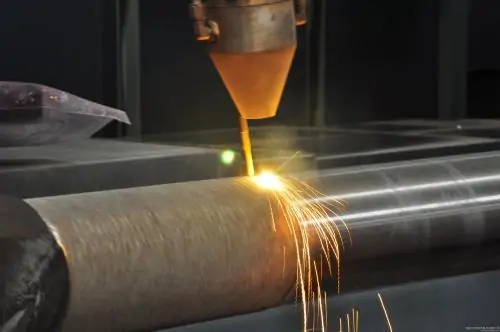
We provide tailored laser power, cable lengths, and specialized cleaning configurations to meet your specific production needs.
| Specification | General Range / Options |
|---|---|
| Laser Power | 50W – 3000W |
| Laser Type | Fiber Laser (Single-mode / Multi-mode) |
| Laser Source Lifetime | Up to 100,000 hours |
| Applicable Materials | Stainless Steel, Carbon Steel, Aluminum Alloy, Copper, Stone, Wood |
| Cleaning Types | Rust, Oil, Oxide Layer, Coating, Paint, Dust |
| Cleaning Efficiency | 1–1.8 ㎡/min |
| Scanning Speed | 12,000 – 30,000 mm/s |
| Cleaning Width | 0 – 300 mm (Adjustable) |
| Scanning Modes | Multiple scanning modes (9+ supported) |
| Fiber Length | 5m / 10m (Standard) / Customizable |
| Cooling System | Air Cooling / Water Cooling |
| Operation Mode | Continuous / Pulsed |
| Power Supply | AC 220V / 380V ±10%, 50/60Hz |
| Control System | Touchscreen Intelligent Control, Multi-language Support |
| Operation Method | Handheld / Automated |
| Machine Structure | Backpack / Trolley Case / Cabinet Type |
| Machine Weight | Approx. 7kg – 300kg |
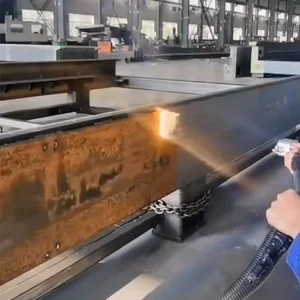
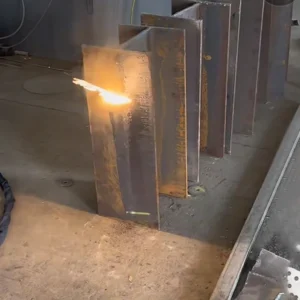
Steel Structures and Metal Fabrication: Removes rust, oxidation layers, and old coatings from the surfaces of steel structures, bridges, and mechanical equipment. Provides uniform, damage-free cleaning, allowing for immediate spray painting or corrosion protection treatment. Suitable for large-scale industrial operations.
Automotive Manufacturing and Repair: Paint stripping from vehicle bodies, rust removal from components, cleaning of engine oil residue, and pre-welding treatment. Improves the quality of subsequent processing and is suitable for repair and mass production.
Shipbuilding and Offshore Engineering: Heavy-duty rust removal from ship hulls, decks, and offshore equipment. Highly efficient, environmentally friendly, and pollution-free, suitable for outdoor and complex operating conditions.
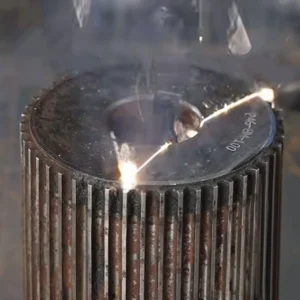
Mold Manufacturing and Maintenance: Online cleaning of tire molds, rubber molds, and precision industrial molds; removes residues without disassembly, improving production efficiency.
Aerospace and Precision Manufacturing: Paint stripping of aerospace components, cleaning of precision parts, and surface treatment; no heat-affected zone, no damage to the base material, and meets high-standard process requirements.
Cultural Heritage Restoration and Surface Protection: Removal of surface contaminants from stone and metal artifacts, as well as historic buildings; precise energy control enables non-destructive restoration.
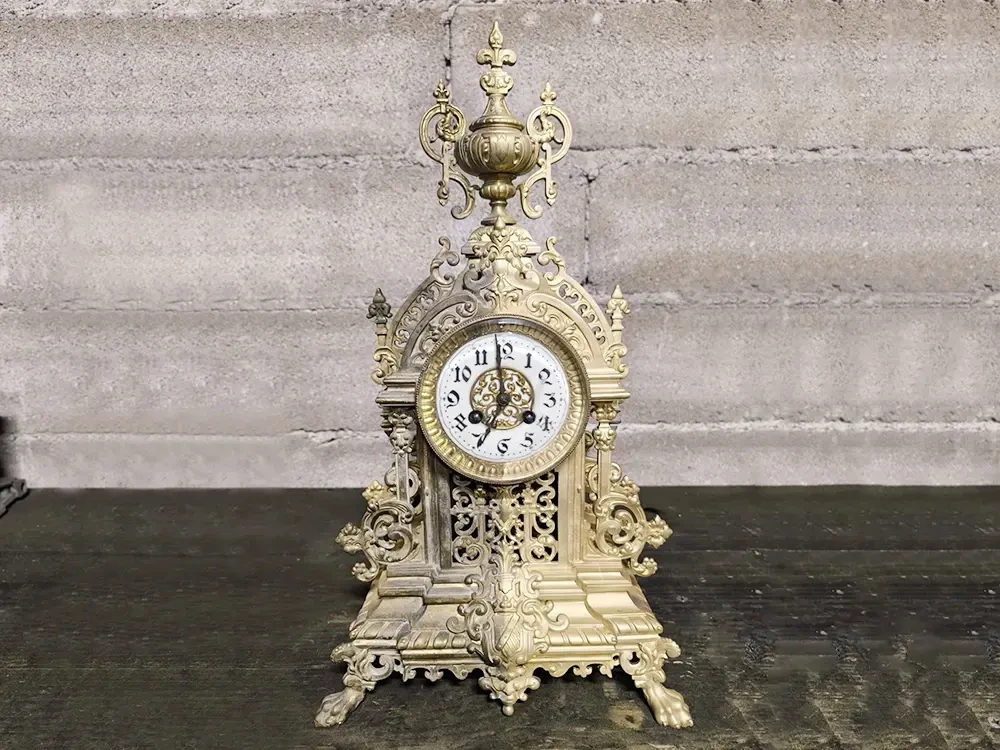
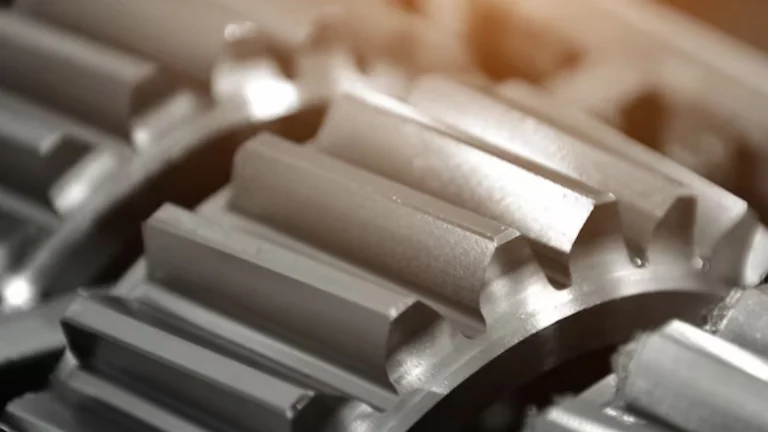
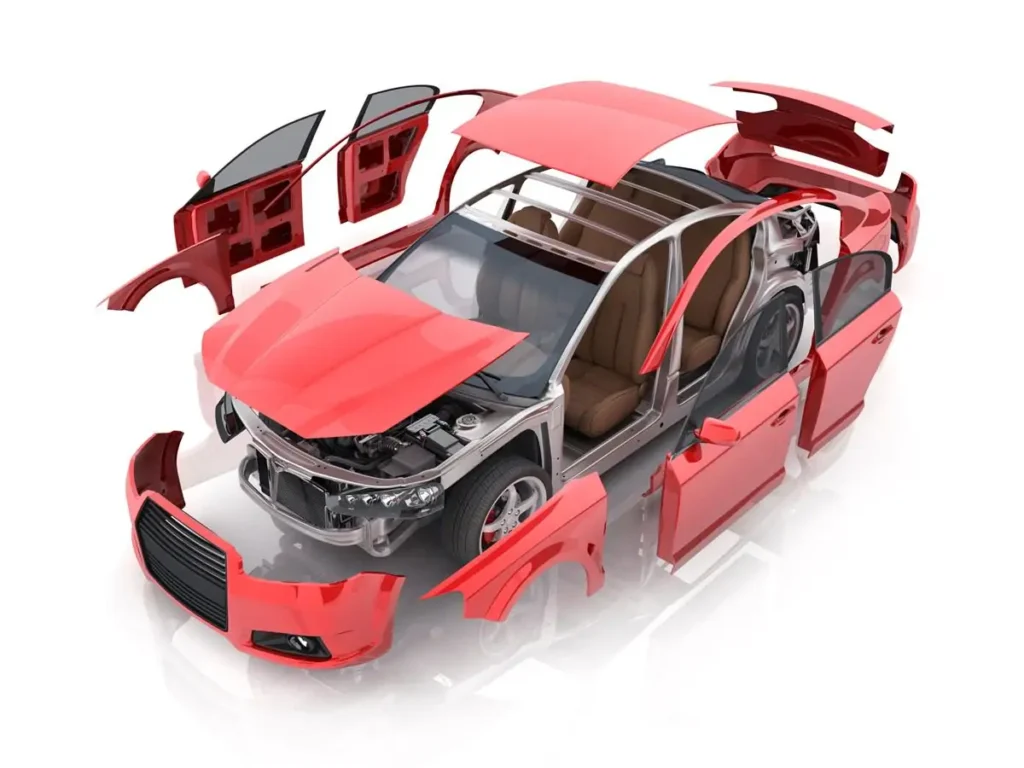
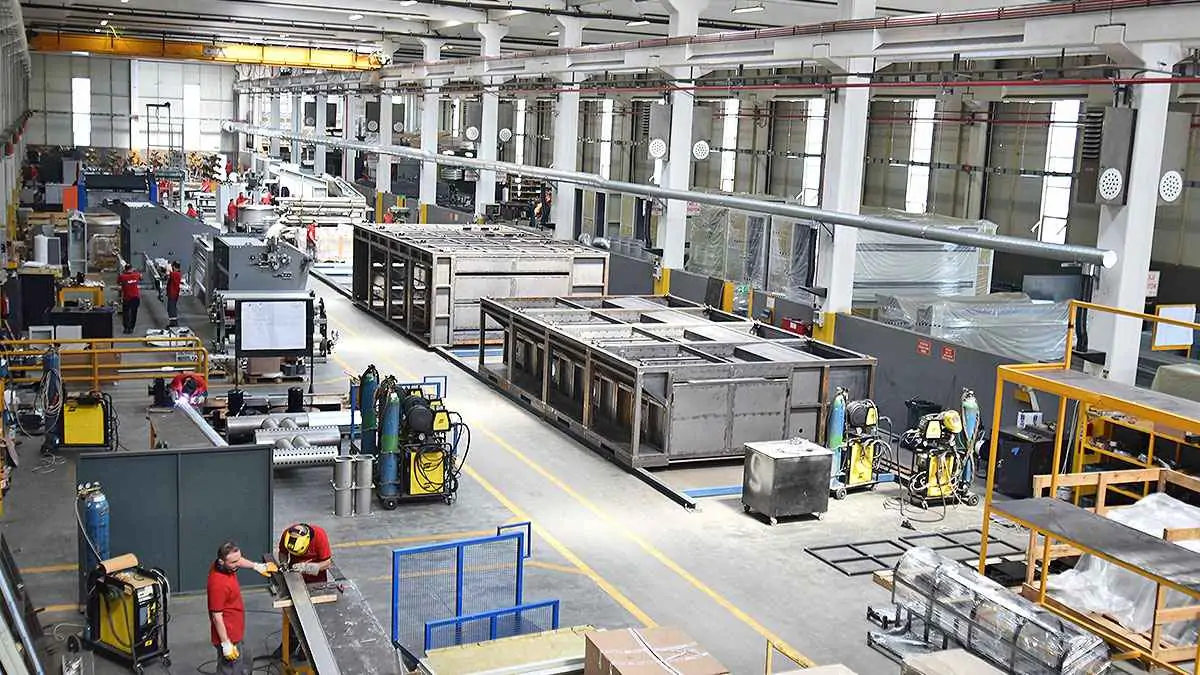
Laser cleaning is a highly efficient, environmentally friendly, and non-contact surface treatment technology that can replace traditional methods such as sandblasting, grinding, or chemical cleaning. By precisely directing a high-energy laser beam at contaminants, it rapidly removes rust, oil, and coatings while causing virtually no thermal damage or mechanical damage to the substrate. As a result, handheld laser cleaning machines are ideal for precision parts, high-value-added products, and industrial applications with strict environmental requirements.
In contrast, traditional cleaning methods typically rely on mechanical friction or chemical reactions, which can easily damage the substrate and generate dust or contaminated waste liquids, thereby increasing post-processing costs and environmental pressure.
To help you choose the cleaning method best suited to your specific operating conditions, here is a detailed comparison based on industrial applications:
| Selection Factor | Handheld Laser Cleaning | Sandblasting | Chemical Cleaning | Mechanical Grinding (Abrasive / Polishing) |
|---|---|---|---|---|
| Cleaning Method | Non-contact | High-speed particle impact (contact) | Chemical dissolution reaction | Mechanical friction (contact) |
| Suitable For | Precision parts, high-value components, multi-materials | Large steel structures, heavy rust surfaces | Oil, coatings, complex structures | Small-area repair, surface finishing |
| Cleaning Precision | High, strong controllability | Difficult to control precisely | Depends on chemicals | Waste liquid treatment is required |
| Substrate Damage | No damage | Surface roughening or deformation | Corrosive to substrate | Easy scratching and wear |
| Cleaning Efficiency | High (1–1.8 ㎡/min) | Medium | Medium | Low |
| Environmental Impact | No chemical pollution, dust can be collected | Severe dust pollution | Liquid waste pollution | Dust and noise pollution |
| Consumables Required | None | Abrasive materials required | Chemical agents required | Grinding / polishing materials required |
| Post-processing Required | Minimal | Dust cleanup required | Waste liquid treatment is required | Secondary polishing required |
| Operation Difficulty | Easy to use, parameters controllable | Requires skilled operation | Requires chemical handling experience | Depends on manual skill |
| Operating Cost | Low (long-term) | Medium (consumables + labor) | High (chemicals + environmental costs) | Medium (labor + consumables) |
| Equipment Cost | Relatively high | Medium | Low | Low |
| Portability | High, flexible handheld | Low (bulky equipment) | Medium | High |
| Automation Potential | High, easy to integrate with robots | Limited | Limited | Low, depends on the operator |
Selecting the right handheld laser cleaning machine can improve cleaning efficiency, reduce labor costs, and ensure consistent cleaning results. In practical applications, factors such as the type of contamination, material properties, operating environment, and efficiency requirements directly influence equipment selection and return on investment. Understanding these key factors is essential for choosing the laser cleaning solution that best suits your production needs.
Different contaminants react differently to laser energy. For light contamination (such as surface rust, dust, and thin oil films), low-power pulsed equipment is suitable. For moderate contamination (such as oxide layers and light coatings) and heavy contamination (such as thick rust and thick paint layers), continuous-wave laser cleaning machines with 2000W or higher are recommended to achieve optimal cleaning efficiency and results.
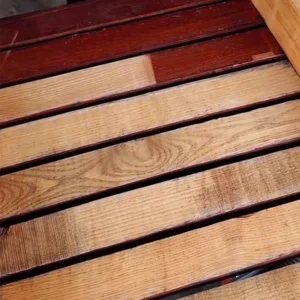
Different materials have varying degrees of laser absorption. Metal materials such as stainless steel and carbon steel are highly compatible and suitable for most machine models. For highly reflective materials such as aluminum alloy and copper, it is recommended to choose cleaning equipment with adjustable parameters. For surfaces made of stone, wood, or cultural artifacts, pulsed laser cleaning machines are more suitable to avoid heat-affected zones and surface damage.
For precision parts, molds, or high-value-added products, we recommend pulse-type laser cleaning machines, which offer precise energy control, no heat-affected zone, and more uniform cleaning. For large-area, high-volume cleaning applications such as steel structures and shipbuilding, high-power continuous-wave cleaning equipment is more suitable to improve overall operational efficiency.
The operating environment directly influences the choice of equipment configuration. For outdoor or high-altitude operations, we recommend backpack-style or air-cooled portable models, which offer flexible mobility and do not require an external water supply. For continuous production within factories, cabinet-style water-cooled equipment is suitable, as it provides stable heat dissipation and supports long-term, uninterrupted operation.
Need help selecting the perfect model for your needs? Contact our team today for expert guidance and personalized recommendations.
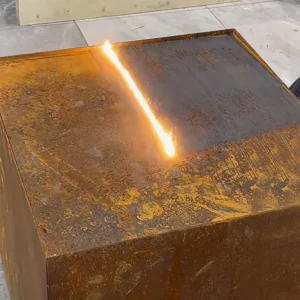
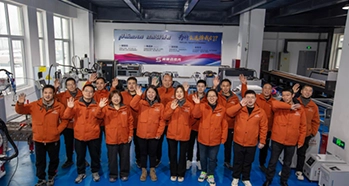
Kempson boasts an independent R&D team and a team of senior engineers, focusing on cutting-edge laser welding technology development and committed to providing high-performance and cost-effective customized solutions for various industrial applications.
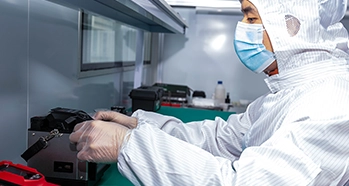
With 30+ patents, all machines are CE, ISO, and FDA certified. We offer a 3-year warranty, free sample welding tests, and lifetime after-sales support to ensure long-term reliability.
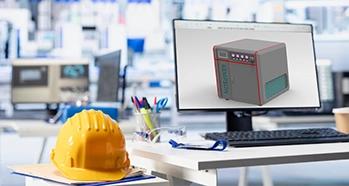
We support comprehensive OEM/ODM cooperation, providing personalized services such as system design, hardware and software integration, special accessory development, and brand logo customization, precisely tailored to different markets and application scenarios.
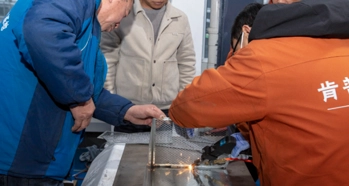
We offer free sample welding testing services: simply send us your materials or provide your process requirements, and we will perform welding tests, record process videos, and return the physical samples, providing you with objective and reliable purchasing information.
Users are concerned about the range of cleaning thicknesses the equipment can handle, as this helps determine whether it can meet the requirements for removing heavy rust or industrial coatings. The maximum removal thickness depends on the power output and whether the machine operates in continuous or pulsed mode. Generally, 50W–2500W is suitable for precision cleaning, while 2000W–3000W can handle thick rust and heavy coatings.
In practical applications, many industrial sites—such as bridges, ships, or high-altitude steel structures—require portable and safe equipment. Handheld laser cleaning machines are available in backpack-style or lightweight portable designs, supporting air-cooled or water-cooled operation for extended periods. They require no external consumables, offering flexible operation and environmental friendliness.
Continuous-wave lasers (2000–3000W) are suitable for large-area heavy rust and high-intensity industrial rust removal, offering fast cleaning speeds and continuous operation. Pulsed lasers (50–2500W) are suitable for precision parts, complex shapes, or highly adherent contaminants; while slightly less efficient, they have a smaller heat-affected zone, provide precise cleaning, and protect the substrate. Users can flexibly select the appropriate model based on the degree of contamination and required cleaning precision to improve production efficiency.
Laser cleaning systems do not require chemicals or consumables, reducing secondary processing costs. Air-cooled models are easy to maintain, while water-cooled models are suitable for extended operation. Fiber lasers have a lifespan of up to 100,000 hours, resulting in low long-term operating costs and making them ideal for industrial batch applications.
In real-world production, our customers aim to reduce manual labor and improve efficiency. Laser cleaning machines support automated control, robotic arm integration, and trajectory programming to achieve precise, continuous operation, making them suitable for assembly line applications or the cleaning of complex structural components.
Looking for a Handheld Laser Cleaning Machine?
Contact Kempson today to get a customized laser cleaning solution.