This article primarily explores the applications of handheld vs robotic laser welding. Laser welding technology is gradually replacing traditional welding. Compared with conventional welding methods, laser welding is faster, produces cleaner welds, and offers stronger automation capabilities. Use a high-energy laser beam to join metals or thermoplastic materials. The laser generates a concentrated heat source, melting the materials at the joint, allowing two pieces of material to fuse with high precision, low deformation, and high-quality results. Among these, handheld laser welders and automated laser welding have become the two main application forms.
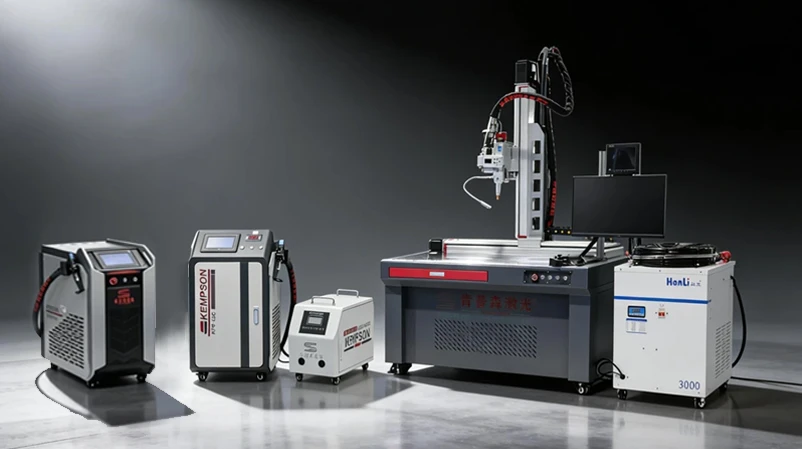
The choice of welding technology directly affects production efficiency, cost investment, and product quality. This article will explore the core differences, performance characteristics, and application scenarios of these two types of equipment, helping you quickly determine which solution is better suited to your business needs.
Handheld Laser Welder
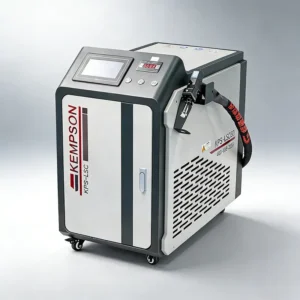
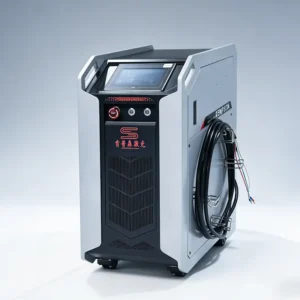
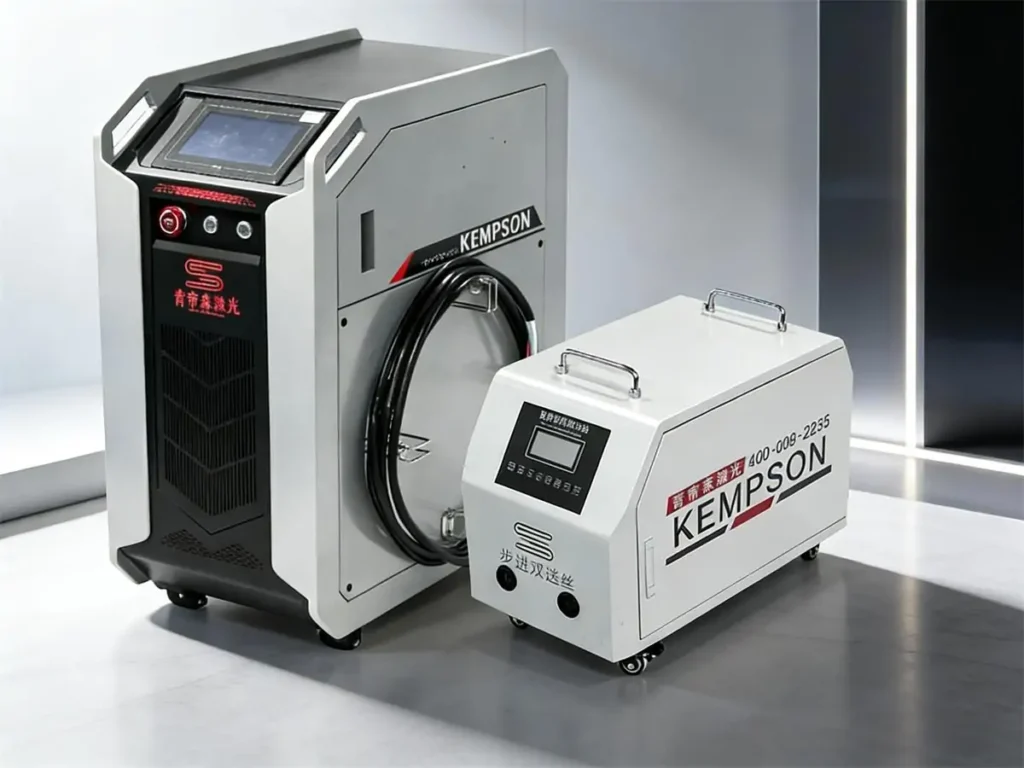
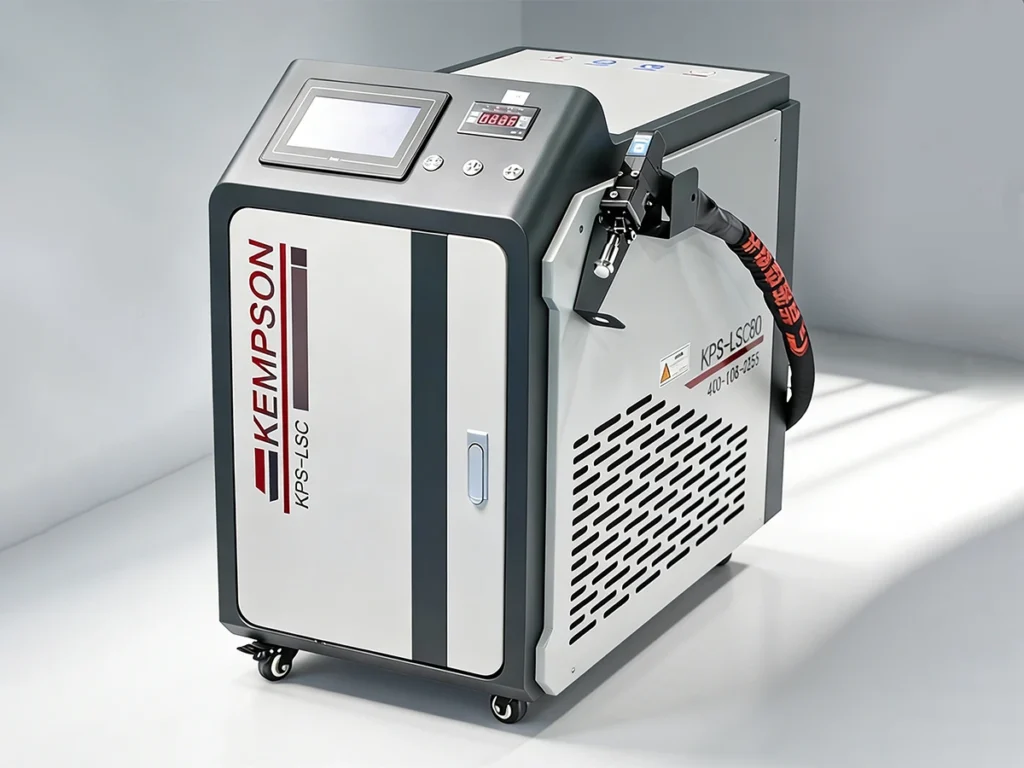
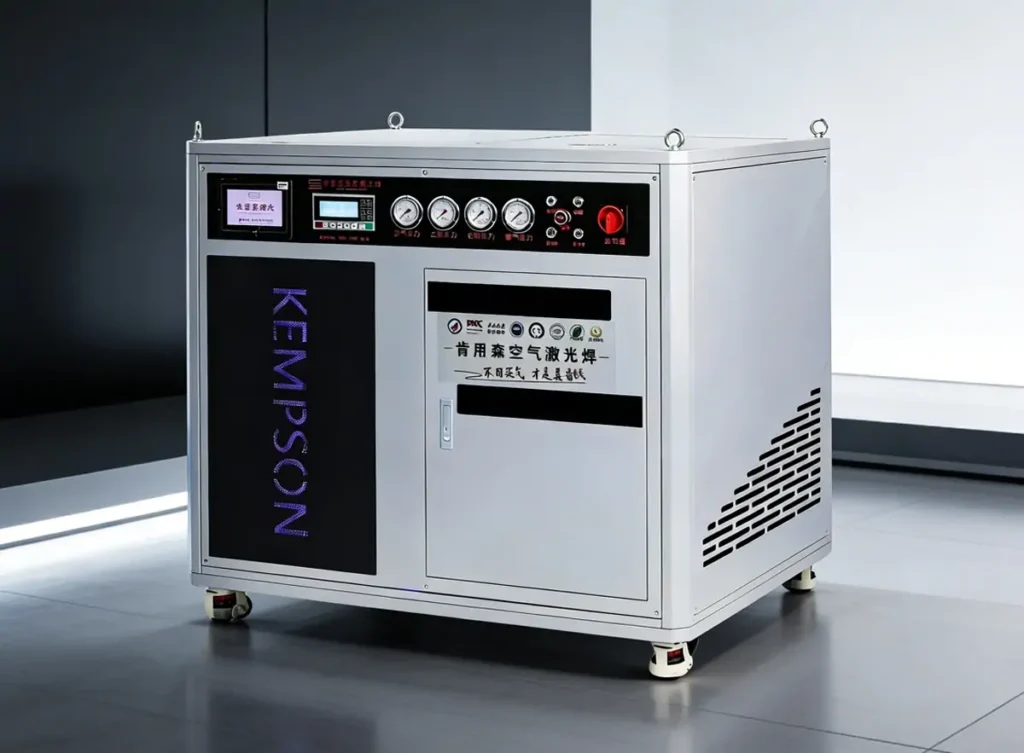
A handheld laser welder is a portable laser welding via a handheld welding gun with a high-energy laser beam to achieve rapid material fusion. Compared with traditional arc welding or electric welding, it offers higher precision, smaller heat-affected zones, and more aesthetically pleasing welds. Common types include Air Cooled Handheld Laser Welding Machine, Water Cooled Portable Fiber Laser Welding Machine, and Air Laser Welding Machine. Next, we will look at product features, application scenarios, and equipment parameters in detail.
Features
- quick to learn: Traditional arc welding requires high operator experience. Handheld laser welder has visual parameter adjustment and simple control systems, allowing ordinary operators to master them after short-term training.
- Fast speed, High efficiency: Laser welding is a high-energy-density process, with welding speeds 2–10 times faster than traditional welding.
- Beautiful welds: The laser welding molten pool is stable, with uniform and smooth welds, essentially free of spatter or porosity.
- low material deformation: High laser focus precision and concentrated heat input minimize the effect on the surrounding material. Workpieces are less prone to deformation or burn-through, especially suitable for thin plates, stainless steel, and precision components.
- Highly flexible: Handheld design allows the device to easily weld complex structures and irregular workpieces. Suitable for on-site construction, maintenance, and small-batch or multi-type production.
- Material compatibility: Handheld laser welder can be used on stainless steel, carbon steel, aluminum alloy, and other metals, and supports dissimilar metal welding. Widely used in hardware processing and sheet metal manufacturing.
- Safety and environmental: Equipped with multiple safety protections (laser shields, emergency stop devices, etc.), with low smoke and noise, making it more environmentally friendly than traditional welding.
- Flexible application: The compact structure occupies minimal space and can be flexibly placed at different workstations or moved. Ideal for factories with limited space or frequently adjusted production lines.
Applications
The flexibility and efficiency of the handheld laser welder make it suitable for industries requiring high weld quality and appearance, especially small-batch, multi-type, and on-site operations. Typical applications include stainless steel doors and windows, kitchenware, sanitary products, sheet metal processing, signage, small-batch production, repair, and hardware components.

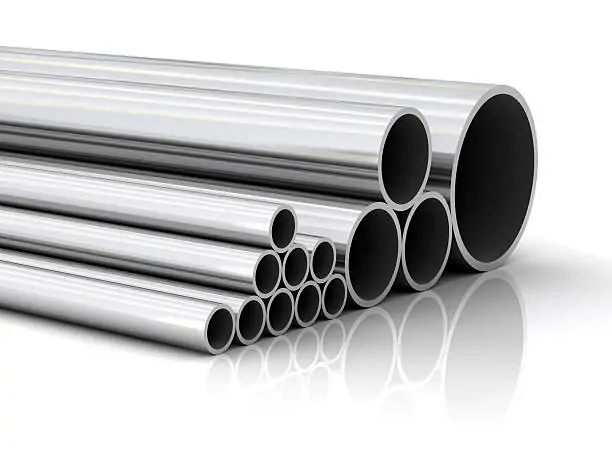
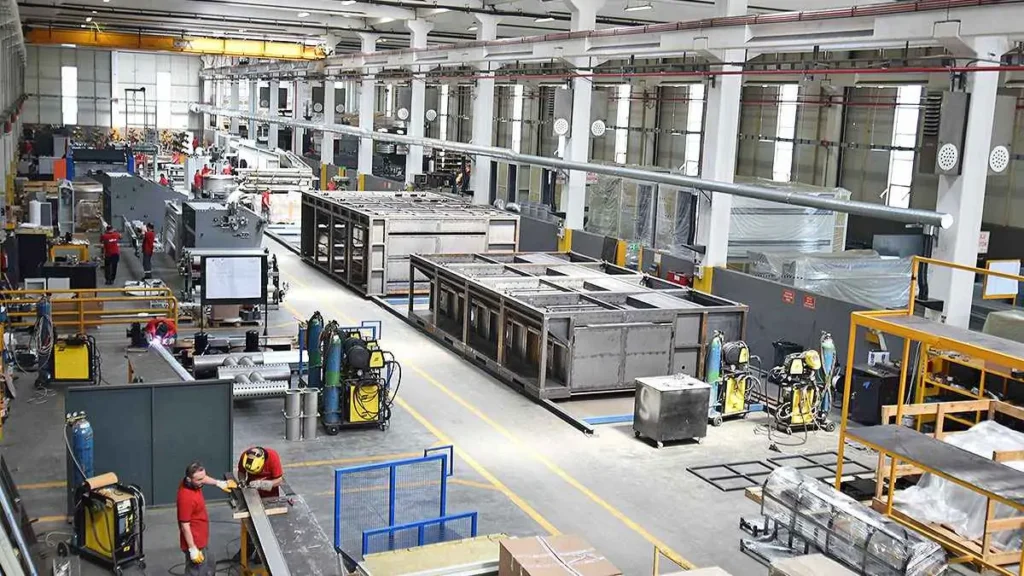
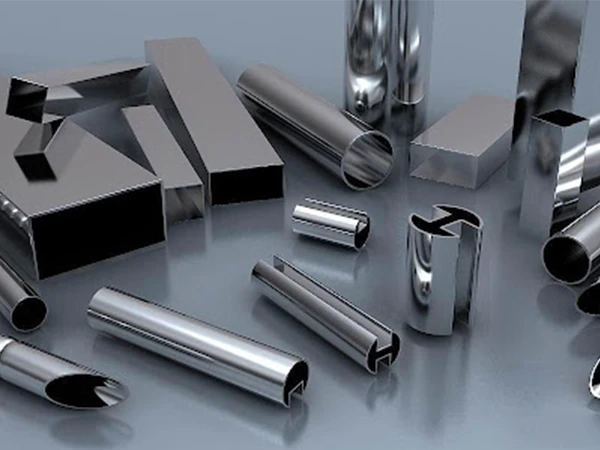
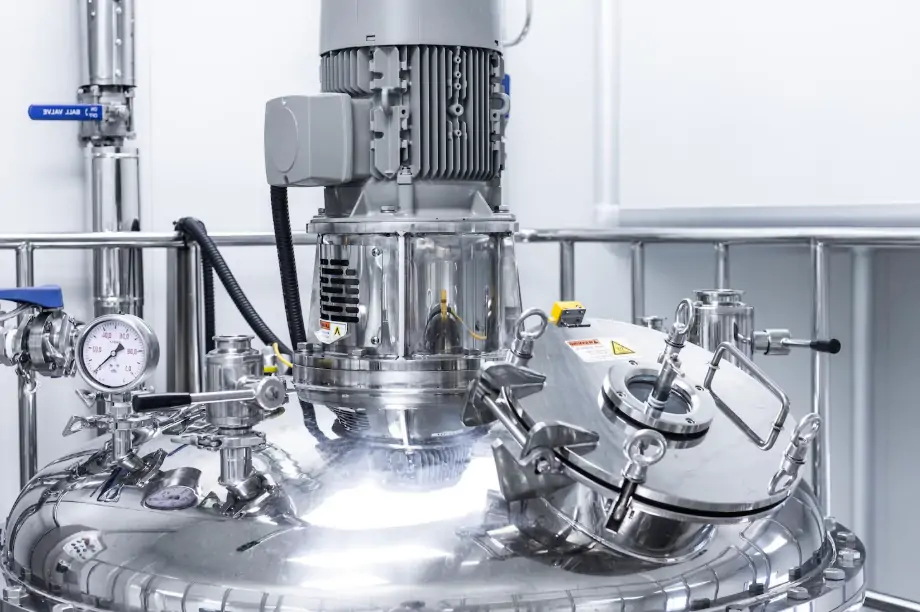
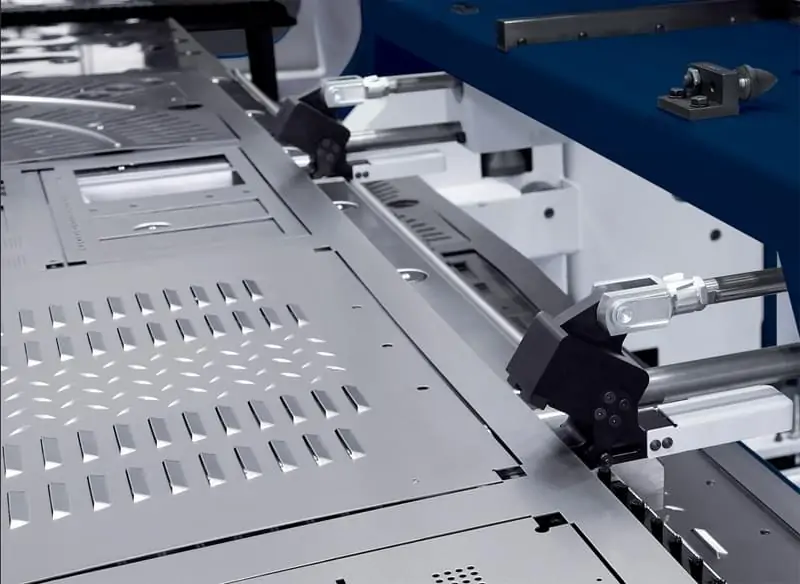


In maintenance, engineering installation, and other scenarios requiring mobile operations, handheld laser welders also show clear advantages, ensuring weld quality while greatly improving construction efficiency.
Specifications
| Parameter | Range |
| Laser Power | 1100W – 4000W |
| Laser Type | Fiber Laser |
| Weld Thickness | 0.5 – 12 mm |
| Weld Width | 1.5 – 8 mm |
| Material | Stainless Steel, Carbon Steel, Aluminum Alloy |
| Cooling Method | Air / Water Cooling |
| Power Requirement | 220V / 380V |
| Operation Mode | Continuous and Pulse |
| Total Power | 2.0 kW – 3.5 kW |
Automated Laser Welding
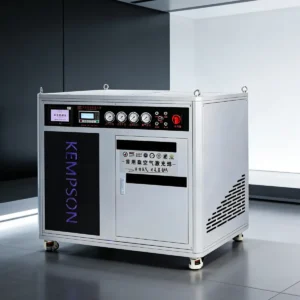
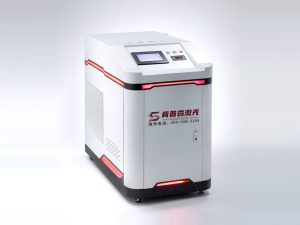
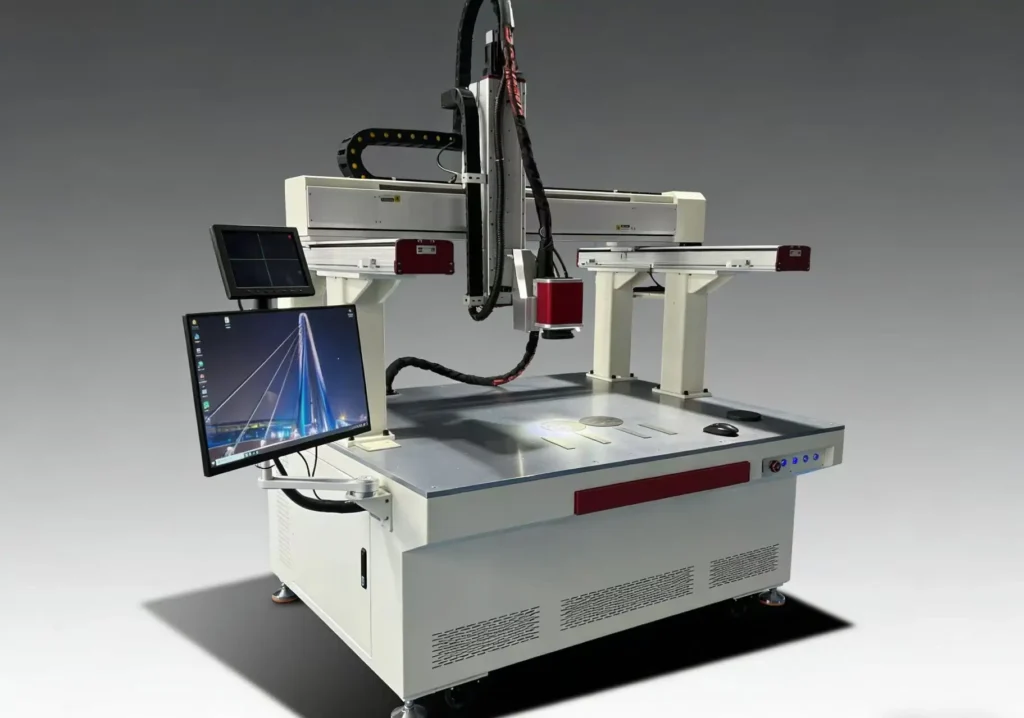
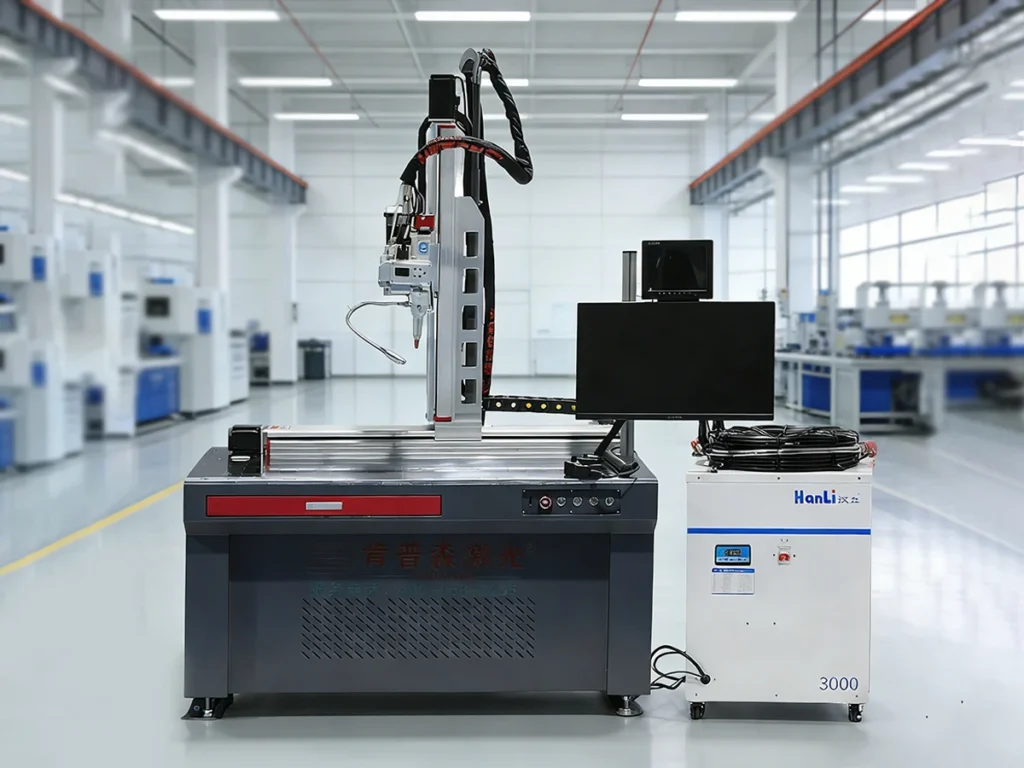
Automated laser welding belongs to industrial robots or CNC system-based automated welding. It uses programmed control for high-precision, highly consistent batch welding and is widely used in industrial manufacturing. Common types include CNC Laser Welding Machine, Galvanometer Scan XY Platform Laser Welding Machine, Battery Laser Welding Machine. These devices differ from the handheld Laser Welder, and we will explore their features, applications, and specifications.
Features
- Highly automated, reduces labor dependency: Controlled by robots or CNC systems, the entire welding process is automated, reducing labor involvement and improving production stability.
- Stable and consistent welding quality: Programmed operation ensures each weld has consistent parameters, avoiding human error, suitable for products with high consistency requirements.
- High production efficiency, suitable for large-scale manufacturing: Supports continuous operation and multi-station linkage, greatly increasing output; ideal for high-volume, standardized production.
- High precision, capable of complex welding paths: High-precision motion control systems allow complex trajectories and precision components to be welded, meeting high-end manufacturing requirements.
- Easy integration into smart production lines: Can integrate with automatic loading/unloading, visual inspection, and other systems, forming a complete Industry 4.0 smart manufacturing solution.
- Long-term cost advantages: Although initial investment is high, large-scale production reduces unit costs and improves overall ROI.
Applications
Automated laser welding is mainly used in large-scale manufacturing scenarios requiring efficiency, consistency, and precision. Examples include automotive manufacturing (body welding, batteries), new energy (power batteries, energy storage systems), electronic components, aerospace, medical devices, and mass production of precision components.
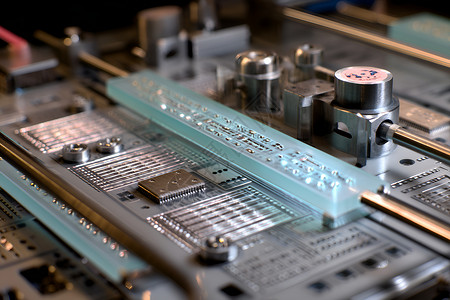

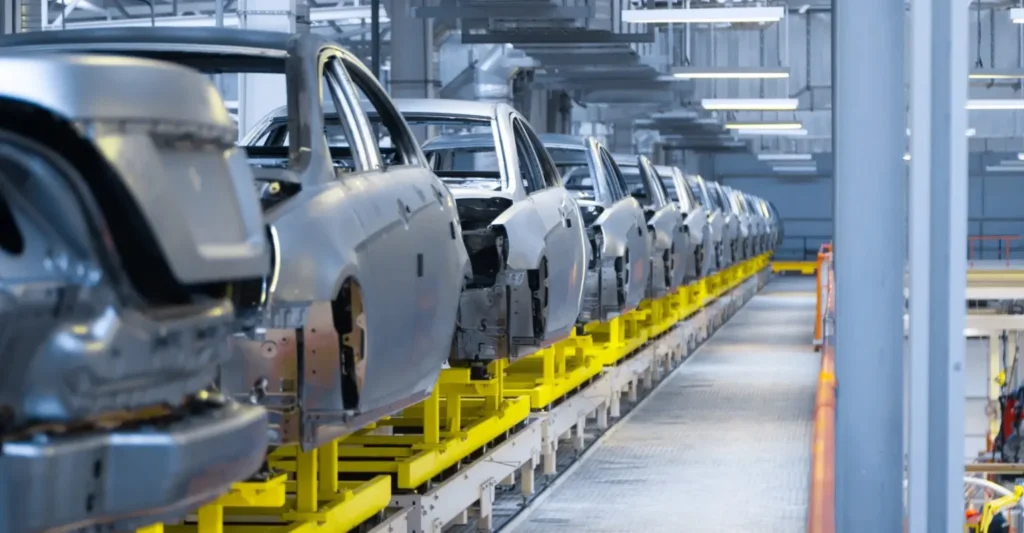
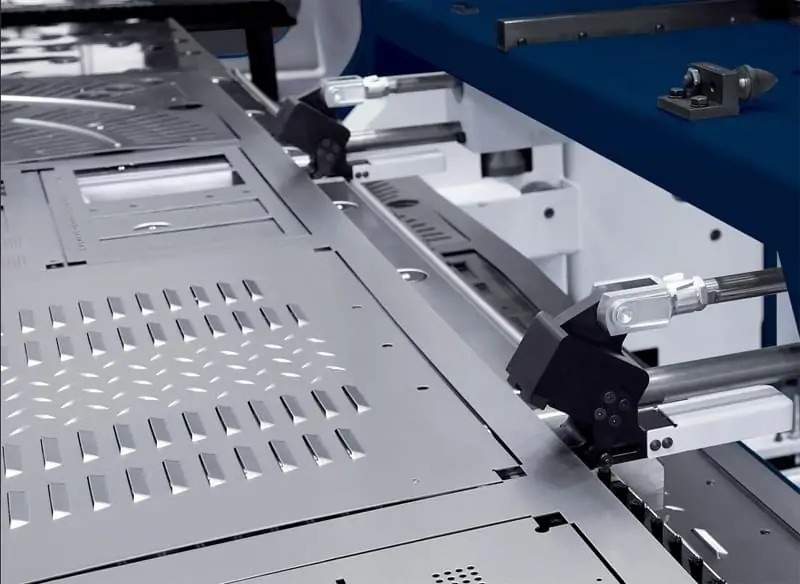
Automated laser welding ensures stable, high-precision processing of micro-structures and complex trajectories, making it an essential process in high-end manufacturing.
Specifications
| Parameter | Range |
| Laser Power | 1100W – 3000W+ |
| Operation Method | Panel – App – Remote Diagnosis |
| Weld Thickness | 2.0 – 5.5 mm |
| Weld Width | 1.5 – 6 mm |
| Material | Stainless Steel, Carbon Steel, Aluminum Alloy |
| Cooling Method | Built-in Intelligent Air Cooling |
| Power Requirement | 220V / 380V |
| Operation Mode | Continuous and Pulse |
| Total Power | 2.8 kW – 3.5 kW |
Handheld vs. Robotic Laser Welding Comparison
When choosing laser welding equipment, companies balance flexibility vs. production efficiency, and low cost vs. high precision. The above analysis of handheld laser welder vs. automated laser welding parameters, performance, and applications clearly shows the differences in practical production. The table below summarizes the pros and cons for easier decision-making.
| Comparison Item | Handheld Laser Welder | Automated Laser Welding |
| Operation Method | Handheld gun, manual operation | Robot / CNC fully automatic |
| Automation Level | Low (semi-automatic) | High (fully automatic) |
| Operation Difficulty | Simple, easy to learn | Requires professional programming and setup |
| Labor Dependency | High | Very low |
| Welding Efficiency | Medium (flexible production) | High (continuous batch production) |
| Weld Consistency | Slightly affected by operator | Highly consistent, stable quality |
| Welding Precision | ±0.2 mm | ±0.01 – 0.05 mm |
| Suitable Batch | Small batch / multi-type | Large batch / standardized production |
| Flexibility | Very high | Low |
| Complex Path Capability | Slightly affected by the operator | Strong, capable of complex paths |
| Equipment Cost | Low | High |
| Maintenance Cost | Low | Medium (requires professional maintenance) |
| Floor Space | Small | Large (production line layout required) |
| Deployment Time | Short (plug-and-play) | Long (system integration required) |
| Production Mode | Flexible / custom processing | Automated assembly line |
| Typical Applications | Sheet metal, doors/windows, repair | Automotive, batteries, electronics manufacturing |
From the table, handheld laser welders excel in flexibility, low cost, and on-site operation, while automated laser welding excels in precision, efficiency, and large-scale production capability. To help companies make informed decisions when purchasing equipment, optimizing production processes, and improving product quality, we now consider the selection factors.
How to Choose
The choice of laser equipment should be based on specific work scenarios and requirements. If flexibility, diverse welding, and on-site operation are needed with low cost, the handheld Laser Welder is preferred. For high-volume, high-efficiency, high-precision, and consistent welding, Automated Laser Welding is more suitable.
Selecting Handheld Laser Welder:
- Volume: Small batch, multi-type, or custom production; flexible operation; ideal for frequent workpiece changes or on-site tasks.
- Precision & quality: Suitable when the weld appearance and consistency requirements are general.
- Material: Suitable for thin plates, simple structures, or irregular workpieces; flexible movement.
- Investment & cost considerations: Low initial investment, quick deployment; suitable for small businesses or maintenance.
- Space & deployment conditions: Small footprint, high flexibility; suitable for on-site use.
- Operation skills & maintenance: Simple operation, low training cost.
Selecting Automated Laser Welding:
- Volume: Large batch, standardized production, high efficiency; suitable for continuous production lines, reducing unit cost.
- Precision & quality: High precision and repeatability; for batteries, electronic components, or precision parts.
- Material: For complex workpieces, thick plates, or precision components; precise trajectory welding via robot programming.
- Investment & cost considerations: High initial investment; long-term efficiency and low labor cost; ideal for medium to large enterprises or production lines.
- Space & deployment conditions: Requires workstation layout, production line planning, and safety measures; occupies significant space.
- Operation skills & maintenance: Requires professional personnel for robot operation, programming, and system maintenance.
Which laser welding machine best suits your operational requirements? After understanding the differences between handheld laser welding and automated platform welding systems, you should now have a comprehensive grasp of both technologies. For any selection-related inquiries, feel free to contact us. Kempson’s expert team is ready to provide customized solutions tailored to your specific needs.
Conclusion
From the in-depth comparison of handheld laser welders vs. automated laser welding, both have their advantages: handheld welders are suitable for flexible, diverse, small-batch, or on-site operations, while automated laser welding excels in high precision, large-scale, and standardized production.
KEMPSON’s professional design team can help enterprises choose the most suitable solution. Contact us today.
FAQS
Q: What metals are suitable for handheld laser welders?
A: Supports stainless steel, carbon steel, aluminum alloy, copper, galvanized sheet, and other metals; some models also support dissimilar metal welding.
Q: Is automated laser welding suitable for small-batch production?
A: While possible, high investment and fixed production lines are more suited to large-scale, standardized production.
Q: Does handheld laser welding require skilled operators?
A: Operation is relatively simple, and operators can learn in a short training period, but welding skill affects weld quality.
Q: How precise is automated laser welding?
A: Repeat positioning accuracy is generally ±0.01–0.05 mm, capable of complex trajectory welding.
Q: Is there a big difference in welding speed between handheld and automated laser welding?
A: Handheld welders are suitable for intermittent work, speed is moderate; automated welding can operate continuously at high speed, producing higher output.
Q: What auxiliary equipment is needed for automated laser welding?
A: Typically requires industrial robots, CNC control systems, loading/unloading equipment, and safety protection devices.
Q: Is there a difference in maintenance cost between the two types?
A: Handheld welders are easy to maintain with low cost; automated welding equipment requires professional maintenance and higher long-term costs.
Q: Is laser welding environmentally friendly?
A: Compared with traditional welding, laser welding produces less smoke, smaller heat-affected zones, and lower noise, making it more environmentally friendly.
Q: How to determine whether to choose handheld or automated laser welding?
A: Consider production volume, weld precision, workpiece type, investment budget, operator skill, and production environment comprehensively.