Table of Contents
Introduction
In manufacturing workshops, welding is often one of the most skill-dependent and consistency-challenging processes: even with the same materials and parameters, different operators may produce different results. As order volumes continue to grow and quality requirements become more stringent, traditional labor-dependent methods are starting to show their limitations. It is in this context that the robotic welding machine has gradually entered mainstream production lines, taking over repetitive and highly standardized welding tasks and handing them to stable and controllable automation equipment.
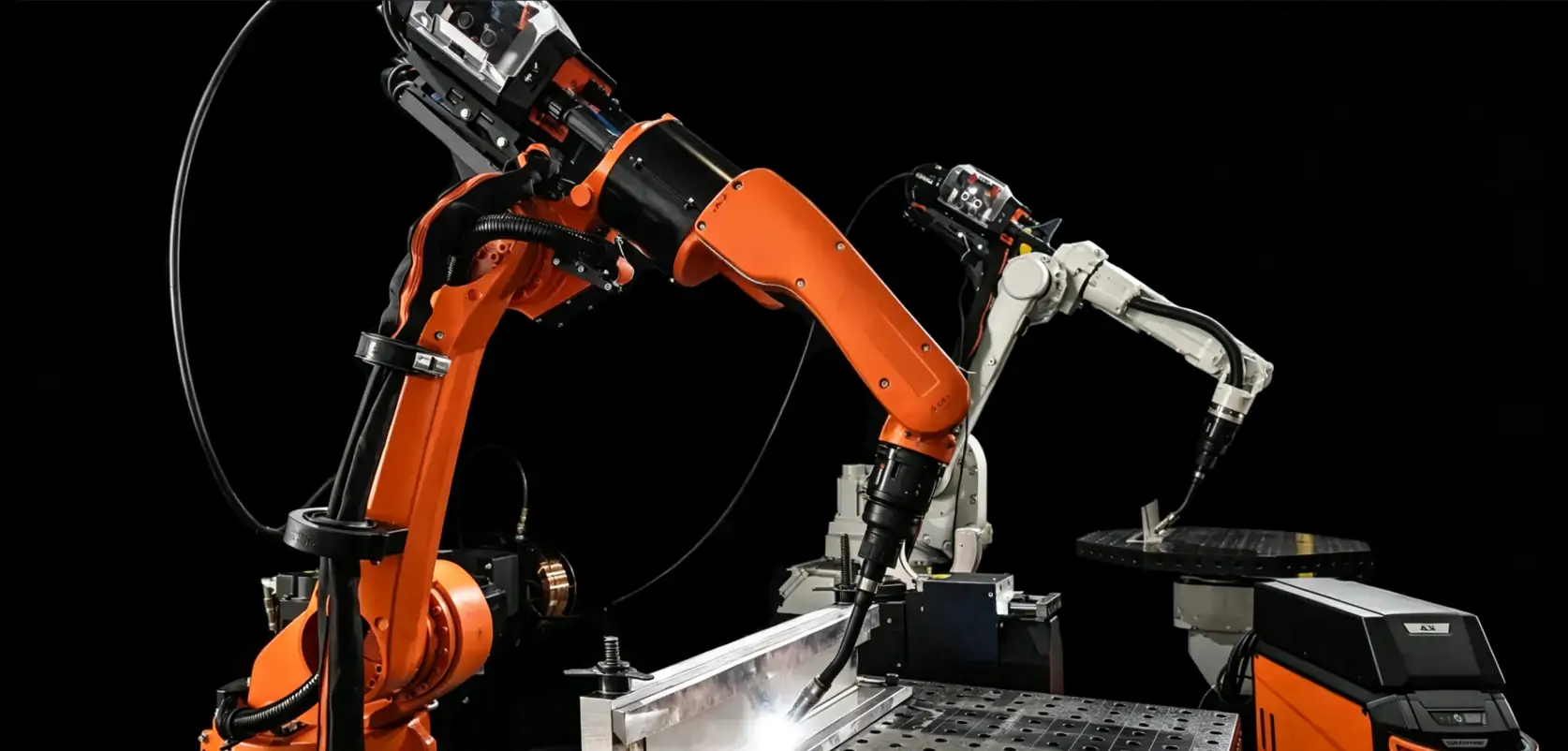
Along with this shift, the robotic welding system has not only changed the way welding is performed but also redefined the balance between efficiency, quality, and cost. In the following sections, we will break down this welding automation solution step by step, covering types, system structure, selection considerations, cost, and real-world applications to understand how it performs in actual production.
What Is a Robotic Welding Machine?
A robotic welding machine is a programmable automated device that combines a robotic arm system with welding equipment to carry out welding tasks with minimal manual intervention. It can perform operations such as positioning, clamping, welding, and post-welding handling of workpieces according to pre-set programs or planned paths, replacing traditional manual welding operations.
Robotic Welding Machine Workflow
A robotic welding machine follows a clear and repeatable process to complete welding tasks with high consistency and efficiency.
1. Programming & Setup
The welding path and parameters are set using a teach pendant or offline software. Fixtures are installed to keep the workpiece in a fixed position.
2. Loading & Position Check
The workpiece is placed on the fixture manually or by automation. Sensors or vision systems confirm the correct position before welding starts.
3. Welding Process
The robot follows the programmed path and starts welding at the defined points. Speed, angle, and arc conditions are kept stable throughout the operation.
4. Cooling & Inspection
After welding, the part is cooled and checked using visual or sensor-based inspection to detect defects or deviations.
5. Unloading & Reset
The finished part is removed, and the system resets for the next cycle, supporting continuous production.
This process allows a robotic welding system to deliver stable weld quality and repeatable production output.
Robotic Welding vs Automation vs Mechanized Welding
Welding processes in manufacturing vary widely in terms of automation level, stability, and production efficiency. Welding methods include: manual welding, mechanized welding (hand-held laser welding), automated welding (platform laser welding), and robotic welding systems. Each approach offers different capabilities and limitations.
| Dimension | Manual Welding | Mechanized Welding | Automated Welding Cell | Robotic Welding System |
| Automation Level | Fully dependent on operator skill | Low – machine guides torch, operator still controls key actions | Highly dedicated system for fixed product, low flexibility | Very high – programmable system with high flexibility |
| Stability | Low – depends on welder experience | Medium – mechanical path improves consistency | High – fixed process ensures repeatability | Very high – precision control and feedback systems |
| Production Speed | Slow – limited by human operation | Medium – partially improved by mechanics | High dedicated system for fixed product, low flexibility | Fast and flexible – optimized cycle time and multi-product use |
| Labor Dependency | Fast – optimized for a single product | High – operator supervision required | Low – mainly loading/unloading | Very low – mostly programming and monitoring |
Among all welding methods, the robotic welding system delivers the highest level of automation, stability, and operational flexibility. It reduces labor dependency while maintaining consistent weld quality and supports both high-volume and mixed-production environments.
Types of Robotic Welding Processes
Robotic welding processes are not all the same. Different methods are built for different production needs, from fast structural welding to high-precision joining. Knowing the differences between MIG/MAG, TIG, spot welding, and laser welding helps in choosing the right process for better efficiency, quality, and cost control.
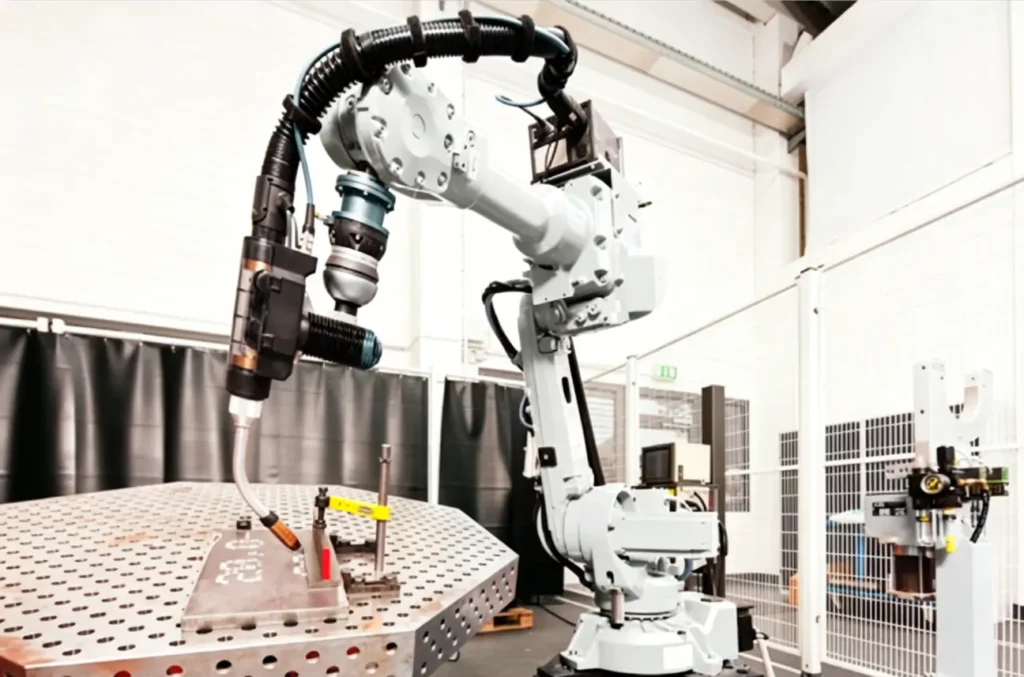
MIG/MAG Robotic Welding
A gas-shielded arc welding process using a consumable wire electrode, automatically fed by a robotic system.
Key Features:
High welding speed, high deposition rate, and strong production efficiency. Suitable for continuous, high-volume manufacturing.
Applications:
Widely used in automotive frames, chassis, pressure vessels, shipbuilding, and steel structures. Also applied in aluminum alloy welding for lightweight structures.
TIG Robotic Welding
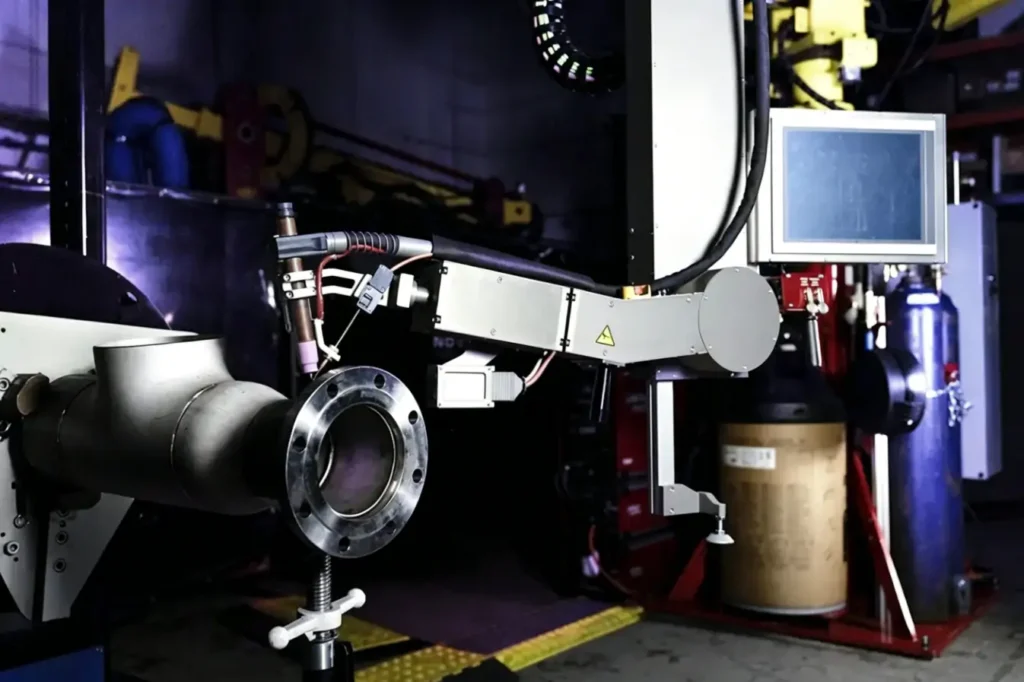
A tungsten electrode gas-shielded welding process using an inert gas (usually argon) to create a stable arc.
Key Features:
Very stable arc, concentrated heat input, precise control, and high-quality weld appearance with minimal spatter. Slower welding speed but excellent accuracy.
Applications:
Used for stainless steel, aluminum, copper alloys, thin-wall components, pipe welding, pressure vessel root passes, and high-value precision products such as medical devices.
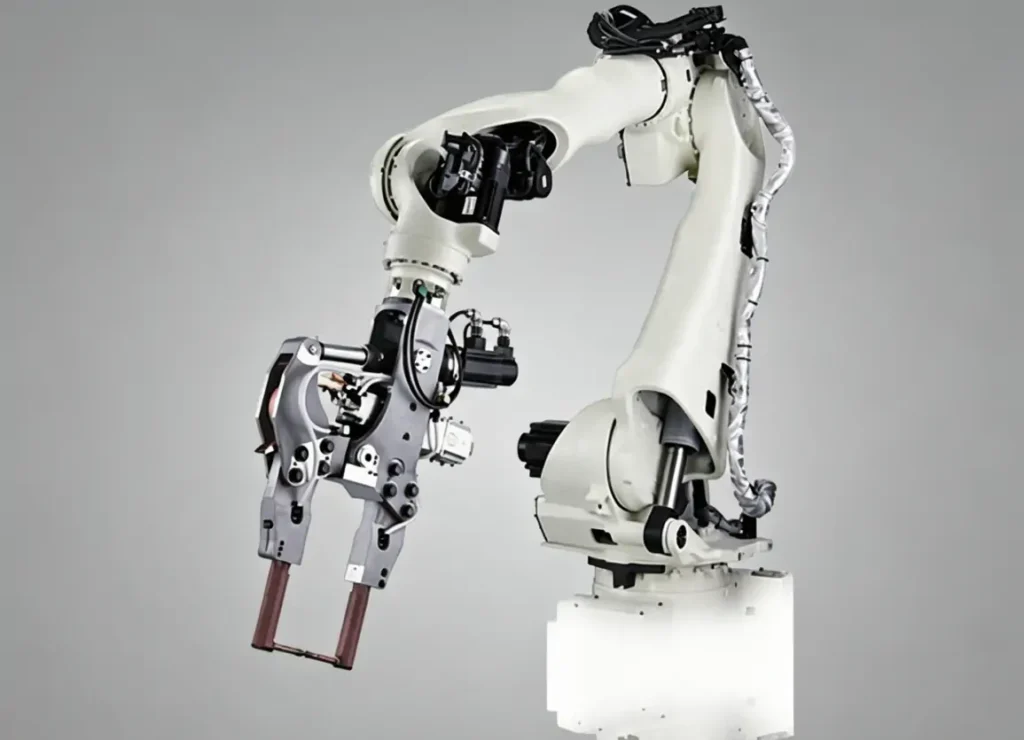
Spot Welding Robots
A resistance welding process where pressure and high current are applied through electrodes to form localized weld spots on overlapping metal sheets.
Key Features:
Extremely fast cycle time, minimal thermal distortion, and easy integration into automated production lines.
Applications:
Core process in automotive body-in-white production, including doors, panels, and frames. Also used in appliances and sheet metal enclosures.
Laser & Laser Hybrid Welding
A high-energy beam welding process that fuses materials using a focused laser beam. Hybrid systems combine laser and arc welding for improved performance
Key Features:
High energy density, fast welding speed, narrow heat-affected zone, minimal deformation, and high weld strength. Requires high assembly accuracy.
Applications:
Used in automotive body structures, EV battery modules, precision electronics, medical devices, and dissimilar metal joining, such as steel-aluminum connections.
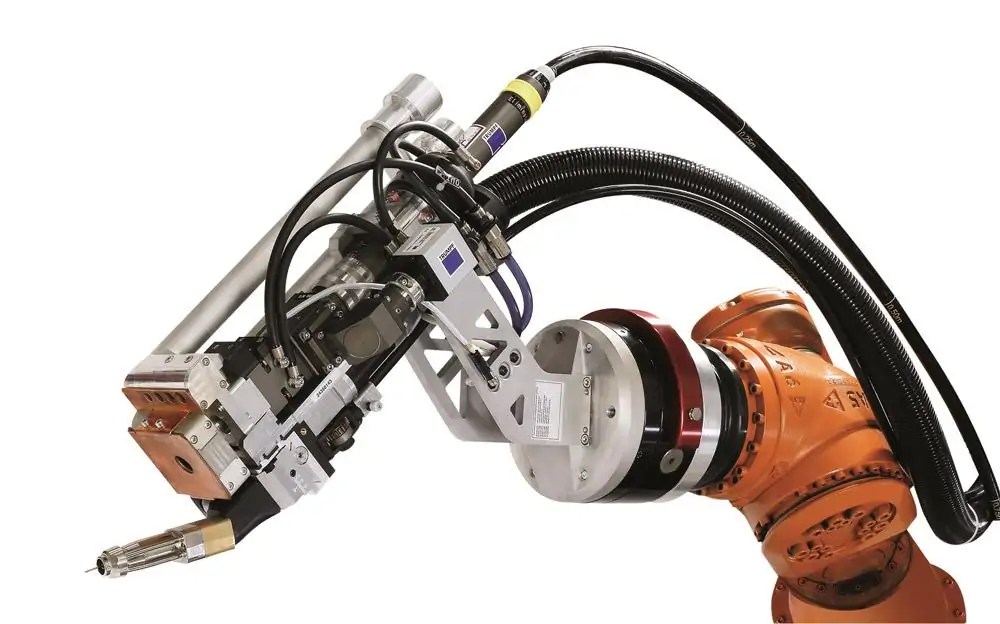
Each welding process serves a different purpose. MIG/MAG fits high-volume work, TIG is used for precise welding, spot welding is common in sheet metal production, and laser welding is used for high-end applications.
Core Components of a Robotic Welding Cell
A robotic welding system is made up of several core parts that work together during welding production. Each part has a clear role in motion, welding, positioning, and safety.
Robot Arm, Controller & Teach Pendant
- Robot arm: 6-axis motion unit for flexible welding paths with high accuracy.
- Controller: System core that coordinates the robot, welding power, and programs.
- Teach pendant & offline programming: Used for setup and path planning, reducing downtime.
Welding System
- Power source: Provides stable energy for welding, affecting arc quality.
- Wire feeder: Delivers wire steadily for consistent welding.
- Torch & TCP: Torch performs welding; TCP ensures accurate positioning.
Fixtures & Positioners
- Rotary positioner: Rotates parts to keep welds in optimal position.
- Fixtures: Hold workpieces for stable and repeatable welding.
- Accuracy impact: Directly affects consistency in batch production.
Sensors & Intelligent Systems
- Seam tracking: Adjusts path based on real weld position.
- Vision system: Used for positioning and inspection.
- Arc sensing: Monitors arc signals for process control.
Safety Systems & Compliance
- Safety fence: Prevents operator access during operation.
- Laser scanner: Detects intrusion and triggers a stop or slowdown.
- Emergency stop: Immediately shuts down the system.
- ISO/CE: Ensures safety and industrial compliance.
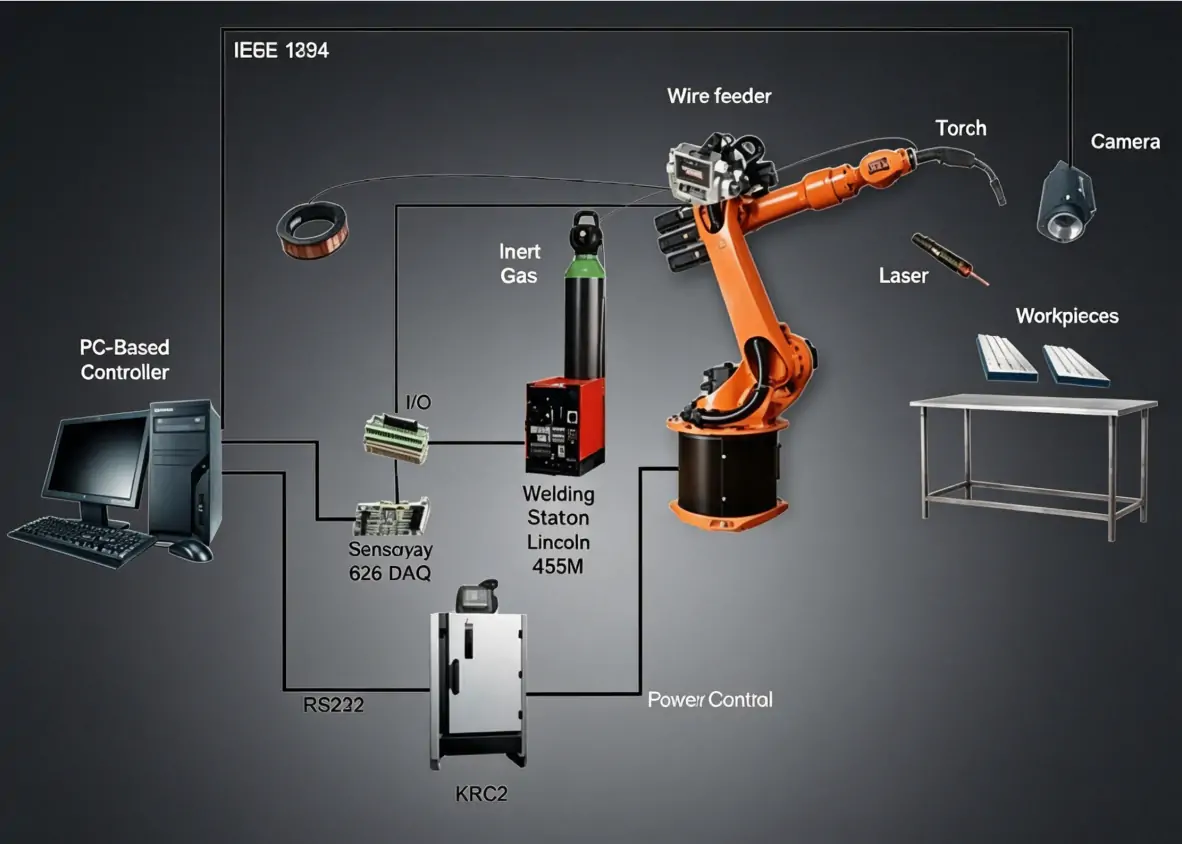
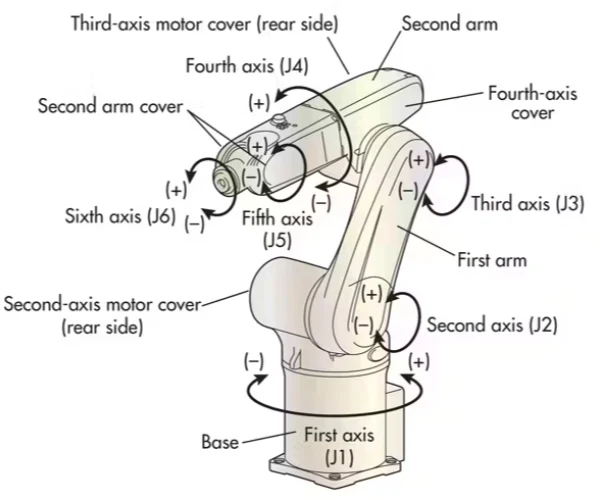
These parts need to work in coordination to keep the system stable. When properly set up, they help maintain steady welding quality and repeatable production.
Welding Quality Control & Process Stability
Welding quality in robotic systems depends on process control, understanding of defects, and proper setup of key parameters.
Welding Procedure Specification
Importance of process standards: Welding procedure specifications define the basic requirements for quality, safety, and consistency in welding production. They provide the foundation for stable and repeatable manufacturing.
Parameter control: Key settings such as current, voltage, and welding speed are defined in advance to maintain consistency and reduce variation in weld quality.
Common Welding Defects in Robotic Systems
Porosity: Caused by moisture in filler material, poor shielding gas, or excessive welding speed, resulting in gas pockets in the weld.
Undercut: A groove formed at the weld edge when the base material melts but is not properly filled.
Spatter: Metal particles were ejected from the weld pool and deposited around the weld area.
Lack of fusion: Occurs when weld metal does not fully bond with the base material or between weld layers.
Root Causes & Prevention
Fixture accuracy: Correct positioning of the workpiece reduces deformation and improves joint consistency.
Shielding gas: Proper gas flow and protection from airflow help prevent oxidation and porosity.
Parameter tuning: Adjusting current, voltage, and other settings based on material thickness helps control heat input and weld shape.
Torch alignment: Correct torch angle and distance support stable arc conditions and uniform weld deposition.
Stable weld results come from correct process settings, controlled parameters, and proper handling of common defect causes.
Cost, ROI & Total Cost of Ownership (TCO)
The cost of a robotic welding system is made up of initial investment, operating expenses, and several hidden costs. Understanding these parts helps evaluate total ownership cost and return on investment more clearly.
1 Initial Investment (CAPEX ~50–70%)
Initial investment is the upfront cost of setting up a robotic welding system. It usually makes up the largest part of the total cost.
Robot arm: Main unit of the system. Cost depends on payload, accuracy, and reach.
Welding power system: Core power source that affects performance and stability.
Fixtures & safety enclosure: Used for part positioning and operator safety, cost varies by design complexity.
2 Operating Cost (OPEX)
Operating costs are ongoing expenses during daily production.
Electricity consumption (robot, welding system, cooling)
Consumables (nozzles, lenses, shielding gas, coolant)
Regular maintenance (calibration, cleaning, preventive repair)
These costs increase with production time.
3 Hidden Costs
Some costs are often overlooked during planning:
Programming & training: Time and cost for operators to learn system setup and programming
Downtime: Planned maintenance and unexpected stoppages that reduce output
Fixture redesign: Extra cost when product design changes or production is switched
4 ROI of Welding Automation
ROI mainly comes from:
Reduced labor cost
Higher production output
Lower defect and rework rate
Payback period depends on production scale and utilization.
In the total cost of ownership, CAPEX is usually the largest share, while OPEX and hidden costs run through the full lifecycle. ROI should be evaluated by comparing all costs with long-term gains from labor savings, efficiency, and quality improvement.
Applications
Robotic welding systems are widely used across industries that require stable, repeatable, and high-efficiency welding for metal structures and components.
- · Automotive manufacturing: car bodies, chassis, doors, and structural frames
- · Steel structure fabrication: beams, columns, and building steel frameworks
- · Heavy machinery: excavator arms, crane components, and equipment frames
- · Shipbuilding: hull sections, deck structures, and large welded assemblies
- · Sheet metal production: cabinets, enclosures, and industrial metal housings
- · Energy & precision equipment: pressure vessels, pipelines, battery modules, and precision parts
From automotive to energy equipment, robotic welding supports consistent production quality and efficient manufacturing across a wide range of industrial applications.
Advantages
Robotic welding systems bring clear improvements to production by making welding faster, steadier, and easier to manage across different manufacturing tasks.
Higher productivity — Runs continuously with stable cycle time, supporting larger output
Consistent weld quality — Same motion and parameters help keep welds uniform
Less manual work — Reduces dependence on skilled welders for repetitive tasks
Better safety conditions — Keeps operators away from heat, arc, and welding fumes
Lower rework rate — More stable process reduces defects and repair work
Flexible production — Programs can be adjusted for different products and batch sizes
robotic welding systems help make production more stable, efficient, and easier to control in daily operation.
Future Trends in Robotic Welding Technology
Robotic welding is moving toward smarter, more flexible, and more efficient production methods. New technologies are changing how welding systems are designed and used across industries.
AI and smarter control
Future welding robots will rely more on cameras and AI to recognize seams, find defects, and adjust welding settings automatically.
More flexible production and collaboration
Systems will be easier to switch between products, and robots will work more closely with operators in shared workspaces.
New welding methods
Laser welding and hybrid welding will be used more because they are faster, cleaner, and better for high-precision parts like EV batteries and aerospace components.
Digital tools and simulation
More welding work will be planned and tested in software before real production, using digital models and remote monitoring tools.
Energy saving and new uses
Welding systems will use less energy and create less waste, while also being used in more industries like new energy, aerospace, and precision manufacturing.
Future welding technology is shifting toward smarter control, easier operation, and wider application, while also improving efficiency and reducing energy use in production.
Conclusion
Robotic welding machines are changing welding from manual work to more stable and efficient automated production. Across system structure, process types, components, cost, and applications, the focus is always on better consistency, higher efficiency, and easier production control. As manufacturing continues to upgrade, choosing the right welding automation system has a direct impact on long-term production performance.
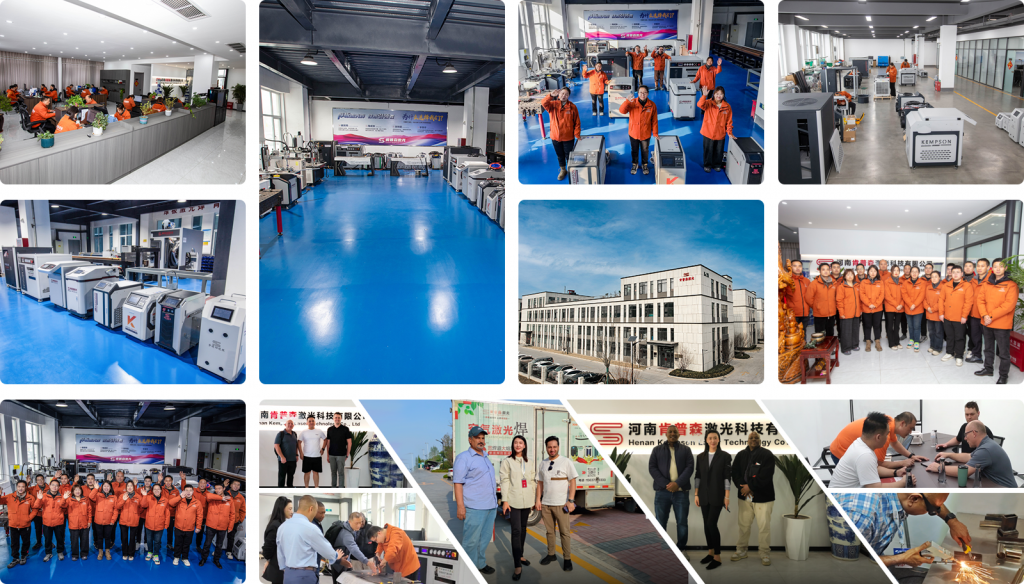
KEMPSON provides reliable welding and automation solutions for different industrial needs. If you are planning to upgrade your welding line or need a customized laser welding system, feel free to contact us for more details.e right welding system for your production line. Feel free to contact us for professional recommendations and tailored solutions.
FAQS
What is a robotic welding machine used for?
It is used for automated welding of metal parts in mass production, improving speed, consistency, and weld quality.
How much does a robotic welding system cost?
Cost varies by configuration, but most systems range from mid-level setups to high-end automated lines, depending on size and function.
Is robotic welding better than manual welding?
For large-scale production, yes. It offers more stable quality, faster output, and lower long-term labor dependence.
What industries use welding robots?
Automotive, steel structures, heavy machinery, shipbuilding, energy equipment, and metal fabrication industries.
How accurate are robotic welding systems?
Most systems achieve high repeatability, typically within a very small tolerance range, ensuring consistent weld quality.
Can robots weld different materials?
Yes. They can handle carbon steel, stainless steel, aluminum, and other alloys with the correct setup and process.
How long does it take to set up a robotic welding cell?
It depends on complexity, but setup can range from a few days for basic cells to several weeks for full production lines.
What is the ROI of welding automation?
ROI comes from reduced labor cost, higher productivity, and lower defect rates, with payback often achieved in a few years, depending on usage.