Table of Contents
Introduction
For mold manufacturers, tool shops, and maintenance teams, repairing a damaged mold is often far more practical than replacing it. QCW (Quasi-Continuous Wave) laser welding is widely used to repair cracks, worn edges, and surface defects on injection molds, die casting molds, stamping dies, and other precision tooling. Its controlled heat input helps limit distortion, preserve dimensional accuracy, and reduce the amount of grinding and polishing required after welding.
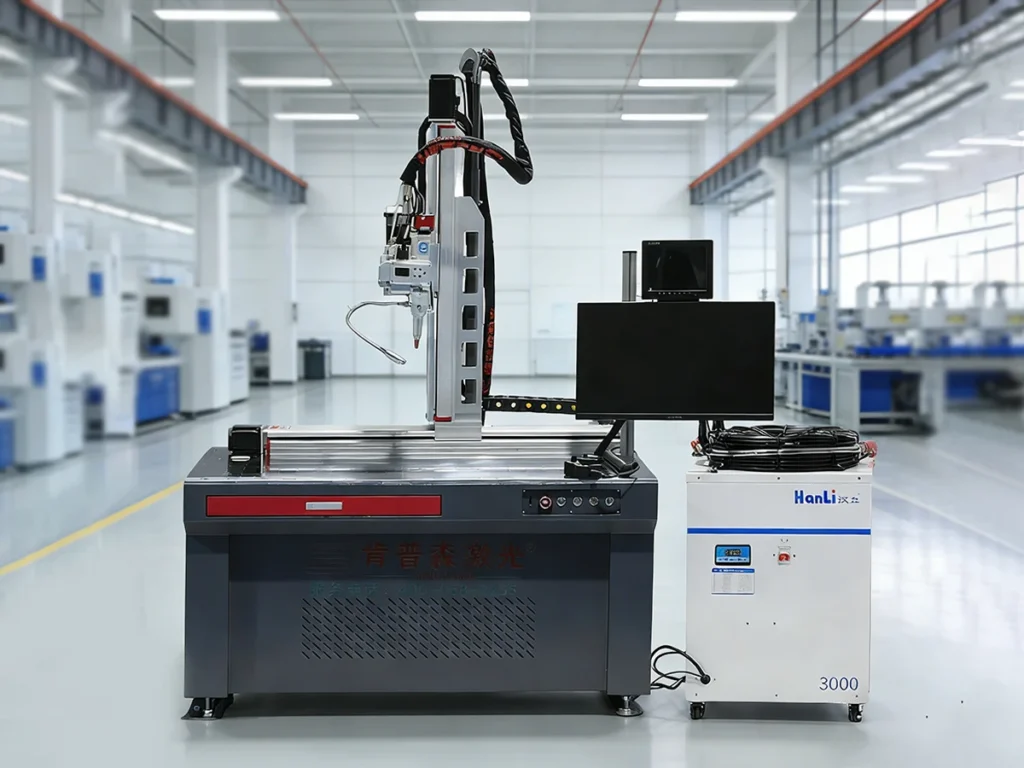
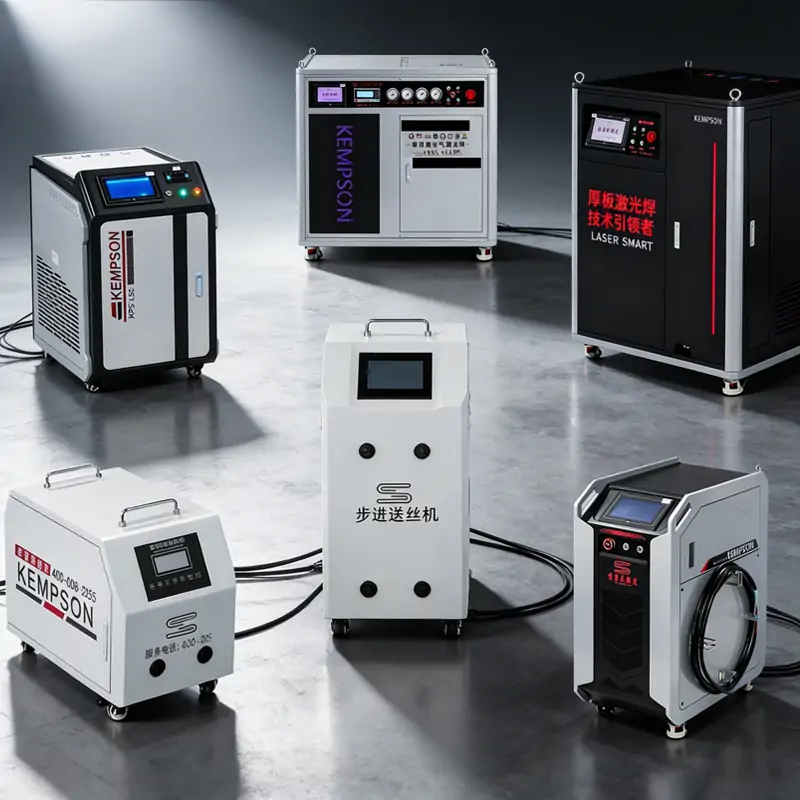
In this article, we’ll look at how QCW laser technology works, why it has become a preferred choice for mold repair, where it is commonly used, and how it compares with Micro TIG and traditional Nd laser welding systems.
What is QCW Laser Technology in Mold Repair?
QCW (Quasi-Continuous Wave) laser technology combines the benefits of pulsed and continuous laser operation(Learn more: What Is the Difference Between Continuous Laser Welding and Pulsed Laser Welding?). It delivers high peak power with controlled heat input, making it suitable for precision mold repair. QCW laser welding is commonly used to repair wear, cracks, chipped edges, and other localized defects on injection molds, die casting molds, and stamping dies while maintaining dimensional accuracy and minimizing thermal distortion.
Functions of QCW Laser Technology in Mold Repair
For mold manufacturers and repair shops, QCW laser welding offers several practical advantages, from precision defect repair and reduced thermal distortion to lower repair costs and longer mold service life.
- High-Precision Defect Repair: Accurately repairs small cracks, worn areas, and chipped edges while maintaining mold dimensions and surface quality.
- Reduced Thermal Distortion: Low heat input helps minimize thermal stress and reduces the risk of mold deformation during repair.
- Better Weld Quality: Produces dense, smooth welds that require less grinding and polishing after repair.
- Compatible with Various Mold Materials: Suitable for repairing a wide range of mold steels and alloys with consistent welding performance.
- Lower Repair Costs: One QCW system can support multiple repair tasks, helping reduce equipment investment, outsourcing costs, and production downtime.
QCW laser welding sits between pulsed and continuous laser operation, delivering controlled energy that is well-suited for precision mold repair. It is commonly used to restore cracks, worn edges, and surface damage on molds while keeping heat input low and maintaining dimensional stability. See how laser welding can repair cracks in molds
Advantages of QCW Laser Welding
QCW laser welding is defined by its ability to deliver short bursts of high energy while keeping overall heat input under control, making it suitable for precision mold repair where stability and accuracy are required.
High Peak Power with Controlled Heat Input
QCW laser welding operates with short high-energy pulses and low overall heat input, allowing controlled penetration and limited thermal impact during mold repair.
| Parameter | Range / Performance |
|---|---|
| Average Power | 150W – 600W |
| Peak Power | Up to kW-level transient output |
| Pulse Frequency | 1–500 Hz |
| Heat-Affected Zone (HAZ) | Typically < 0.5 mm |
Advantages
- Stable weld penetration
- Reduced annealing zone in base material
- Improved control of mold deformation
The combination of high peak energy and low thermal input helps maintain stable weld quality, limits heat-affected changes in the base material, and improves dimensional control after mold repair.
Fiber Laser vs Crystal (Nd: YAG) Architecture
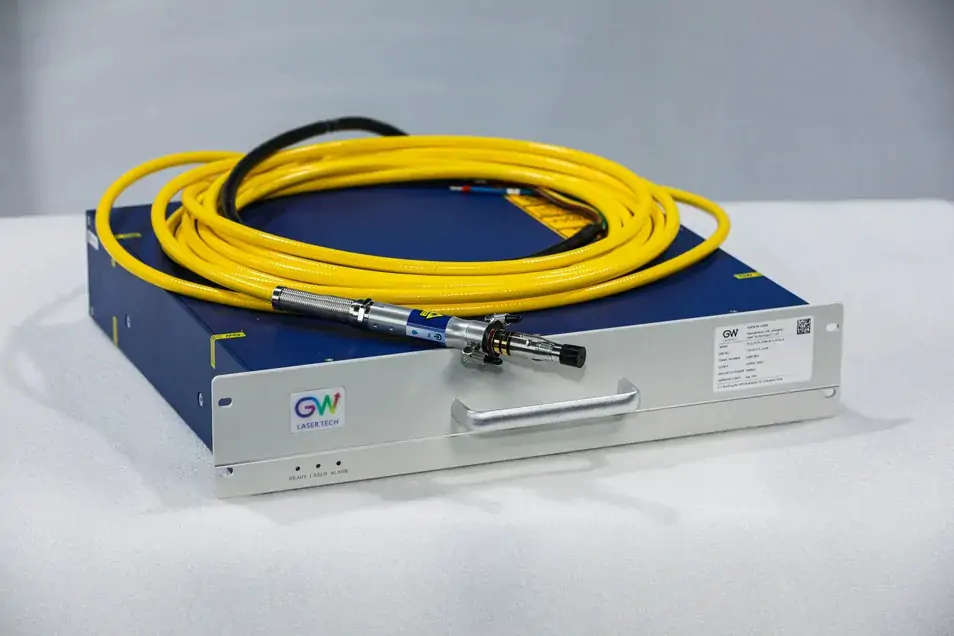
QCW laser systems mainly come in two forms: fiber laser and Nd crystal laser. Each type performs differently in efficiency, maintenance needs, and long-term use in mold repair work.
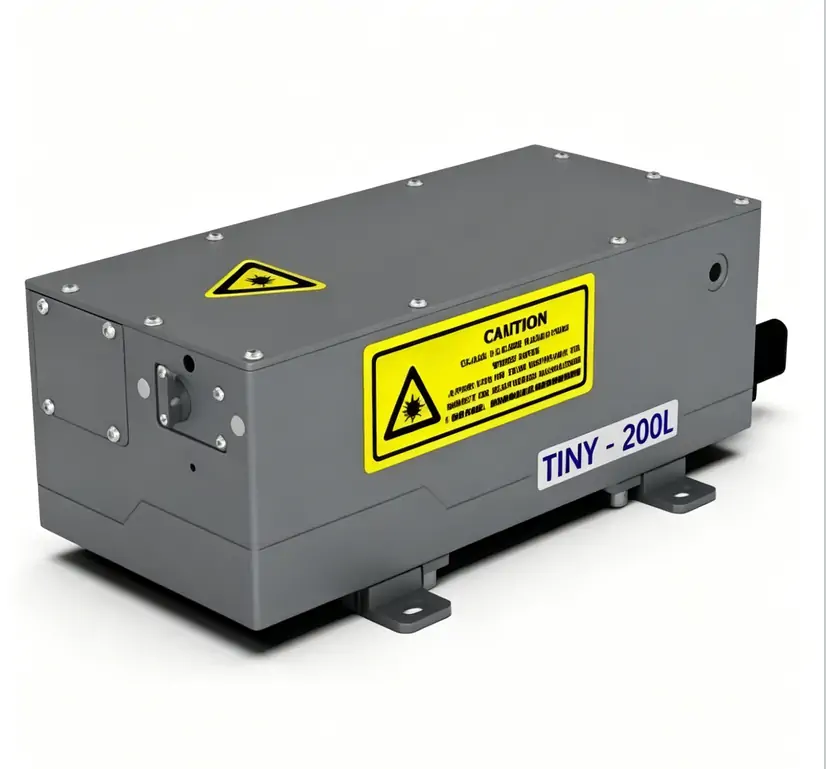
| Item | Fiber QCW Laser | Nd:YAG Crystal Laser |
| Electro-optical efficiency | 25%–35% | 3%–8% |
| Maintenance cycle | Long (no optical alignment required) | Frequent calibration required |
| Energy stability | High | Medium |
| Service life | >100,000 hours | 8,000–15,000 hours |
In practice, fiber-based QCW lasers tend to run more efficiently, last longer, and require less maintenance than Nd systems, which makes them a more common choice in modern mold repair shops.
Why QCW Laser Welding Is a Cost-Effective Investment for Mold Repair
In mold repair work, the real cost is often not the welding itself, but the production time lost when a mold is out of service. QCW laser welding helps reduce downtime and repair costs by making mold restoration faster and more efficient in daily production environments.
Reduced Downtime in Mold Production
In injection molding and tooling work, stopping a mold often costs more than fixing it. QCW laser repair helps shorten downtime by allowing local repair without taking the whole mold apart, so production can restart sooner.
Advantages: Faster repair (about 30%–60% quicker than TIG), less setup work, and downtime savings of roughly 1–3 production days in busy lines.
Lower Total Cost of Ownership (TCO)
QCW systems may cost more at the start, but over time, they help cut repair expenses by reducing consumables, rework, and time spent on finishing work.
Advantages: Less welding material used, 40%–70% less grinding and polishing, fewer repairs needed, and mold life extended by 20%–50%, with payback often within 12–24 months.
Repair Instead of Replace Strategy
Instead of scrapping damaged molds, QCW welding makes it possible to repair them several times, which is often more practical for high-value molds.
Advantages: Each mold can usually be repaired 2–5 times, service life is extended, material waste is reduced, and replacement costs are delayed or avoided.
By reducing downtime, lowering rework effort, and extending mold life, QCW laser welding often pays back its investment within a relatively short operating period, especially in high-volume manufacturing settings.
How Pulse Shaping and Beam Oscillation Improve Mold Repair Quality
QCW laser welding quality often depends on how energy is controlled during the process, especially when working on small defects and complex mold surfaces, where stability matters more than speed.
Pulse Shaping Technology
Pulse shaping in QCW laser welding changes how energy is released during welding, making it smoother and more controlled instead of just switching on and off.
| Item | Before (Basic Pulse Control) | After (Pulse Shaping Control) |
| Energy delivery | Simple on/off switching | Controlled energy curve (rise, peak, fall) |
| Molten pool | Unstable, easier to fluctuate | More stable and consistent |
| Spatter & porosity | More likely to appear | Reduced occurrence |
| Crack risk | Higher thermal stress | Lower risk, better stability |
| Application result (H13 steel) | Higher chance of micro-cracks | Better crack resistance in repair area |
By smoothing out how energy is delivered, QCW welding keeps the weld pool more stable and helps reduce common defects, especially when repairing hardened mold steels like H13.
Beam Oscillation
Beam oscillation (wobble welding) moves the laser side to side during welding, so the heat spreads more evenly across the repair area instead of staying in one narrow line.
| Item | Details |
| Oscillation frequency | 100–2000 Hz |
| Oscillation width | 0.2–5 mm |
| Weld width | More even and consistent |
| Bond strength | Improved joint strength |
| Surface finish | Smoother surface, less grinding needed |
| Complex mold repair | Works better on curved and detailed surfaces |
Spreading the laser energy more evenly helps make the weld stronger and smoother, and it also reduces the amount of finishing work needed after mold repair.
Material-Specific Welding Strategies
Different materials respond differently to QCW welding settings:
- H13 tool steel: requires careful control of preheating and cooling to avoid cracking
- S136 stainless steel: focuses on surface finish and corrosion resistance
- SKD11: needs lower heat input to prevent hardening and brittle cracking
- Aluminum alloys require a higher energy density to avoid a lack of fusion
Material matching is one of the key strengths of QCW systems in high-end mold repair work.
With better control over energy release, beam movement, and material behavior, QCW welding produces more stable repairs and helps reduce finishing work, especially on precision mold steels.
Typical Application Scenarios of QCW Laser Welding
QCW technology is mainly used in high-precision, high-value mold repair applications:
- Injection mold repair
- Die casting mold refurbishment
- Edge repair of stamping dies
- Automotive panel mold maintenance
- Local repair of precision electronic components
- Micro-crack and worn area rebuilding
In these cases, the main value of QCW is not just welding itself, but restoring the original dimensions and function of the mold.
QCW Laser Welding vs Traditional Repair Methods
QCW laser welding is usually compared with TIG welding and older Nd laser systems because they are still commonly used in mold repair, especially when looking at heat control, accuracy, and how stable the process is over time.
QCW vs Micro TIG Welding
Micro TIG is still widely used for mold repair, but QCW laser welding offers a different level of control, especially when precision and surface quality matter.
| Item | QCW Laser Welding | Micro TIG Welding |
|---|---|---|
| Medium, depends on the operator | <0.5 mm | More affected by the heat |
| Deformation control | Better control | More affected by heat |
| Post-processing | Less grinding needed | More finishing required |
| Precision | High, fine control | More affected by the heat |
| Operation style | Parameter-based | Skill-dependent |
QCW tends to give more consistent results with less manual adjustment, while TIG relies more on operator experience and usually needs more post-work finishing.
QCW vs Nd: YAG Flash Lamp Laser
Nd flash lamp lasers are an older but still used option in mold repair, mainly in workshops that have not fully upgraded to fiber-based systems.
| Item | QCW Fiber Laser | Nd: YAG Flash Lamp Laser |
|---|---|---|
| Energy efficiency | 25%–35% | 3%–5% |
| Maintenance | Low | High |
| Beam stability | Stable | Less stable over time |
| Service life | Long | Shorter |
In daily use, QCW systems are easier to maintain and more stable over long periods, while Nd systems require more upkeep and tend to wear out faster.
Compared with TIG and Nd laser systems, QCW offers better control during welding, causes less heat damage, and delivers more consistent results in mold repair work.
Why QCW is Replacing Traditional Mold Repair Methods
QCW laser welding is increasingly used in mold repair because it handles heat more carefully, improves repair accuracy, and fits better with today’s demand for stable and repeatable production results.
Lower Heat Input and Less Deformation
Less distortion and reduced need for re-machining after welding.
Higher Precision for Complex Repairs
Cleaner surface finish and less polishing work after repair.
Stronger Compatibility with Mold Materials
Stronger bonding and lower risk of weak welds in repair areas.
More Automation and Stable Results
More stable quality and fewer variations caused by manual operation.
Additional Advantage: Lower Overall Repair Time
Less setup and finishing work helps shorten the total time needed for mold repair.
QCW is gradually replacing traditional mold repair methods because it reduces heat damage, improves precision, and delivers more consistent results in real production environments.
Conclusion:
QCW laser welding is now widely used in mold repair because it helps control heat better, improves repair accuracy, and reduces the time molds stay out of production. Compared with traditional welding methods, it gives more stable results when repairing cracks, worn edges, and surface damage, especially on high-value molds used in daily production.
KEMPSON works with mold manufacturers and repair shops to provide laser welding solutions that fit real production needs, helping reduce downtime and repair costs while keeping mold quality stable. If you are looking for a practical way to improve mold repair work, you can contact us to discuss suitable options.ns.
FAQS
What is QCW laser welding used for in mold repair?
QCW laser welding is used to repair cracks, worn edges, and surface damage on injection molds, die casting molds, and stamping dies.
How is QCW different from traditional TIG welding?
QCW uses focused laser energy with lower heat input, while TIG welding relies on broader heat, which usually causes more deformation and requires more finishing work.
Can QCW repair small cracks in molds?
Yes, QCW is commonly used for micro cracks and small defect areas where precise control is needed.
Does QCW welding damage the mold surface?
Heat input is much lower than traditional welding, so deformation and surface damage are significantly reduced when parameters are set correctly.
What materials can be repaired with QCW laser welding?
It is widely used on mold steels such as H13, S136, SKD11, and also works on some aluminum and alloy materials.
Is QCW suitable for large mold repairs?
It is more suitable for localized repair work. For large-area welding, other processes may be more efficient.
Does QCW reduce post-processing work?
Yes, welds are usually smoother and more stable, so less grinding and polishing is needed after repair.
Why is QCW becoming more popular in mold workshops?
It helps reduce downtime, improves repair quality, and lowers long-term maintenance costs compared with traditional welding methods.