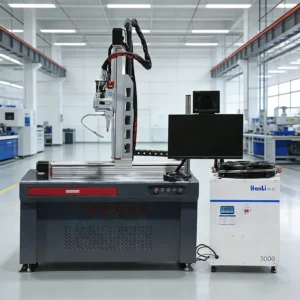
Laser cleaning and sandblasting are commonly used surface treatment technologies for removing rust from metal, removing coatings, and pre-welding cleaning. The two methods differ in terms of precision, efficiency, and cost. Laser cleaning offers the advantages of high precision, high efficiency, and environmental friendliness, while sandblasting is a reliable choice for low-cost, large-area, and rough cleaning applications. For buyers, understanding the differences between the two allows companies to make better choices in balancing efficiency, cost, and quality.
This article will systematically analyze laser cleaning vs sandblasting from multiple perspectives, including operating principles, cost, efficiency, safety, and environmental impact, to help you understand the differences between the two and select the method best suited to your production needs.
What Is Laser Cleaning?
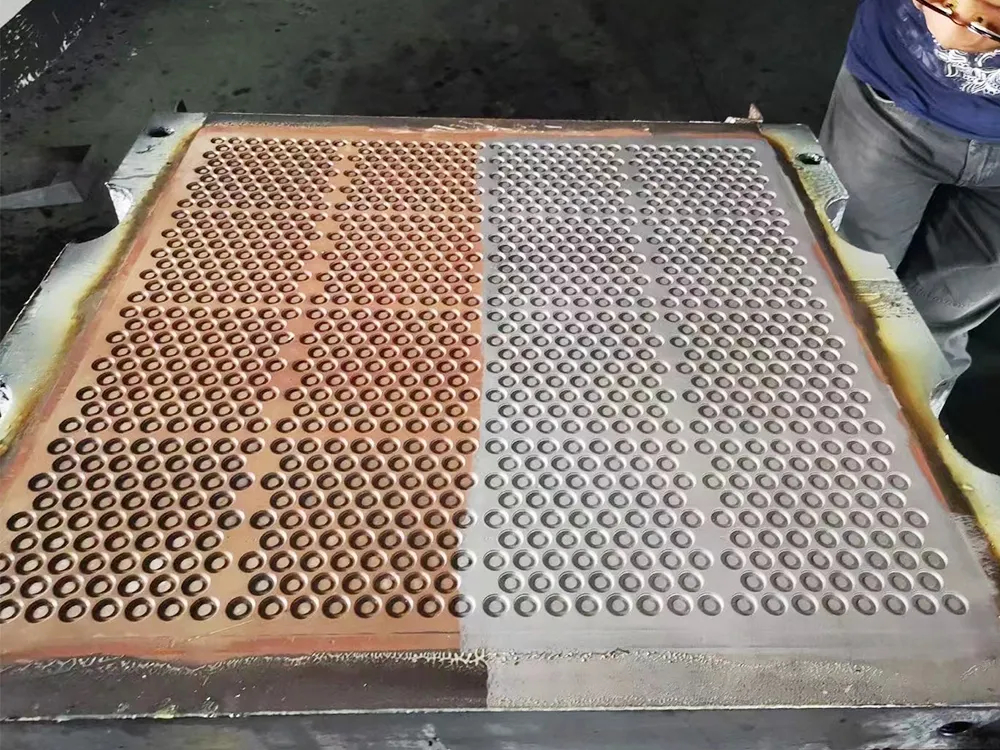
Laser cleaning is a high-precision surface treatment process that uses a laser beam to remove contaminants (such as rust, oil, oxide layers, or coatings) from the surface of a material without damaging the substrate itself. Compared to traditional cleaning methods, fiber laser cleaning offers advantages such as non-contact operation, high precision, and strong controllability. It is widely used in industries with high surface quality requirements, including automotive manufacturing, mold maintenance, aerospace, and metal processing.
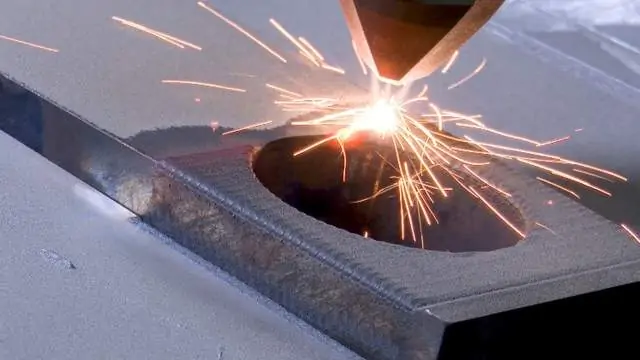
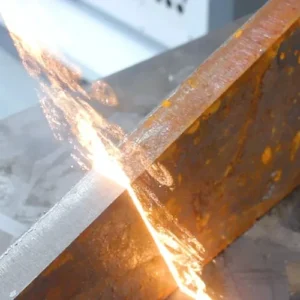
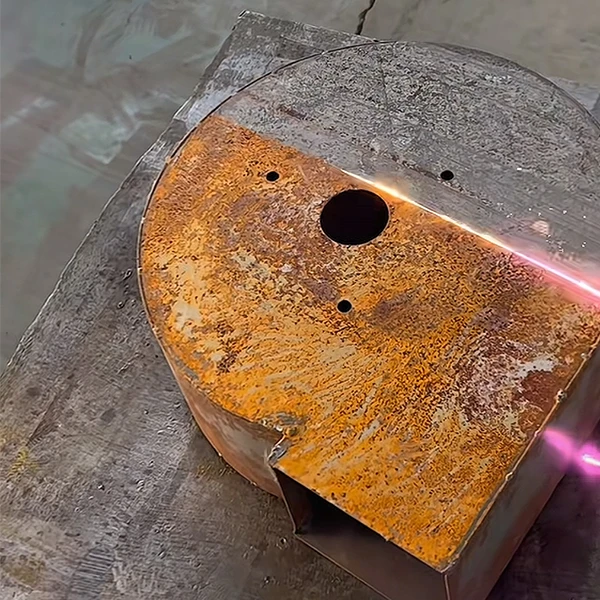
The working principle of laser cleaning involves focusing a high-energy laser beam onto the contaminated layer on the workpiece surface. The contaminants absorb the laser energy, causing them to rapidly heat up, expand, and detach from the substrate surface, while the metal substrate remains undamaged due to reflection or low absorption rates. The entire process is non-contact cleaning, offering high controllability and selectivity.
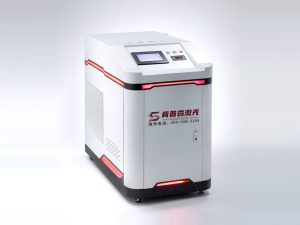
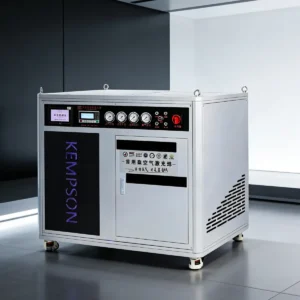
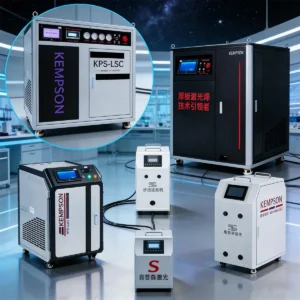
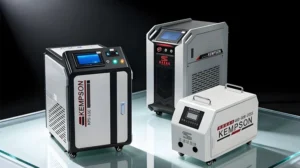
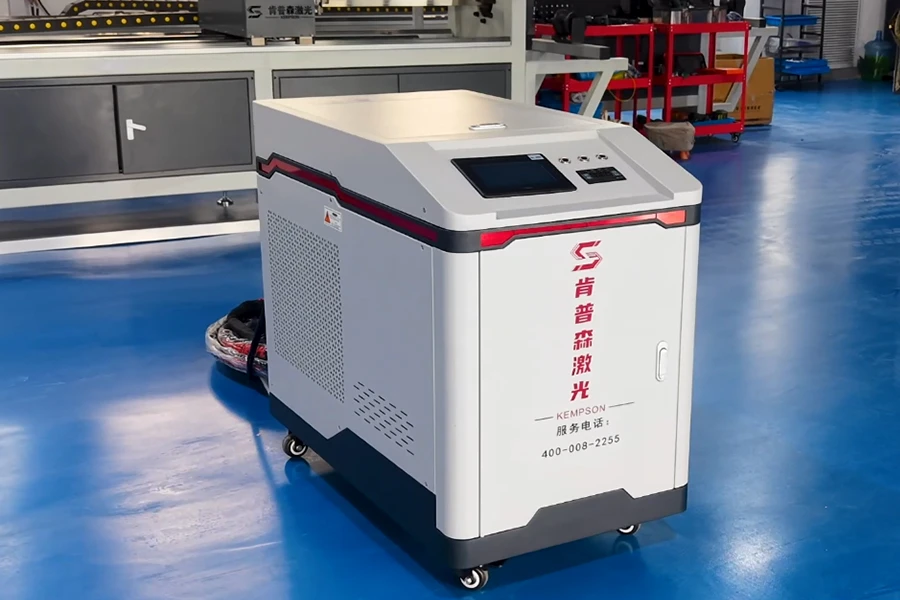
In practical applications, fiber laser cleaning machines use pulse control to precisely remove rust layers and coatings of varying thicknesses, thereby achieving a highly efficient, low-damage industrial cleaning process. Consequently, they are also referred to as laser rust removal machines or laser rust cleaners, and are suitable for removing rust from metal, pre- and post-welding cleaning, and cleaning precision components. KEMPSON offers a variety of models with power ratings of 2000W, 3000W, 4000W, and a Portable Laser Rust Removal Machine for you to choose from.
Advantages of Laser Cleaning
- High-precision cleaning: Targets and removes contamination layers without damaging the substrate, making it suitable for precision component processing
- Environmentally friendly and consumable-free: Requires no abrasive media or chemical agents, aligning with trends toward green manufacturing and eco-friendly production
- Easy to automate: Can be integrated into production lines to enable batch and intelligent cleaning
Limitations of Laser Cleaning
- High Initial Cost: Equipment investment is relatively higher than that of traditional sandblasting processes
- Strict Process Parameter Requirements: Laser parameters must be properly adjusted based on material type and contamination layer thickness; otherwise, cleaning effectiveness will be compromised
Depending on the application and power, laser cleaning can be performed using either pulsed or continuous-wave methods; however, there are significant differences between the two. For more details, see: Pulsed Laser Cleaning Machine vs. Continuous Laser Cleaning Machine: Differences and Selection Guide
What Is Sandblasting?
Sandblasting is a traditional industrial surface treatment process that removes rust, oxide layers, oil stains, or old coatings by propelling abrasive particles (such as quartz sand, steel grit, or aluminum oxide) at high speeds to impact the material’s surface. As a typical abrasive blasting technique, sandblasting equipment is simple and cost-effective, and is widely used in steel structure treatment, ship repair, and heavy industrial manufacturing.
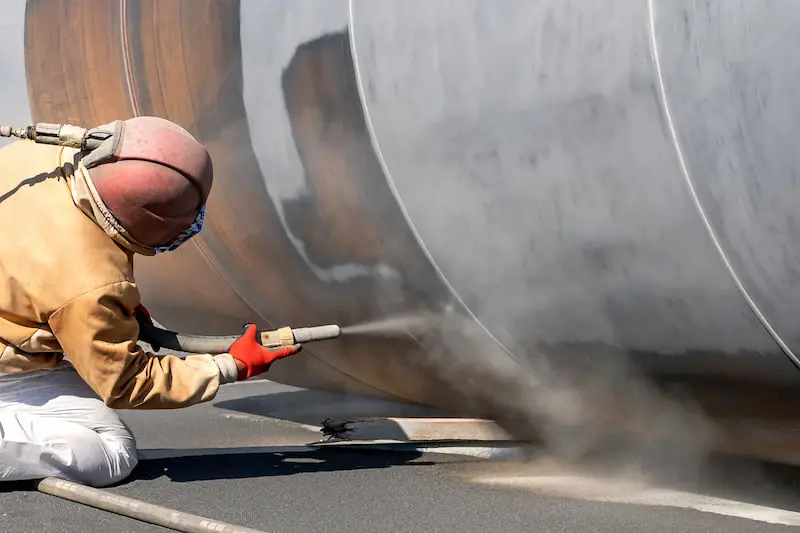
The working principle of sandblasting involves using compressed air or mechanical centrifugal force to accelerate the abrasive particles efficiently, continuously impacting the workpiece surface. Through physical impact, it strips away contaminants or modifies surface roughness to meet the requirements for subsequent coating or machining. However, as a contact-based cleaning method, this process inevitably causes some wear to the substrate surface.
In practical industrial applications, sandblasting equipment is typically used for large-area surface roughening or heavy-duty rust removal, such as steel plate pretreatment, ship hull maintenance, and the cleaning of large metal structures. It is a well-established solution in traditional industrial cleaning.
Advantages of Sandblasting
- Low equipment costs: Requires a relatively low initial investment, making it suitable for limited budgets or basic industrial cleaning needs
- High processing efficiency: Ideal for rapid, large-scale surface cleaning, especially for heavily rusted workpieces
- Mature and stable process: The technology has a long history of development, and operating procedures are highly standardized
Limitations of Sandblasting
- High risk of surface damage: As a contact-type abrasive blasting process, it may alter or damage the surface of the base material
- Significant Environmental Impact: Generates large amounts of dust during operation, requiring additional environmental protection and waste management systems
- Continuous Consumption of Materials: Requires constant replenishment of sand or abrasives, resulting in higher long-term operating costs
- Low Precision: Difficult to achieve fine-tuned control; not suitable for cleaning high-precision components
Laser Cleaning vs Sandblasting
Laser cleaning and sandblasting are both widely used. However, they differ in terms of how they work, their cleaning effectiveness, and their cost. Let’s take a closer look at the differences between them.
| Comparison Factor | Laser Cleaning | Sandblasting |
|---|---|---|
| Cleaning Principle | Laser energy removes contaminants selectively | Abrasive particles impact the surface for removal |
| Cleaning Method | Non-contact process | Contact-based abrasive impact |
| Substrate Impact | Does not alter base material structure | May cause surface wear or deformation |
| Consumables | No consumables required | Limited control in specific areas |
| Environmental Impact | No dust or waste residue | Generates dust and waste abrasives |
| Cleaning Precision | High precision for localized cleaning | Limited control on specific areas |
| Safety | Requires standard laser protection, relatively safe | Risk from inhaling abrasive particles |
| Automation Integration | Easy integration with automated systems | Requires additional setup for automation |
| Process Stability | Stable output based on parameter control | Depends on operator skill for consistency |
| Surface Effect | Maintains original surface condition | Alters surface roughness for adhesion |
| Maintenance | Mainly optical system maintenance | Continuous use of abrasives is required |
| Efficiency & Cost | Higher initial cost, lower long-term cost | Lower initial cost, ongoing consumable cost |
| Applications | Requires maintenance of the blasting system and abrasives | Precision manufacturing, pre-welding cleaning, and mold cleaning |
Laser Cleaning vs Sandblasting: Precision
Generally speaking, laser cleaning offers higher precision than sandblasting. Let’s take a brief look at the differences.
Laser cleaning removes rust, oxides, or coatings by directing a laser beam at the contaminated layer. Because the laser beam is fine and controllable, it can be used on smaller or thinner metal objects. Additionally, laser cleaning machines can be automated and rely on parameter control, requiring no additional operational skills or expertise.
Sandblasting uses sand as the blasting medium and relies on the physical impact of abrasive particles to clean the surface. It covers large areas but is difficult to control with precision. Furthermore, sandblasting typically requires manual operation and demands a high level of skill and expertise from the operator.
Laser Cleaning vs Sandblasting: Substrate Effect
The impact on the substrate is a key indicator in evaluating cleaning processes, as it directly affects the performance and service life of the workpiece.
Laser cleaning is a non-contact cleaning method that removes surface contaminants through controlled energy application, resulting in minimal thermal impact on the substrate. Its selective absorption allows contaminants to be stripped away while leaving the substrate largely intact, without altering its structure or properties. This makes it suitable for cleaning electronic components, precision parts, and high-value workpieces.
Sandblasting, on the other hand, relies on the physical impact of abrasive blasting. While removing contaminants, it directly affects the surface, potentially causing wear, changes in surface roughness, or even fine scratches or pits. It is more suitable for applications requiring surface strengthening or roughening.
Laser Cleaning vs Sandblasting: Safety
Safety is a critical factor when selecting a cleaning process, as it directly impacts the health of operators and the stability of the production environment.
Laser cleaning employs a non-contact method, resulting in minimal dust and abrasive splatter; however, strict adherence to safety protocols and the use of personal protective equipment (PPE)—including safety goggles and protective clothing—are still required to ensure a controlled and safe working environment. Additionally, the cleaning process is easily enclosed and automated, thereby reducing risks associated with manual operation.
Sandblasting generates large amounts of dust and high-speed particles, posing potential hazards to operators’ respiratory systems and skin. It requires additional protective equipment and dust collection systems, resulting in higher overall safety management requirements.
Laser Cleaning vs Sandblasting: Environmental Impact
Laser cleaning and sandblasting differ significantly in terms of environmental impact. Laser cleaning uses a focused laser beam as the cleaning medium, requiring no chemicals or abrasives; it vaporizes contaminants to clean the metal surface. This process generates very little dust, which can be collected and treated through a dust collection system, thereby reducing waste generation.
Sandblasting requires the use of sand particles or other abrasive consumables. When these particles are released into the air, they pollute the atmosphere. Furthermore, when the particles strike a coating, the coating is reduced to dust and flakes off, becoming additional waste that contributes to environmental pollution.
Laser Cleaning vs Sandblasting: Operational Efficiency
Laser cleaning and sandblasting differ in terms of operational efficiency; let’s take a closer look.
Sandblasting can quickly clean large surface areas and is suitable for industrial-scale projects. By adjusting various parameters—such as the type of abrasive, nozzle diameter, and spray pressure—the cleaning rate and efficiency of sandblasting can be optimized.
Laser surface cleaning technology can precisely target contaminants, making it suitable for small-scale, precision tasks. Additionally, laser cleaning systems can be automated using robotic arms or gantry systems, delivering consistent and reliable cleaning results with minimal human intervention. However, for large-area cleaning, the speed is lower than that of sandblasting because the laser beam must scan the entire surface.
Laser Cleaning vs Sandblasting: Cost
Laser cleaning and sandblasting differ significantly in their cost structures: Laser cleaning requires a high initial investment but has low long-term operating costs. Sandblasting equipment involves lower upfront costs, but consumables and labor costs continue to rise over time. The actual choice should be based on a comprehensive evaluation that takes into account usage frequency and production scale.
Laser cleaning equipment requires many components and has a higher initial purchase cost, but its long-term operating costs are low. It requires virtually no consumables and has low maintenance costs, needing only electricity and basic upkeep. It offers a high degree of automation and consistent efficiency, reducing labor requirements and downtime. In the long term, it offers a more favorable total cost of ownership (TCO).
Sandblasting equipment is relatively inexpensive. However, it requires continuous consumption of abrasives during operation and involves costs related to dust control, waste recovery, and manual labor. As usage time increases, the costs of consumables and equipment maintenance continue to accumulate, resulting in significant long-term cost pressures.
Industrial Applications
In real-world industrial settings, laser cleaning and sandblasting each have their own specific applications. Laser cleaning is suitable for high-precision, low-damage, and automated production environments, while sandblasting is better suited for large-area, rough-surface treatment and cost-sensitive operations. The following is a comparison of typical applications:
| Application | Laser Cleaning | Sandblasting |
|---|---|---|
| Mold Cleaning | Non-damaging, ideal for precision molds and tire molds | May cause surface wear on molds |
| Rust Removal | Removes rust precisely without damaging base material | High efficiency, suitable for heavy rust |
| Pre/Post Welding Treatment | Removes oxide layers, improves weld quality | Applicable, but increases surface roughness |
| Coating & Oil Removal | Highly controllable, suitable for localized cleaning | Suitable for large-area fast removal |
| Aerospace | High precision, no contamination, meets strict standards | Risk of dust contamination |
| Shipbuilding & Steel Structures | Higher cost, suitable for critical or localized areas | More economical for large surfaces |
| Cultural Relics & Precision Parts | Non-contact, no damage to surfaces | Removes rust precisely without damaging the base material |
Laser cleaning is better suited for industries with high-value-added, high-precision, and stringent environmental requirements; sandblasting offers advantages for large-area treatment, heavy-duty applications, and cost-sensitive applications. In practice, many companies employ a combined laser and sandblasting process to balance efficiency and quality.
How to Choose: Laser Cleaning VS Sandblasting?
Precision Requirements: Whether the substrate can tolerate damage. Laser cleaning is suitable for high-precision applications where the substrate must remain undamaged, while sandblasting is preferred for surface roughening.
Treatment Area: This primarily refers to the size of the cleaning area. Laser cleaning is recommended for small areas or localized weld cleaning, while sandblasting is suitable for large areas or batch processing.
Environmental Requirements: Strict dust and emission limits. Laser cleaning is suitable for high environmental standards and low-dust requirements, while sandblasting is suitable for general environmental requirements, outdoor, or open-air operations.
Cost Structure: Primarily depends on whether the investment is long-term or short-term. Laser cleaning is more cost-effective for long-term, high-frequency use, while sandblasting is more economical for short-term or low-budget applications.
Industry Applications: Based on industry standards and process requirements. Laser cleaning is suitable for precision manufacturing, electronics, and aerospace industries, while sandblasting equipment is suitable for steel structures, shipbuilding, and heavy industry.
Automation Needs: Labor arrangements and plans. Laser cleaning machines are suitable for operations requiring automation and reduced manual labor, while sandblasting cleaning is suitable for flexible manual operations.
Choose laser cleaning for precision and environmental requirements, and sandblasting for large areas or low-cost applications. A combination of both can also be used based on actual working conditions to add value.
FAQs
For laser cleaning machines, what is the typical payback period for small and medium-sized enterprises?
Although laser cleaning requires a higher initial investment, it eliminates the need for abrasive consumables, hazardous waste disposal, and high labor costs. For production lines with moderate usage frequency, the return on investment (ROI) is typically between 12 and 24 months. When factoring in the added value from extended mold life and reduced defect rates, the payback period is even shorter.
Does laser cleaning cause burrs or alter metal hardness?
No. Sandblasting alters surface topography through physical impact (increasing dislocation density), whereas laser cleaning involves selective ablation. Under the correct parameters, lasers can achieve damage-free cleaning. Furthermore, lasers can also achieve a micron-level “roughening” effect through specific parameters to enhance coating adhesion.
How does the rust resistance of surfaces treated with laser cleaning compare to that of surfaces treated with sandblasting?
It performs well. The increased roughness of sandblasted metal surfaces makes them more prone to absorbing moisture, leading to oxidation and rust. In contrast, laser cleaning removes the oxide layer while forming a thin, dense protective oxide film on the metal surface. Within a short period, this film typically provides better corrosion resistance than the exposed surface after sandblasting.
Which method should be chosen if the workpiece has a very complex shape, with deep holes or narrow slots?
Sandblasting abrasives can penetrate crevices, but particles tend to remain trapped in blind holes, making cleanup difficult. Lasers can clean any area within the beam’s range of visibility (line of sight). For deep holes, the effective depth of the laser is limited by the focal range.
For precision blind holes that are not through-holes, laser cleaning provides a cleaner result. However, for deep grooves in large castings, sandblasting offers greater advantages.
Can laser cleaning remove flexible contaminants that are difficult to treat with sandblasting?
Sandblasting thick oil residues can cause abrasive agglomeration, resulting in low efficiency. Laser cleaning utilizes high-frequency shock waves and thermal pressure to efficiently peel away elastic coatings, thick oil residues, and sealants. For such contaminants, the efficiency of laser cleaning is often several times higher than that of traditional sandblasting.
Are there any special environmental safety requirements for deploying laser cleaning equipment?
Laser cleaning does not require heavy-duty dust collection systems like those used in sandblasting rooms, but it does require:
- Optical path protection: A dedicated laser safety enclosure must be set up, or protective eyewear rated for the corresponding wavelength must be worn.
- Mobile ventilation: A small smoke purifier must be provided to capture vaporized contaminants and maintain air quality.
Conclusion:
When comparing laser cleaning vs sandblasting, both processes have their own advantages: Laser cleaning is known for its high precision, minimal damage, and environmental friendliness, making it ideal for precision manufacturing and automated production. Sandblasting, on the other hand, offers high efficiency and low initial costs and is widely used in large-scale and heavy industrial applications.
If you have any questions or are having trouble choosing the right cleaning method, please feel free to contact us. Our professional team is always happy to assist you.