Table of Contents
Introduction
A water manifold is welded by joining pipes and fittings into a sealed assembly with accurate positioning and reliable weld quality. The welding method depends on the material, wall thickness, production volume, and surface requirements. TIG welding, MIG welding, and laser welding are commonly used for stainless steel water manifold fabrication.
Here, I will explain how to weld a water manifold by covering the key welding requirements, common welding methods, and the complete water manifold welding process. The article also introduces fixture positioning, pipe and fitting welding, leak testing, and surface finishing to help manufacturers select a suitable welding solution.
What Are the Welding Requirements for a Water Manifold?
Water manifold welding focuses on four areas: joint sealing, material selection, dimensional accuracy, and weld surface quality. These factors affect leakage control, assembly accuracy, and long-term operation performance.
- 1. Leak-Tight Welded Joints — Water manifolds operate under fluid pressure, so welds require stable penetration and fusion. Poor penetration or incomplete fusion can cause leakage. Stainless steel welding usually requires shielding gas protection to reduce oxidation and maintain weld quality.
- 2. Material Selection for Water Manifold Welding — Stainless steel is commonly used for water manifolds due to its corrosion resistance and weldability. SS304 is suitable for general applications, while SS316 is used for higher corrosion resistance requirements.
- 3. Dimensional Accuracy During Welding — Multiple branch pipes require accurate positioning during assembly. Welding fixtures are used to control pipe alignment and reduce deformation. Precision manifolds usually require branch pipe positioning tolerance within ±0.5 mm.
- 4. Weld Surface Quality — Welds should be free from cracks, porosity, and excessive spatter. Water systems with sanitary requirements may require internal weld polishing to improve surface cleanliness.
A proper water manifold welding process depends on suitable materials, accurate assembly, and controlled welding parameters. Common methods include TIG welding, MIG welding, and laser welding.
Common Welding Methods for Water Manifolds
The main welding methods used for water manifolds include TIG welding, MIG welding, and laser welding. The suitable method depends on material, pipe thickness, production volume, and weld requirements.
| Welding Method | Advantages | Limitations | Suitable Applications |
|---|---|---|---|
| TIG Welding | Clean weld, low spatter, good control for stainless steel | Slow speed, high operator skill requirements | Prototype production, small diameter pipes, high appearance requirements |
| MIG Welding | Higher productivity, easier operation, suitable for thicker materials | More spatter, more post-weld cleaning, lower precision for small pipes | Medium thickness components, large production parts |
| Laser Welding | High speed, small heat-affected zone, low deformation, consistent weld quality | Higher equipment investment | Stainless steel manifolds, thin-wall pipes, automated production |
TIG Welding for Water Manifold
TIG welding for water manifold fabrication uses a tungsten electrode with separate filler wire feeding. The process produces clean welds with good control on stainless steel materials. Weld width can be controlled within 1–2 mm, making it suitable for thin-wall pipes and precision joints.
Applications include prototype production, small diameter branch pipes, and manifolds requiring high weld appearance.
MIG Welding for Water Manifold
MIG welding manifold production uses a continuously fed wire electrode with shielding gas protection. It provides higher deposition rates than TIG welding and handles thicker materials with fewer passes.
It is commonly used for medium-thickness manifolds and larger production parts. The process produces more spatter and requires additional cleaning after welding.
Laser Welding for Water Manifold
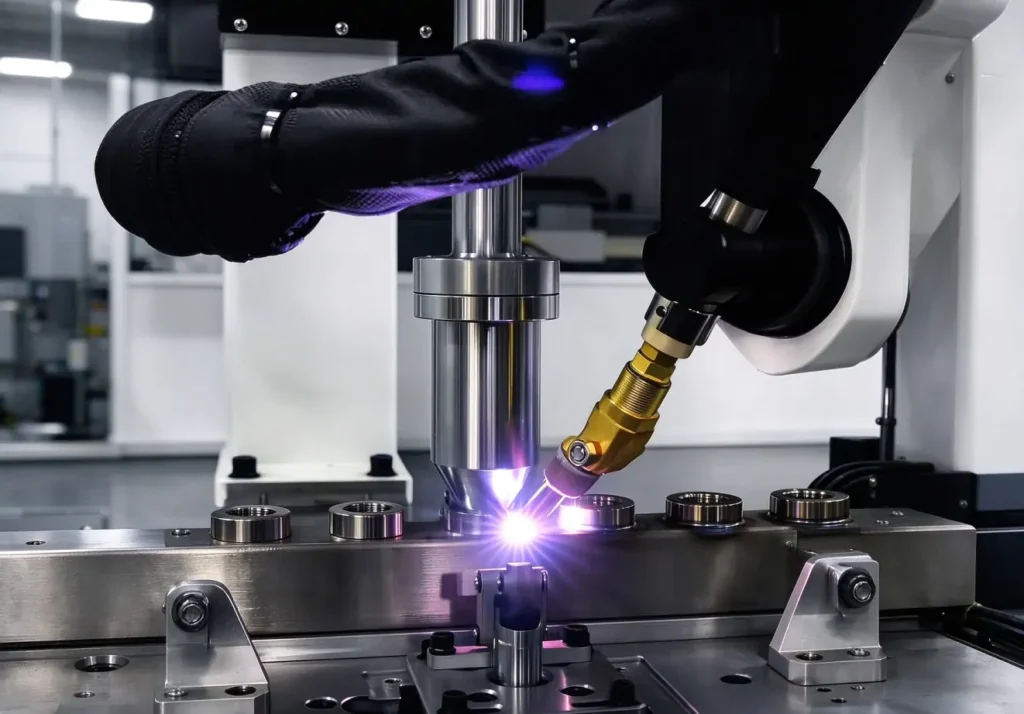
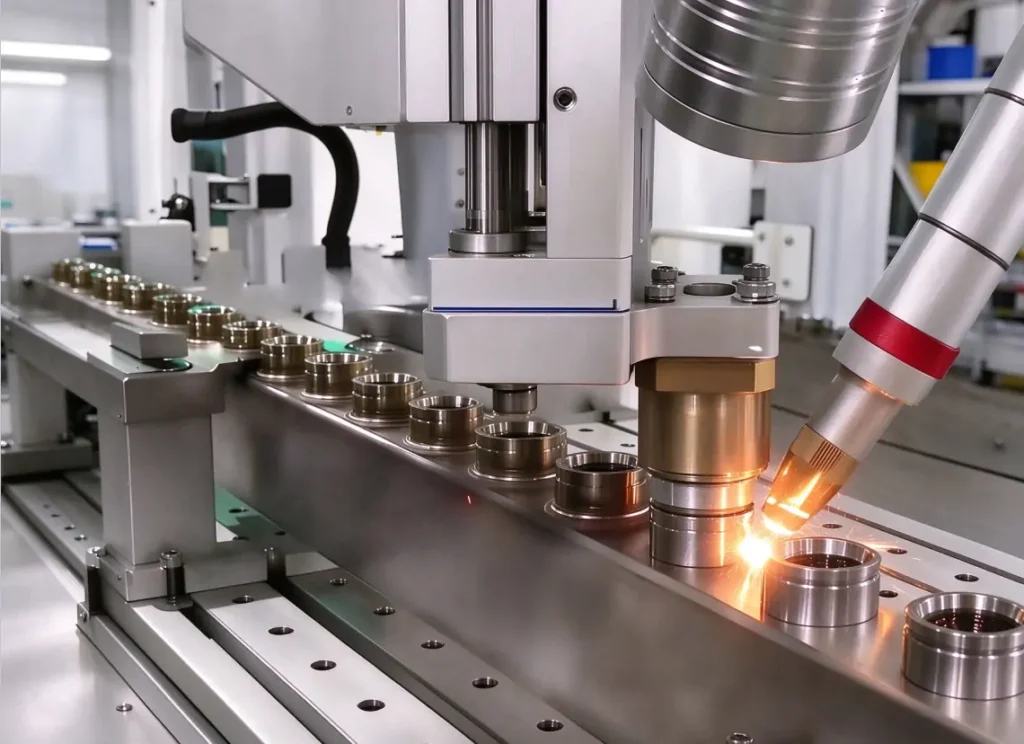
Laser welding for water manifold production uses a focused laser beam with concentrated heat input. The laser spot size is typically 0.1–0.3 mm, producing a narrow heat-affected zone and low thermal deformation.
The process provides stable weld quality, high repeatability, and good compatibility with automated production. It is suitable for stainless steel water manifolds, thin-wall pipe assemblies, and high-volume manufacturing.
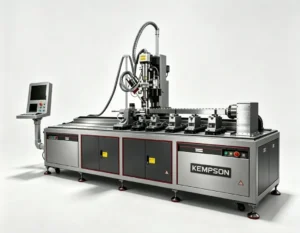
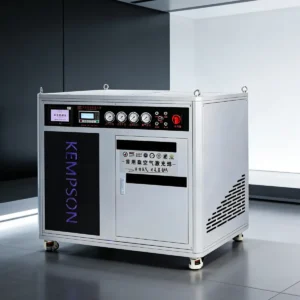
For manufacturers producing water manifolds in batches, a dedicated water manifold laser welding machine can improve welding consistency and production efficiency.
Frequently asked questions and solutions for welding stainless steel water manifolds—see: Stainless Steel Water Manifold Welding: Methods, Challenges, and Solutions
Water Manifold Welding Process: Step-by-Step Guide
The water manifold welding process includes five main steps: component preparation, fixture positioning, pipe and fitting welding, leak testing, and surface finishing. Each step affects weld quality, dimensional accuracy, and final product performance.
Step 1: Component Preparation
Before welding, pipes and fittings are prepared according to the production drawing.
The preparation process includes:
- Cutting pipes and fittings to required dimensions
- Removing oil, oxidation, and surface contamination
- Checking pipe spacing, angles, and overall dimensions
- Preparing welding edges according to material thickness
For stainless steel water manifolds, the joint area should be clean before welding to avoid defects such as porosity and poor fusion.
Step 2: Fixture Positioning
Pipes and fittings are positioned according to the assembly drawing and fixed before welding.
The process includes:
- Aligning branch pipes with the header
- Using welding fixtures to prevent movement
- Checking pipe spacing and connection angles
Fixture accuracy affects the final manifold quality. Precision water manifolds commonly require branch pipe positioning tolerance within ±0.5 mm.
Step 3: Pipe and Fitting Welding
After positioning, tack welding is applied to hold the assembly before final welding.
The welding process includes:
- Tack welding for component fixing
- Main welding around pipe joints
- Adjusting welding parameters according to material and thickness
Welding parameters include:
- Welding current or laser power
- Welding speed
- Shielding gas flow
For stainless steel manifolds, shielding gas protection is required to reduce oxidation and maintain weld quality. Laser welding systems provide stable heat input and consistent weld results for repeated production.
Step 4: Leak Testing
After welding and cooling, water manifold leak testing is performed to check sealing performance.
Common testing methods include:
- Air pressure test: used for basic leakage inspection
- Water pressure test: hydraulic testing under specified pressure conditions
- Helium leak test: used for high-requirement cooling systems
The inspection focuses on:
- Weld cracks
- Porosity
- Leakage points
- Incomplete fusion
Leak testing confirms that the welded manifold can operate under the required pressure conditions.
Step 5: Surface Finishing
The final step removes welding marks and improves surface condition.
The finishing process includes:
- Removing weld discoloration
- Grinding and polishing weld areas
- Cleaning internal and external surfaces
For sanitary water and cooling applications, internal surfaces may require polishing to reduce contamination risks. Surface finishing also restores corrosion resistance around the weld area.
A complete water manifold welding process requires accurate preparation, controlled welding parameters, and proper inspection.
TIG Welding vs MIG Welding vs Laser Welding for Water Manifold
TIG welding, MIG welding, and laser welding are common methods for water manifold fabrication. The selection depends on material thickness, weld quality, production volume, and deformation control requirements.
Water Manifold Welding Method Comparison
| Comparison | TIG Welding | MIG Welding | Laser Welding |
|---|---|---|---|
| Heat Input and HAZ | Higher heat input, larger HAZ | Higher heat input, higher deformation risk | Low heat input, small HAZ |
| Welding Speed | 0.5–2 m/h | Wire feed speed up to 8 m/min | High speed for continuous production |
| Weld Precision | Clean weld, low spatter | Moderate precision, more spatter | Narrow weld seam, high consistency |
| Gap Requirement | Medium | Medium | Strict, usually within 10% of material thickness |
| Suitable Thickness | 0.3–3 mm thin-wall welding | Medium thickness components | Thin-wall pipes and precision assemblies |
| Automation | Operator dependent | Easy to standardize | CNC and robotic integration |
| Water Manifold Applications | Prototypes, small pipes, appearance-focused parts | Medium thickness and larger components | Stainless steel manifolds, multi-branch assemblies, mass production |
TIG welding fits prototypes and appearance-focused parts. MIG welding fits medium-thickness components requiring higher productivity. Laser welding fits thin-wall stainless steel manifolds with strict deformation and consistency requirements.
For the specific differences between laser welding and TIG welding, and to learn when to choose the appropriate welding method, see: Laser Welding vs. TIG Welding for Water Manifold Manufacturing
Which Welding Method Is Suitable for a Stainless Steel Water Manifold?
The suitable welding method for a stainless steel water manifold depends on material thickness, production volume, weld appearance requirements, and automation needs.
- TIG Welding —- TIG welding is suitable for small-quantity production, prototype manufacturing, and water manifolds where weld appearance and precision are important. It provides good control on stainless steel thin-wall pipes but requires skilled operators and more manual work.
- MIG Welding —- MIG welding is commonly used for general fabrication and medium-thickness water manifolds. It provides higher productivity and easier operation for larger components, with additional cleaning required after welding.
- Laser Welding —- Laser welding is suitable for precision water manifolds, thin-wall pipe assemblies, and mass production. It provides low heat input, small deformation, and stable weld quality for applications requiring consistent results.
The selection should be based on pipe thickness, production requirements, weld appearance, and automation level rather than a single welding performance factor.
These welding methods each have their own merits, not only in water manifolds but also in other welding applications. For more information, see: Laser Welding vs. Traditional Welding: Differences, Advantages, Costs, and Applications
Can Laser Welding Be Used for Water Manifold Production?
Yes, laser welding can be used for stainless steel water manifold production. It is suitable for manufacturers requiring consistent weld quality, lower thermal deformation, faster production speed, and cleaner weld appearance.
Laser welding uses concentrated heat input to reduce the heat-affected zone and control distortion during multi-branch pipe welding. The process is commonly applied to thin-wall stainless steel manifolds, cooling components, and precision pipe assemblies.
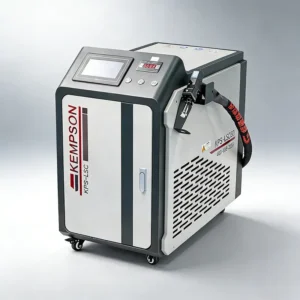
Water manifold laser welding machines are designed for manufacturers requiring repeatable welding quality on stainless steel pipe assemblies, with solutions available for different production volumes and welding requirements.
Water Manifold Laser Welding Machine for Industrial Production
A water manifold laser welding machine is designed for welding stainless steel pipe assemblies with strict requirements on weld quality, deformation control, and production consistency. The machine can be configured for stainless steel, carbon steel, and aluminum welding based on material type and process requirements.
Applications include:
- Water manifolds
- Cooling pipes
- Heat exchanger components
- Fluid control assemblies
The system is suitable for multi-branch pipe welding, thin-wall components, and batch production where stable weld performance is required.
Conclusion
Water manifold welding requires proper material selection, accurate positioning, suitable welding methods, and reliable inspection. TIG, MIG, and laser welding each fit different production requirements. For stainless steel water manifolds with thin-wall pipes, multiple branch connections, and batch production needs, laser welding provides stable weld quality and controlled heat input.
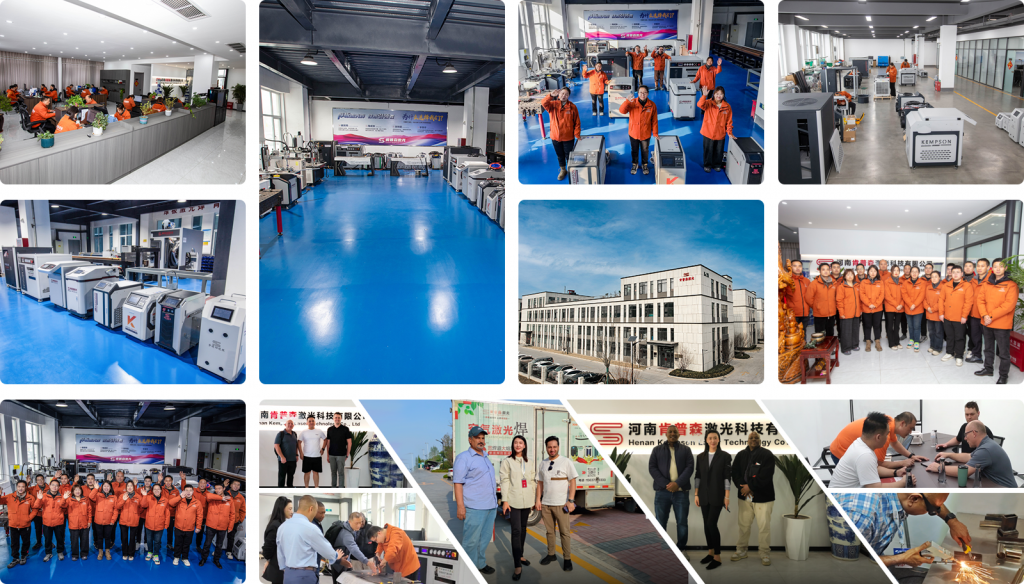
KEMPSON provides water manifold laser welding machines with customized configurations based on material type, pipe structure, welding thickness, and production requirements. With professional R&D capability, engineering experience, product certifications, and export service support, KEMPSON supplies complete laser welding solutions for manufacturers in different industries.
Contact us to discuss your water manifold welding requirements and find a suitable laser welding solution for your production.
FAQ
What welding method is used for water manifolds?
Common welding methods for water manifolds include TIG welding, MIG welding, and laser welding. TIG suits precision and small-batch production, MIG is used for general fabrication, and laser welding fits thin-wall stainless steel manifolds and higher-volume production.
Can stainless steel water manifolds be TIG welded?
Yes. TIG welding is widely used for stainless steel water manifolds, especially for thin-wall pipes and small-diameter branch connections. It provides clean welds with good control but requires skilled operators and has lower production speed.
Is laser welding suitable for stainless steel manifolds?
Yes. Laser welding is suitable for stainless steel manifolds requiring low heat input, limited deformation, and consistent weld quality. It is commonly used for thin-wall pipe assemblies, multi-branch structures, and production applications requiring stable welding results.
What is the water manifold welding process?
The water manifold welding process includes component preparation, fixture positioning, pipe and fitting welding, leak testing, and surface finishing. Each step controls joint quality, dimensional accuracy, and final sealing performance.
How do you test a welded water manifold for leaks?
Welded water manifolds are commonly tested with air pressure tests, water pressure tests, or helium leak tests. The inspection checks for weld cracks, porosity, incomplete fusion, and leakage points before the manifold enters service.
What causes water manifold weld leakage?
Water manifold weld leakage is usually caused by incomplete penetration, poor fusion, welding cracks, porosity, contamination, or excessive welding deformation. Proper joint preparation, parameter control, and inspection help reduce leakage risks.
What thickness can laser welding handle for water manifolds?
Laser welding can be used for thin-wall water manifolds and precision pipe assemblies. The suitable thickness depends on material type, laser power, joint design, and welding parameters. Stainless steel manifold applications commonly involve thin-wall pipes around 0.6–1.5 mm.
Can water manifold welding be automated?
Yes. Water manifold welding can be automated with CNC systems, robotic welding equipment, or dedicated laser welding machines. Automation improves welding consistency for multi-branch assemblies and repeat production.