Table of Contents
Introduction
Water manifolds are widely used in HVAC, underfloor heating, and plumbing systems, where welding quality directly affects sealing performance and service life. During operation, the welded joints need to withstand continuous water pressure, making leak prevention and weld consistency important requirements for manufacturers.
Traditional TIG welding is still widely used for manifold production, but it relies heavily on skilled operators. Differences in welding experience can lead to unstable quality, while heat input, deformation, polishing work, and production efficiency remain common challenges in batch manufacturing. Laser welding provides a cleaner and more stable solution for water manifold manufacturing with lower heat input, smoother weld seams, and better production consistency.
This article explains how laser welding is used for water manifold manufacturing, the advantages of 2000W–3000W fiber laser welding machines, the differences between laser welding and TIG welding, and how manufacturers can select the right welding solution for different manifold designs and production requirements.
What Is a Water Manifold Laser Welding Machine?
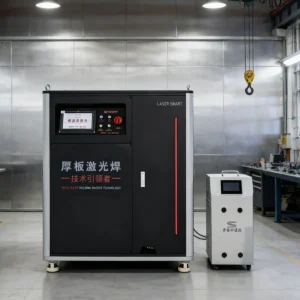
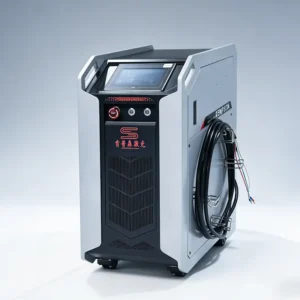
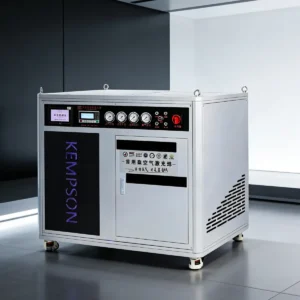
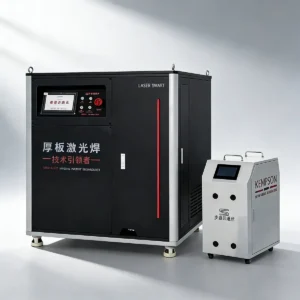
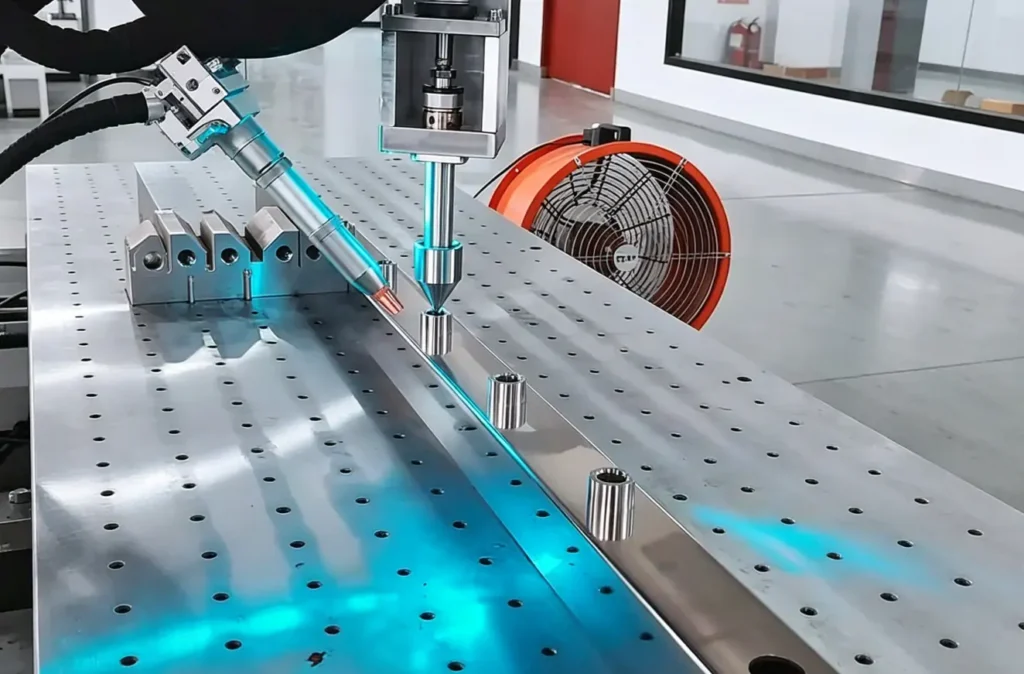
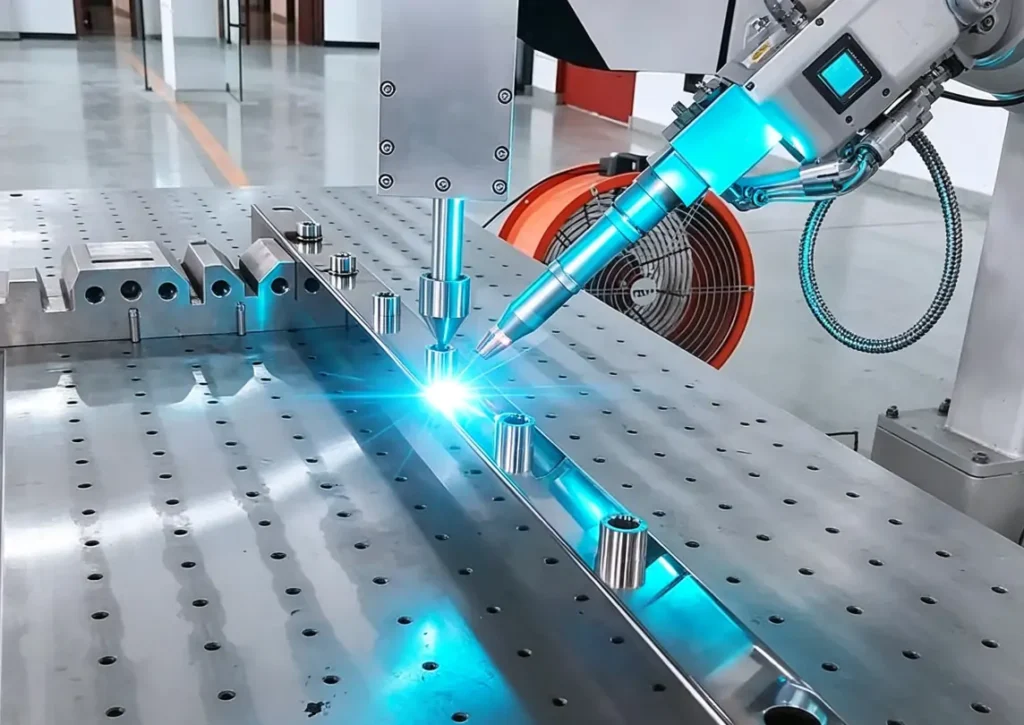
A water manifold laser welding machine is a specialized welding system designed for joining water manifold components with a focused laser beam. The high-energy laser creates a stable molten pool to weld the main pipe, branch pipes, valve bodies, and other connection parts with precise control of weld penetration and heat input.
This equipment is widely used for stainless steel manifolds, brass manifolds, heating manifolds, and HVAC manifolds. Compared with traditional welding processes, laser welding provides a smaller heat-affected zone, lower deformation, and smoother weld seams. It improves sealing performance and reduces post-welding finishing work.
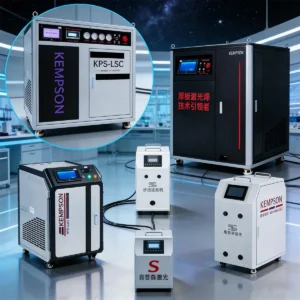
For water manifold production, 2000W–3000W fiber laser welding machines are commonly selected according to material thickness, welding speed, and production requirements. Customized fixtures and automated welding systems support different manifold structures and batch manufacturing needs.
Why Use Laser Welding for Water Manifolds?
For water manifold manufacturing, weld consistency directly affects sealing and product reliability. Laser welding provides precise energy control and repeatable welding results for stainless steel pipes, joints, and complex manifold assemblies.
Better Weld Quality
Laser welding uses a concentrated heat source with a small heat-affected zone. The welding process controls heat input, limits deformation, and produces smooth, uniform weld seams. For stainless steel manifold welding, laser welding delivers stable penetration, clean appearance, and reliable sealing performance with less post-welding polishing.
Faster Production
Custom fixtures position manifold pipes, valves, and fittings before welding. Multi-station workstations allow continuous operation for batch production.
Compared with manual TIG welding, automated laser welding reduces operator differences and keeps weld quality consistent between production runs.
Easier Operation
The system stores welding parameters for different manifold models. Operators can call the required program for production without repeated parameter adjustment.
Standardized welding settings reduce dependence on skilled welders and simplify machine operation.
Quick Model Change
The modular fixture design fits different manifold structures, including 2-way, 3-way, 4-way, 6-way, and 8-way manifolds.
Fixture replacement takes less time during model changes. One welding system can handle multiple manifold specifications for different production orders.
2000W vs 3000W Laser Welding Machine for Water Manifold
The suitable laser power depends on material thickness, welding speed requirements, and production volume. For water manifold welding, 2000W and 3000W fiber laser welding machines are commonly used for different production conditions.
2000W Laser Welding Machine for Water Manifold
The 2000W fiber laser welding machine is suitable for standard water manifold welding, including stainless steel and brass components. The laser system provides stable output, controlled heat input, and consistent weld seams for regular-size manifolds in medium-volume production.
Suitable for:
- Standard stainless steel manifold welding
- Brass manifold welding
- Small and medium production batches
- Regular wall thickness components
3000W Laser Welding Machine for Water Manifold
A 3000W fiber laser welding machine is developed for water manifold manufacturers requiring higher welding speed and larger production capacity. The higher laser power provides stronger processing capability for thicker materials, larger manifold components, and continuous batch production.
Suitable for:
- High-volume manifold production
- Larger stainless steel manifolds
- Thicker welding parts
- Automated production lines
The 2000W model is used for standard water manifold welding, while the 3000W model handles larger components and higher production demands. KEMPSON can customize laser power according to different manifold sizes, materials, and welding requirements.
How Does Water Manifold Laser Welding Machine Work?
A 3000W water manifold laser welding machine uses a focused laser beam to melt and join manifold components. The laser energy forms a controlled molten pool at the welding area, creating connections between the main pipe, branch pipes, valve bodies, and other fittings.
The welding process includes five main steps:
- 1. Fixture Positioning — Water manifold components are placed in a customized fixture before welding. The fixture keeps the pipes and fittings aligned during the welding process.
- 2. Laser Focusing — The welding head focuses the laser beam on the joint area. The concentrated energy melts the metal surface and forms a stable weld pool.
- 3. Continuous Laser Welding — The laser welding head moves along the preset welding path. The laser output maintains stable energy during continuous welding, producing consistent weld seams on stainless steel and brass manifolds.
- 4. Weld Inspection — The finished weld seam is checked for appearance, penetration, and surface quality. Visual inspection or welding monitoring systems can be used for production control.
- 5. Pressure Testing — The welded manifold is tested under water pressure to check sealing performance and detect possible leakage points.
A 3000W laser welding machine combines precise positioning, stable laser output, and controlled welding parameters for water manifold production. The process is suitable for manufacturers requiring consistent weld quality and batch production.
To learn about the detailed process and welding methods for water manifold welding, read the article: How to Weld a Water Manifold: Welding Methods and Process Guide
Applications of Water Manifold Laser Welding Machine
A water manifold laser welding machine is used for stainless steel and brass manifold production in heating, HVAC, and plumbing systems. It is suitable for different manifold structures and batch welding applications.
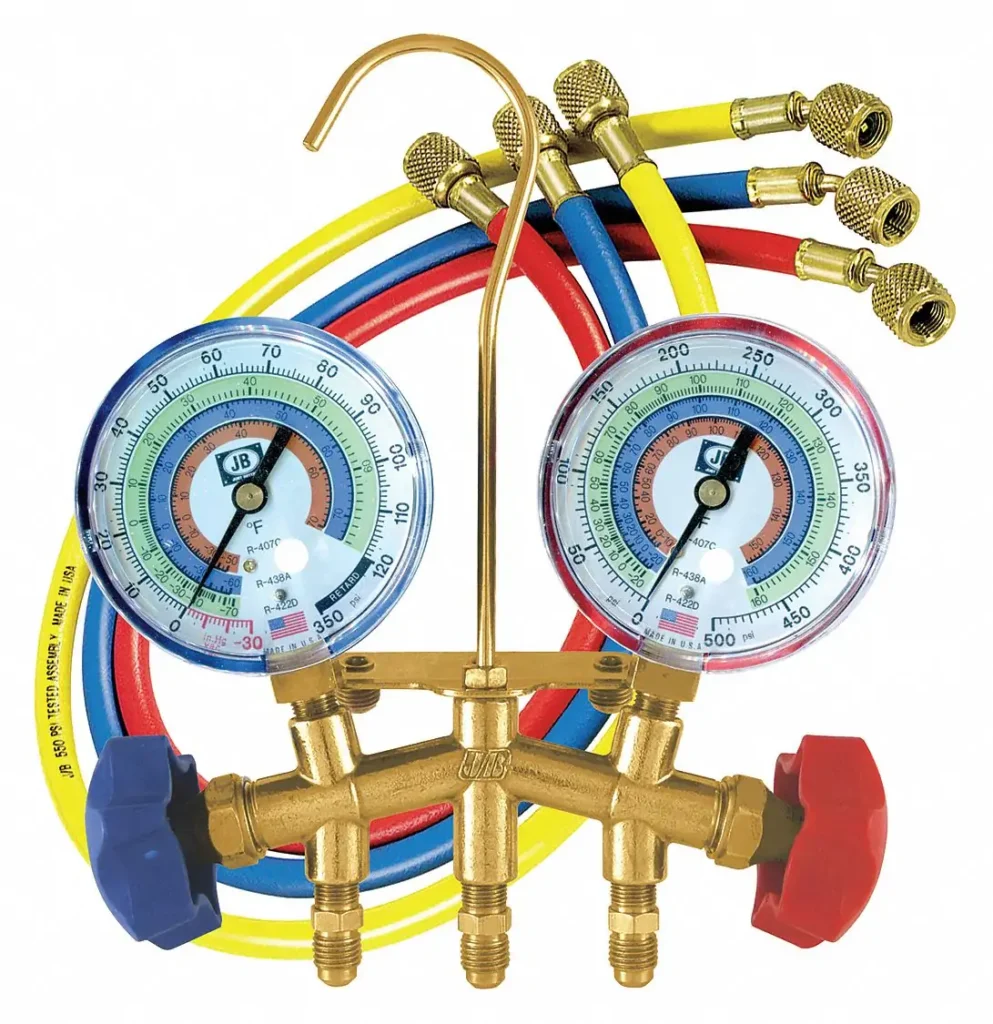
HVAC Manifold Welding
Laser welding is used for HVAC manifolds that require stable joints and reliable sealing performance. It is suitable for stainless steel and brass HVAC components.
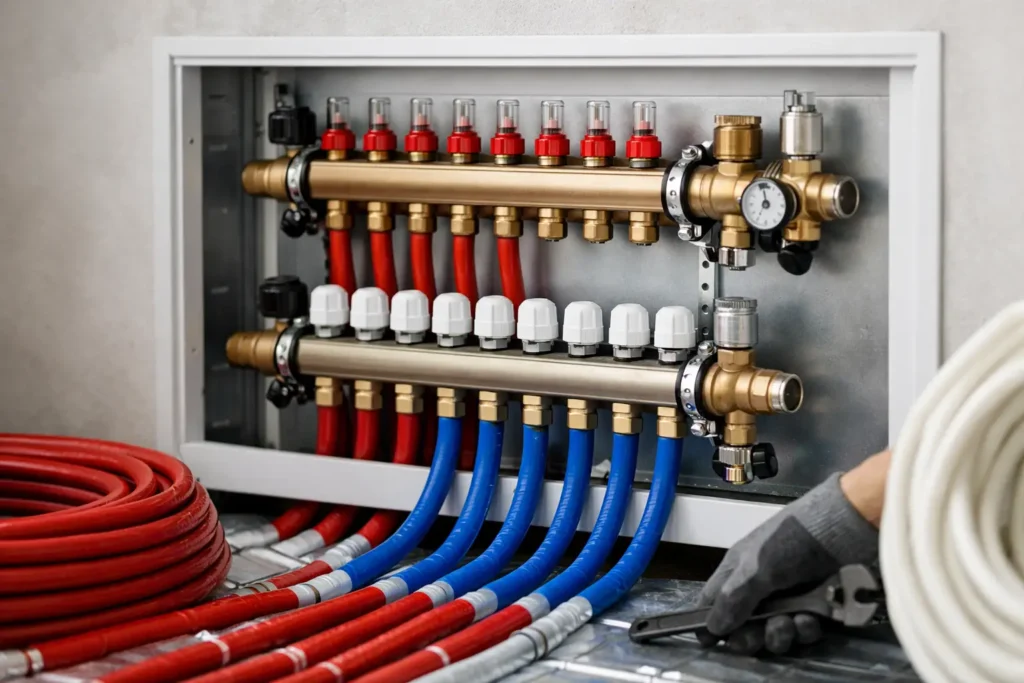
Underfloor Heating Manifold Welding
Underfloor heating manifolds contain multiple connection points and require consistent welding quality. Laser welding supports the production of 2-way, 3-way, 4-way, 6-way, and 8-way manifolds.
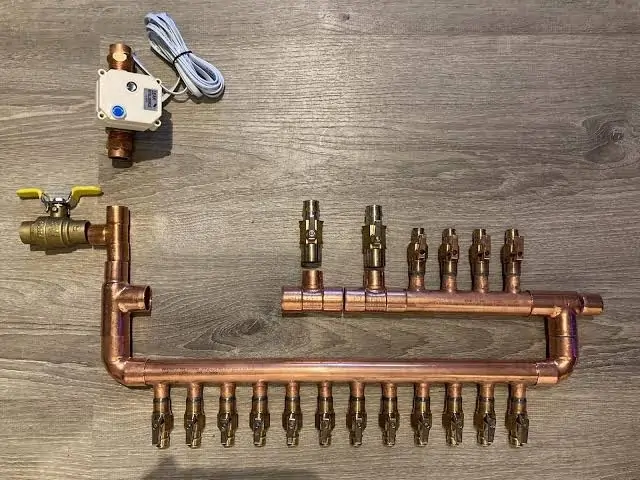
Plumbing Manifold Welding
Laser welding provides clean weld seams for plumbing manifolds used in water distribution systems. It fits applications that require good appearance and stable welding quality.
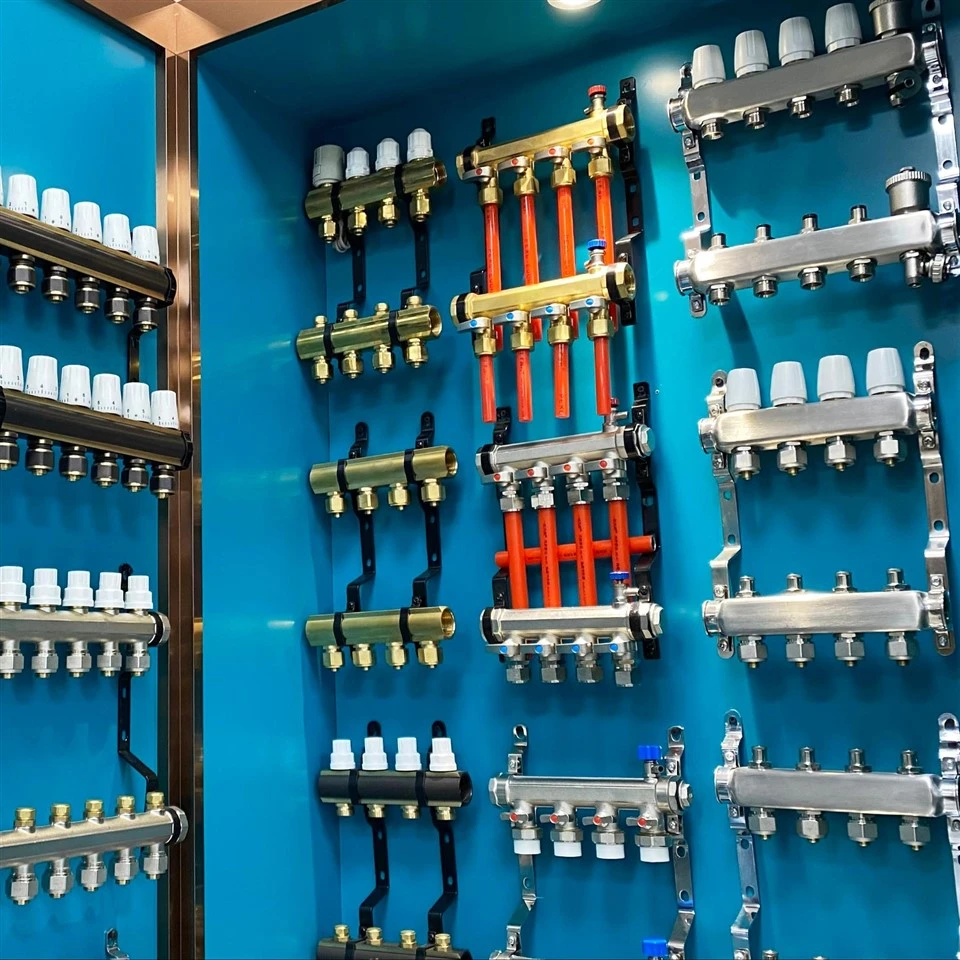
Stainless Steel and Brass Manifold Manufacturing
The machine is suitable for stainless steel and brass manifold manufacturing. Customized fixtures can match different sizes and structures for various production models.
Frequently asked questions and solutions for welding stainless steel water manifolds—see: Stainless Steel Water Manifold Welding: Methods, Challenges, and Solutions
Features of a 3000W Water Manifold Laser Welding Machine
3000W Fiber Laser Source
Multi-Axis Motion System
Rotary Welding Head
Customized Fixtures
Automatic Welding Control
Industrial Cooling and Control System
Laser Welding vs TIG Welding for Water Manifolds
Water manifold manufacturers commonly use TIG welding for stainless steel and brass components. With higher requirements for weld appearance, production speed, and batch consistency, laser welding has become an alternative process for manifold production.
| Item | Laser Welding | TIG Welding |
|---|---|---|
| Heat input | Low heat input, small heat-affected zone | Higher heat input, larger heat-affected zone |
| Weld deformation | Low deformation after welding | More deformation risk on thin components |
| Weld appearance | Smooth and uniform weld seams | More post-welding finishing may be required |
| Welding speed | Faster welding process | Lower welding speed |
| Operator skill | Standardized operation with stored parameters | Depends heavily on welder experience |
| Production mode | Suitable for automated batch production | More suitable for manual production |
| Weld consistency | Stable quality between production batches | Quality varies with operator skill |
Laser welding is suitable for water manifold production where weld appearance, sealing performance, and production consistency are important. TIG welding remains a common method for manual welding, while laser welding is more suitable for manufacturers looking for automated production and stable welding quality.
For more information on the differences and pros and cons of laser welding versus TIG welding, see the article: “Laser Welding vs. Traditional Welding: Differences, Advantages, Costs, and Applications”
How to Choose a Water Manifold Laser Welding Machine?
Selecting a water manifold laser welding machine depends on the material, product structure, welding requirements, and production volume. The right configuration should match the actual manifold type and factory production conditions.
- 1. Material: Identify the manifold material before selecting the laser power and welding configuration. Stainless steel and brass are common materials used in water manifold production, and different materials require suitable welding parameters.
- 2. Thickness: Material thickness affects laser power selection, welding speed, and penetration depth. Thin-wall manifolds may require lower power, while thicker components need higher laser output.
- 3. Manifold Size: The manifold length, diameter, number of outlets, and welding positions affect machine structure and fixture design. Larger manifolds require a larger working area and suitable movement range.
- 4. Production Capacity: Production volume determines the level of automation required. Batch production usually requires automatic loading, fixed fixtures, and stored welding programs for repeated processing.
- 5. Automation Requirement: Manufacturers can choose different automation levels based on production needs. Options include manual loading, automatic positioning, multi-station welding, and integrated production systems.
- 6. Fixture Design: Fixture design directly affects welding accuracy and production efficiency. Customized fixtures hold pipes, valves, and fittings in fixed positions for different manifold models.
The right water manifold laser welding machine depends on material type, component size, welding thickness, production volume, and automation needs. Laser power, fixture design, and control system are selected based on the manifold structure and production process.
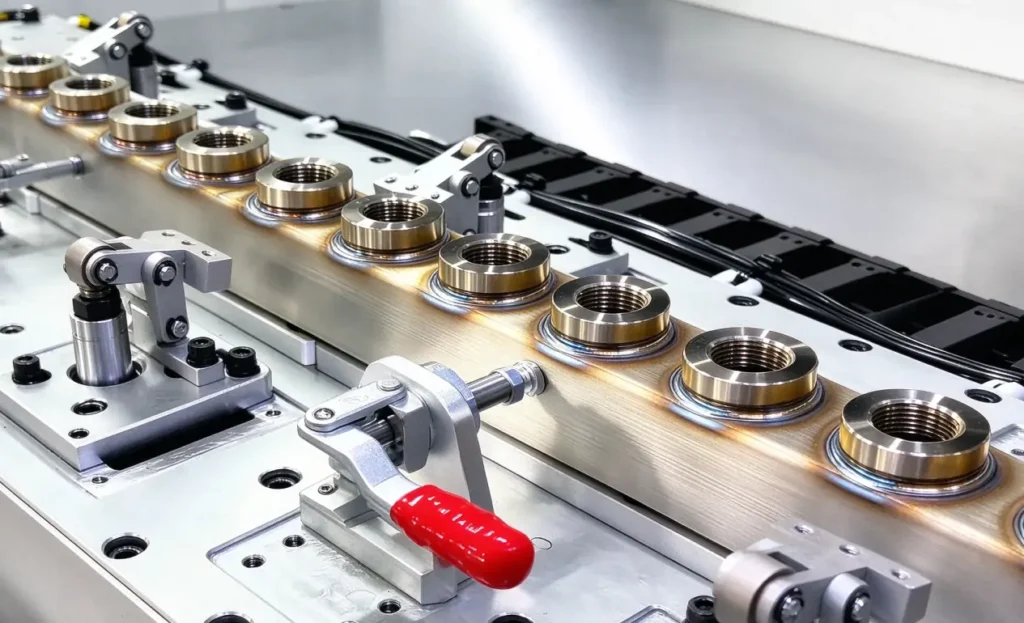
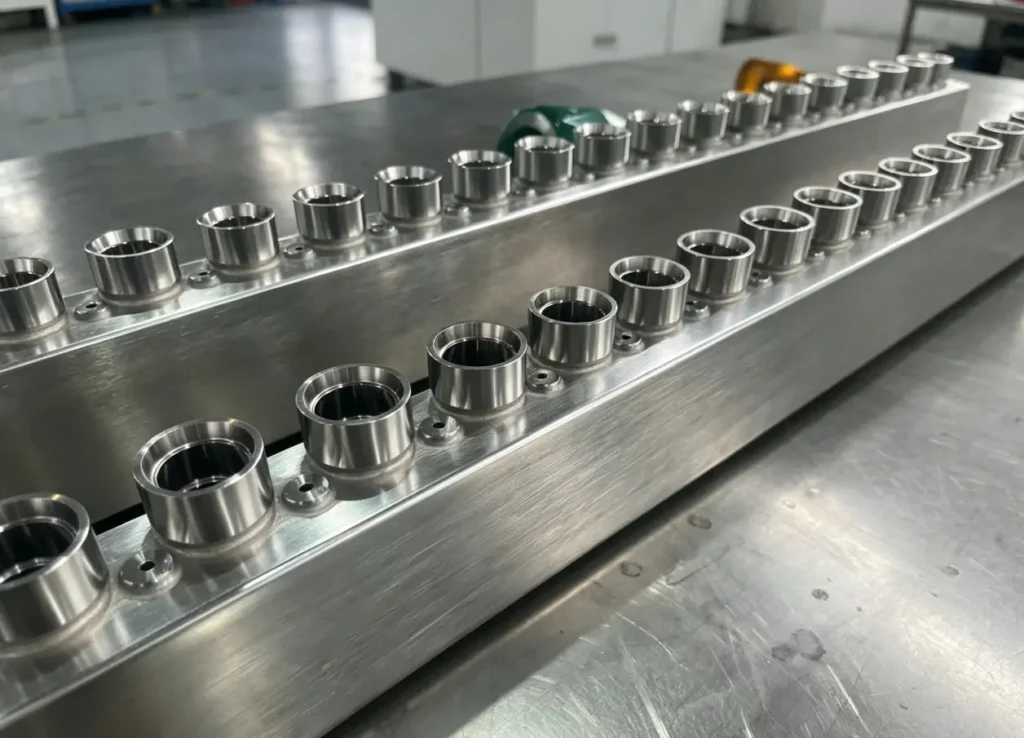
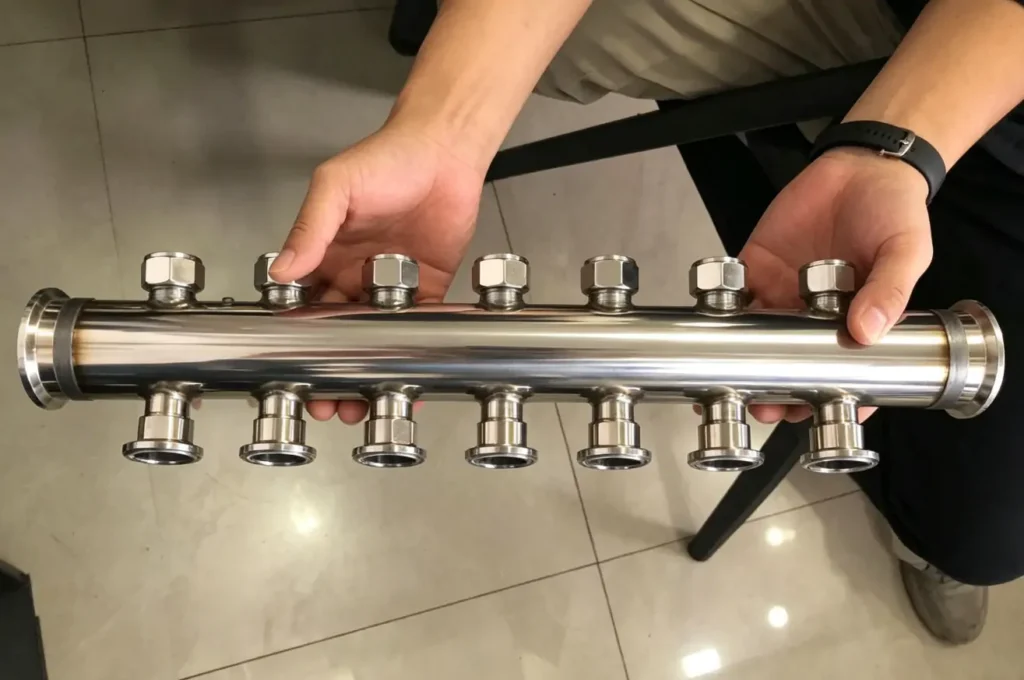
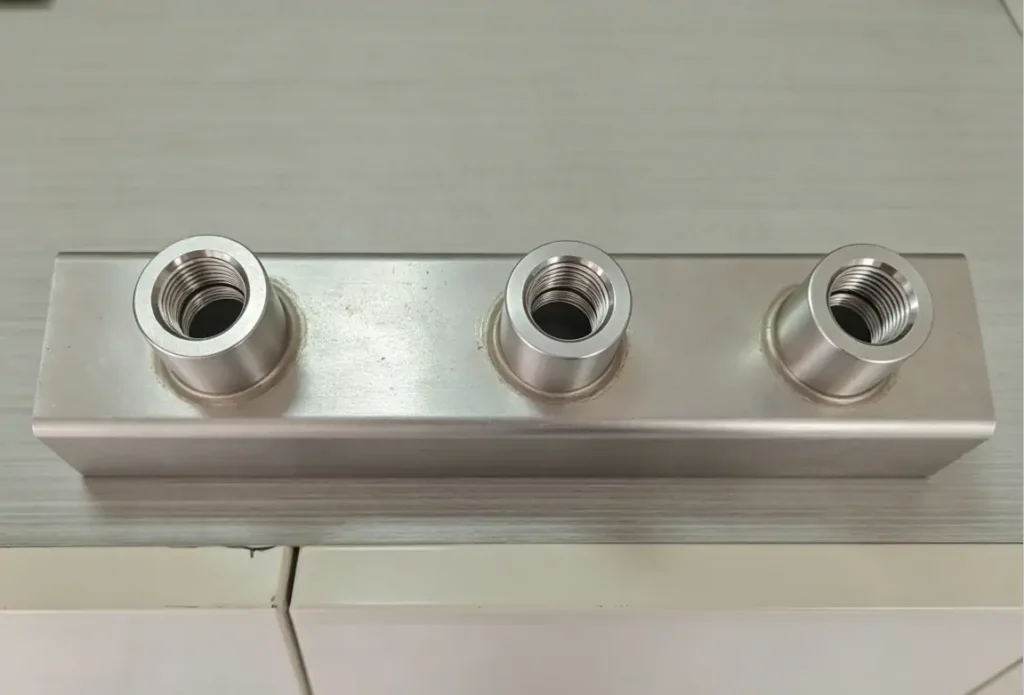
Laser Welding Results Showcase
Conclusion
Laser welding is used in water manifold production where weld consistency, appearance, and sealing performance are important. The 2000W–3000W fiber laser welding solutions match different production conditions, including standard manifold welding and high-volume manufacturing.
KEMPSON water manifold laser welding machines use customized fixtures and automation options for different manifold structures in HVAC, heating, and plumbing applications.
KEMPSON provides customized water manifold laser welding solutions with 2000W–3000W fiber laser systems, automated welding options, and production support. Contact us for your manifold welding requirements.
FAQ
What is the best welding method for stainless steel water manifolds?
Laser welding and TIG welding are common methods for stainless steel water manifolds. Laser welding uses lower heat input and produces smooth weld seams with less deformation, while TIG welding remains suitable for manual welding and small-batch production.
Can a laser welding machine weld water manifolds?
Yes. A laser welding machine can weld water manifold components, including main pipes, branch pipes, valve connections, and fittings. It is commonly used for stainless steel and brass manifold production where weld consistency and sealing performance are required.
What laser power is needed for water manifold welding?
The required laser power depends on material type, thickness, manifold structure, and production volume. 2000W laser welding machines are suitable for standard manifold welding, while 3000W models are used for higher production speed and larger welding tasks.
Is 3000W laser welding suitable for stainless steel manifolds?
Yes. A 3000W fiber laser welding machine is suitable for stainless steel manifold production, especially for larger components, thicker materials, and batch manufacturing. The final power selection depends on the welding thickness and production requirements.
Can laser welding prevent water leakage in manifolds?
Laser welding creates narrow and consistent weld seams with controlled penetration. Proper welding parameters, fixture positioning, and pressure testing after welding are important factors for reducing leakage risks in water manifold production.
What materials can a water manifold laser welding machine weld?
A water manifold laser welding machine can weld common manifold materials, including stainless steel and brass. The machine configuration and welding parameters are selected based on material properties and component thickness.
Can the welding machine be customized for different manifold sizes?
Yes. Water manifold laser welding machines can be equipped with customized fixtures for different manifold structures, including 2-way, 3-way, 4-way, 6-way, and 8-way designs. Fixture changes allow production of different manifold models.
What is the difference between laser welding and TIG welding for manifolds?
Laser welding uses concentrated heat input, faster welding speed, and automated processing. TIG welding relies more on operator skill and is commonly used for manual production. The suitable method depends on production volume, weld requirements, and automation needs.