Table of Contents
Introduction
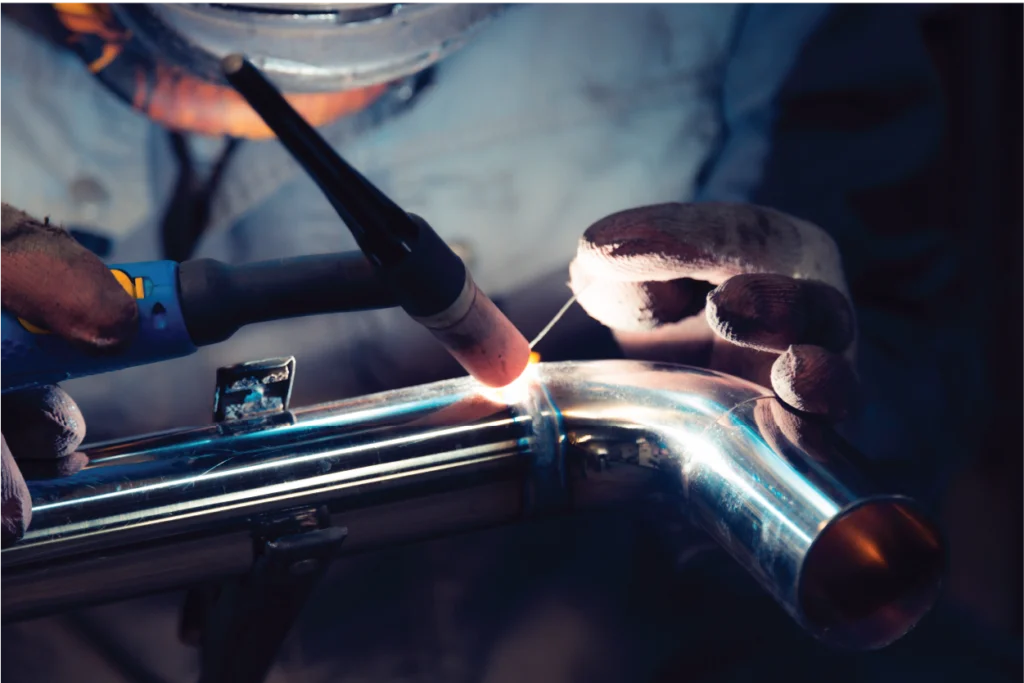
Laser welding and TIG welding are both used for stainless steel water manifold manufacturing, but they have different performance characteristics. TIG welding remains a common choice for its weld control and appearance, while laser welding is considered for higher welding speed, lower heat input, and automated production.
In this article, I will compare laser welding vs TIG welding for water manifold manufacturing based on welding speed, heat input, deformation, weld quality, operator requirements, and production applications. The comparison helps manufacturers select a suitable stainless steel welding method based on pipe thickness, production volume, and welding requirements.
Laser Welding vs TIG Welding for Water Manifold: Key Differences
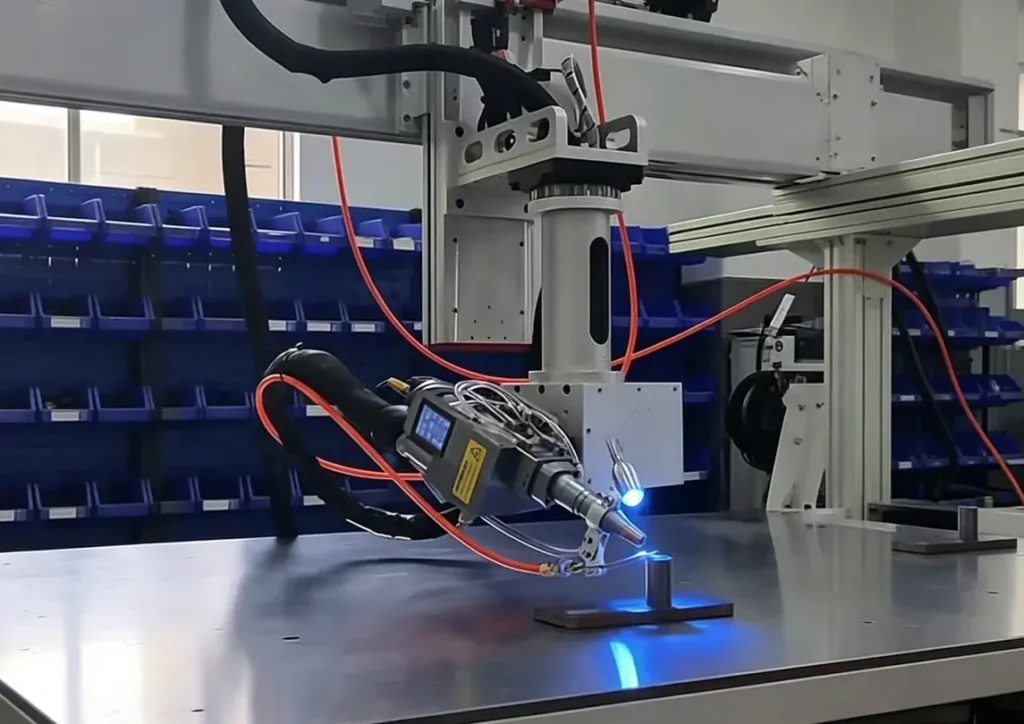
Laser welding and TIG welding are both used for stainless steel water manifold manufacturing, but they differ in heat input, production efficiency, and automation capability.
| Comparison | Laser Welding | TIG Welding |
|---|---|---|
| Heat Input and HAZ | Low heat input with a narrow heat-affected zone, typically around 0.1–0.3 mm | Higher heat input with a larger heat-affected zone |
| Welding Speed | High welding speed, suitable for continuous production and repeated joints | Lower speed, mainly controlled by operator operation |
| Weld Precision and Deformation | Small weld area, low thermal deformation, suitable for thin-wall pipes | Good weld control but higher heat accumulation risk |
| Weld Appearance | Narrow weld seam with clean appearance and consistent results | Smooth weld appearance with skilled operation |
| Operator Skill | Easier to standardize with controlled parameters | Quality depends strongly on welder experience |
| Automation | Suitable for CNC systems and robotic production lines | Limited automation capability |
| Batch Production | Suitable for high-volume manufacturing | Suitable for prototypes and small-batch production |
| Equipment Cost | Higher initial investment | Lower equipment cost with flexible operation |
- Laser welding is suitable for manufacturers focusing on thin-wall stainless steel manifolds, batch production, dimensional control, and automation.
- TIG welding remains suitable for prototypes, low-volume production, and manually adjusted welding applications.
The selection depends on pipe thickness, production volume, weld appearance requirements, and manufacturing conditions.
Not only in manifold applications, but in other welding applications as well, both methods have their own merits. Learn more: Laser Welding vs. Traditional Welding: Differences, Advantages, Costs, and Applications
Water Manifold TIG Welding: Advantages and Limitations
TIG welding remains a common method for stainless steel water manifold manufacturing. It provides good weld control and a clean weld appearance, making it suitable for specific production requirements.
Advantages of TIG Welding
TIG welding is suitable for stainless steel water manifolds that require precise manual control and good weld appearance.
Common applications include:
- Prototype production
- Small quantity orders
- Small diameter pipe welding
- Manifolds with high appearance requirements
- Components requiring manual adjustment during welding
Limitations of TIG Welding
TIG welding has limitations in production efficiency and process consistency.
Common challenges include:
- Lower welding speed
- High dependence on operator skill
- More manual adjustment during production
- Larger heat-affected zone compared with laser welding
For thin-wall water manifolds with multiple branch pipes, higher heat input can increase the risk of deformation and pipe alignment issues during welding.
Frequently asked questions and solutions for welding stainless steel water manifolds—see: Stainless Steel Water Manifold Welding: Methods, Challenges, and Solutions
Why Is Laser Welding Becoming More Common for Water Manifolds?
Manufacturers are considering laser welding for water manifolds due to production efficiency, heat input control, weld consistency, and automation requirements. The process is suitable for stainless steel pipe assemblies with repeated joints and strict dimensional requirements.
- 1. Higher Production Speed — Laser welding provides faster welding cycles compared with traditional manual processes. It is suitable for repeated pipe joints and helps reduce manual welding time in batch production.
- 2. Lower Heat Input and Less Deformation — Laser welding uses concentrated heat input, creating a smaller heat-affected zone. It reduces thermal deformation and improves dimensional control, which is important for thin-wall stainless steel pipes and multi-branch manifold structures.
- 3. Stable Weld Quality — Laser welding uses controlled welding parameters to maintain consistent results between different parts. The process reduces quality variation caused by operator differences and is suitable for repeated production.
- 4. Easier Automation Integration — Laser welding can be integrated with CNC motion systems and robotic platforms. Digital parameter control allows manufacturers to standardize welding procedures for continuous production.
Laser welding is considered for water manifold production when manufacturers need higher welding efficiency, lower deformation, stable weld quality, and automation-ready production.
When to Use Laser Welding for Water Manifolds?
Laser welding stainless steel manifolds is suitable when manufacturers require lower deformation, stable weld quality, and consistent production results. The application is mainly determined by pipe thickness, manifold structure, and production volume.
Thin-Wall Pipe Welding
Laser welding is suitable for stainless steel water manifolds with thin-wall pipes around 0.6–1.5 mm. The concentrated heat input reduces the risk of burn-through and limits the heat-affected zone.
Advantages include:
- Lower risk of burn-through on thin materials
- Reduced thermal deformation
- Better control of pipe positioning after welding
This makes laser welding suitable for thin-wall stainless steel assemblies where dimensional accuracy is important.
Multi-Branch Water Manifold Production
For water manifolds with multiple branch connections, welding consistency becomes a key requirement. Laser welding provides stable process control for repeated joints.
Important factors include:
- Accurate positioning of branch pipes
- Stable welding parameters
- Consistent weld quality between parts
With proper fixtures and parameter settings, laser welding can maintain repeatable results for multi-port manifold production.
High-Volume Manufacturing
Laser welding is suitable for standardized water manifold production where output volume supports automation investment.
Typical applications include:
- Continuous production
- Standardized manifold designs
- Automated welding lines
Laser welding can be integrated with CNC systems or robotic platforms to reduce manual adjustment and maintain consistent welding performance during batch production.
For stainless steel manifolds with thin-wall pipes, multiple branches, and repeated production requirements, laser welding provides better control of heat input, deformation, and welding consistency.
When Should You Choose a 3000W Laser Welding Machine for Water Manifold?
A 3000W laser welding machine is considered for water manifold production when manufacturers need stable weld quality, controlled heat input, and higher production efficiency. The suitable power level depends on material type, pipe structure, thickness, and production requirements.
Recommended Applications
A 3000W laser welding machine is commonly used for:
- Stainless steel water manifolds
- Medium production volume
- Multiple pipe joint welding
- Thin to medium thickness materials
- Production requiring consistent weld quality
Selection Factors
Before selecting a 3000W laser welding machine, manufacturers should evaluate:
- Material type, such as stainless steel, carbon steel, or aluminum
- Pipe diameter and joint structure
- Wall thickness
- Welding position and accessibility
- Production quantity and automation requirements
For water manifold manufacturing, 3000W laser welding is suitable when the application requires repeatable welding results across multiple components rather than single-piece production.
To learn more about the specific applications and advantages of laser welding machines used for stainless steel water manifolds, read the article: “Water Manifold Laser Welding Machine for Stainless Steel Manifold Manufacturing”
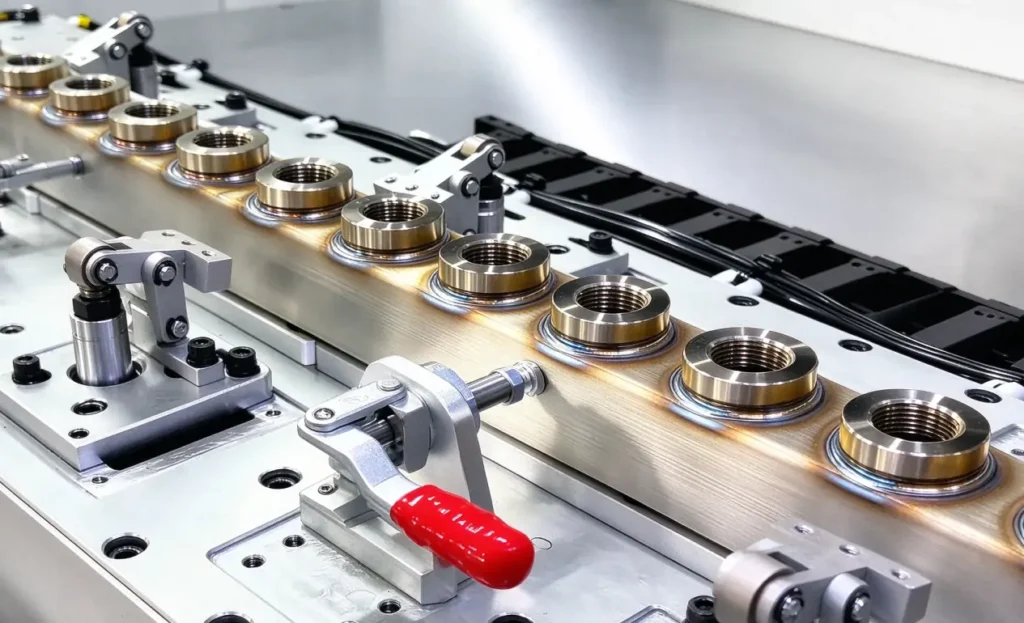
Laser Welding Results Showcase
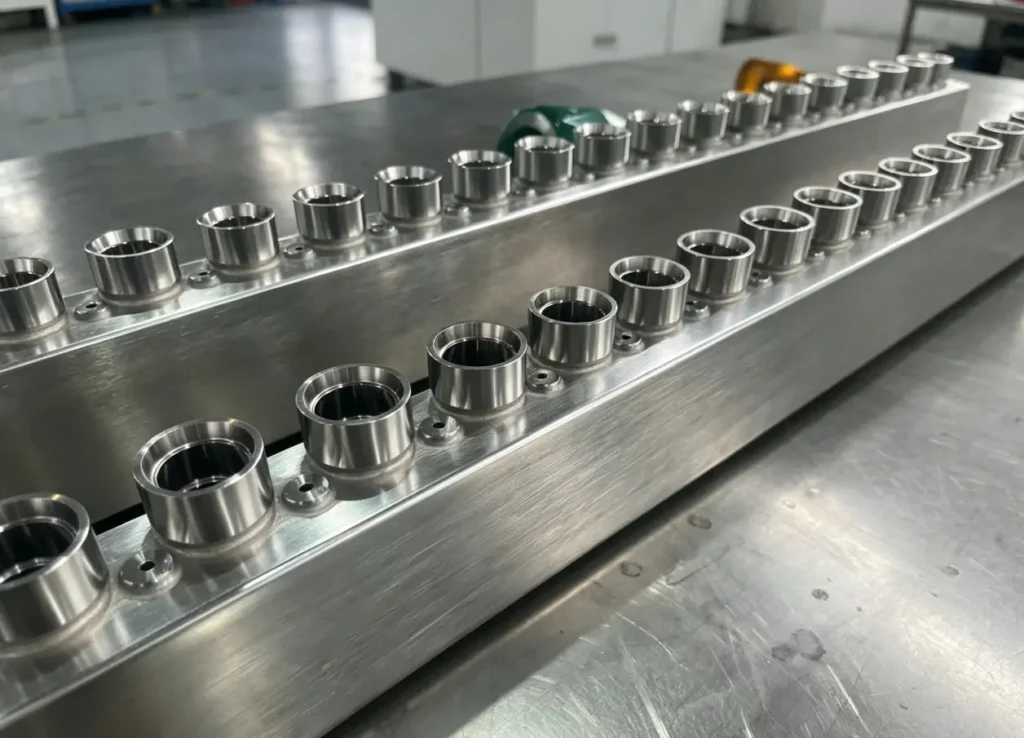
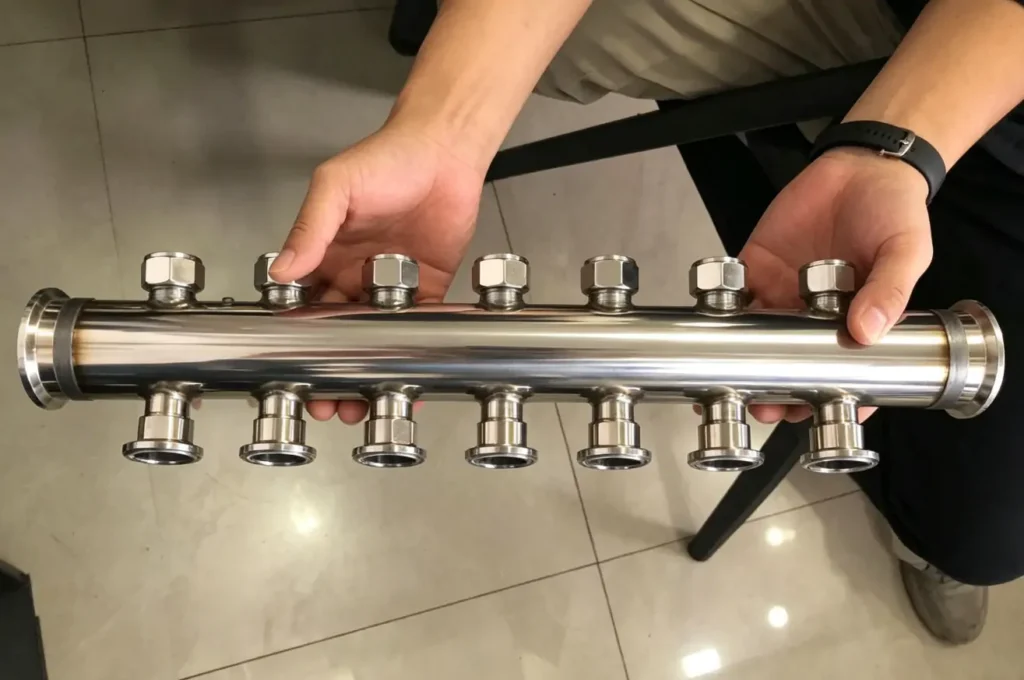
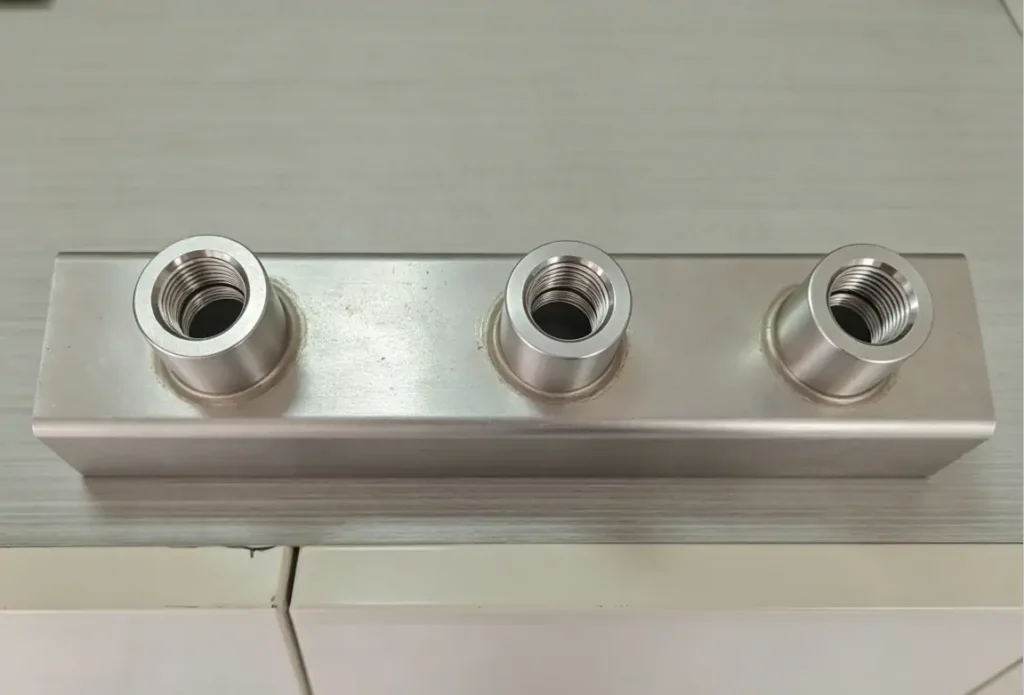
Laser Welding vs TIG Welding: Which Method Fits Your Production?
The suitable welding method depends on production volume, material thickness, welding requirements, and automation level. TIG welding and laser welding each fit different water manifold manufacturing conditions.
| Production Requirement | Recommended Method |
|---|---|
| Prototype production | TIG welding |
| Small quantity production | TIG welding |
| Thin-wall stainless steel manifold | Laser welding |
| High-volume production | Laser welding |
| Manual adjustment required | TIG welding |
| Automated production line | Laser welding |
TIG welding remains suitable for flexible production, prototypes, and applications requiring manual control. Laser welding fits standardized production with thin-wall stainless steel manifolds, repeated joints, and automation requirements.
To learn about the detailed process and welding methods for water manifold welding, read the article: How to Weld a Water Manifold: Welding Methods and Process Guide
Conclusion
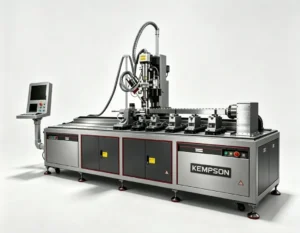
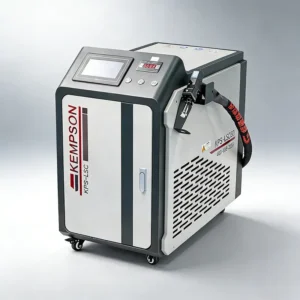
KEMPSON water manifold laser welding machines are designed for stainless steel pipe assemblies requiring stable weld quality, controlled heat input, and repeat production capability. The equipment is suitable for water manifolds with multiple branch pipes, thin-wall structures, and strict requirements on welding consistency.
The laser welding system provides precise heat control, reduced thermal deformation, and stable welding parameters for repeated production. It can be configured according to different materials, pipe diameters, wall thicknesses, joint designs, and production volumes.
KEMPSON supports customized laser welding solutions for stainless steel, carbon steel, and aluminum components with professional engineering support, product certification, and after-sales service. Contact us to discuss your water manifold welding requirements and find a suitable laser welding solution for your production.
FAQ
Is laser welding better than TIG welding for water manifold?
Laser welding and TIG welding fit different production requirements. Laser welding is suitable for thin-wall stainless steel manifolds, repeated production, and automation. TIG welding remains suitable for prototypes, small batches, and applications requiring manual adjustment.
What is the difference between laser welding and TIG welding?
Laser welding uses a focused laser beam with low heat input, small heat affected zone, and high automation capability. TIG welding uses an electric arc with filler wire, providing good weld control but lower welding speed and higher manual involvement.
Can TIG weld stainless steel water manifolds?
Yes. TIG welding is commonly used for stainless steel water manifolds. It provides clean welds and good control on thin-wall pipes, making it suitable for prototypes, small production runs, and applications with strict appearance requirements.
Why use laser welding for stainless steel manifolds?
Laser welding is used for stainless steel manifolds when manufacturers need low deformation, stable weld quality, and repeat production. The process is suitable for thin-wall pipes, multi-branch structures, and automated manufacturing.
Is laser welding faster than TIG welding?
Yes. Laser welding generally provides higher welding speed than TIG welding because of concentrated heat input and reduced manual operation. It is suitable for repeated joints and batch production where welding cycle time is a key factor.
Does laser welding reduce water manifold deformation?
Yes. Laser welding reduces deformation by using lower heat input and a smaller heat affected zone. This helps maintain branch pipe alignment and dimensional accuracy in thin-wall stainless steel water manifolds.
What power laser welding machine is suitable for water manifold?
The suitable laser power depends on material type, pipe diameter, wall thickness, joint design, and production volume. A 3000W laser welding machine is commonly considered for stainless steel water manifolds requiring stable welding quality and batch production.
Can water manifold laser welding be automated?
Yes. Water manifold laser welding can be integrated with CNC systems, robotic platforms, and automated production lines. Automation helps maintain consistent welding parameters and repeatable weld quality for multi-branch manifold production.