Table of Contents
Introduction
Even the most advanced laser welding equipment will experience performance issues if routine maintenance is overlooked. Problems such as unstable weld quality, excessive spatter, overheating, or unexpected downtime often start with small issues that go unnoticed. Understanding the best practices for maintaining laser welding equipment is essential for extending equipment service life, maintaining consistent welding performance, and reducing operating costs. This article explores the key areas that deserve attention, including optical components, cooling systems, shielding gas supply, electrical and mechanical parts, workplace conditions, and preventive maintenance practices.
Why Perform Regular Maintenance on Laser Equipment
In production environments, equipment condition affects weld quality, operating costs, and output. Issues such as dirty lenses, cooling problems, or worn consumables can lead to defects, downtime, and higher repair costs. Proper practices for maintaining laser welding equipment help keep the machine in a stable working condition.
- Welding Quality: Clean lenses, proper cooling, and stable gas flow help reduce porosity, incomplete penetration, spatter, and other welding defects.
- Equipment Lifespan: Routine inspection and replacement of worn parts help reduce component wear and extend equipment service life.
- Operating Costs: Early detection of minor issues can help avoid costly repairs, reduce scrap, and lower spare parts consumption.
- Production Efficiency: Reliable equipment reduces unexpected downtime, supports stable production schedules, and improves machine availability.
Regular maintenance is one of the most effective ways to maintain weld quality, extend equipment life, control operating costs, and keep production running without interruption. This is a key part of the best practices for maintaining laser welding equipment.
Parts requiring maintenance
Not all components wear at the same rate. Parts exposed to heat, spatter, dust, and continuous operation typically require more frequent inspection. Regular checks of these key components can help reduce welding defects, equipment faults, and unplanned downtime.
Laser Welding Gun and Nozzle
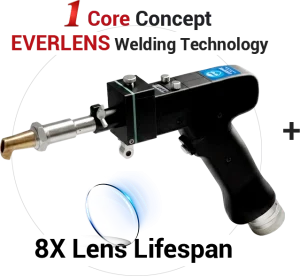
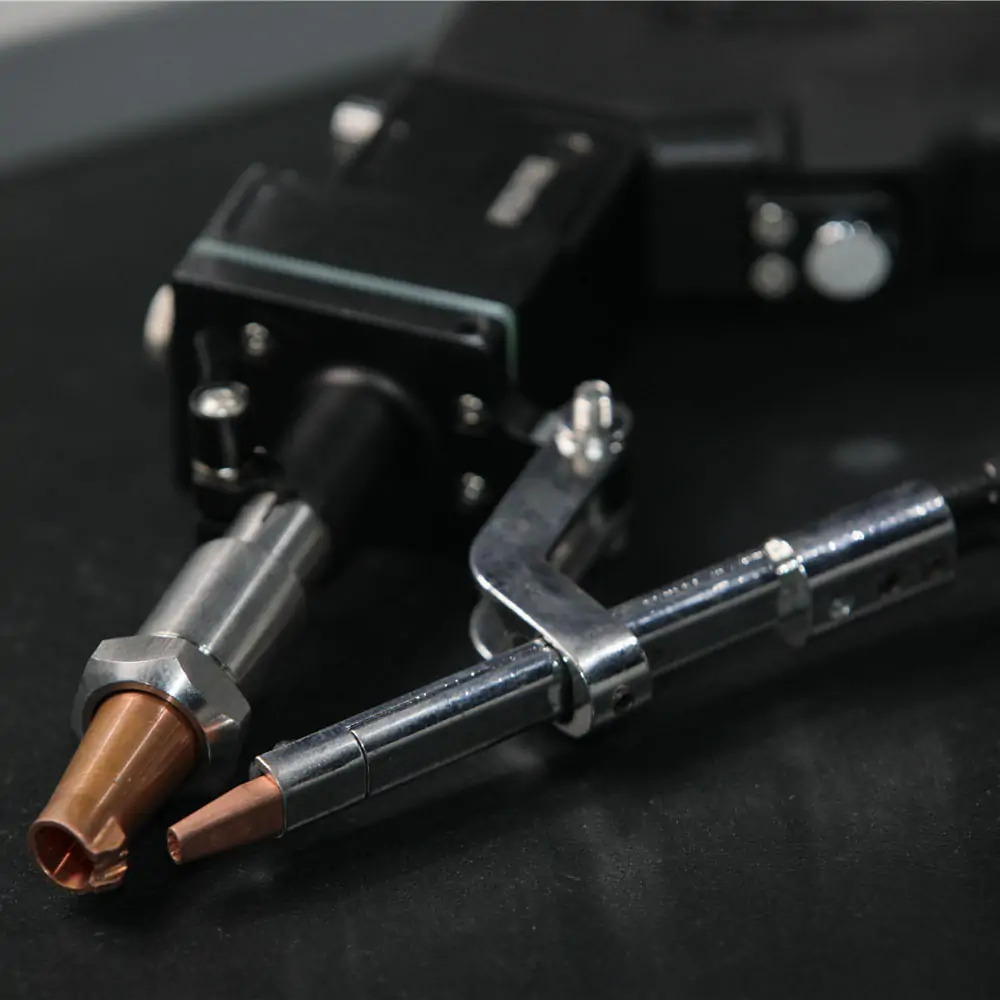
The welding gun and nozzle are exposed directly to heat and spatter during operation. Buildup or damage can affect shielding gas coverage and welding performance. View Kempson welding torch equipment: Handheld Laser Welding Gun
- Spatter buildup inside the nozzle
- Nozzle deformation or wear
- Gas flow blockage

Protective Lens and Focusing Lens
Optical components play a critical role in laser transmission. Contamination or damage can reduce laser efficiency and affect weld quality.
- Dust and debris contamination
- Burn marks
- Surface scratches or cracks
Wire Feeder System
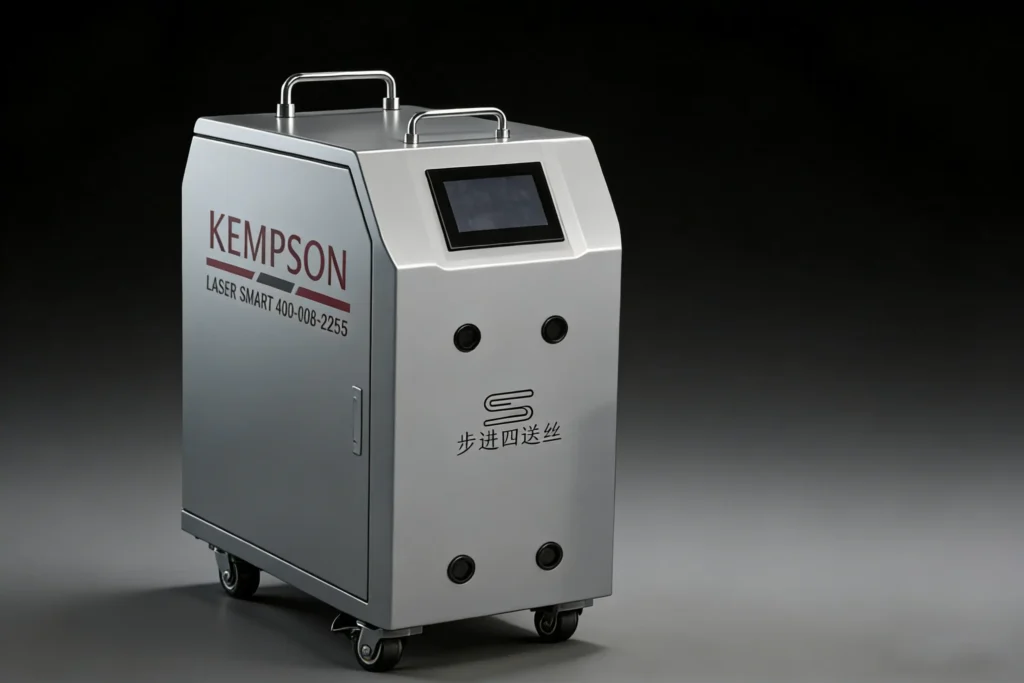
For wire-fed laser welding applications, stable wire feeding is essential for consistent weld formation.
- Feeding roller wear
- Wire guide blockage
- Feeding consistency and stability
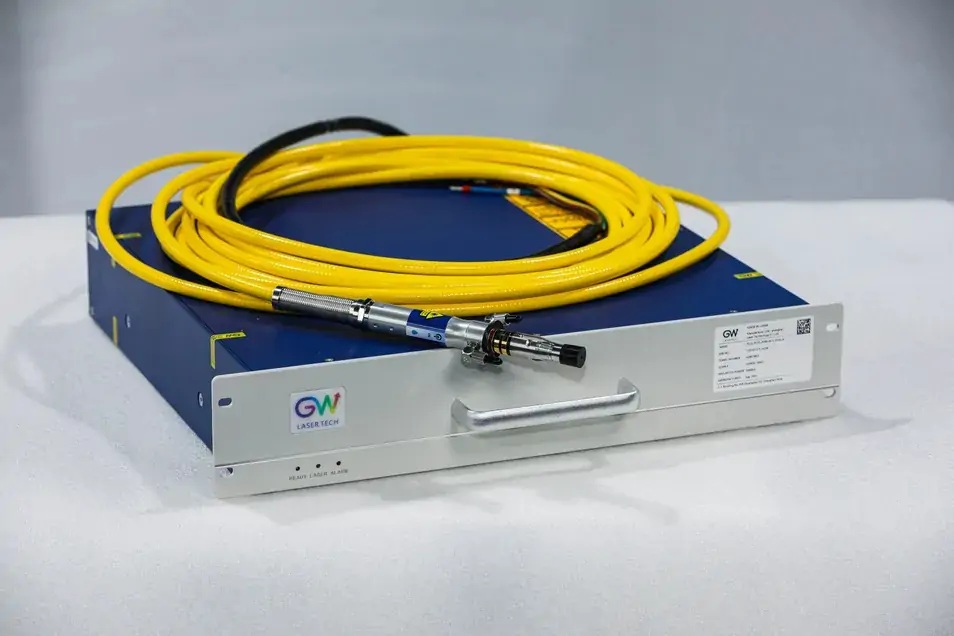
Laser Source and Optical Path
The laser source and optical path directly affect beam quality and machine performance. Routine inspection helps identify potential issues before production is affected. View Kempson laser equipment: Laser Nitrogen Generator System | Fiber Laser Source
- Optical alignment
- Connector cleanliness
- Fiber cable connection condition
Regular inspection of these critical components helps maintain stable welding performance and reduces the risk of unexpected equipment failures.
Laser Welding Maintenance Schedule
Laser welding equipment consists of several interconnected systems. Each system has its own specific vulnerable parts and maintenance requirements. The table below provides an overview of the main components, common issues, and basic maintenance methods.
| Maintenance Object | Common Problems | How to Maintain (Brief) |
|---|---|---|
| Optical Components | Dust, oil, spatter, scratches, beam loss | Clean with lens paper and approved alcohol, avoid direct contact, replace damaged lenses |
| Cooling System | Overheating, flow alarm, leakage, poor cooling efficiency | Check coolant level, clean filters, replace coolant, inspect pump and pipes |
| Protective Gas System | Porosity, oxidation, discoloration, unstable shielding | Check gas purity and flow, inspect leaks, keep stable pressure from cylinder to torch |
| Electrical System | Power fluctuation, alarms, unstable startup | Check wiring, grounding, voltage, and control system fault codes |
| Servo & Drive System | Positioning errors, overload, unstable motion | Inspect motor condition, cables, and drive performance regularly |
| Guide Rails | Vibration, reduced accuracy, wear | Keep lubricated, clean rails, check alignment, and wear condition |
| Cable Chains | Cable damage, jamming, signal instability | Inspect movement, avoid wear, replace damaged cables |
| Connectors & Fasteners | Loose connection, intermittent faults | Tighten terminals and bolts, check for overheating or oxidation |
| Air / Hydraulic System | Pressure loss, leakage, unstable actuation | Check hoses, valves, and seals for leaks or damage |
| Working Environment | Dust, humidity, and temperature fluctuation | Keep a clean workshop, stable temperature, and humidity, and good ventilation |
Regular inspections of each system ensure stable machine operation, reduce malfunctions, and maintain consistent welding performance.
Maintenance Tasks and Frequency
Laser welding equipment requires regular inspection based on operating conditions. Maintenance tasks should cover daily checks, periodic servicing, and monthly system inspection
| Daily Checks | Weekly Maintenance | Monthly Maintenance |
|---|---|---|
| Clean the machine surface, remove dust, oil, and spatter | Clean lenses and optical components | Check laser output stability |
| Check the optical window condition | Check coolant flow and temperature | Replace coolant and check water quality |
| Check the cooling water level and leaks | Inspect and clean filters | Calibrate motion accuracy |
| Check gas pressure and hose condition | Inspect the gas flow meter and joints | Back up control system data |
| Test emergency stop and safety sensors | Lubricate guide rails and moving parts | Clear error logs |
| Listen for abnormal noise or vibration | Tighten electrical connectors | Test the safety interlock system |
| Run test welding for stability | Check spare parts inventory |
Regular checks at different intervals help keep each system stable, reduce wear, and prevent unexpected downtime in production.
Maintenance Guidelines
- Use original or approved spare parts
- Keep a record of all inspections, cleaning, and replacements
- Monitor key machine data such as power, temperature, and alarms
- Train operators for correct daily handling
- Follow the manufacturer’s maintenance schedule
- Do not ignore early warning signs or small faults
- Keep maintenance tools and the environment clean and suitable for work
- Arrange professional service for complex faults or internal adjustments
Conclusion
Best practices for maintaining laser welding equipment can reduce unexpected malfunctions and help keep the machine in good working condition. This includes maintaining key systems such as the optical system, cooling system, gas supply system, and electrical components, as well as paying attention to the working environment.
At KEMPSON, we provide professional laser welding equipment, technical support, spare parts supply, and maintenance guidance for long-term equipment performance. Contact our team to discuss your welding application and maintenance requirements. The right welding system for your production line. Feel free to contact us for professional recommendations and tailored solutions.
FAQS
How often should a laser welding machine be serviced?
Daily checks before or after the operation, weekly maintenance for key systems, and monthly full inspections are recommended.
What is included in laser welding equipment maintenance?
Optics cleaning, cooling system checks, gas supply inspection, electrical connection checks, and mechanical part inspection.
How do I clean a laser welding machine lens?
Use lens paper or a microfiber cloth with high-purity alcohol. Wipe gently from the center outward and avoid direct contact.
How often should protective lenses be replaced?
How often should protective lenses be replaced?
What coolant should be used in a laser welding machine?
Use deionized water or manufacturer-recommended coolant to prevent scaling and protect the cooling system.
What are the signs of a laser welding machine failure?
Weld defects, frequent alarms, unstable laser output, overheating, and increased spatter are common warning signs.
How can I extend the lifespan of a laser welding machine?
Regular maintenance, stable operating conditions, correct operation, and timely replacement of worn parts help extend service life.
Can poor maintenance affect laser welding quality?
Yes. Poor maintenance leads to unstable beam quality, gas issues, overheating, and directly affects weld consistency and appearance.