Table of Contents
Introduction
Stainless steel water manifold welding requires reliable sealing, accurate pipe positioning, and corrosion-resistant weld joints to maintain long-term performance. TIG welding, MIG welding, and laser welding are commonly used methods, with each process fitting different manufacturing conditions.
In this article, I will introduce stainless steel water manifold welding methods, common welding challenges, and practical solutions. The selection of welding process depends on material thickness, manifold structure, production volume, and weld quality requirements.
What Is Stainless Steel Water Manifold Welding?
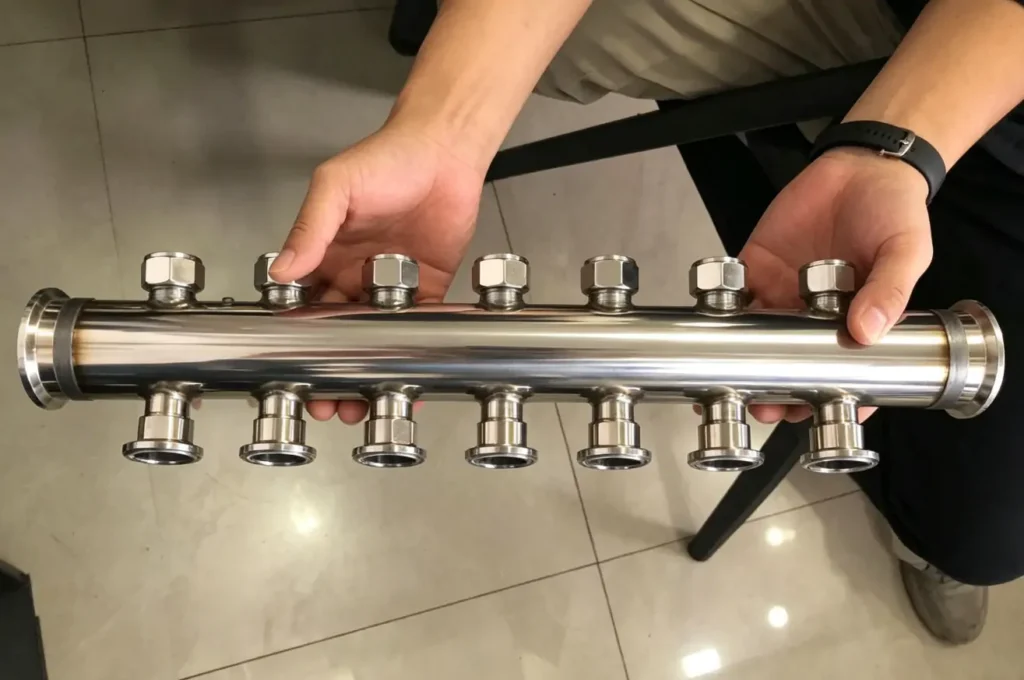
A stainless steel water manifold is a fluid distribution component that combines a main header pipe with multiple branch outlets. The design allows water or coolant to enter from one inlet and flow through several connected circuits. It is widely used in cooling systems, heat exchangers, industrial equipment, and fluid control assemblies.
Welding is a key manufacturing process for connecting the header and branch pipes into a sealed structure. The weld joints must maintain leak resistance, accurate branch positioning, and corrosion protection. Thin-wall stainless steel manifolds commonly use SS304 or SS316L materials with pipe thickness around 0.6–1.5 mm.
The welding method depends on manifold structure, material thickness, production volume, and quality requirements. TIG, MIG, and laser welding are commonly used processes, with laser welding often selected for thin-wall assemblies and repeated production requiring consistent weld performance.
Common Stainless Steel Water Manifold Welding Methods
Common welding methods for stainless steel water manifolds include TIG welding, MIG welding, and laser welding. The suitable process depends on material thickness, manifold structure, production volume, and weld quality requirements.
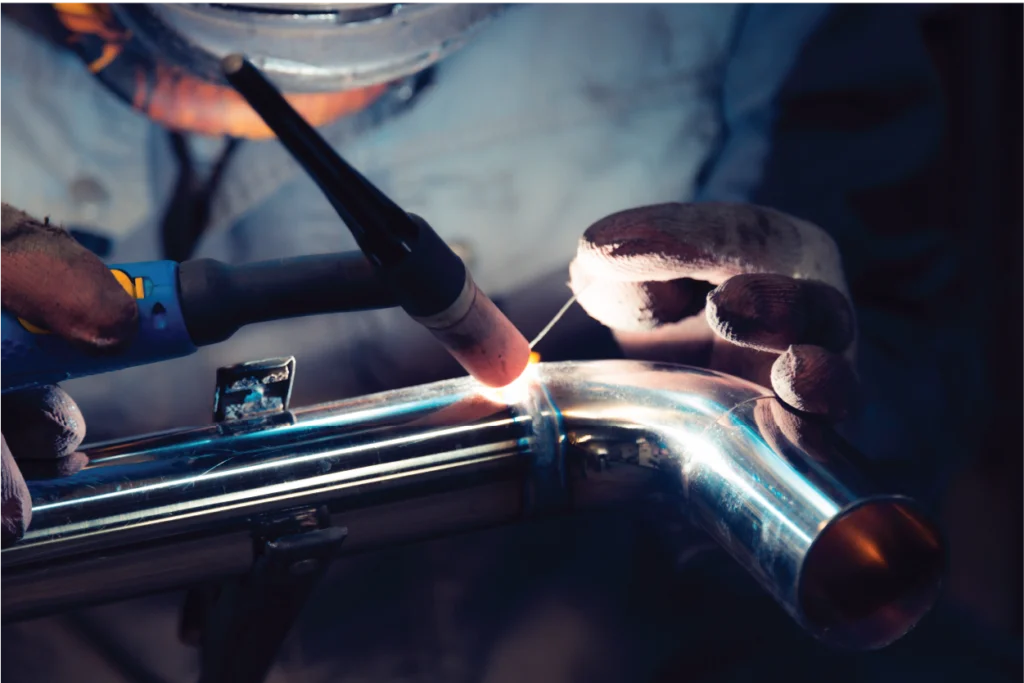
TIG Welding for Stainless Steel Water Manifolds
TIG welding is widely used for stainless steel water manifolds where weld control and appearance are important. It produces clean welds with good control of heat input, making it suitable for stainless steel pipe assemblies.
- Applications include: Prototype production, Small-batch manufacturing, Manifolds with high appearance requirements
- Limitations include: Lower welding speed, More manual operation, High dependence on operator skill
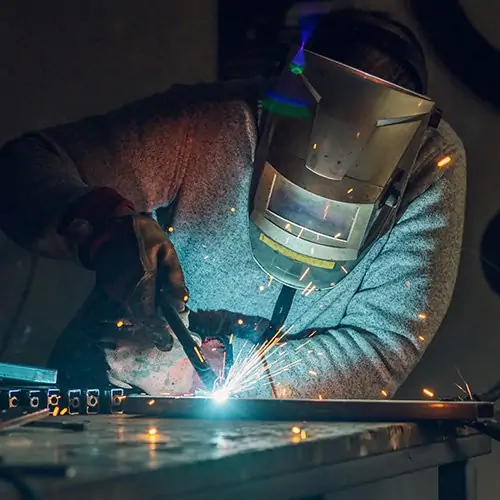
MIG Welding for Stainless Steel Water Manifold
MIG welding is used for stainless steel manifolds requiring higher production efficiency and easier operation. It is suitable for thicker materials and general fabrication work.
- Applications include: Medium-thickness components, General industrial fabrication, Larger structural assemblies
- Limitations include: More welding spatter, Additional post-weld cleaning, Lower precision for small pipe connections
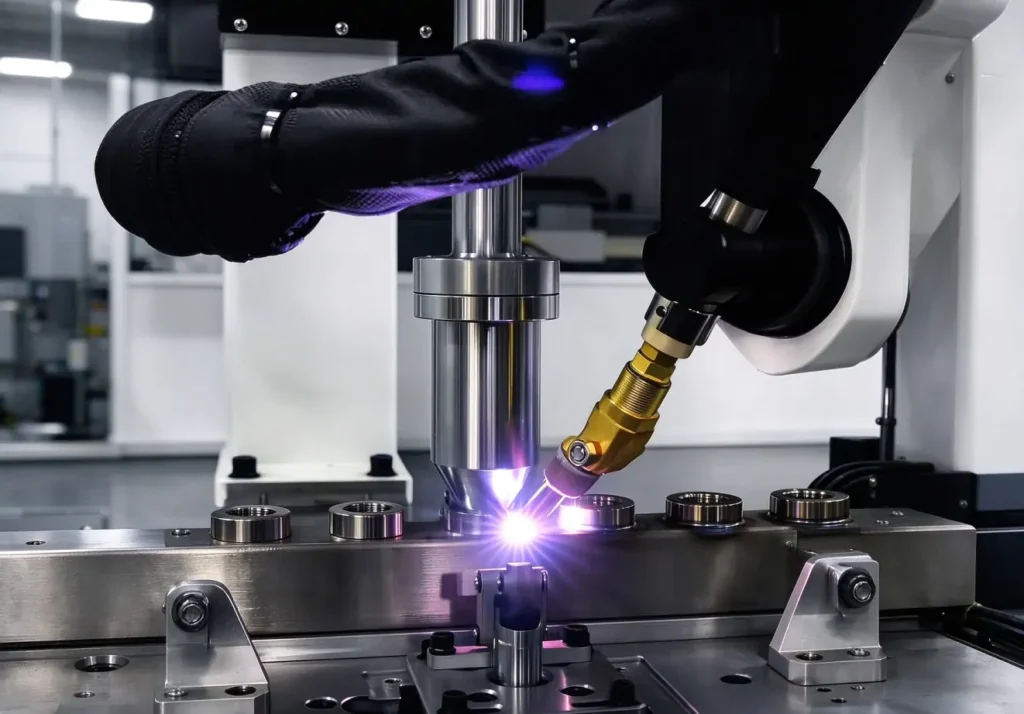
Laser Welding for Stainless Steel Water Manifold
Laser welding uses concentrated heat input to achieve a smaller heat-affected zone and lower deformation. It is suitable for stainless steel water manifolds requiring stable weld quality and repeat production.
Applications include: Thin-wall stainless steel pipes, Multi-branch manifolds, Batch production
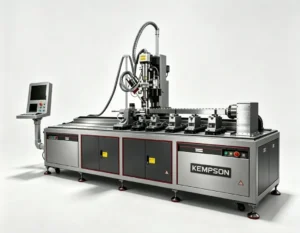
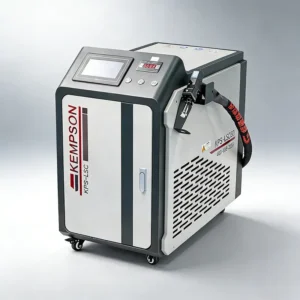
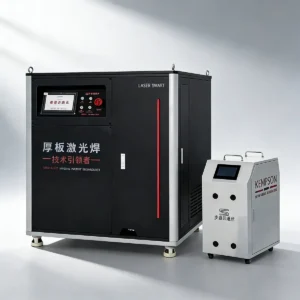
Water manifold laser welding machines are commonly used for manufacturers requiring repeatable welding quality, controlled heat input, and consistent production results.
To learn about the detailed process and welding methods for water manifold welding, read the article: How to Weld a Water Manifold: Welding Methods and Process Guide
Common Challenges in Stainless Steel Water Manifold Welding
Stainless steel water manifold welding involves thin-wall pipes, multiple branch connections, and strict dimensional requirements. The main welding issues are related to sealing performance, deformation control, weld consistency, and corrosion resistance.
1. Weld Leakage
Weld leakage affects the sealing performance of water manifolds and can cause fluid loss during operation. Common defects include poor penetration, porosity, incomplete fusion, and contamination inside the joint area.
Causes:
- Improper joint preparation
- Incorrect welding parameters
- Insufficient shielding gas protection
- Excessive welding speed or unstable heat input
Solutions:
- Clean the welding area before processing
- Match welding parameters with material thickness and joint design
- Use proper shielding gas protection
- Perform pressure testing or leak testing after welding
2. Welding Deformation and Pipe Misalignment
Multi-branch water manifolds are sensitive to welding deformation. Heat accumulation during welding can change branch pipe position, angle, and overall dimensional accuracy.
Causes:
- High heat input during welding
- Uneven welding sequence
- Repeated heating of nearby joints
- Insufficient fixture support
Solutions:
- Use dedicated welding fixtures to maintain pipe positioning
- Control heat input during the welding process
- Optimize welding sequence to reduce heat accumulation
- Select low-heat-input processes such as laser welding for thin-wall structures
3. Inconsistent Weld Quality
Weld consistency directly affects batch production quality. Manual welding may produce differences between joints due to operator operation and parameter changes.
Causes:
- Different operator experience levels
- Unstable welding speed
- Variation in current, power, or gas flow settings
Solutions:
- Establish fixed welding parameters
- Control welding speed and heat input
- Use automated welding equipment for repeated production
4. Reduced Corrosion Resistance After Welding
Welding can affect the corrosion resistance of stainless steel in the weld area and heat-affected zone. Poor surface condition may reduce service life in water applications.
Causes:
- Damage to the stainless steel passivation layer
- Excessive heat exposure
- Improper cleaning after welding
Solutions:
- Select suitable stainless steel grades such as SS304L or SS316L
- Control welding heat input
- Apply pickling and passivation when required
- Clean the weld area before final assembly
5. Poor Weld Surface Quality
Water manifold applications often require smooth weld surfaces for fluid flow, cleanliness, and appearance. Uneven weld beads or oxidation marks can affect the final product quality.
Causes:
- Unstable welding parameters
- Insufficient gas protection
- Improper post-weld treatment
Solutions:
- Maintain stable welding conditions
- Use suitable shielding gas flow
- Remove oxidation and welding marks through grinding or polishing
Stainless steel water manifold welding mainly faces leakage, deformation, weld consistency, and corrosion issues. Proper welding parameters, fixture control, and post-weld treatment are required to maintain joint quality and product performance.
Solutions for Improving Stainless Steel Water Manifold Welding Quality
Stainless steel water manifold welding quality depends on welding method, process control, fixture accuracy, and production conditions. The right setup helps control leakage, deformation, and weld variation during manufacturing.
Select Suitable Welding Method
The welding process should match the manifold structure, material thickness, and production volume.
| Production Requirement | Suitable Method |
|---|---|
| Prototype production | TIG welding |
| Small batch production | TIG welding |
| Thin-wall stainless steel manifold | Laser welding |
| Mass production | Laser welding |
TIG welding is suitable for flexible production and manual adjustment. Laser welding is suitable for thin-wall structures and repeated production where weld consistency is required.
Control Welding Parameters
Welding parameters directly affect penetration, heat input, and weld appearance. For stainless steel water manifolds, the main parameters include:
- Welding power or current
- Welding speed
- Shielding gas flow
- Joint preparation
Incorrect settings may cause incomplete fusion, burn-through, excessive deformation, or surface defects. Parameter control should match the material grade, pipe thickness, and joint design.
Use Proper Fixtures
Fixtures maintain the position of the header pipe and branch pipes during welding. They are important for multi-branch manifolds where pipe spacing and angle tolerance are required.
Main functions include:
- Holding pipe alignment during welding
- Limiting deformation caused by heat
- Maintaining consistent joint positions
Rigid fixtures are commonly used for manifolds with multiple connection points to reduce dimensional changes after welding.
Apply Automated Welding
Automated welding is used for standardized water manifold production with repeated welding paths and fixed designs.
- Suitable applications include:
- High production volume
- Multiple branch joints
- Continuous manufacturing
CNC and robotic welding systems control welding paths and parameters, reducing variation between individual parts and improving production consistency.
Why Is Laser Welding Used for Stainless Steel Water Manifold Production?
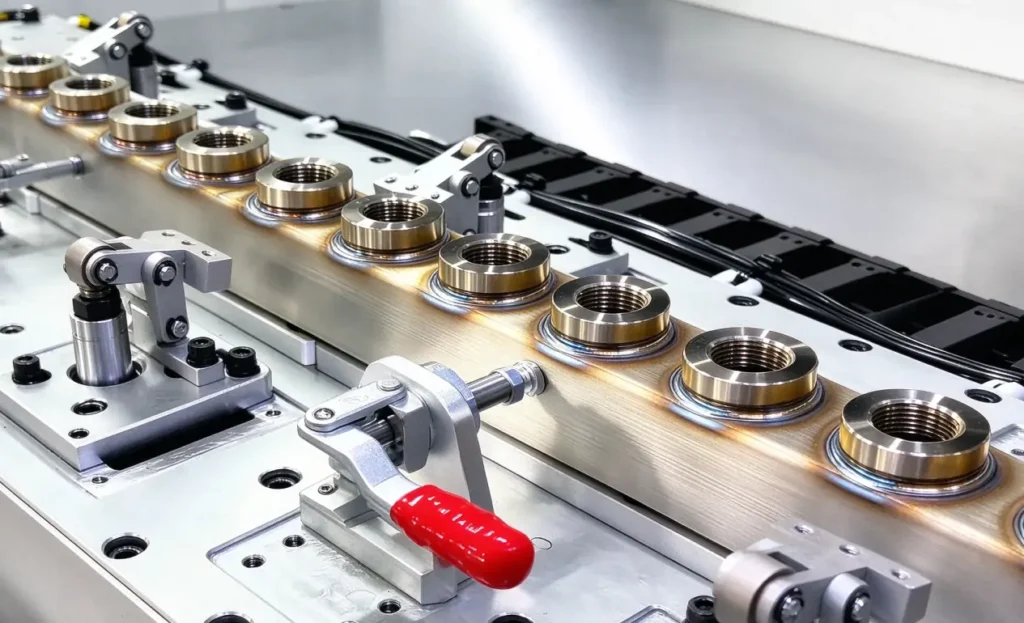
Laser welding is used for stainless steel water manifold production when manufacturers require controlled heat input, stable weld performance, and consistent production results.
- 1. Higher Welding Speed: Laser welding uses a concentrated heat source to complete pipe joints at a faster cycle time. It reduces manual welding time for repeated manifold production.
- 2. Lower Heat Input: The laser beam delivers energy into a small welding area. The reduced heat-affected zone limits thermal impact on stainless steel pipes.
- 3. Less Welding Deformation: Lower thermal input helps control pipe distortion during welding. This is important for thin-wall pipes and multi-branch manifold structures with tight positioning requirements.
- 4. Stable Weld Quality: Laser welding uses preset welding parameters for power, speed, and beam movement. The process reduces differences caused by manual operation and maintains consistent weld results.
- 5. Automation Integration: Laser welding systems can be connected with CNC platforms and robotic equipment. Automated control suits standardized water manifold production with repeated welding paths.
- 6. Cleaner Weld Surface: The narrow weld seam and controlled welding process produce smooth weld surfaces. Less grinding and finishing work may be required after welding.
How to Choose the Right Welding Method for Stainless Steel Water Manifold?
The right welding method for stainless steel water manifolds depends on material thickness, manifold structure, production volume, and weld requirements. TIG welding and laser welding are used for different production conditions.
| Production Requirements | Recommended Welding Method |
|---|---|
| Prototype production | TIG welding |
| Small batch production | TIG welding |
| Thin-wall stainless steel manifold | Laser welding |
| Multiple branch pipe welding | Laser welding |
| High-volume production | Laser welding |
| Manual adjustment required | TIG welding |
TIG welding fits applications requiring flexible operation and manual control. Laser welding fits thin-wall stainless steel manifolds, repeated production, and applications requiring stable weld consistency.
The selection should be based on pipe thickness, joint design, production quantity, and quality requirements rather than welding speed alone.
Learn the specific differences between laser welding and TIG welding, and when to choose the appropriate method. For details, see: Laser Welding vs. TIG Welding for Water Manifold Manufacturing
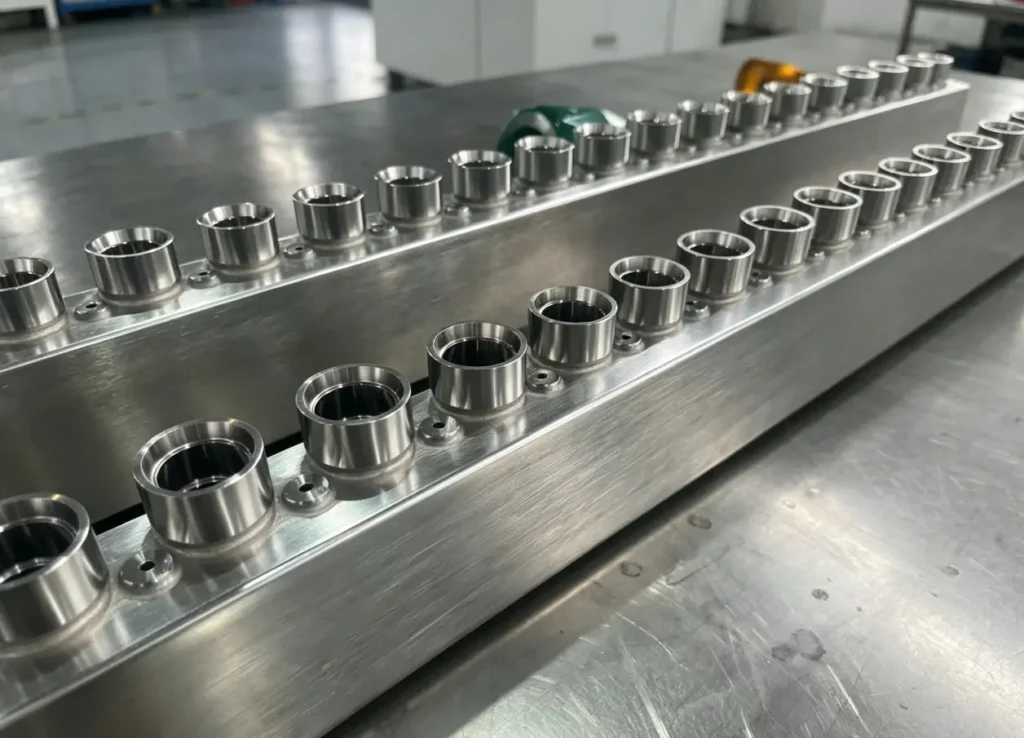
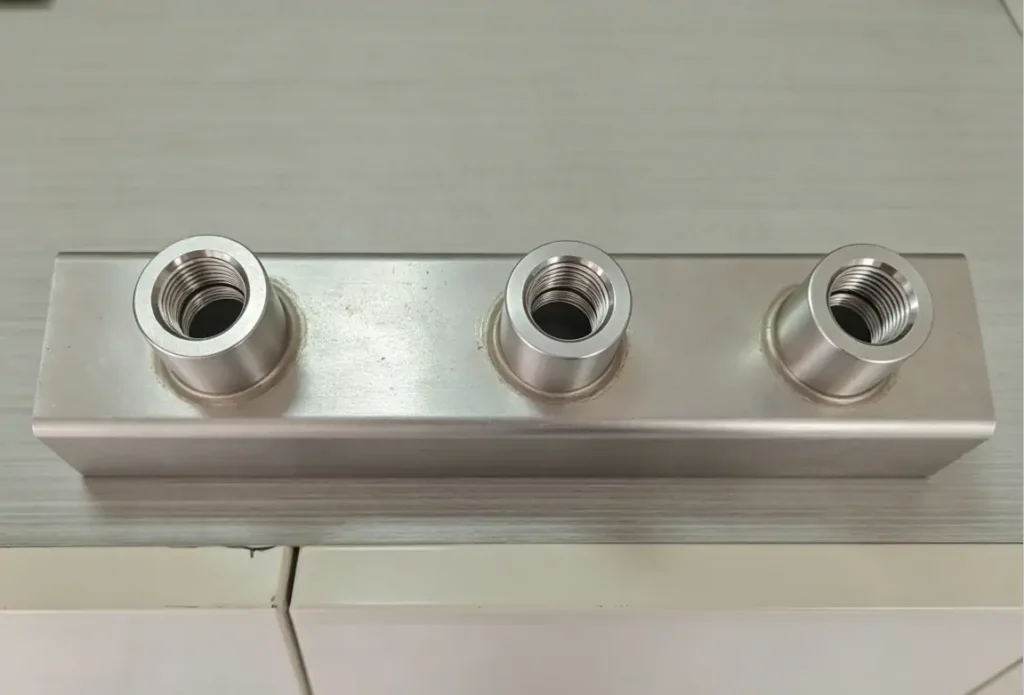
Laser Welding Results Showcase
Conclusion
Stainless steel water manifold welding involves challenges such as leakage control, pipe alignment, heat deformation, and weld consistency. The welding method should be selected according to material thickness, manifold design, production volume, and quality requirements.
KEMPSON supplies laser welding solutions for stainless steel water manifolds with a focus on stable weld quality, controlled heat input, lower deformation, and repeat production. Laser welding systems can be configured with different power options, materials, and pipe structures to match specific manufacturing conditions.
Contact us to discuss your stainless steel water manifold welding requirements and find a suitable laser welding solution.
FAQ
What welding method is used for stainless steel water manifolds?
Common welding methods for stainless steel water manifolds include TIG welding, MIG welding, and laser welding. The suitable method depends on pipe thickness, manifold structure, production volume, and weld quality requirements.
Can stainless steel water manifolds be TIG welded?
Yes. TIG welding is widely used for stainless steel water manifolds, especially for prototypes, small batch production, and applications requiring a clean weld appearance. It provides good weld control but has lower production speed.
What are common stainless steel manifold welding problems?
Common welding problems include leakage, deformation, inconsistent weld quality, and surface defects. These issues are usually related to improper welding parameters, excessive heat input, poor joint preparation, or insufficient process control.
Why do stainless steel water manifolds leak after welding?
Leakage can result from incomplete penetration, porosity, poor fusion, contamination, or incorrect welding parameters. Proper joint preparation, shielding gas protection, parameter control, and leak testing help prevent weld leakage.
How can welding deformation be reduced?
Welding deformation can be reduced by controlling heat input, using proper fixtures, optimizing welding sequence, and selecting a suitable welding process. Laser welding is often used for thin-wall stainless steel manifolds where deformation control is required.
Is laser welding suitable for stainless steel manifolds?
Yes. Laser welding is suitable for stainless steel manifolds with thin-wall pipes, multiple branch connections, and repeated production requirements. It provides low heat input, a small heat-affected zone, and stable weld quality.
What thickness can laser weld on stainless steel water manifolds?
Laser welding thickness depends on material type, laser power, joint design, and welding parameters. Stainless steel water manifold applications commonly involve thin-wall pipes around 0.6–1.5 mm, with the final process determined by the specific structure.
Can stainless steel water manifold welding be automated?
Yes. Stainless steel water manifold welding can be automated with CNC systems, robotic equipment, or dedicated laser welding machines. Automation helps maintain consistent welding paths, parameters, and quality for batch production.