Table of Contents
Introduction
When choosing a laser cutting machine for metal tubes, one common question is whether to use a fiber laser or a CO2 laser. Both technologies can cut metal tubes, but their performance differs in material compatibility, cutting speed, energy consumption, and maintenance. In our experience, fiber laser technology has become the preferred choice for many metal tube cutting applications, particularly when processing stainless steel, carbon steel, and reflective metals such as aluminum. However, CO2 lasers still have applications in certain metal cutting operations.
In this article, we compare fiber vs CO2 laser cutting technologies, covering their working principles, cutting performance, operating costs, and practical considerations to help you choose the right solution for your production needs.

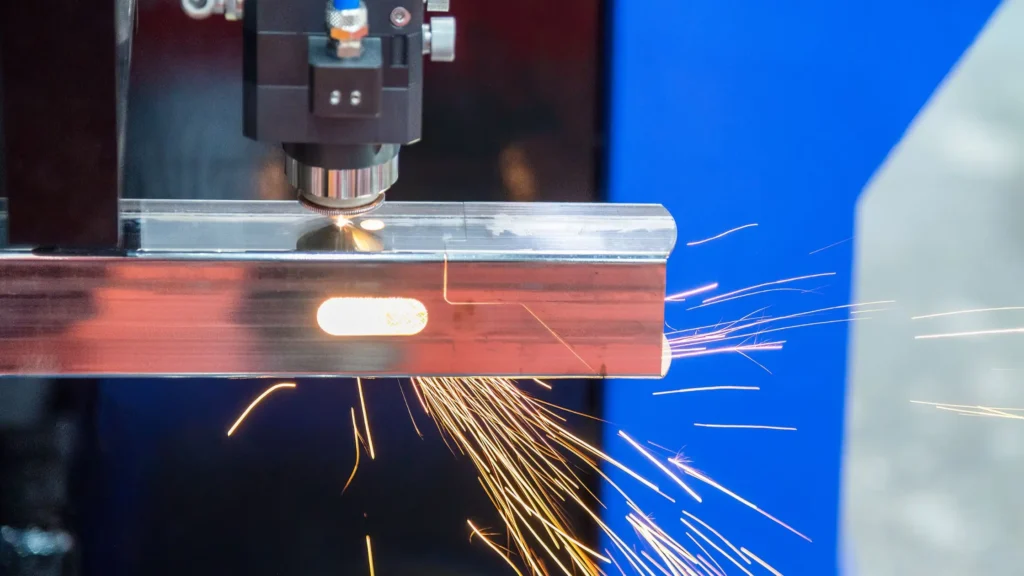
What Is the Difference Between Fiber and CO2 Laser Cutting?
Fiber and CO2 lasers differ in laser source, wavelength, and beam delivery. Fiber lasers operate at approximately 1.06–1.08 μm, while CO2 lasers operate at 10.6 μm. This affects metal absorption and cutting performance. Both can cut carbon steel and stainless steel tubes, but fiber lasers handle reflective metals more effectively and require less optical maintenance.

How Does Fiber Laser Cutting Work?
A fiber laser uses rare-earth-doped optical fibers, commonly ytterbium-doped fibers, to generate the laser beam. Operating at approximately 1.06–1.08 μm, the beam travels through a flexible fiber optic cable directly to the cutting head without an external mirror-based optical path.
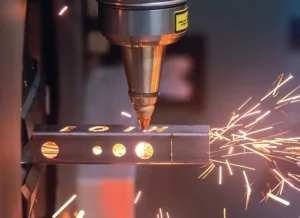
Fiber lasers are suitable for cutting carbon steel, stainless steel, aluminum, copper, and brass. In tube cutting machines, the CNC system coordinates cutting head movement and chuck rotation to process holes, slots, and complex tube profiles.
How Does CO2 Laser Cutting Work?
A CO2 laser generates its beam through an electrically excited gas mixture containing carbon dioxide, nitrogen, and helium. The beam operates at approximately 10.6 μm and travels through a series of mirrors to the cutting head.
CO2 lasers can cut carbon steel and stainless steel tubes, but aluminum, copper, and brass are more challenging to process due to their lower absorption at this wavelength. The optical system also requires regular mirror inspection, cleaning, and beam alignment.
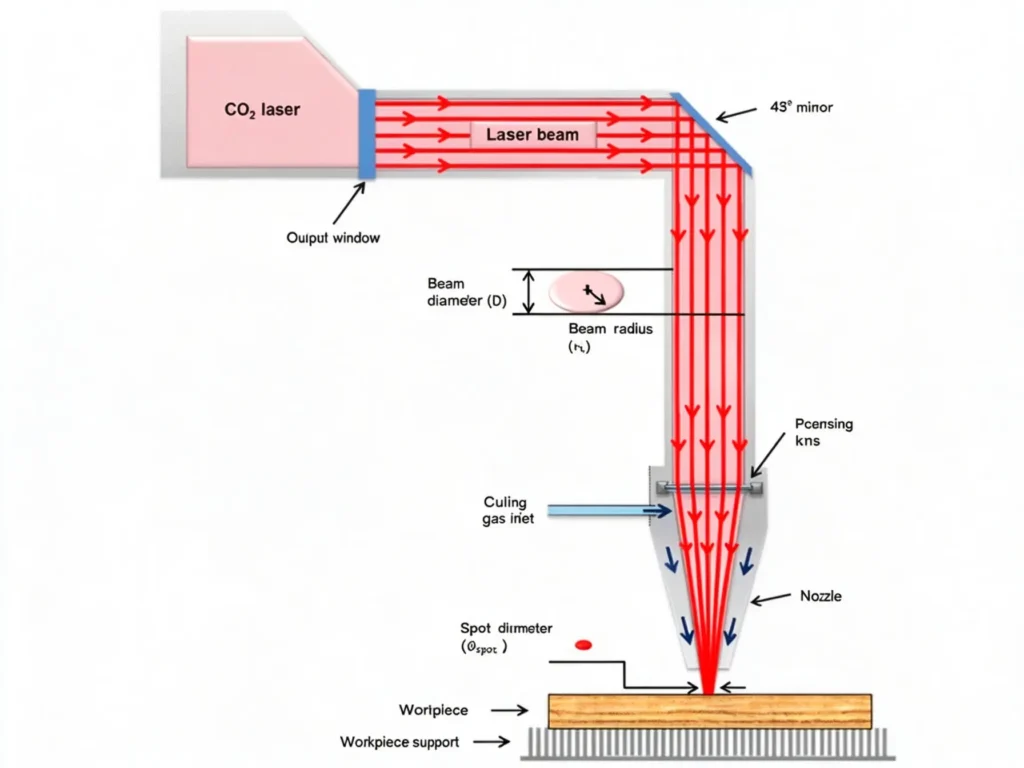
Fiber Laser vs CO2 Laser: Basic Technical Differences
| Comparison | Fiber Laser | CO2 Laser |
|---|---|---|
| Laser source | Solid-state fiber | Gas mixture |
| Wavelength | Approx. 1.06–1.08 μm | Approx. 10.6 μm |
| Beam transmission | Optical fiber | Mirror-based optical path |
| Metal absorption | Higher for most common metals | Lower for many metals |
| Reflective metals | Better suited | More challenging |
| Energy efficiency | Generally higher | Generally lower |
| Optical maintenance | No external beam-path mirror alignment | Requires mirror and optical path maintenance |
| Metal tube applications | Widely used | Suitable for selected metal cutting applications |
Note: Energy efficiency refers to electrical-to-optical conversion efficiency. Actual performance varies with laser source design, rated power, and operating conditions.
Fiber vs CO2 Laser Cutting for Metal Tubes: 6 Differences
1. Material Compatibility
Fiber and CO2 lasers differ in how efficiently metals absorb laser energy. Fiber lasers work well with carbon steel, stainless steel, aluminum, copper, and brass tubes. CO2 lasers are suitable for carbon steel and stainless steel but face greater difficulties with highly reflective metals such as copper and brass.
| Laser Type | Carbon Steel | Stainless Steel | Aluminum | Copper | Brass |
|---|---|---|---|---|---|
| Fiber Laser | Excellent | Excellent | Well suited | Well suited with suitable protection | Well suited with suitable protection |
| CO2 Laser | Suitable | Suitable | More challenging | Highly challenging | Highly challenging |
Actual cutting results depend on laser power, tube wall thickness, cutting head protection, and process parameters.
2. Cutting Speed and Processing Efficiency
Tube cutting cycle time = Loading + Positioning + Cutting + Rotation + Unloading
Fiber lasers generally cut thin- and medium-wall metal tubes faster than CO2 lasers under comparable processing conditions. Their higher metal absorption reduces the energy required for cutting. The actual cutting speed depends on material, wall thickness, tube diameter, laser power, and cutting geometry.
For tube processing, total cycle time also includes loading, positioning, chuck rotation, cutting, and unloading. Hole patterns, corner profiles, and repeated piercing can add significant processing time beyond the laser’s linear cutting speed.
3. Cutting Quality and Precision
Both laser types can produce clean metal tube cuts when properly configured. Fiber lasers generally offer a smaller focused spot, making them suitable for narrow kerfs, small holes, and detailed cutting profiles.
Cutting quality also depends on focus position, assist gas, nozzle condition, wall thickness, and cutting speed. For tube processing, chuck positioning and rotation accuracy affect hole alignment, dimensional tolerance, and cut consistency, particularly on square tubes, angled cuts, and complex profiles.
4. Energy Consumption and Operating Costs
Fiber lasers generally consume less electricity and require less optical maintenance than CO2 systems. CO2 equipment also requires laser gas management and regular maintenance of mirrors and optical components.
| Laser Type | Electrical Consumption | Laser Gas | Optical Maintenance | Consumables | Operating Costs |
|---|---|---|---|---|---|
| Fiber Laser | Generally lower | No CO2 laser gas mixture required | Lower beam-path maintenance | Protective windows, nozzles and other parts | Generally lower |
| CO2 Laser | Generally higher | Requires laser gas system | Mirror and optical path maintenance | Mirrors, lenses, gas-related consumables and other parts | Generally higher for comparable metal cutting tasks |
For production cost calculations, consider electricity, assist gas, consumables, maintenance, and processing time per tube. Cutting gas such as nitrogen and oxygen is separate from the gas mixture used inside a CO2 laser source.
5. Machine Structure and Maintenance
Fiber and CO2 tube cutting machines use different laser transmission systems, which affect machine layout and maintenance requirements.
Fiber Laser Tube Cutting Machine:
- Fiber laser source
- Fiber optic transmission cable
- Laser cutting head
- CNC control system
- Tube chuck and rotation system
- Automatic loading and unloading system, depending on configuration
CO2 Laser Tube Cutting Machine:
- CO2 laser source
- Laser gas system
- Mirror-based beam delivery system
- Cutting head and optical components
- Tube clamping and rotation system
Fiber systems have a simpler beam transmission path, with no external mirrors requiring alignment. CO2 systems need regular optical inspection, mirror cleaning, and beam alignment. Both machine types require maintenance of the chuck, drive system, CNC controls, and mechanical components.
6. Applications and Production Suitability
Fiber lasers are widely used in dedicated metal tube production, particularly where different metal materials, complex profiles, and high production volumes are involved.
Fiber Laser Tube Cutting Applications:
- Automotive exhaust pipes and structural tubes
- Stainless steel furniture tubes
- Steel frames and metal profiles
- Aluminum tubes and profiles
- Copper and brass tube components
- Industrial equipment frames
CO2 Laser Applications:
- Carbon steel tube cutting
- Stainless steel tube processing
- Metal fabrication using existing CO2 equipment
- Production involving both metal and non-metal materials, where the CO2 machine is designed for these applications
Fiber laser tube cutting machines are generally the preferred choice for new metal tube production lines. CO2 systems remain suitable for specific cutting requirements and factories with existing equipment.
How Do Tube Shapes Affect Fiber and CO2 Laser Cutting?
Tube shape affects clamping, rotation, cutting paths, and machine configuration. Both fiber and CO2 lasers can process different metal tube profiles when the machine is equipped with suitable fixtures and motion controls.
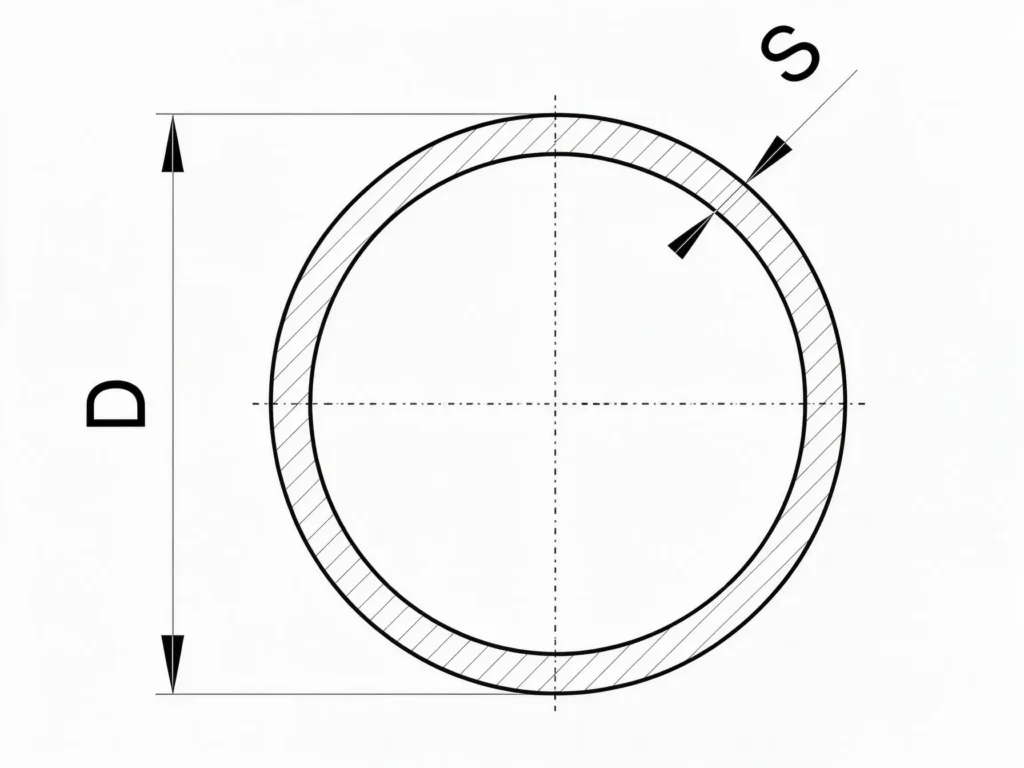
Round Tube Cutting
Round tubes rotate in the chuck while the cutting head moves along the tube axis. Common operations include hole cutting, slotting, end cutting, and contour cutting.
Small-diameter tubes require precise clamping, while large-diameter and heavy-wall tubes need sufficient chuck capacity and workpiece support.

Square and Rectangular Tube Cutting
Square and rectangular tubes require cutting across multiple faces. Typical operations include side holes, slots, notches, and corner cuts.
The CNC system coordinates chuck rotation with cutting head movement to maintain hole alignment and dimensional accuracy across different faces.

Special-Shaped Tube Cutting
Oval, flat, D-shaped, and other custom profiles require matching clamping fixtures and cutting paths. Irregular cross-sections also affect cutting head positioning and workpiece support.
For these profiles, check the chuck’s clamping range, support structure, and CNC control against the actual tube dimensions and cutting requirements.
Fiber vs CO2 Laser Cutting: Comparison Table
| Comparison Factor | Fiber Laser | CO2 Laser |
|---|---|---|
| Wavelength | Approx. 1.06–1.08 μm | Approx. 10.6 μm |
| Laser Medium | Rare-earth-doped optical fiber | CO2 gas mixture |
| Beam Delivery | Fiber optic cable | Mirror-based optical path |
| Carbon Steel Tubes | Suitable for a wide range of cutting applications | Suitable |
| Stainless Steel Tubes | Suitable for a wide range of cutting applications | Suitable |
| Aluminum Tubes | Well suited with suitable source and process settings | More challenging |
| Copper and Brass Tubes | Suitable with proper back-reflection protection and process settings | Highly challenging |
| Cutting Speed | Generally faster in many thin- and medium-wall applications | Generally slower in comparable applications |
| Cutting Precision | High, depending on machine configuration and process parameters | High, depending on machine configuration and process parameters |
| Energy Efficiency | Generally higher | Generally lower |
| Optical Maintenance | Lower beam-path maintenance | Requires regular mirror and optical path maintenance |
| Automation Integration | Widely integrated into modern tube cutting lines | Depends on machine design |
| Metal Tube Production | Common choice for modern metal tube production | Used in selected applications |
How to Choose Between Fiber and CO2 Lasers for Metal Tube Cutting
The choice between fiber vs CO2 laser cutting depends on tube materials, wall thickness, production volume, and existing equipment. Fiber lasers are the preferred option for most new metal tube cutting lines, while CO2 lasers remain suitable for specific applications and established production systems.
Choose a Fiber Laser
- Multiple Metal Materials: Regularly cutting carbon steel, stainless steel, aluminum, copper, or brass tubes.
- Reflective Metals: Processing aluminum, copper, and brass with a suitable laser source and protection system.
- Thin and Medium-Wall Tubes: Handling production orders that require fast cutting of thin- and medium-wall metal tubes.
- High Production Output: Reducing processing time and electrical consumption in continuous production.
- Automated Processing: Integrating automatic loading, unloading, and continuous tube feeding.
- Multiple Tube Profiles: Cutting round, square, rectangular, and selected special-shaped tubes.
Choose a CO2 Laser
A CO2 laser tube cutting machine can remain a practical choice under specific production conditions:
- Existing Equipment: Your factory already operates a CO2 laser system with established production processes.
- Carbon Steel and Stainless Steel: The machine meets the cutting requirements for your regular tube materials and thicknesses.
- Validated Production Process: Existing cutting parameters deliver acceptable results for your specific products.
- Mixed Material Production: Your factory also processes non-metallic materials, provided the CO2 machine is designed and configured for those applications.
Before selecting a machine, prepare tube drawings, material specifications, wall thicknesses, and sample cutting requirements. These details allow the manufacturer to evaluate the laser source, chuck system, machine configuration, and automation options.
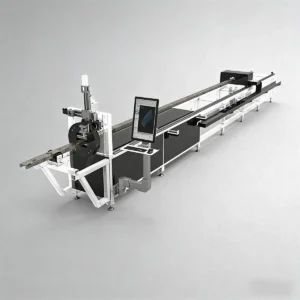
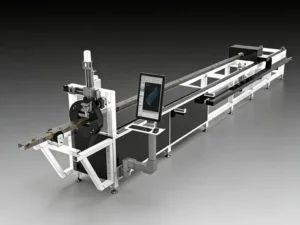
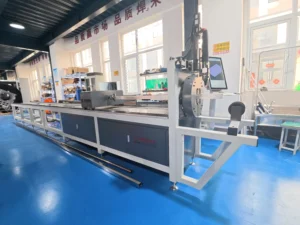
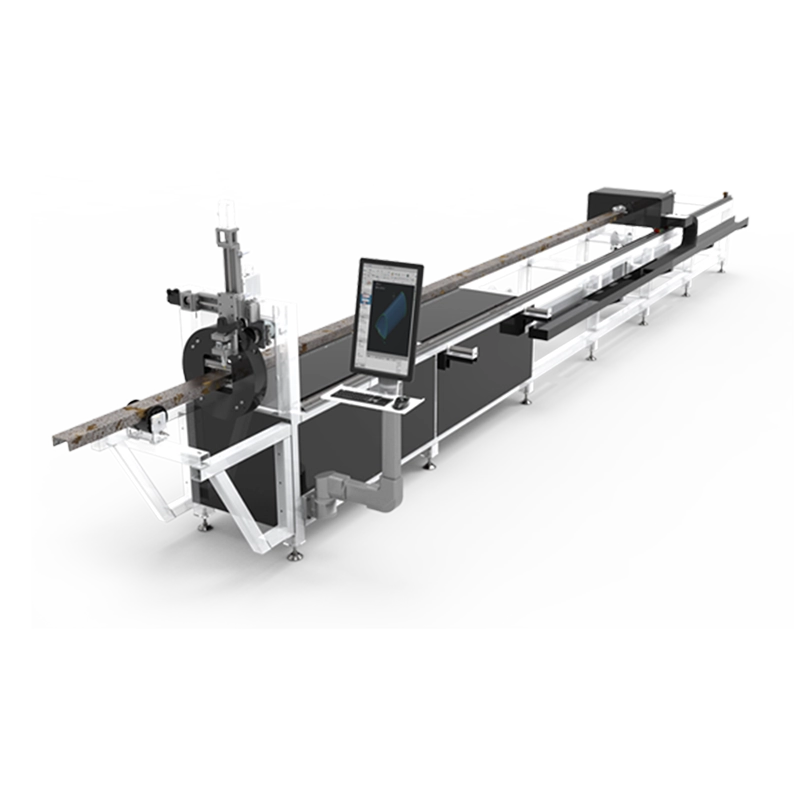
KEMPSON Fiber Laser Tube Cutting Machine
KEMPSON fiber laser tube cutting machines are configured for different tube materials, dimensions, profile shapes, and production requirements.
Machine Configuration
Main machine components include:
- Fiber Laser Source
- Laser Cutting Head
- CNC Control System
- Tube Chuck and Rotation System
- Automatic Loading and Unloading System




Tube Cutting Applications
The machine can be configured for cutting different metal tube profiles, including:
Round steel tubes, Square tubes, Rectangular tubes, Stainless steel tubes, and Aluminum profiles
Customized Machine Configuration
KEMPSON configures each machine according to the actual production requirements:
- Tube Dimensions: Diameter, wall thickness, and tube length.
- Material and Laser Power: Tube material and required cutting performance.
- Tube Profile: Chuck type, clamping range, and workpiece support.
- Automation: Production volume, loading, and unloading requirements.
- Cutting Tests: Sample materials, workpiece drawings, and cutting results.
Send your tube material, diameter, wall thickness, length, and cutting drawings to KEMPSON. Our engineering team will evaluate your requirements and recommend a suitable fiber laser tube cutting machine configuration for your production needs.
Conclusion
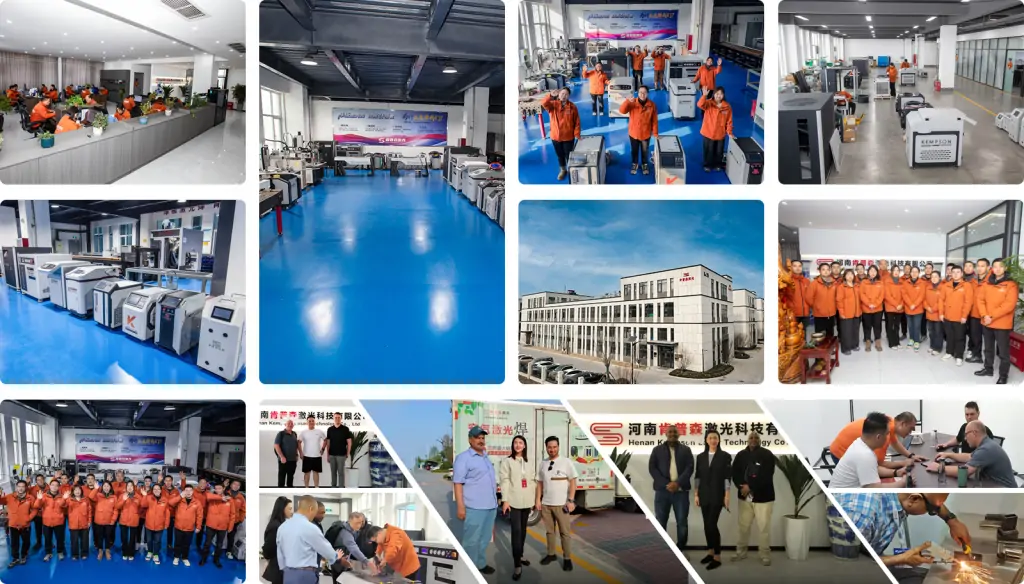
KEMPSON manufactures fiber laser tube cutting machines for industrial metal fabrication. The company provides equipment configuration, OEM/ODM customization, sample cutting, and technical evaluation based on customer requirements.
Overseas services include equipment installation, operator training, and after-sales support. Contact us and send your tube material, diameter, wall thickness, and cutting drawings to our engineering team for machine configuration evaluation.
FAQ
What is the main difference between fiber and CO2 laser cutting?
The main difference is the laser wavelength and beam generation method. Fiber lasers use an optical fiber source at approximately 1.06–1.08 μm, while CO2 lasers use a gas mixture at 10.6 μm. Their different wavelengths affect metal absorption, cutting performance, and optical maintenance.
Is a fiber laser better than a CO2 laser for cutting metal tubes?
A fiber laser is generally the preferred choice for modern metal tube cutting. It offers higher efficiency and better compatibility with reflective metals such as aluminum, copper, and brass. The actual choice depends on tube material, wall thickness, production volume, and machine configuration.
Can a CO2 laser cut stainless steel and carbon steel tubes?
Yes, CO2 lasers can cut both stainless steel and carbon steel tubes. Cutting performance depends on laser power, wall thickness, assist gas, and process parameters. The machine must also have a suitable chuck system and tube rotation control for the required cutting operations.
Can a fiber laser cut aluminum, copper, and brass tubes?
Yes, fiber lasers can cut aluminum, copper, and brass tubes with suitable laser power and process settings. These reflective metals require appropriate back-reflection protection and optical components. Cutting results depend on material grade, wall thickness, cutting gas, and machine configuration.
Which laser is faster for metal tube cutting?
Fiber lasers are generally faster in many thin- and medium-wall metal tube cutting applications. Actual speed depends on material, wall thickness, tube diameter, laser power, and cutting geometry. Loading, positioning, chuck rotation, and piercing time also affect the total production cycle.
Does fiber laser cutting produce better edge quality than CO2 laser cutting?
Not in every application. Both laser types can produce clean cutting edges when properly configured. Edge quality depends on material, wall thickness, focus position, cutting speed, assist gas, and nozzle condition. Kerf width, burr formation, and heat-affected zones should be evaluated through actual cutting tests.
Is a fiber laser tube cutting machine cheaper to operate than a CO2 laser machine?
Fiber laser machines generally have lower electrical consumption and beam-path maintenance costs. CO2 systems require regular mirror maintenance and laser gas management. Actual operating costs also include assist gas, consumables, maintenance, and processing time, so compare total costs under similar production conditions.
What factors should I consider when choosing a fiber laser tube cutting machine?
Check tube material, diameter, wall thickness, and maximum processing length first. Also consider laser power, tube profiles, cutting requirements, daily production volume, and automation needs. Provide actual tube drawings and sample specifications for machine configuration and cutting evaluation.