Introduction
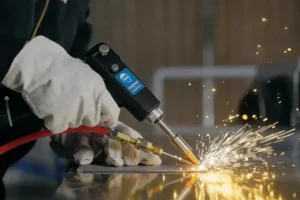
Welding is a key metal joining process used in manufacturing, construction, automotive production, and heavy industry. Traditional methods such as MIG, TIG, and arc welding have been widely used for their flexibility and reliability, while laser welding has emerged with the shift toward higher precision, efficiency, and automation.
Laser Welding
Traditional Welding
When evaluating laser welding vs traditional welding, factors such as weld quality, speed, heat input, automation, and cost are usually considered. This laser welding comparison will cover working principles, precision, speed, heat-affected zone, material use, automation, and applications to help explain what is the difference between laser welding and traditional welding.
What Is Traditional Welding?
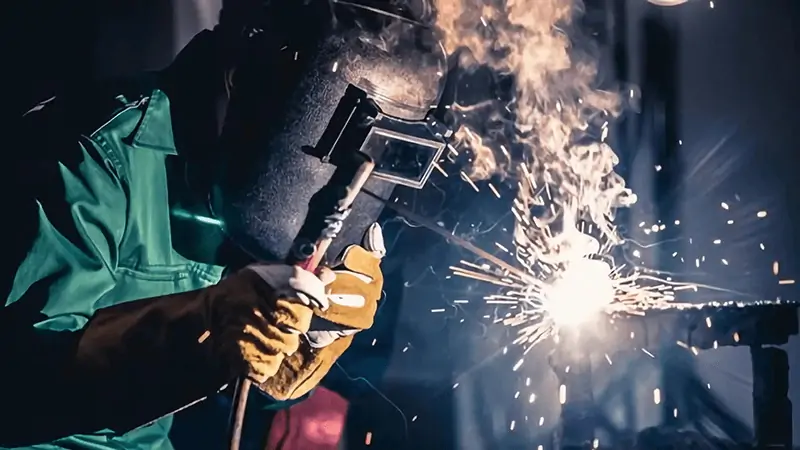
Traditional welding is a joining process in which workpieces—either of the same or different materials—are permanently bonded through heating, pressure, or a combination of both, with or without filler materials, until atomic-level bonding is achieved. It is also commonly referred to as fusion joining or metal fusion in the industry, and remains one of the core processes for connecting metals and thermoplastic materials in modern manufacturing.
Common Types of Traditional Welding
Traditional welding includes several widely used processes that differ in operation method, equipment requirements, and application scenarios. Among them, MIG welding, TIG welding, Stick welding, and Flux-cored welding (FCAW) are the most common techniques in modern manufacturing and field operations.
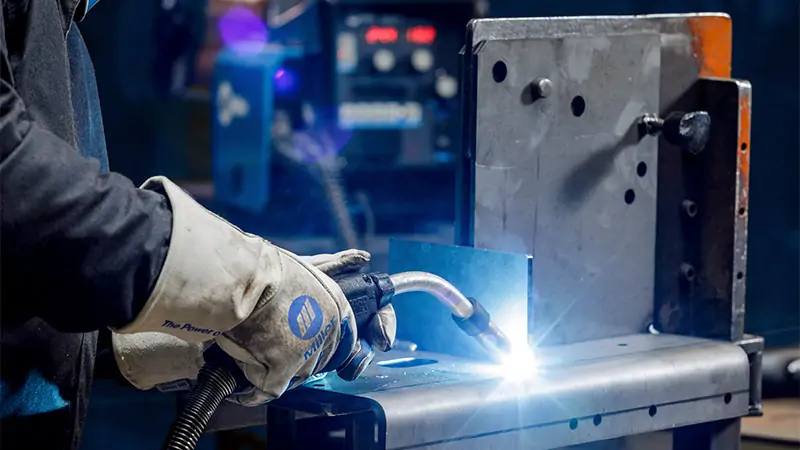
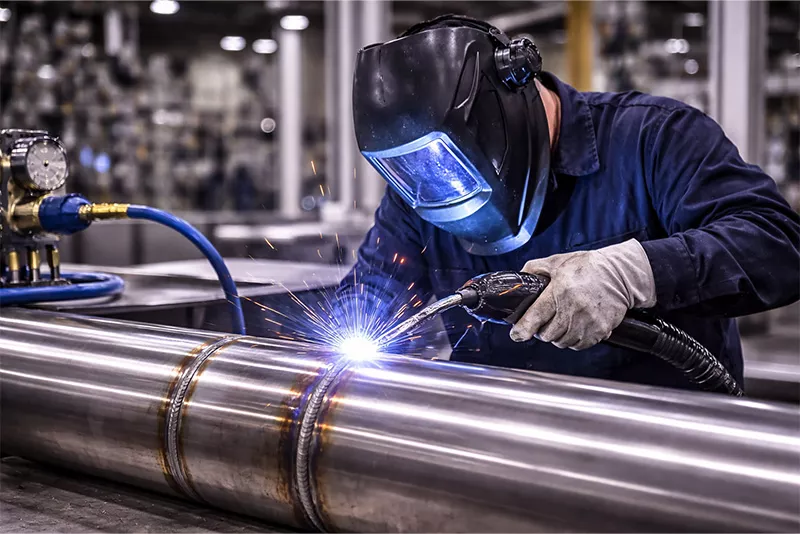
- MIG Welding: MIG welding uses a continuously fed wire electrode and shielding gas to join metals efficiently, offering high welding speed and easy operation for production and thin sheet applications.
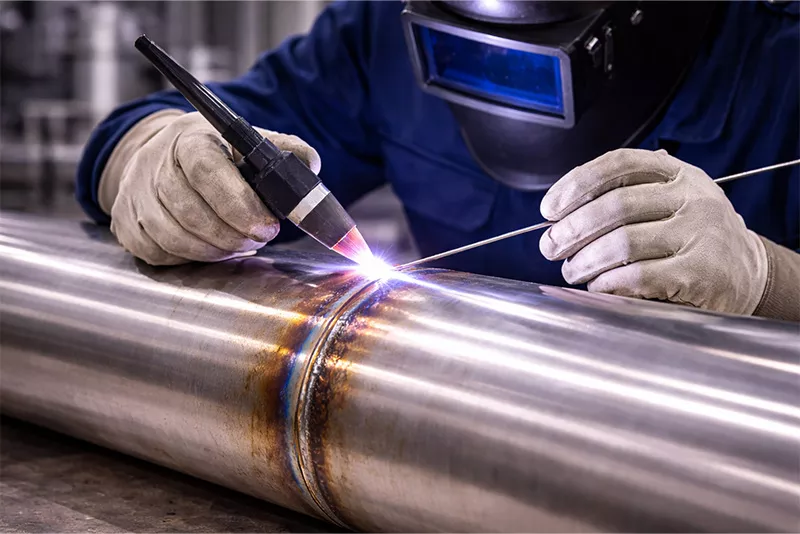
- TIG Welding: TIG welding uses a non-consumable tungsten electrode with inert gas protection to produce clean, precise welds, making it ideal for high-quality work on stainless steel, aluminum, and other critical materials.
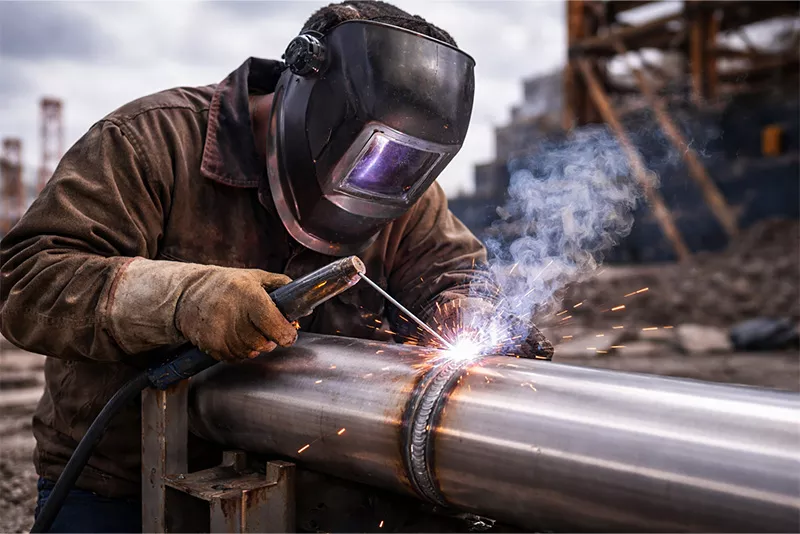
- Stick Welding: Stick welding (SMAW) uses a flux-coated electrode that generates its own shielding, providing a simple and low-cost solution suitable for outdoor work and heavy structural welding.
- Flux-Cored Welding (FCAW): Flux-cored welding (FCAW) uses a flux-filled wire to create shielding during welding, delivering strong penetration and high deposition rates for medium to heavy-duty industrial applications.
Traditional Welding Principle
Traditional welding joins two or more metal parts by applying heat, pressure, or both, allowing the materials to form a permanent metallurgical bond. Depending on the joining method, traditional welding processes are generally classified into fusion welding, pressure welding, and brazing.
Fusion Welding
Fusion welding joins materials by melting the base metals at the joint and allowing the molten pool to solidify into a permanent bond. Common methods include MIG, TIG, SMAW, and SAW welding. Shielding gas or flux is often used to protect the weld from contamination.
Pressure Welding
Pressure welding forms a joint by applying force to the materials, sometimes with additional heat. The process bonds the metals without fully melting them. Typical examples include resistance welding, friction welding, and forge welding.
Brazing
Brazing uses a filler metal with a lower melting point than the base materials. The filler metal melts and flows into the joint while the base metals remain solid. It is commonly used for joining dissimilar materials and heat-sensitive components.
Traditional welding methods are valued for their versatility, relatively low equipment costs, and ability to handle a wide range of materials and thicknesses. They remain widely used in construction, fabrication, shipbuilding, pipeline projects, and heavy manufacturing.
What Is Laser Welding?
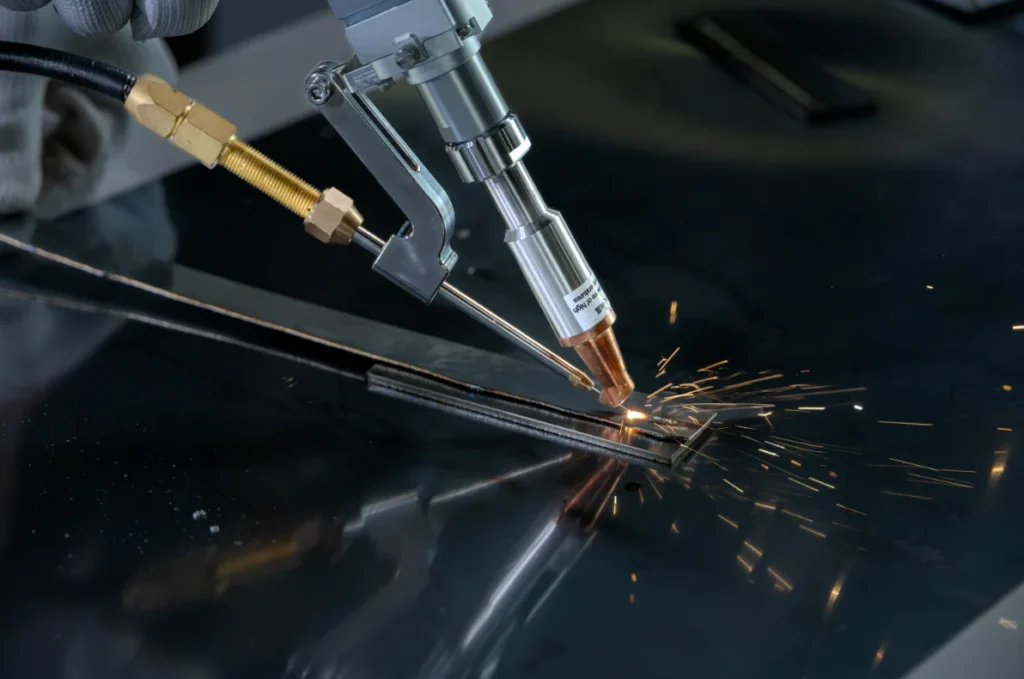
Laser welding is a precision welding process that uses a focused high-energy laser beam as the heat source to join materials. The laser is generated through stimulated emission and directed onto the workpiece, where it is absorbed and converted into heat to melt the material and form a weld joint. Learn More: What Is Laser Welding?
Because the heat input is highly concentrated, the process produces a narrow heat-affected zone and minimal thermal distortion. It also delivers stable weld quality and is well-suited for automated production environments. As a result, laser welding is widely used in automotive manufacturing, aerospace, electronics, and precision component production.
Types of Laser Welding
Laser welding is generally divided into two main types based on the weld formation mechanism: heat conduction welding and keyhole (deep penetration) welding. Learn About Different Laser Welding Machines.
- Heat conduction welding is suitable for thin materials and produces shallow, smooth welds through surface heat transfer.
- Keyhole welding is used for thicker materials, where high laser energy creates a vaporized cavity that enables deep penetration and strong structural joints.
How Laser Welding Works
The working process of laser welding can be summarized in four key steps:
- A laser medium (such as CO₂ gas or YAG crystal) is excited to generate a focused laser beam.
- The beam is transmitted through an optical system and concentrated into a small, high-energy spot.
- The laser energy is absorbed by the workpiece, rapidly heating the material to its melting or vaporization point and forming a molten pool.
- As the laser moves along the joint, the molten pool solidifies, forming a continuous weld. Shielding gas is used during the process to prevent oxidation and protect weld quality.
Laser welding is a modern joining technology designed for precision, speed, and automation. Compared with traditional welding methods, it delivers higher weld quality, lower thermal distortion, and better process control.
Laser Welding vs Traditional Welding: Key Differences
Cost and performance differences play a key role when evaluating laser welding vs traditional welding in real production environments. Beyond welding quality and speed, factors such as equipment investment, labor requirements, energy use, and maintenance directly influence long-term operating decisions.
1. Heat Source Comparison in Welding Processes
Welding heat sources are mainly divided into arc, flame, and laser beam, each with different energy concentration and application characteristics.
Arc (Traditional Welding Heat Source)
Arc is used in MIG, TIG, Stick, and FCAW welding. It generates heat through electric discharge to melt metal and filler material.
The energy density is relatively low (≤10⁴ W/cm²), with a wide heating area and a larger heat-affected zone. It is suitable for thick materials and general structural welding, but requires higher operator experience and may cause more deformation.
Flame (Gas Welding Heat Source)
Flame welding uses combustion of oxygen and fuel gas as the heat source.
It has lower energy concentration than arc welding, with more dispersed heat and lower precision. It is mainly used for repair work and light applications, rather than large-scale industrial production.
Laser Beam (Laser Welding Heat Source)
Laser welding uses a focused high-energy laser beam with very high energy density (10⁶–10⁸ W/cm²).
The heat input is highly concentrated, producing a small heat-affected zone (0.1–1 mm), minimal deformation, and high welding precision. It supports automation and high-speed production, making it suitable for automotive, aerospace, and precision manufacturing.
2. Precision and Weld Quality
Precision and weld quality are key factors when evaluating laser welding vs traditional welding. Differences in heat input, energy concentration, and process control directly affect weld appearance, stability, and the amount of post-processing required.
| Dimension | Traditional Welding | Laser Welding |
| Weld Width | Heat spreads over a wide area, resulting in a wider weld seam and larger heat-affected zone. It is less suitable for narrow or precision joints. | Highly concentrated energy produces a narrow weld seam with a heat-affected zone of about 0.1–1 mm, suitable for precision components. |
| Spatter | Arc and flame processes often generate significant spatter due to molten pool instability and flux decomposition, leading to surface contamination. | As a non-contact process, spatter is minimal due to stable energy input and controlled shielding gas protection. |
| Surface Quality | Weld appearance is often uneven and depends heavily on operator skill, especially in manual processes. | Produces smooth, consistent welds with high surface quality, especially suitable for automated production. |
| Post-processing Requirements | Higher deformation and surface irregularities often require grinding, polishing, and straightening. | Minimal deformation and clean welds usually reduce or eliminate post-processing needs. |
3. Welding Speed
Welding speed is one of the key factors affecting production efficiency and cycle time in industrial manufacturing. Different heat sources and process methods directly influence how quickly materials can be melted and joined.
Traditional Welding
Traditional welding uses lower energy density, requiring more time to heat and melt the material. TIG welding is typically around 1–5 m/min, while MIG and FCAW are faster but still limited by heat input and manual operation, making them less suitable for high-volume production.
Laser Welding
Laser welding uses highly concentrated energy to melt material quickly, achieving welding speeds of 10–50 m/min in industrial use. It is well-suited for automated, high-efficiency production lines.
4. Heat-Affected Zone (HAZ)
The heat-affected zone (HAZ) has a direct impact on material performance, dimensional stability, and final weld quality. Different welding processes generate different levels of heat input, which leads to variations in deformation, microstructure changes, and suitability for precision applications.
| Dimension | Traditional Welding (Arc / Flame) | Laser Welding |
| Heat-Affected Zone (HAZ) | High heat input and wide heat diffusion create a large HAZ, causing noticeable changes in base metal microstructure and reducing material stability. | Highly concentrated heat input results in a very small HAZ (about 0.1–1 mm), with minimal impact on surrounding material and better joint properties. |
| Thermal Deformation | Large heat spread leads to significant deformation, often requiring straightening or polishing after welding. | Low heat input and localized heating result in minimal deformation, often eliminating the need for post-processing. |
| Material Damage | Higher temperatures can cause grain growth, oxidation, and hardness changes, affecting strength and corrosion resistance. | Rapid heating and cooling reduce thermal damage, maintaining better mechanical properties. |
| Precision Parts Processing | Limited suitability for precision components due to large HAZ and deformation; mainly used for large structural parts. | High accuracy and small spot size enable welding of micro parts and tight tolerances, suitable for electronics, medical, and aerospace applications. |
5. Material Thickness Capability
Material thickness is a key factor in selecting a suitable welding process, as it directly affects penetration depth, efficiency, and weld stability. Different welding methods perform differently across thin, medium, and thick materials. The comparison below outlines the capability differences between laser welding vs traditional welding.
| Material Category | Laser Welding Capability | Traditional Welding Capability |
| Thin Plate | Strong advantage for thin sheets due to concentrated energy and small HAZ. It reduces burn-through and deformation. Suitable for precision parts; very thin materials (<0.1mm) require strict parameter control. | High heat input easily causes deformation, burn-through, and poor dimensional accuracy. Efficiency and yield are lower in thin plate welding. |
| Medium-Thickness Plate | Suitable for plates up to ~12mm with high speed and low deformation. Hybrid laser-arc welding (6–15mm) improves penetration and efficiency in industrial production. | Mature and widely used process (MIG, SMAW, etc.). Works well with medium thickness and gap tolerance, but requires multi-pass welding and causes higher deformation. |
| Extra-Thick Plate (>12mm) | Mature and widely used processes (MIG, SMAW, etc.). Works well with medium thickness and gap tolerance, but requires multi-pass welding and causes higher deformation. | Fully mature and widely used for heavy structures. Can handle almost all thicknesses with stable results, but with lower speed and higher deformation. |
6. Ease of Operation and Setup Complexity
Operation method and setup requirements directly affect production efficiency, training cost, and process stability. Traditional welding and laser welding differ significantly in dependence on operator skill, equipment configuration, and process control.
Traditional Welding
Traditional welding relies heavily on operator experience. Welding quality depends on manual control of parameters such as current, speed, and filler feeding, requiring long-term training. However, the equipment is simple, easy to set up, and flexible for on-site adjustments, making it suitable for repair work and field operations.
Laser Welding
Laser welding is controlled through preset CNC parameters such as power, speed, and spot size. Operators can be trained in a short time, and welding quality is more consistent. However, it requires higher setup precision, strict workpiece alignment, and more complex system integration in automated production environments.
7. Automation Compatibility & Cost Overview
Automation level and total cost structure are key factors in evaluating welding processes for modern manufacturing. Differences in process control, equipment integration, and labor dependency directly affect production efficiency and long-term investment.
Traditional Welding
Automation compatibility is limited due to manual dependency and unstable process control. It is difficult to integrate into fully automated production lines, and long-term labor costs remain high despite lower initial equipment costs.
Laser Welding
Laser welding integrates well with robotic systems, vision positioning, and automated control platforms. It supports continuous production with stable quality and reduced labor input. Although the initial investment is higher, overall production efficiency and long-term operating cost are more favorable in mass manufacturing scenarios.
8. Initial Investment vs Long-Term Cost
Cost structure plays an important role in selecting a welding process, especially when balancing upfront equipment spending with long-term operating expenses. Laser welding vs traditional welding differ significantly in equipment investment, labor demand, energy use, and maintenance requirements.
| Cost Dimension | Traditional Welding | Laser Welding |
| Equipment Cost | Low initial cost; basic equipment costs only a few thousand yuan, suitable for small workshops and low-budget users. | High initial investment; complete systems (laser source, cooling, safety) typically cost several hundred thousand yuan. |
| Labor Cost | High long-term labor cost due to reliance on skilled welders and higher repair rates in manual operations. | Low labor requirement; fewer operators needed with stable and consistent welding quality. |
| Energy Consumption | Lower efficiency with higher overall energy use due to dispersed heat input. | Higher energy efficiency with concentrated heat input, reducing overall energy consumption. |
| Maintenance Cost | Higher consumable usage (electrodes, wires, gas) but simple equipment maintenance. | Lower consumable cost, but requires periodic maintenance of optical components such as lenses and protective glass. |
Laser welding vs traditional welding shows a clear trade-off between upfront investment and long-term efficiency. Traditional welding has a lower entry cost but higher labor and consumable costs, while laser welding requires a higher initial investment but offers better efficiency, lower operating costs, and stronger suitability for automated production.
Advantages of Traditional Welding
Traditional welding remains widely used across industries due to its practicality, flexibility, and low entry requirements. It continues to play an important role in construction, maintenance, and heavy fabrication, where cost and adaptability are key factors.
- Lower Initial Equipment Cost: Traditional welding requires relatively simple and low-cost equipment, making it accessible for small workshops and entry-level users.
- Suitable for Outdoor and Field Work: It performs well in outdoor environments and on-site operations, with strong adaptability to changing working conditions.
- Better for Certain Thick Materials: Traditional processes are effective for heavy and thick structural materials, especially in large-scale fabrication and construction projects.
Traditional welding remains a practical solution for cost-sensitive and field-based applications. Its simplicity, flexibility, and ability to handle heavy materials ensure it continues to be widely used in industrial and construction environments.
Advantages of Laser Welding
Laser welding is widely used in modern manufacturing due to its high efficiency, precision, and strong compatibility with automated production systems.
- Higher Precision: Laser welding provides highly accurate control of the heat input, producing narrow weld seams and stable joint quality.
- Faster Production Speed: The concentrated energy enables rapid melting and solidification, significantly increasing welding speed in mass production.
- Reduced Material Distortion: Low and localized heat input minimizes thermal deformation, improving the dimensional stability of welded parts.
- Lower Post-Processing Requirements: Clean weld formation reduces the need for grinding, polishing, and other finishing processes.
- Better Automation Integration: Laser welding systems integrate easily with robots and control systems, supporting continuous and automated production lines.
Laser welding vs traditional welding highlights clear advantages in precision manufacturing. Laser welding delivers higher efficiency, better consistency, and stronger automation capability, making it a key process in advanced industrial production.
Laser Welding vs MIG Welding
Laser welding and MIG welding are both widely used metal joining processes, but they differ significantly in speed, cost structure, weld quality, and automation capability. For a detailed comparison, read: Laser Welding vs. MIG Welding
| Dimension | MIG Welding | Laser Welding |
| Speed | Moderate speed, suitable for general fabrication and manual production. | High speed, suitable for continuous automated production. |
| Cost | Low equipment cost but higher labor and consumable costs over time. | High initial cost but lower long-term operating cost. |
| Weld Quality | Good quality but more spatter and wider weld seams. | High precision, narrow seams, and stable quality. |
| Automation | Limited automation, mostly manual or semi-automatic use. | Strong automation integration for robotic production lines. |
Laser welding vs MIG welding shows a clear trade-off between initial investment and production efficiency. MIG welding remains suitable for flexible and cost-sensitive applications, while laser welding is more effective for high-speed, automated, and high-precision manufacturing environments.
Laser Welding vs TIG Welding
Laser welding and TIG welding are both used for high-quality metal joining, but they differ in precision control, weld appearance, operation complexity, and overall cost structure.
| Dimension | TIG Welding | Laser Welding |
| Precision | High precision, but strongly dependent on operator skill. | Very high precision with stable, repeatable control. |
| Appearance | Clean welds with good finish, often used for visible parts. | Smooth, narrow seams with minimal post-processing. |
| Operation Difficulty | Requires skilled welders and long training. | Easy parameter-based operation with CNC/automation support. |
| Overall Cost | Lower equipment cost but higher labor cost over time. | Higher initial investment but lower long-term production cost. |
Laser welding vs TIG welding shows a clear shift from skill-dependent operation to automated precision manufacturing. TIG welding remains suitable for high-quality manual work, while laser welding is more efficient for consistent, high-volume production.
Applications of Laser Welding
Laser welding is widely used in industries requiring high precision, stability, and automation. It is suitable for both mass production and fine processing applications.
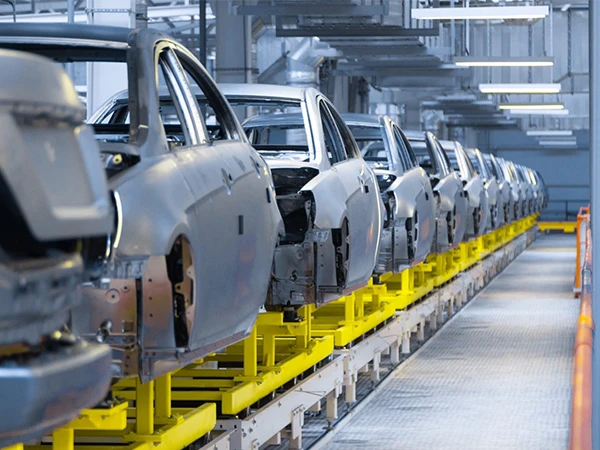
Automotive Manufacturing
Used for body structures and key parts in high-volume production.
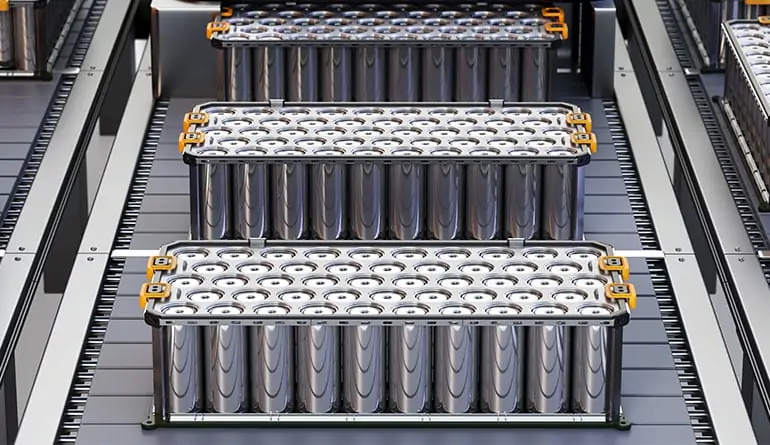
Battery and EV Production
Used for battery tabs, packs, and electrical connections with high precision.
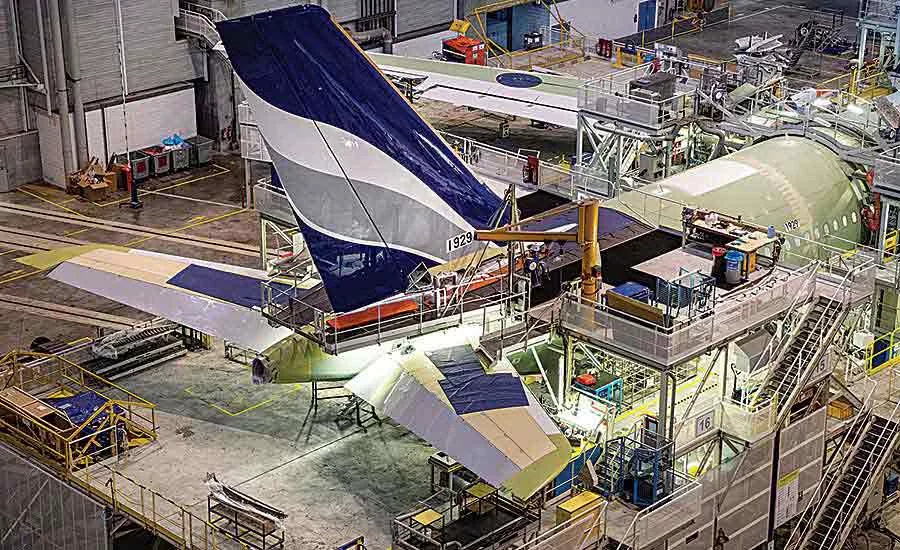
Aerospace Industry
Used for lightweight, high-strength components with strict quality control.
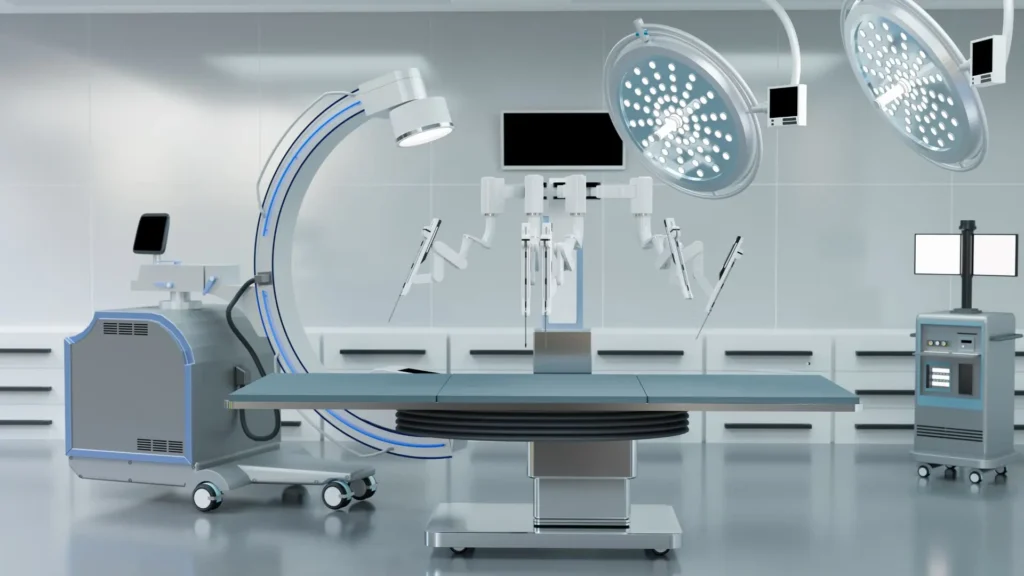
Medical Device Manufacturing
Used for small parts requiring clean and accurate welds.

Electronics Industry
Used for micro-components with low heat impact requirements.
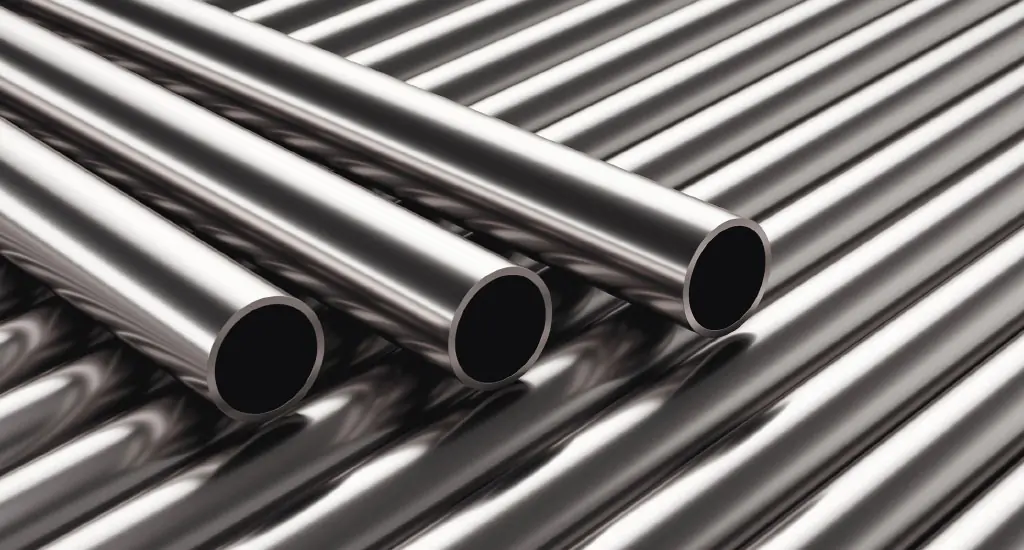
Stainless Steel Fabrication
Used for clean, smooth welds in decorative and structural parts.
Laser welding vs traditional welding shows clear advantages in precision industries. Laser welding is widely adopted in high-end manufacturing due to its accuracy, efficiency, and automation compatibility.
When Should You Choose Laser?
The choice between laser welding vs traditional welding depends on production requirements such as precision level, batch size, material type, and automation degree. Different processes are better suited to different industrial scenarios.
| Scenario | Recommended Process |
| High-volume production lines (automotive, consumer goods, continuous output) | Laser Welding – supports fast cycle time and stable mass production |
| Precision components (electronics, medical parts, micro-assemblies) | Laser Welding – ensures high accuracy and minimal thermal distortion |
| Automated smart factories (robotic welding, CNC integration) | Laser Welding – fully compatible with automation and digital control systems |
| Small workshops and repair jobs (on-site maintenance, flexible operation) | Traditional Welding – easy setup and adaptable to varying conditions |
| Thick steel structures (construction, shipbuilding, heavy fabrication) | Traditional Welding – better suited for large gaps and heavy-duty materials |
In practice, when to choose laser welding over traditional welding depends on whether the focus is automation and precision, or flexibility and structural work. Laser welding is better suited for modern automated production, while traditional welding is commonly used for field work, repair, and heavy fabrication.
If none of the above scenarios match your application, feel free to contact us. Our engineering team can provide professional recommendations based on your specific requirements.
Conclusion
Laser welding vs traditional welding shows clear differences in application. Laser welding is suitable for high-precision, automated, and high-efficiency production. Traditional welding is widely used for flexible operation, field work, and heavy structural applications. The choice depends on production requirements and cost considerations. A proper selection can improve product quality and overall efficiency.
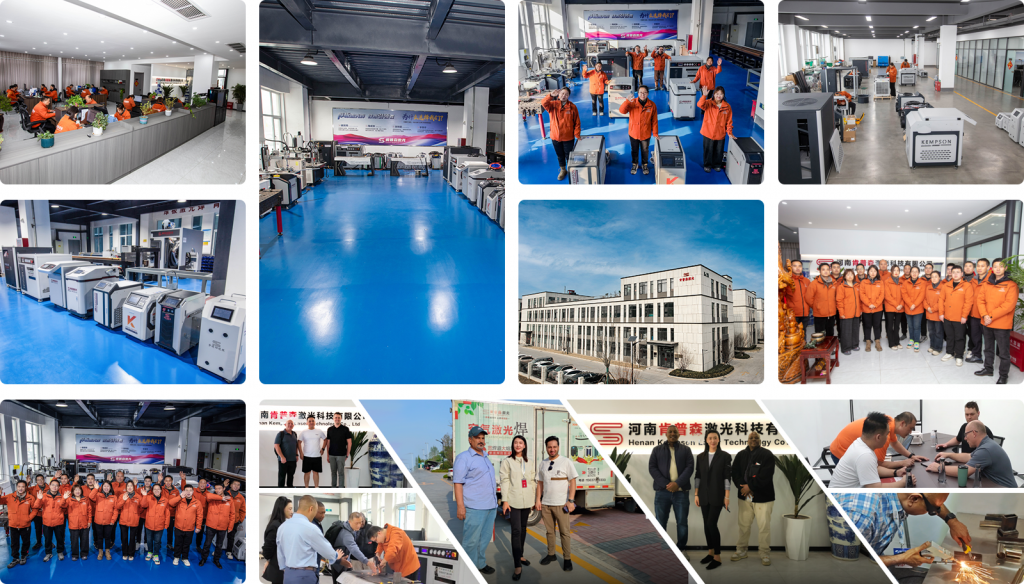
As a professional supplier, KEMPSON provides industrial welding solutions and customized technical support for different application needs. If you need a suitable welding solution, you can contact us for professional assistance.
FAQs
What is the difference between laser welding and traditional welding?
The main difference lies in the heat source and energy concentration. Laser welding uses a focused beam for high precision and low deformation, while traditional welding relies on arc or flame heat with wider heat input and more flexibility.
Is laser welding stronger than traditional welding?
Strength depends on material and process control. Laser welding can achieve high-strength joints with low distortion, while traditional welding is also strong for structural applications when properly executed.
Is laser welding better than MIG welding?
For precision, speed, and automation, laser welding performs better. MIG welding is more flexible and cost-effective for general fabrication and manual operation.
How much does laser welding cost compared with TIG welding?
Laser welding has a higher initial equipment cost but lower long-term labor and operating costs. TIG welding has a lower equipment cost but a higher labor dependency over time.
What materials can be laser-welded?
Laser welding can process stainless steel, carbon steel, aluminum, titanium, and some dissimilar metals, depending on laser power and process settings.
Is laser welding suitable for thick metal plates?
It is suitable for thin to medium-thickness materials. For thick plates, high-power or hybrid laser welding systems are required, while traditional welding is still more commonly used.
Why is laser welding widely used in automotive manufacturing?
Because it supports high-speed production, consistent weld quality, and easy integration with robotic automation systems, it is suitable for mass production lines.
Can laser welding be fully automated?
Yes. Laser welding can be fully integrated with robots, CNC systems, and vision control for continuous automated production with stable quality.