Table of Contents
Introduction
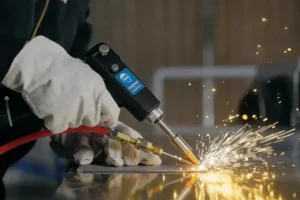
Filler wire is used to add metal to an aluminum laser weld when the joint needs more material. It can help fill a small gap between the workpieces, build up the weld bead, and provide the strength or weld appearance required for the joint. The choice of filler wire also matters because different aluminum alloys, such as 4043, 5356, and 5183, produce different weld characteristics.
Choosing aluminum laser welding filler wire mainly comes down to two things: the filler alloy and the wire diameter. We’ll compare common options such as 4043, 5356, 5183, and 4047, then look at which wire works with common aluminum grades and how to choose the right diameter for different material thicknesses. We’ll also cover when filler wire is needed and when aluminum can be laser welded without it.
KEMPSON offers professional laser welding machines designed for aluminum alloys. To learn more about our products, visit: Aluminum Laser Welding Machine
Do You Need Filler Wire for Aluminum Laser Welding?
No. Aluminum can be laser welded without filler wire when the joint fit-up, material thickness, and required weld profile allow autogenous welding. Filler wire is used when the joint needs additional metal or a specific weld composition.
When Filler Wire Is Recommended
- Joint gap: Filler wire fills gaps between the workpieces.
- Edge mismatch: Additional metal helps compensate for uneven or misaligned edges.
- Thicker aluminum: More filler may be needed to build the required weld section.
- Weld reinforcement: Filler wire adds material when a larger weld profile is required.
- Joint strength: The right filler alloy can improve the required weld properties.
- Specific weld chemistry: A selected filler alloy can modify the composition of the weld metal.
When Filler Wire May Not Be Necessary
- Tight butt joint: Closely fitted edges leave little or no gap to fill.
- Thin aluminum: Thin sections may be welded directly without additional metal.
- Clean, consistent edges: Good edge condition supports stable autogenous welding.
- Sufficient penetration: The laser can produce the required penetration without filler.
- Required weld profile: The target weld size and shape can be obtained without added metal.
The decision depends on the joint fit-up, aluminum alloy, thickness, and required weld profile. Filler wire is not a mandatory part of every aluminum laser welding application.
Aluminum Filler Wire Alloys for Laser Welding
No single filler wire fits every aluminum laser welding job. Selection mainly depends on the base alloy and required weld properties.
| Filler Alloy | Common Base Aluminum | Data | Use |
|---|---|---|---|
| 4043 | 6XXX, cast aluminum | ~5% Si; good fluidity and crack resistance | General welding |
| 5356 | 5XXX, some 6XXX | Higher Mg; higher strength and ductility | Structural parts |
| 5183 | 5083, 5086, high-Mg 5XXX | Higher Mg; high weld strength | Marine, heavy-duty structures |
| 4047 | Selected alloys | ~12% Si; excellent fluidity | Thin sections, sealing joints |
- 4043 — A general-purpose filler wire for 6XXX series and cast aluminum. It offers good fluidity and low cracking tendency.
- 5356 — Commonly used for 5XXX series aluminum and applications requiring higher weld strength.
- 5183 — Suitable for high-strength aluminum joints where better mechanical properties are required.
- 4047 — Contains about 12% silicon and provides excellent fluidity. It is suitable for thin sections and sealing applications but is less suitable for structural joints requiring high strength.
The filler wire selection should match the base aluminum alloy, weld requirements, and joint design. Welding tests are recommended before production use.
4043 vs 5356 Filler Wire
4043 and 5356 are two of the most commonly used aluminum filler wires, but they serve different welding needs. The main difference is fluidity and crack resistance versus weld strength and corrosion resistance.
| Factor | 4043 | 5356 |
|---|---|---|
| Main alloy | Al-Si | Al-Mg |
| Si / Mg content | ~5% Si | 4.5–5.5% Mg |
| Tensile strength | ~186–220 MPa | ~290 MPa |
| Fluidity | Higher | Moderate |
| Crack resistance | Good | Good |
| Typical base metal | 6XXX, cast aluminum | 5XXX, some 6XXX |
| Main advantage | Fluidity and weldability | Strength and corrosion resistance |
| Anodizing | Poorer color match | Better color match |
Use 4043
4043 is an Al-Si filler wire with about 5% Si. It is commonly used for 6061, 6063, and other 6XXX alloys, as well as cast aluminum. The wire melts and flows easily, giving a smooth weld bead and good resistance to hot cracking. With a tensile strength of about 186–220 MPa, 4043 is better suited to general welding than high-strength joints.
Use 5356
5356 is an Al-Mg filler wire with 4.5–5.5% Mg. It is commonly matched with 5052, 5083, 5456, and other 5XXX alloys, and is also used on 6XXX aluminum where higher weld strength is required. Its tensile strength is about 290 MPa, with good ductility and corrosion resistance. For parts that will be anodized after welding, 5356 also gives a closer color match to the base aluminum.
Choose 4043 when fluidity, weld appearance, and crack resistance are the main concerns. Choose 5356 when higher strength, ductility, corrosion resistance, or anodizing performance is more important. The final choice should be checked against the actual base aluminum alloy and joint requirements.
When performing laser welding on aluminum plates for structural applications, ensuring consistent material quality and proper alloy selection is critical. For high-grade aluminum materials and custom sheets, you may visit Union Alu to source reliable raw aluminum products.
Best Filler Wire for Common Aluminum Alloys
The filler wire should match the base aluminum alloy and the required weld properties. For common aluminum grades, the following combinations are widely used:
- 6061 Aluminum — Use 4043 for general welding and better fluidity. Choose 5356 when higher weld strength or anodizing performance is required.
- 6063 Aluminum — 4043 and 5356 are both common options. 4043 provides good weldability, while 5356 offers higher strength.
- 5052 Aluminum — 5356 or 5654 filler wire is recommended for good strength and ductility.
- 5083 Aluminum — Use 5356, 5183, or 5556 filler wires for higher strength and corrosion resistance in high-magnesium alloys.
- Cast Aluminum — 4043 is widely used for good fluidity and crack resistance. 4047 is suitable for thin sections and sealing applications due to its higher silicon content.
For production welding, check the filler wire against the base alloy, material thickness, joint design, and required weld strength before finalizing the welding parameters.
What Filler Wire Diameter Should You Use for Aluminum Laser Welding?
Filler wire diameter is mainly selected according to material thickness, joint gap, weld size, wire feed speed, and laser power. There is no single diameter for every aluminum laser welding job.
Common Aluminum Laser Welding Wire Diameters
| Wire Diameter | Material / Joint | Use |
|---|---|---|
| 0.8 mm | Thin aluminum sheet, small joints | Small welds, precise filler control |
| 1.0 mm | Thin to medium thickness | General thin-sheet welding |
| 1.2 mm | Medium thickness, larger welds | General production welding |
| 1.6 mm | Thicker material, larger joints | Higher filler volume |
| 2.0 mm | Thick sections, larger joint gaps | Heavy filler applications |
- 0.8–1.0 mm: Suitable for thin sheet and small welds. The smaller wire gives better control of filler addition and the weld pool.
- 1.2 mm: A common choice for medium-thickness aluminum and general production work. It provides a good balance between filler volume and wire feeding.
- 1.6–2.0 mm: Used for larger welds, thicker material, or wider joint gaps. The larger diameter adds more filler metal but requires suitable wire feeding capacity and laser power.
The wire diameter should be selected based on the aluminum alloy, material thickness, joint gap, laser power, wire feed speed, and welding equipment configuration. For production welding, confirm the selected wire size and parameters through welding tests before full-scale operation.
Does Laser Power Affect Filler Wire Diameter?
Not necessarily. Higher laser power does not automatically require a larger filler wire.
Laser power determines the available heat input, while wire diameter determines the amount of filler metal added. Wire feed speed controls the deposition rate. A larger wire generally needs more energy to melt, so laser power and wire diameter need to be matched.
The final combination depends on the wire diameter, feed speed, material thickness, joint gap, and welding speed. Test the actual setup before production.
Parameters for Aluminum Laser Welding With Filler Wire
Filler wire settings need to be matched with the main welding parameters. The key factors are wire feed speed, laser power, welding speed, and wire feeding angle.
Wire Feed Speed: Wire feed speed controls the amount of filler wire added to the weld. It needs to match the wire diameter and welding speed.
Laser Power: Laser power must provide enough energy to melt the filler wire and base metal. A larger wire diameter generally requires more energy.
Welding Speed: Welding speed affects the heat input and filler amount per unit length. A change in welding speed may require a corresponding adjustment to wire feed speed.
Wire Feeding Angle: The feeding angle determines where the wire enters the molten pool. The wire should enter the pool steadily to maintain consistent filler distribution.
The filler wire diameter and wire feed speed should be validated together with laser power and welding speed. Final settings depend on the aluminum alloy, thickness, joint design, and welding system.
For details on the aluminum laser welding process and parameter settings, see: Laser Welding Aluminum: Process, Parameters & Best Practices
How to Choose Filler Wire for Aluminum Laser Welding
The right filler wire mainly depends on the base aluminum alloy, required weld properties, material thickness, and joint gap.
| Selection Factor | What to Check |
|---|---|
| Base alloy | Match the filler alloy to the aluminum grade. 5XXX alloys commonly use 5356, while 4043 is widely used with many 6XXX alloys. |
| Weld properties | Consider strength, ductility, crack resistance, corrosion resistance, and weld appearance. |
| Wire diameter | Common sizes include 0.8, 1.0, 1.2, 1.6, and 2.0 mm. Smaller wire is easier to control on thin sheet; larger wire provides more filler metal. |
| Joint gap | A tight joint may need little or no filler. Larger gaps require more filler metal and may call for a larger wire or adjusted wire feed speed. |
Match the Filler Alloy to the Base Metal
For 5083, 5A06, and other 5XXX aluminum alloys, ER5356 is a common choice. For many 6XXX alloys, ER4043 or ER5356 may be used depending on the required strength, crack resistance, and surface finish. For 2XXX alloys and dissimilar aluminum joints, filler selection should be checked through welding tests rather than based on alloy name alone.
Choose the Wire Diameter
For aluminum laser welding, 0.8–2.0 mm wire covers many common applications. Thin sheet and small welds generally use smaller diameters, while thicker material or larger joint gaps need more filler metal. Wire diameter must also match laser power and wire feed speed.
Check the Joint Before Welding
Joint gap and fit-up can change the amount of filler wire needed. A small and consistent gap is easier to weld, while a larger gap requires more filler metal and tighter control of the welding parameters.
For production welding, test the selected filler alloy and wire diameter with the actual aluminum grade, thickness, joint design, and welding conditions before fixing the final setup.
Conclusion
Choosing the right filler wire for aluminum laser welding comes down to the base aluminum alloy, weld requirements, wire diameter, and joint gap. 4043 is widely used for 6XXX and cast aluminum, while 5356 and 5183 are common choices for 5XXX alloys and higher-strength welds. Wire diameter should be matched to material thickness, joint gap, laser power, and wire feed speed.
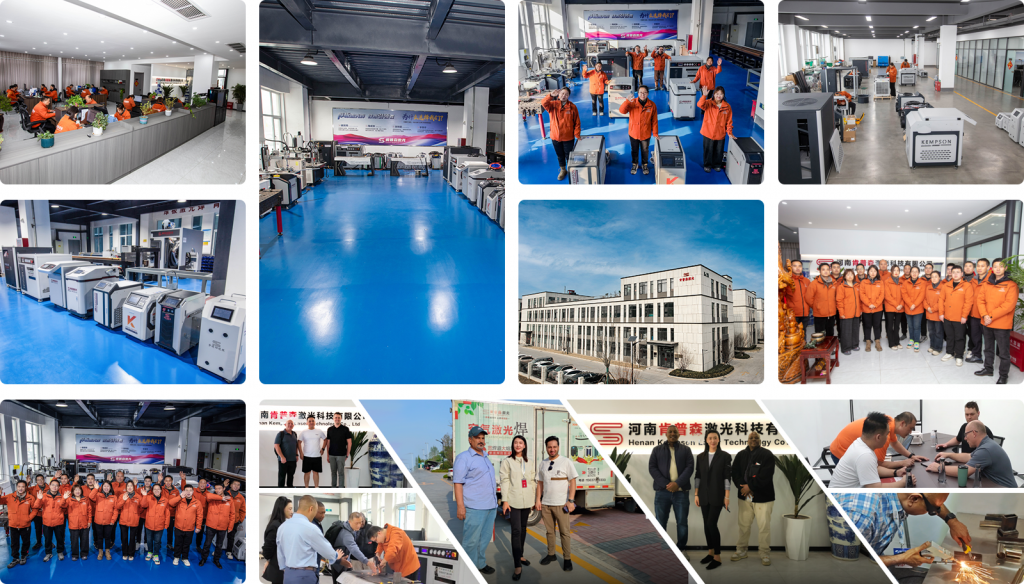
If you are unsure which filler wire or laser welding setup fits your aluminum application, contact us with your material grade, thickness, joint type, and welding requirements. KEMPSON provides professional wire feeding solutions and can recommend the right laser power, filler wire, wire feeder configuration, and welding parameters based on your application conditions.
FAQ
What is the best filler wire for aluminum laser welding?
There is no single filler wire for all aluminum alloys. 4043 is a common choice for 6XXX and cast aluminum, while 5356 and 5183 are widely used for 5XXX alloys and higher-strength welds. The final choice depends on the base alloy and required weld properties.
Is 4043 or 5356 better for aluminum laser welding?
4043 offers good fluidity, weld appearance, and crack resistance, while 5356 provides higher weld strength, ductility, and corrosion resistance. Use 4043 for many 6XXX applications and 5356 when higher strength or anodizing performance is required.
What filler wire should I use for 6061 aluminum?
4043 or 5356 are common choices for 6061 aluminum. Choose 4043 for good fluidity and crack resistance, or 5356 when higher weld strength is needed.
What filler wire is best for 5083 aluminum?
5356, 5183, or 5556 are commonly used with 5083 aluminum. These Al-Mg filler wires are better suited to the strength and corrosion requirements of high-magnesium 5XXX alloys.
What diameter filler wire should I use for aluminum laser welding?
Common aluminum filler wire diameters range from 0.8 to 2.0 mm. Use 0.8–1.0 mm for thin sheet and small welds, 1.0–1.2 mm for medium-thickness welding, and 1.6–2.0 mm for larger welds or wider joint gaps.
Can aluminum be laser welded without filler wire?
Yes. Aluminum can be laser welded without filler wire when the joint has good fit-up, sufficient penetration can be obtained, and the required weld profile can be produced without additional metal. Filler wire is mainly used to fill gaps, add weld metal, or obtain specific weld properties.
Is 4043 suitable for all aluminum alloys?
No. 4043 is widely used with 6XXX and many cast aluminum alloys, but it is not the default choice for high-magnesium 5XXX alloys such as 5083. The filler wire should be selected according to the base alloy and weld requirements.
Can 5356 filler wire be used for 6061 aluminum?
Yes. 5356 can be used with 6061 aluminum when higher weld strength, ductility, or anodizing performance is required. 4043 is also a common option for 6061, particularly when fluidity and crack resistance.