Table of Contents
Introduction
Laser welding aluminum thickness requires precise control of heat input because aluminum transfers heat quickly and reflects laser energy. The suitable welding thickness depends on the machine power, material type, and actual working conditions, making power selection an important part of the welding process.
In this article, I will introduce laser welding aluminum thickness for different power levels, including 1000W to 6000W laser welders, recommended aluminum thickness ranges, factors affecting welding performance, and tips for choosing the right equipment. This guide helps users understand what a laser welder can handle before selecting a machine.
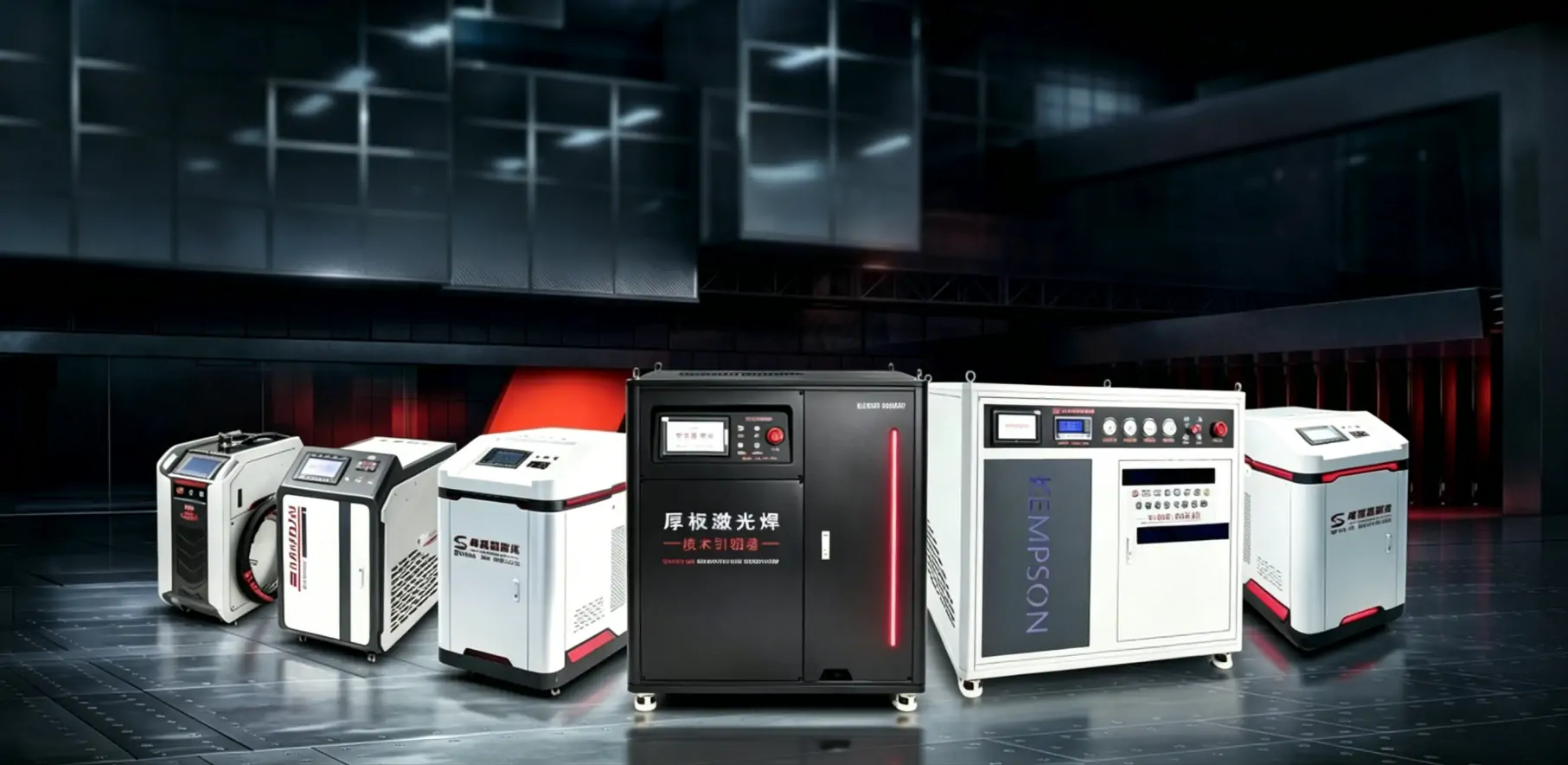
How Thick Aluminum Can a Laser Welder Weld?
A laser welding aluminum thicknesses from thin sheets to several millimeters thick, depending on laser power, aluminum alloy type, joint design, and welding parameters. For handheld laser welding machines, 1500W–3000W models are commonly used for aluminum welding, while higher-power equipment is selected for thicker aluminum plates and heavy-duty applications.
| Laser Power | Recommended Aluminum Thickness | Applications |
|---|---|---|
| 1500W | 0.5–3 mm | Aluminum doors, windows, cabinets, general fabrication |
| 2000W | 1–5 mm | Medium-thickness aluminum components and industrial parts |
| 3000W | 2–8 mm | Larger aluminum structures and continuous production |
| 4000W | 3–10 mm | Heavy aluminum fabrication and thick components |
| 6000W | 5 mm+ | Large structures and high-strength aluminum welding |
The actual laser welding aluminum thickness may vary depending on aluminum alloy composition, surface condition, welding speed, and wire feeding settings.
To learn about aluminum welding methods and characteristics, see the article: “How to Weld Aluminum: Methods, Parameters & Laser Welding Guide”
Aluminum Welding Thickness by Laser Power
Laser power directly affects the laser welding aluminum thickness and application range of aluminum. Different power levels are selected according to material thickness, production requirements, and welding conditions.
1500W Laser Welder
A 1500W laser welder is a common choice for aluminum welding. It is suitable for thin and medium-thickness aluminum parts, offering a good balance between welding performance and equipment cost.
Advantages
- Stable welding performance
- Low heat deformation
- Suitable for daily production
Applications
- Aluminum doors and windows
- Sheet metal products
- Small machinery parts
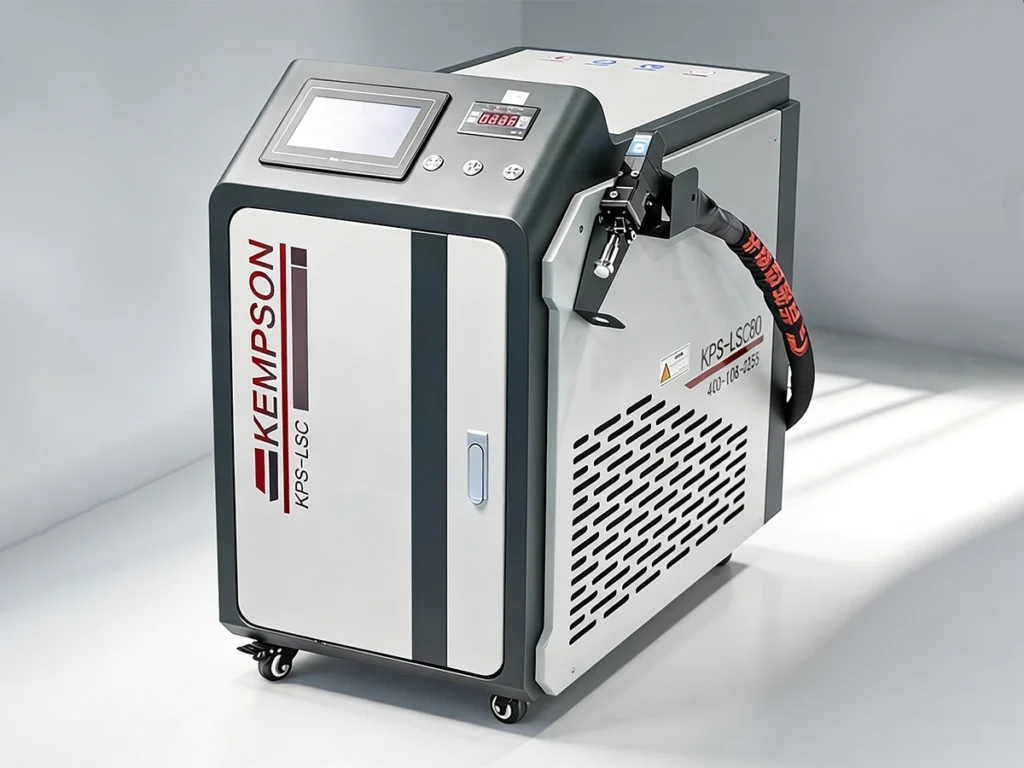
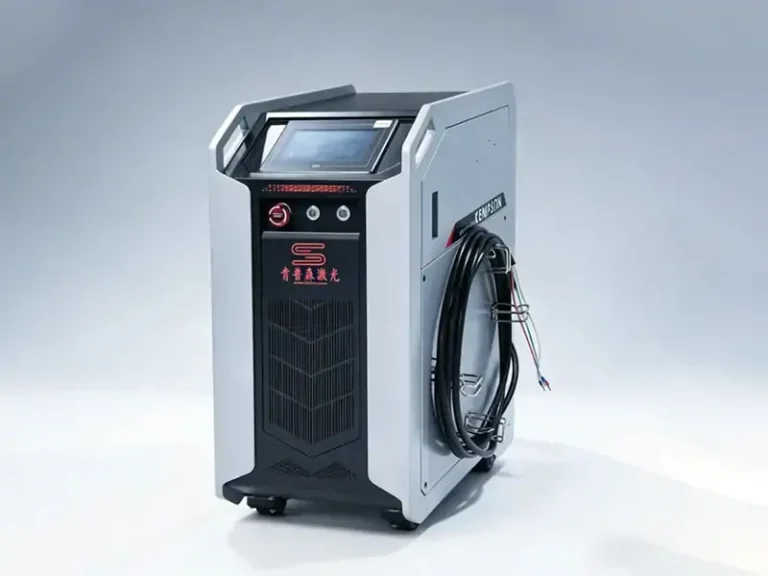
2000W Laser Welder
A 2000W laser welder offers greater penetration and welding speed than a 1500W model. It is suitable for users who need to process thicker aluminum materials or improve production efficiency.
Advantages
- Higher welding speed
- Better thickness capability
- Suitable for continuous operation
Applications
- Aluminum frames
- Industrial components
- Equipment manufacturing
3000W Laser Welder
A 3000W laser welder is designed for thicker aluminum welding and higher production requirements. It provides stronger energy output for larger workpieces.
Advantages
- Deeper weld penetration
- Faster processing speed
- Handles larger components
Applications
- Aluminum structures
- Heavy equipment parts
- Large fabrication projects
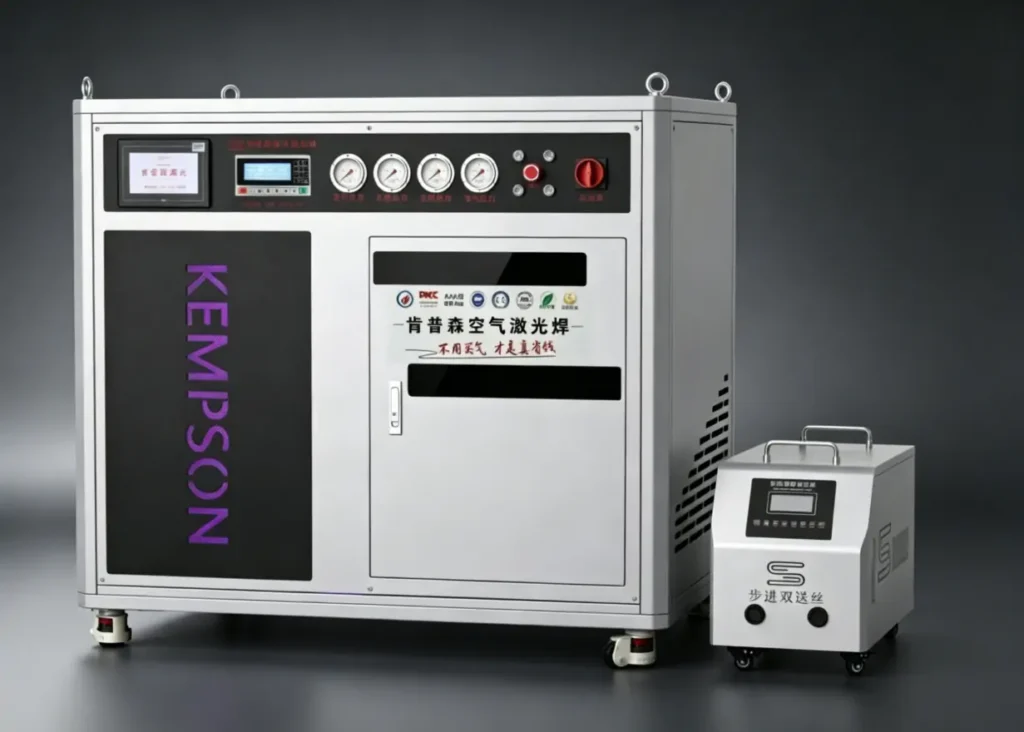
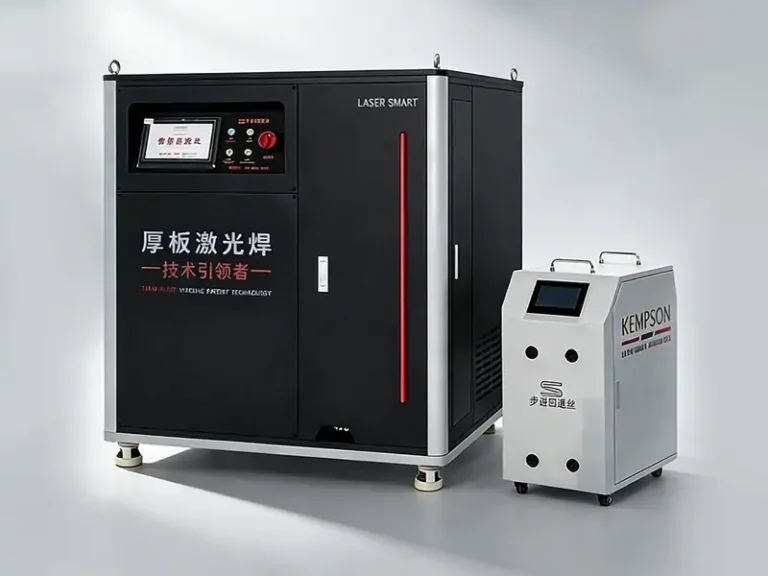
4000W Laser Welder
A 4000W laser welder is used for demanding aluminum welding tasks that require higher penetration and longer working cycles.
Advantages
- Strong welding capability
- Suitable for thick aluminum parts
- Supports high-load production
Applications
- Large aluminum frames
- Industrial machinery
- Heavy fabrication
6000W Laser Welder
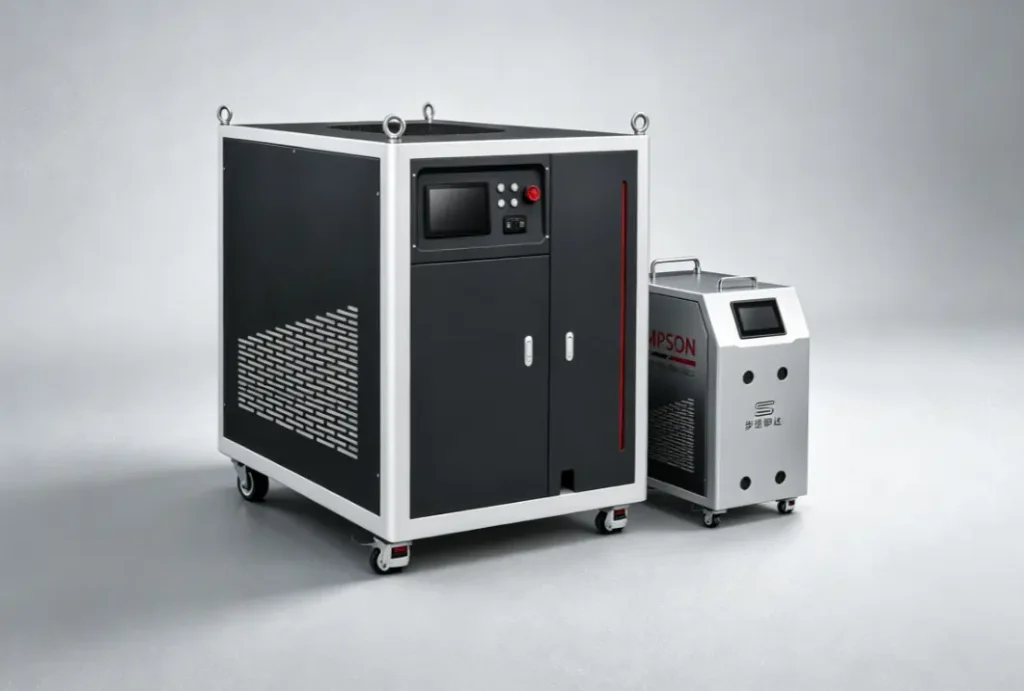
A 6000W laser welder is mainly used for thick aluminum plates and large-scale manufacturing. It provides higher energy output for applications requiring maximum welding capacity.
Advantages
- High penetration depth
- Suitable for thick materials
- Designed for heavy-duty welding
Applications
- Large aluminum structures
- Transportation equipment
- Special industrial projects
What Factors Affect Aluminum Laser Welding Thickness?
Laser welding aluminum thickness depends on laser power, material properties, and welding parameters. The main factors include:
- Laser Power: Laser power directly affects welding penetration. Higher power provides deeper welds, while lower power is suitable for thinner aluminum sheets.
- Aluminum Material: Different aluminum alloys have different thermal conductivity and welding characteristics. High reflectivity and the surface oxide layer reduce laser energy absorption, so proper surface preparation and suitable power settings are required.
- Welding Speed: Welding speed affects heat input and penetration depth. Higher speed reduces heat input, while slower speed increases penetration but may cause excessive melting.
- Focus Position: The focus position affects weld width and depth. Proper focus adjustment helps achieve better penetration and more stable weld formation.
- Shielding Gas: Shielding gas prevents oxidation and protects the weld area during processing. Argon is commonly used for aluminum laser welding to improve weld quality.
- Wobble Welding Settings: Wobble width and frequency affect weld appearance and penetration. Proper adjustment helps improve gap filling and weld consistency, especially for thin aluminum parts.
- Joint Gap and Assembly: Joint accuracy affects welding results. Excessive gaps can reduce welding quality or cause defects, so precise positioning and proper fixture control are important.
The actual laser welding aluminum thickness is determined by the combination of laser power, material type, welding parameters, and assembly conditions.
Recommended Laser Welding Parameters for Aluminum
Laser welding aluminum thickness parameters should be adjusted according to alloy type, material thickness, and welding requirements. The following settings are commonly used as a reference for handheld laser welding applications.
| Parameter | Recommended Range |
|---|---|
| Laser Type | Fiber Laser |
| Laser Power | 1500W–4000W |
| Welding Method | Handheld Laser Welding |
| Welding Speed | 17–80 mm/s (Based on material thickness) |
| Wire Diameter | 0.8–1.6 mm |
| Shielding Gas | 99.99% Argon, 15–25 L/min |
| Cooling Method | Water Cooling for continuous welding |
| Wobble Frequency | 50–100 Hz |
Aluminum Welding Settings
| Aluminum Thickness | Laser Power | Welding Speed | Application |
|---|---|---|---|
| 1–2 mm | 1500W–2000W | 20–80 mm/s | Aluminum sheets, enclosures, light structures |
| 2–5 mm | 2000W–3000W | 17–50 mm/s | Industrial parts, frames, equipment components |
| 5 mm+ | 3000W–4000W+ | Adjust according to joint design | Thick aluminum structures |
The actual parameters vary with aluminum alloy, joint type, and surface condition. Proper adjustment of power, speed, focus position, and shielding gas helps reduce porosity and improve weld strength. Testing with the actual workpiece is recommended before production.
For detailed process parameters on laser welding of aluminum, see the article: “Laser Welding Aluminum: Process, Parameters & Best Practices”
Why Is Aluminum Difficult to Laser Weld?
Aluminum has unique physical properties that make laser welding more challenging than common metals. High reflectivity, fast heat transfer, and oxide layers can affect energy absorption and weld stability.
1. High Reflectivity and Low Laser Absorption — Aluminum has a high reflectivity to fiber laser wavelengths, with reflection rates often reaching 70%–90% at room temperature. A large amount of laser energy is reflected instead of absorbed, making it harder to create a stable molten pool.
2. High Thermal Conductivity — Aluminum transfers heat quickly, with thermal conductivity about 4 times higher than steel. The heat loss during welding requires higher energy density to maintain proper melting and penetration.
3. Oxide Layer on Surface — Aluminum naturally forms an aluminum oxide (Al₂O₃) layer with a melting point of about 2060°C, much higher than aluminum itself (about 660°C). This layer can affect fusion quality and may cause welding defects if not properly treated.
4. Porosity Risk — During welding, aluminum absorbs hydrogen easily in the molten state. If the gas cannot escape before solidification, pores may form inside the weld. Proper welding parameters and shielding gas help reduce this issue.
5. Heat Cracking and Deformation — Some aluminum alloys are sensitive to hot cracking during cooling, especially high-strength alloys. Aluminum also has a higher thermal expansion rate than steel, which can increase welding deformation.
6. Alloy Element Loss — High welding temperatures may cause the loss or uneven distribution of alloy elements such as magnesium, zinc, and copper, affecting weld strength and corrosion resistance.
To improve welding quality, manufacturers usually optimize laser parameters, use suitable welding heads, select proper shielding gas, and prepare the aluminum surface before welding. With the right equipment and process settings, laser welding can achieve stable and high-quality results on aluminum materials.
Aluminum is a highly reflective material, and various defects can occur during the welding process. For specific issues and how to prevent them, see the article: Aluminum Laser Welding Problems: Porosity, Cracks & Solutions
Problems with aluminum welding have always existed, but they are not inevitable. For common issues and solutions in fiber laser welding, see the article: Fiber Laser Welding Aluminum: Challenges and Solutions
Porosity in aluminum laser welding isn’t caused by a single factor. How can it be prevented? For more details, see: How to Reduce Aluminum Laser Welding Porosity?
Laser Welding Aluminum vs Traditional Welding Methods
Laser welding and traditional welding methods such as TIG and MIG have different advantages for aluminum processing. The main differences are heat input, welding speed, deformation control, and application range.
| Comparison | Laser Welding | TIG Welding | MIG Welding |
|---|---|---|---|
| Heat Input | High energy density, low heat input, small heat-affected zone (about 0.1–1mm) | Higher heat input, wider heat-affected zone | Higher heat input, more thermal deformation |
| Welding Speed | Fast welding speed, suitable for batch production | Slower speed, depends on operator skill | Medium speed, suitable for thicker materials |
| Weld Quality | Smooth weld, less deformation, good consistency | Good weld appearance but requires skilled operation | High efficiency but more post-processing may be needed |
| Precision Requirement | Requires accurate assembly, gap usually < 0.1 mm | More tolerant of joint gaps | More flexible for larger gaps |
| Equipment Cost | Higher initial investment, lower labor dependence | Lower equipment cost, skilled operation required | Moderate cost, requires experienced operators |
| Aluminum Thickness | Best for thin and medium plates (0.5–5mm) | Suitable for various thicknesses and repair work | Better for thick aluminum parts (> 8 mm) |
| Application | Precision parts, automotive components, aluminum fabrication | Custom welding, maintenance, small-batch production | Large structures, heavy fabrication |
Laser welding provides advantages in welding speed, heat control, and deformation reduction, making it suitable for aluminum parts that require high efficiency and consistent quality. TIG and MIG welding remain practical choices for repair work, large structures, and applications with higher tolerance for heat input. The right method depends on material thickness, production requirements, and welding conditions.
Common methods for welding aluminum include TIG, MIG, and laser welding, each with its own advantages. For more details, see: TIG vs. MIG vs. Laser Welding for Aluminum: Which Is Better?
How to Choose the Right Laser Welder for Aluminum?
Choosing a laser welder for aluminum depends on material thickness, production requirements, and welding conditions. The main factors include laser type, power, welding functions, and equipment configuration.
- Laser Source: Fiber lasers are widely used for aluminum welding due to their stable output and high energy density. Thin aluminum parts usually require better beam control to reduce heat input.
- Laser Power: Choose power based on aluminum thickness. A 1500W laser welder is suitable for 0.5–4mm aluminum, while thicker materials require higher power.
- Wire Feeding and Gas: Argon shielding gas is commonly used for aluminum welding. For thicker plates or gap filling, an automatic wire feeder helps improve weld quality.
- Welding Head and Cooling: A wobble welding head improves weld formation and reduces defects. Water cooling is recommended for long-term aluminum welding.
- Supplier Support: Select suppliers with aluminum welding experience and request sample tests before purchase. Check equipment quality, warranty, and technical support.
- Budget: Machine cost depends on power, functions, and configuration. Choose equipment according to welding thickness, production volume, and application needs.
Before purchasing, check the laser welding aluminum thickness, welding requirements, and production conditions. A sample test with your own workpiece is the best way to verify the machine configuration and welding results.
Conclusion
Aluminum laser welding requires the right balance of laser power, welding parameters, and machine configuration. For most aluminum fabrication work, a 1500W–3000W laser welder can meet common thickness requirements, while thicker materials require higher power solutions.
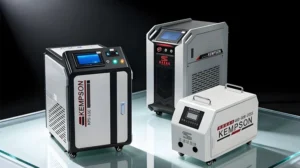
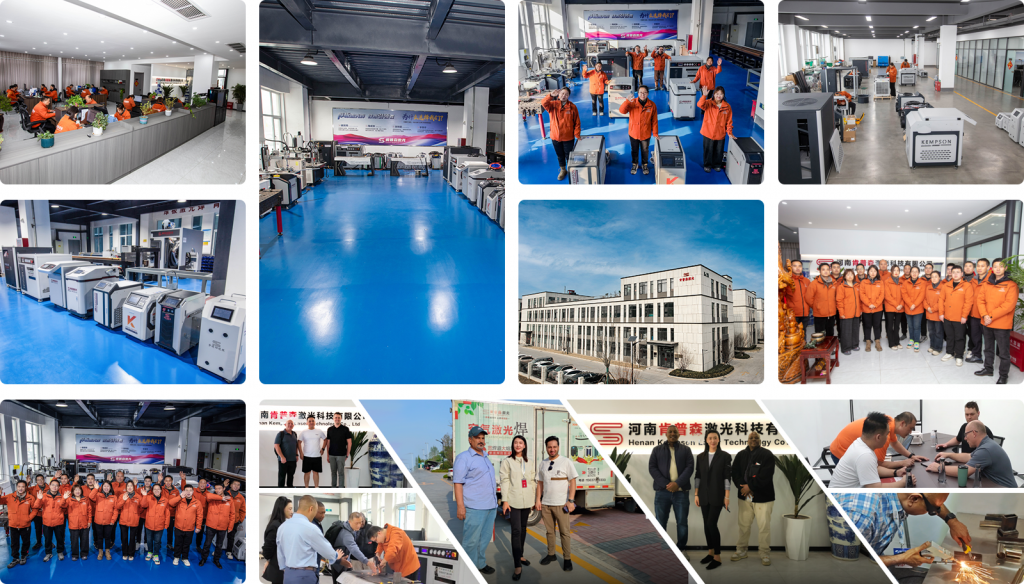
KEMPSON provides laser welding machines for different aluminum welding applications, with options for power levels, wire feeding, and cooling systems. Contact us to discuss your aluminum welding requirements and find a suitable equipment solution.
FAQ
How thick aluminum can a laser welder weld?
Depends on laser power. Common handheld laser welders can laser-weld aluminum thicknesses from thin sheets up to several millimeters thick.
Can a 1500W laser welder weld aluminum?
Yes. A 1500W laser welder can weld aluminum materials, especially thin and medium-thickness aluminum parts.
What laser power is best for aluminum welding?
1500W–3000W is commonly used for aluminum fabrication. Higher power is recommended for thicker materials.
Is laser welding aluminum better than TIG welding?
Laser welding provides faster speed and lower heat input, while TIG remains suitable for applications requiring manual control.
Why is aluminum difficult to laser weld?
Because aluminum has high reflectivity and thermal conductivity, requiring proper power settings and welding parameters.
Does aluminum laser welding need wire feeding?
Wire feeding is recommended for larger gaps, thicker materials, or applications requiring stronger weld filling.
What aluminum alloys can be laser welded?
Common weldable alloys include 5052, 6061, and other industrial aluminum alloys.
How do I choose an aluminum laser welding machine?
Choose based on laser welding aluminum thickness, production requirements, welding speed, and required functions.