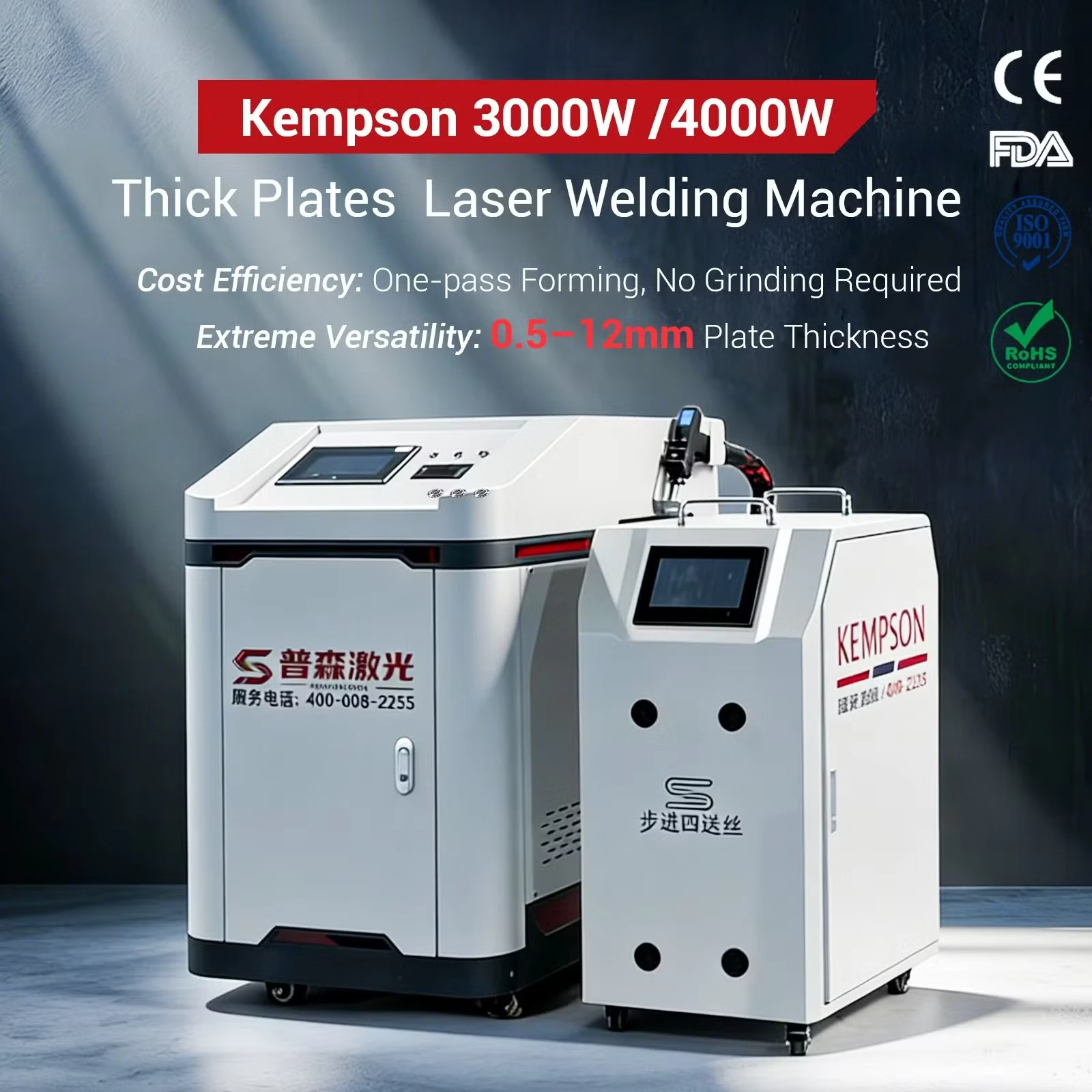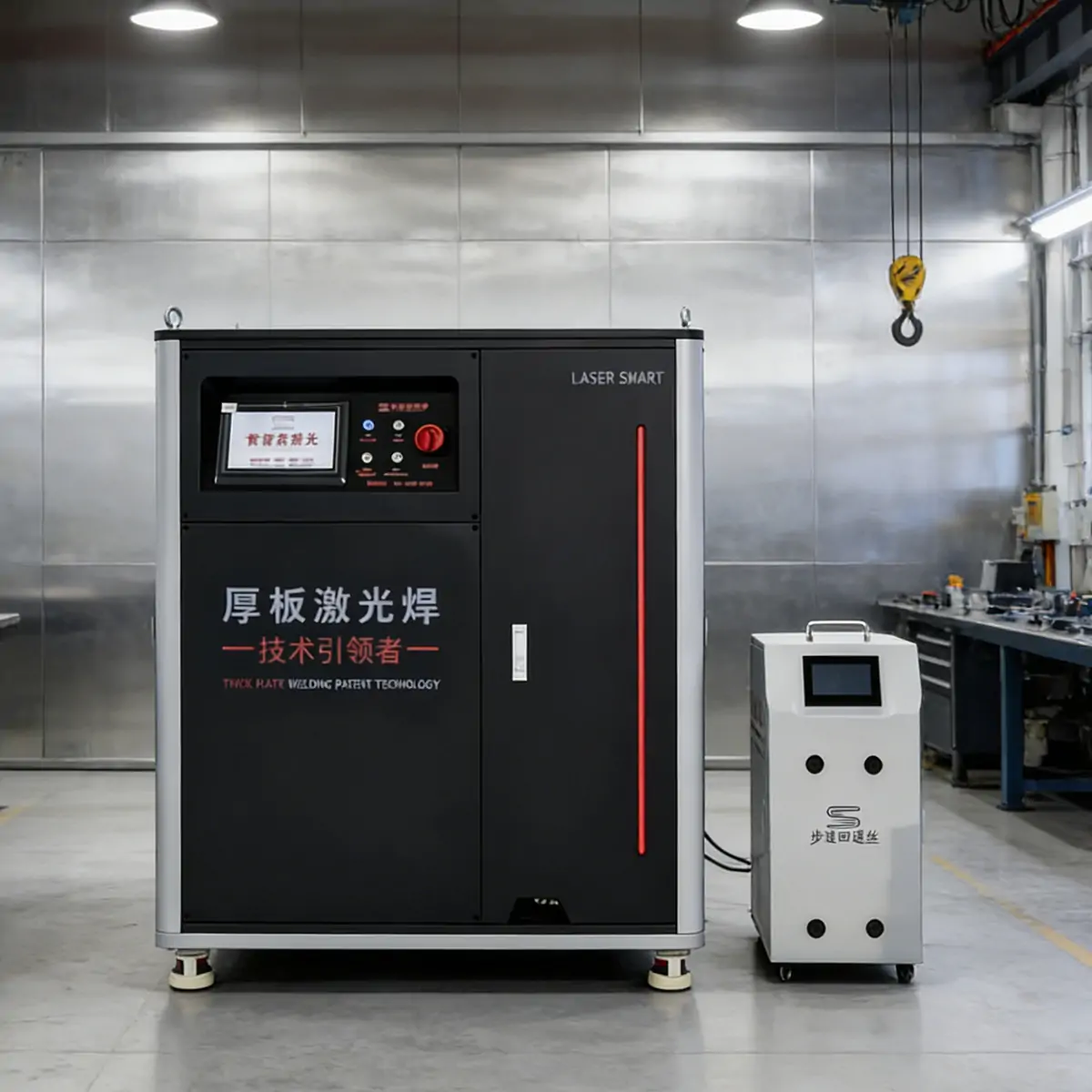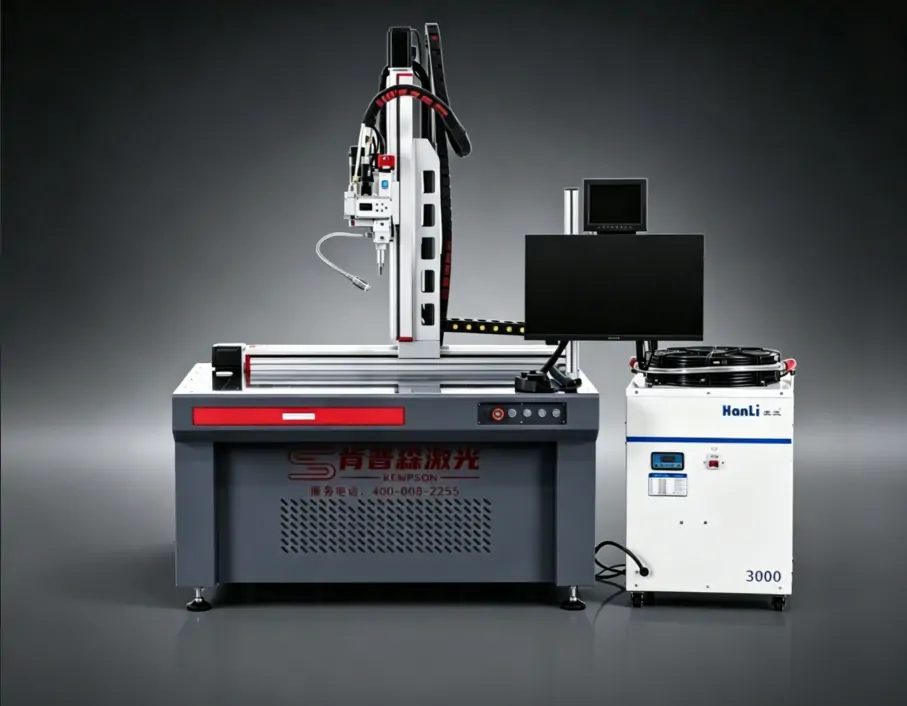


A 3000W laser welding machine is an industrial welding system that uses a 3000-watt fiber laser to join metal parts with high speed and deep penetration. It is commonly used for welding stainless steel, carbon steel, aluminum, and galvanized steel with material thicknesses ranging from 0.5 mm to 10 mm. Compared with traditional TIG and MIG welding, it produces a smaller heat-affected zone, lower deformation, and cleaner weld seams. A 3000W laser welder is widely used in sheet metal fabrication, machinery manufacturing, metal furniture production, and automated welding applications.
Laser welding involves using a laser to generate a laser beam that produces heat to weld metals. For more details, please refer to the article: “What Is Laser Beam Welding? Working Principle, Types, Advantages, and Applications.”
The 3000W laser welding machine is a mid-to-high-power model suitable for welding medium-to-thick plates and high-strength metal structures, offering outstanding performance in terms of stability, penetration depth, and welding efficiency. Depending on different production processes and application scenarios, the equipment varies in structural design and functional configurations.
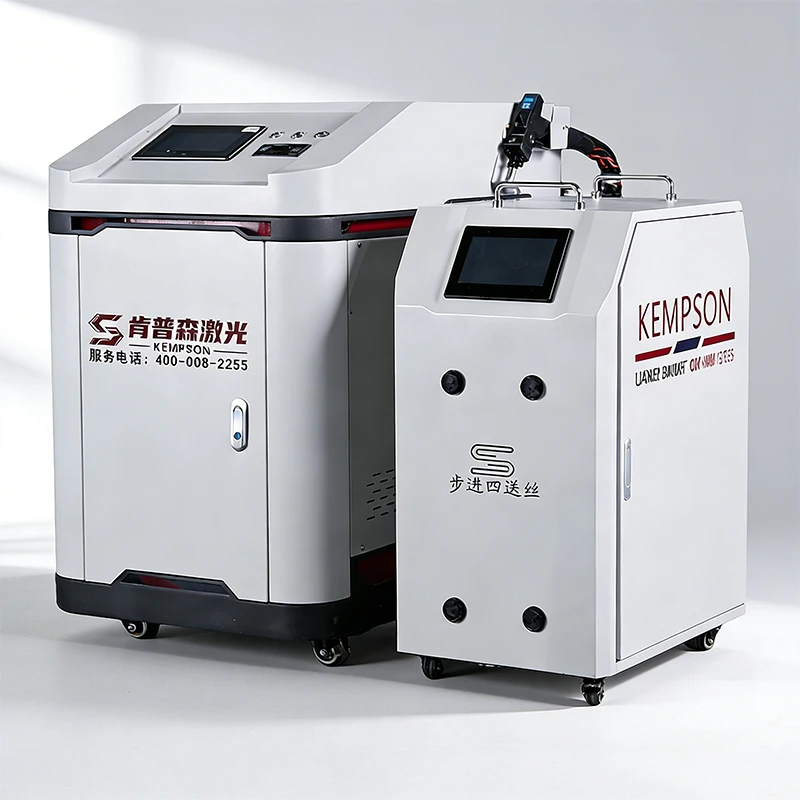
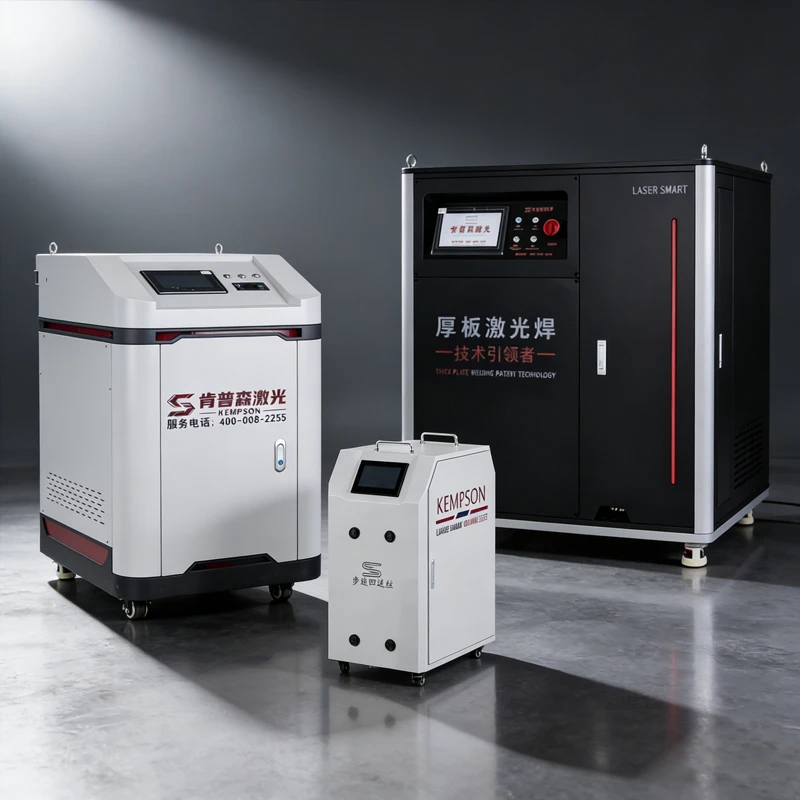
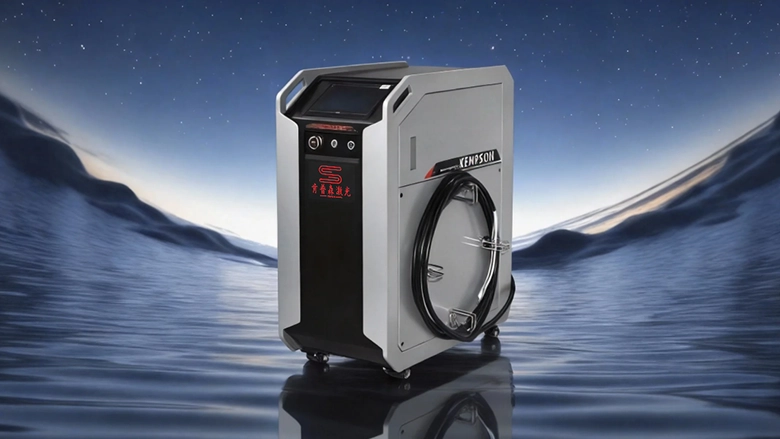
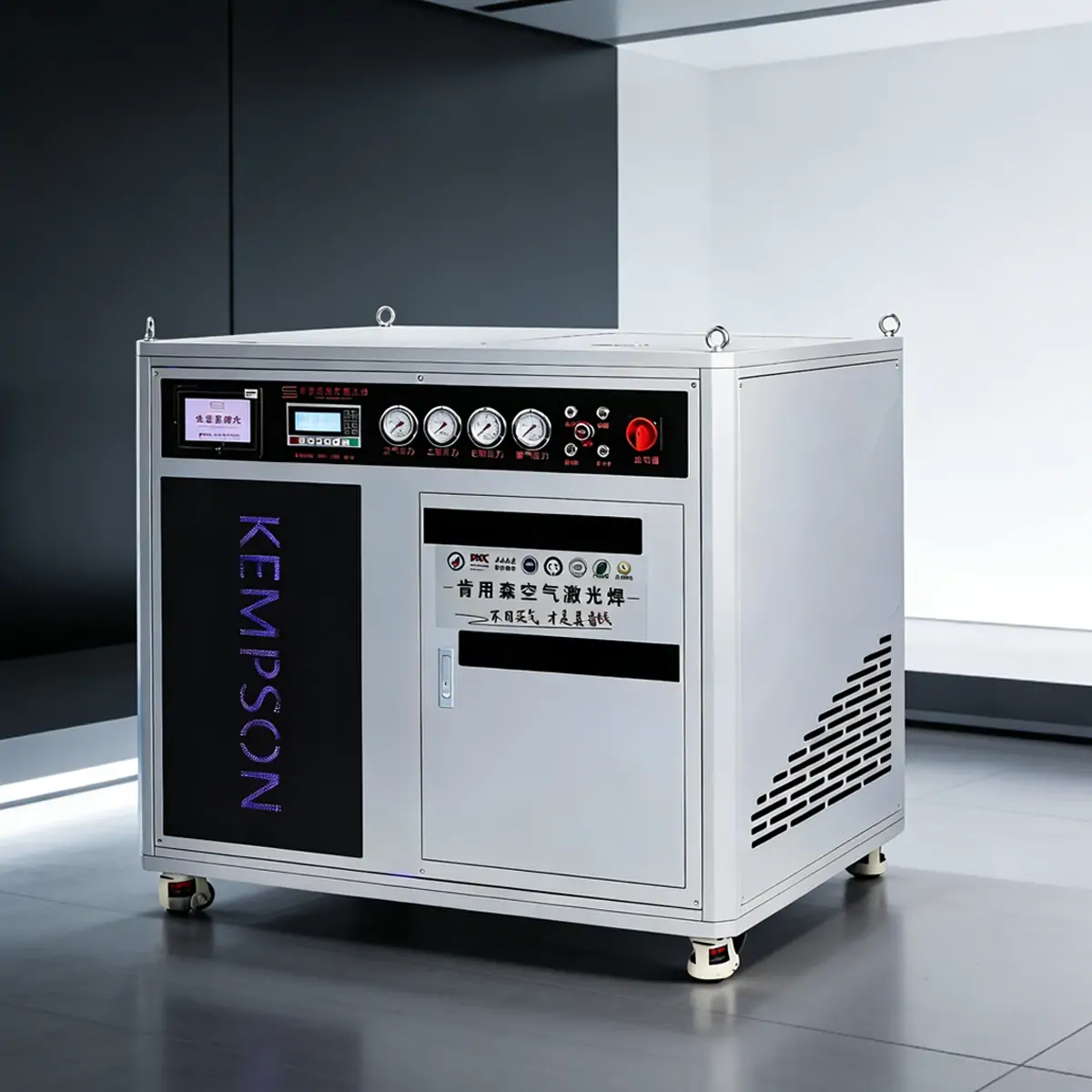
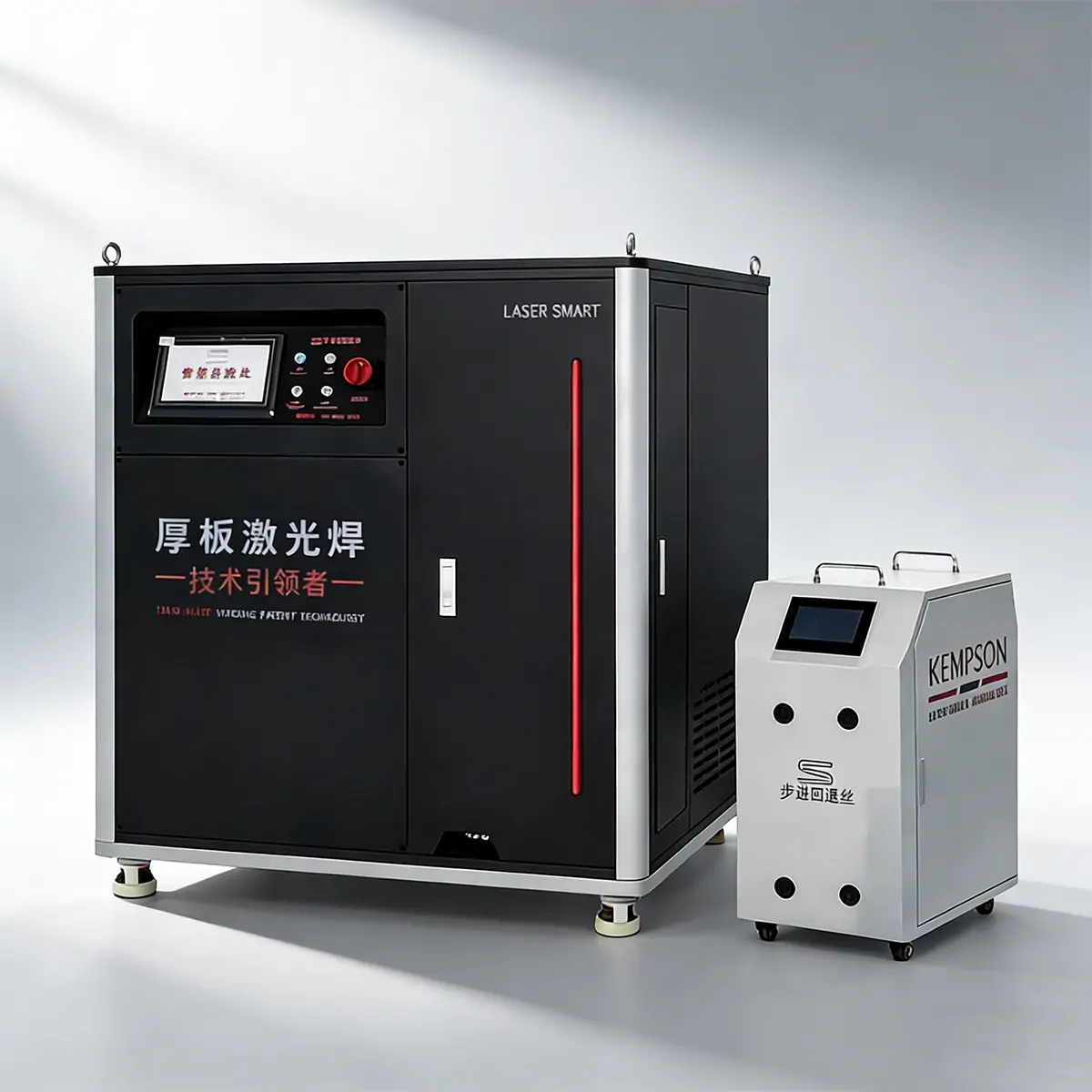
Kempson offers a variety of 3000W laser welding machines, including handheld models, integrated air-cooled/water-cooled units, and integrated welding systems suitable for automated production lines, capable of meeting diverse needs ranging from flexible processing to mass production.
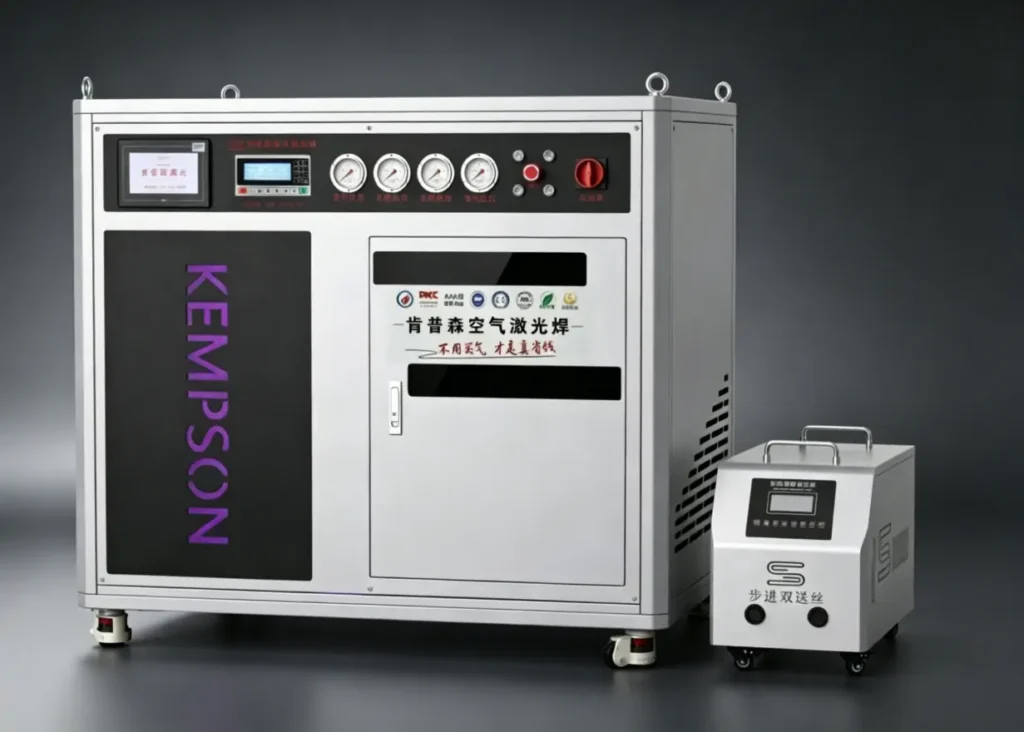
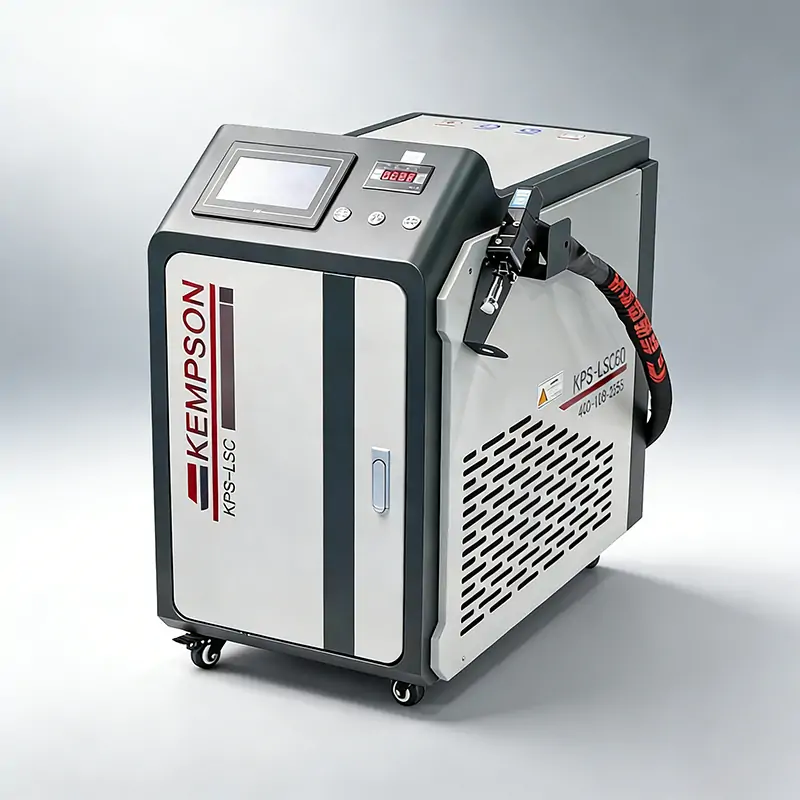
The 3000w air-cooled laser welding machine is for welding stainless steel, carbon steel, aluminum, and galvanized steel up to medium thickness. It features a compact structure, no external water chiller, and simple installation. Commonly used in sheet metal fabrication, metal furniture, doors and windows, and hardware manufacturing.
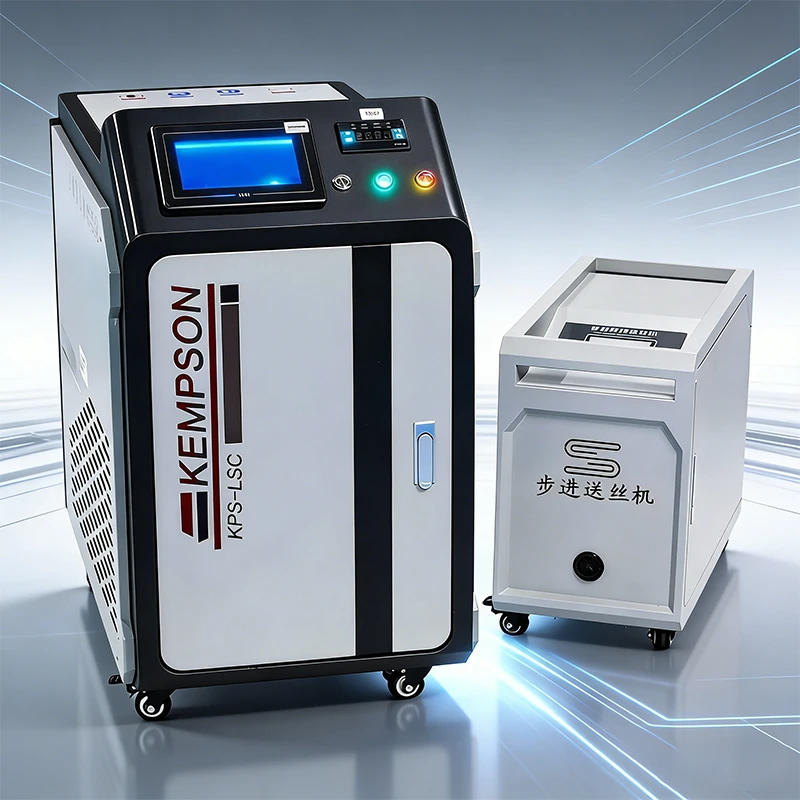
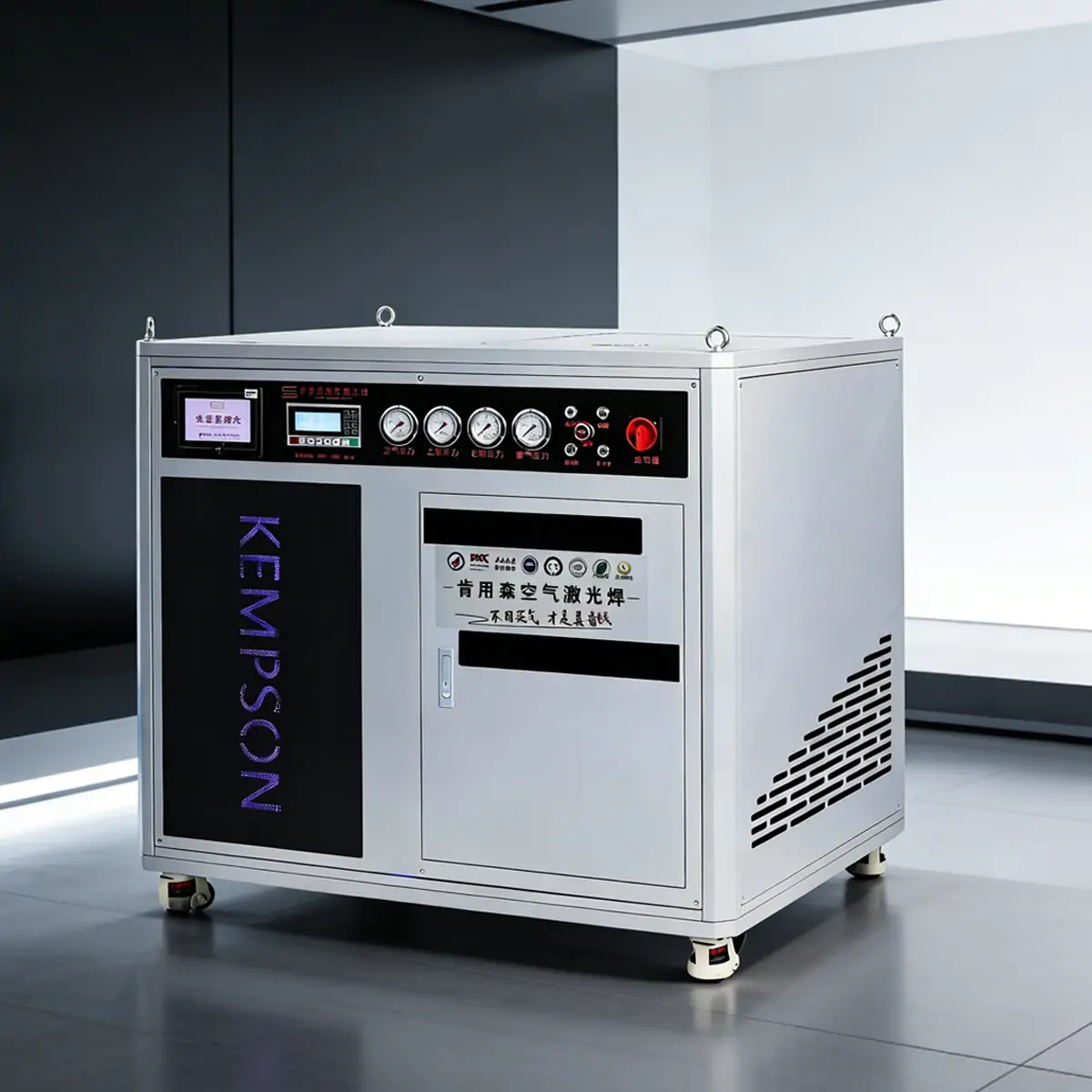
The 3000w air laser welding machine is for thicker metal materials and higher production output. It provides deep penetration, fast welding speed, and stable weld quality. Widely used in heavy fabrication, machinery manufacturing, steel structures, automotive components, and industrial metal processing.


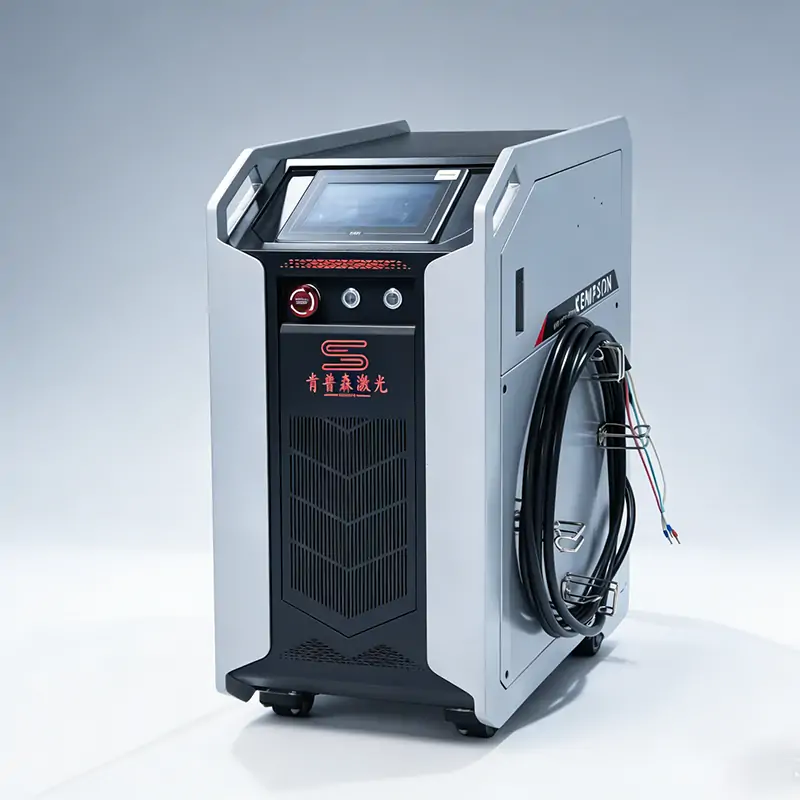
The 3000W water-cooled laser welding system for continuous production and demanding welding applications. The cooling system supports long operating hours and stable laser output. Suitable for stainless steel products, machinery parts, electrical cabinets, metal fabrication workshops, and industrial manufacturing lines.
A CNC laser welding platform for automated welding of repetitive and precision parts. It offers accurate positioning, consistent weld quality, and reduced manual operation. Commonly used for metal enclosures, automotive parts, hardware products, kitchen equipment, and batch production applications.

KEMPSON not only offers standard models of laser welding machines but also provides custom laser welding machines tailored to various operational needs, such as laser welding machines for water manifolds.
The 3000W laser welding machine is suitable for welding thicker plates and high-strength structural components. It achieves greater penetration depth and more stable molten pool control on stainless steel, carbon steel, aluminum alloys, and certain other alloy materials, making it ideal for continuous welding of medium- to thick-gauge plates.
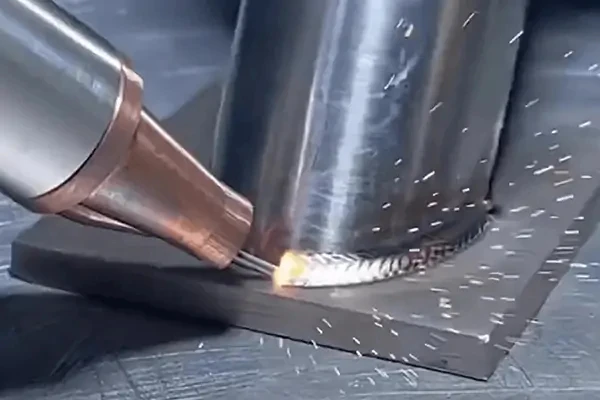
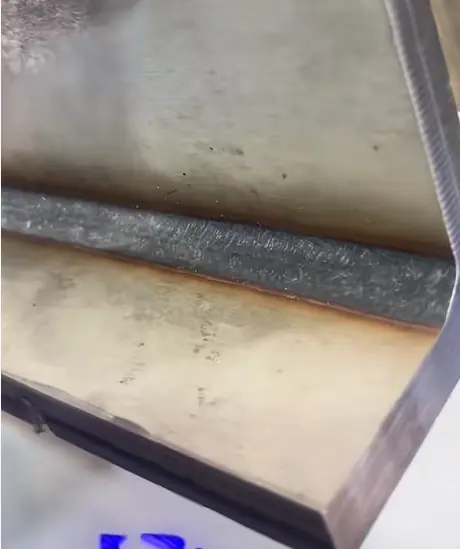
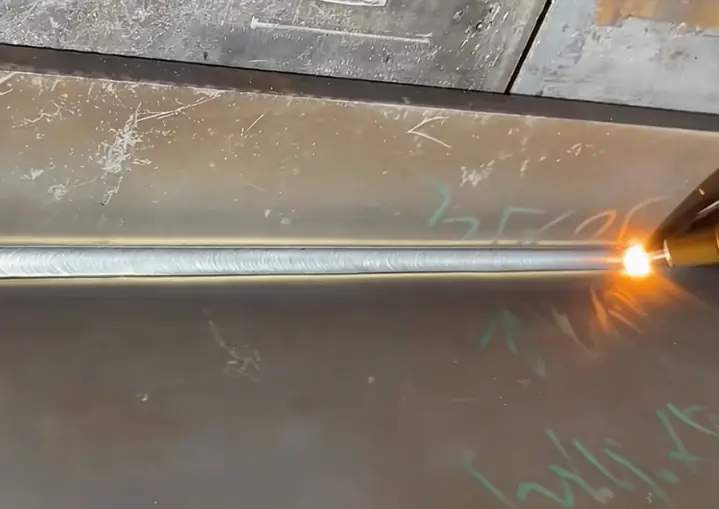
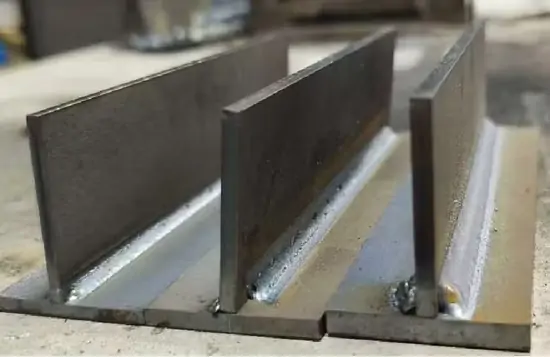
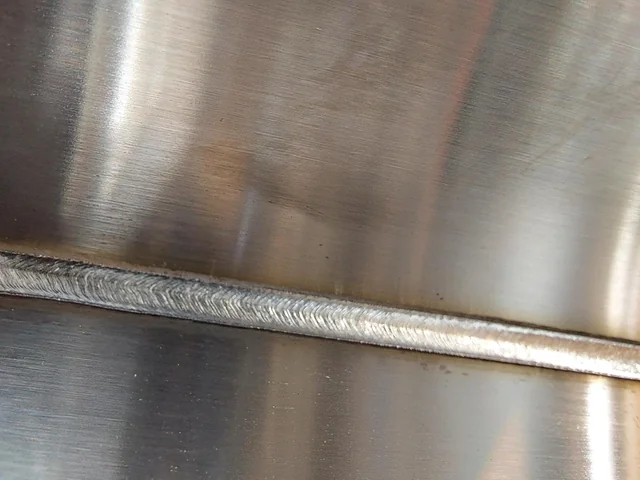
Compared to the 2000W laser welding machine, the 3000W offers superior welding speed, penetration capability, and structural strength. It produces fuller welds with higher bond strength while maintaining low distortion and excellent surface finish quality. It is commonly used in applications requiring high strength, such as heavy-duty sheet metal, mechanical structural components, engineering equipment, and automotive parts. Below is a demonstration of the actual welding results from the Kempson 3000W laser welding machine.


Laser welding is widely used, but what factors affect its weld quality? For more details, see: What Are the Primary Factors Affecting Laser Welding Quality?
| Parameter | Air Laser Welding Machine | 4000W Laser Welding Machine | Water Cooling Industrial Laser Welding Machine | CNC Laser Welding Machine Platform |
|---|---|---|---|---|
| Model | KPS-ALW3000 | KPS-DALW3000 | KPS-XLHW3000 | KPS-PASC3000 |
| Laser Power | 3000W | 3000W × 2 | 3000W | 3000W |
| Stainless Steel Thickness | 9 mm | 9 mm | 9 mm | 5.0 mm |
| Carbon Steel Thickness | 10 mm | 10 mm | 10 mm | 5.5 mm |
| Aluminum Thickness | 8.5 mm | 8.5 mm | 8.5 mm | 4.5 mm |
| Wire Diameter | Φ0.8–2.0 mm | Φ0.8–2.0 mm | Φ0.8–2.0 mm | Φ0.8–1.6 mm |
| Wire Feeding Mode | Automatic, Single/Double/Triple Wire | Automatic Wire Feeding | Automatic, Single/Double Wire | Automatic Wire Feeding |
| Weld Bead Width | 1.5–8.0 mm | — | Up to 8.0 mm | 1.5–6.0 mm |
| Power Consumption | ≤3 kW | ≤6 kW | ≤3 kW | ≤3.5 kW |
| Cooling Method | Built-in Water Cooling | Built-in Water Cooling | Built-in Water Cooling | External Chiller |
| Power Supply | 380V | 380V | 380V | 220V / 380V Optional |
| Dimensions | 1.3 × 1.05 × 1.15 m | 1.2 × 1.3 × 1.3 m | 0.7 × 1.1 × 1.3 m | 1.5 × 1.2 × 1.0 m |
| Weight | ≈410 kg | ≈720 kg | ≈235 kg | ≈210 kg |
| Special Feature | Self-Generated 99.99% Argon-Nitrogen Gas | Dual Laser System | 24-Hour Continuous Welding | X/Y/Z CNC Motion Platform |
The 3000W model is primarily used for welding medium to thick plates. To find out the welding thicknesses for different materials, please see the article: 3000W Laser Welder Thickness: How Thick Can It Weld?

Our 3000W laser welding machine can be equipped with a high-purity nitrogen generator upon customer request, producing argon-nitrogen inert shielding gas with a purity as high as 99.99%. (Understanding the Role of Welding Shielding Gas: Do Laser Welders Need Gas?)We offer global after-sales support covering 22 countries and regions, with spare parts sold at factory prices without any additional profit. All equipment is sold directly from the factory, ensuring reliable performance and highly competitive pricing. Distributors and buyers are welcome to contact us for quotations and further information.
Kempson laser welding gun features a multi-rotor protection design, high-temperature alarms, and splash-proof components that reduce lens and nozzle consumption during welding and support long operating hours. lowering maintenance and consumable costs.
You must select the appropriate laser welding gun for welding different materials and thicknesses. For details on welding gun types and how to choose them, see: Types of Laser Welding Guns: How to Choose?
For information on the structure and troubleshooting of laser welding heads, see the article: Laser Welding Head Problems: Common Faults & Troubleshooting


Welding of body structural parts, brackets, exhaust systems, and chassis components.
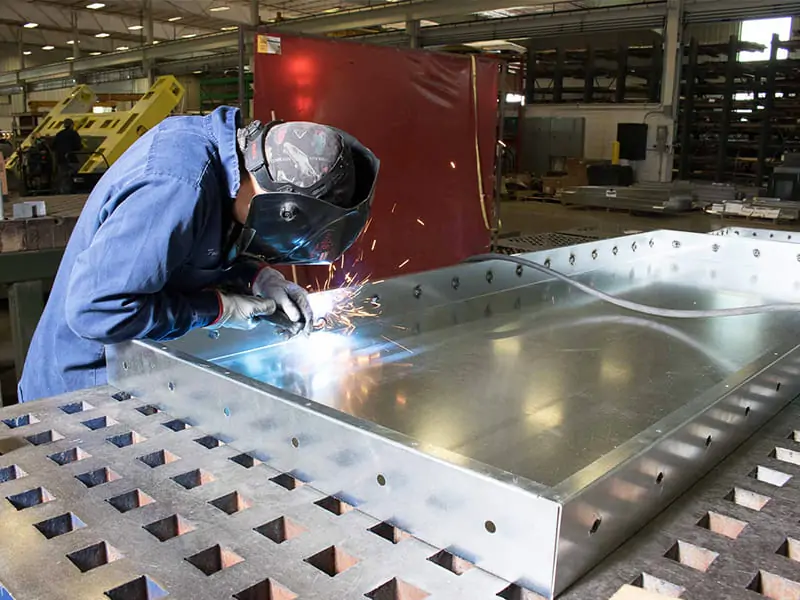
Welding of cabinet enclosures, equipment frames, boxes, and extrusions.
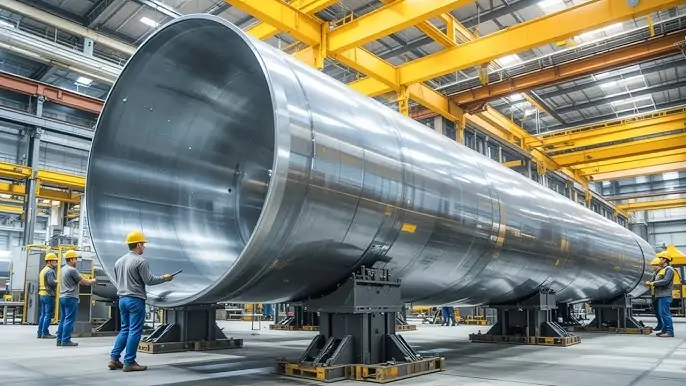
Welding of structural supports, stiffeners, and medium-thick plate connections.

Welding of angle steel, gusset plates, supports, and assembly joints.
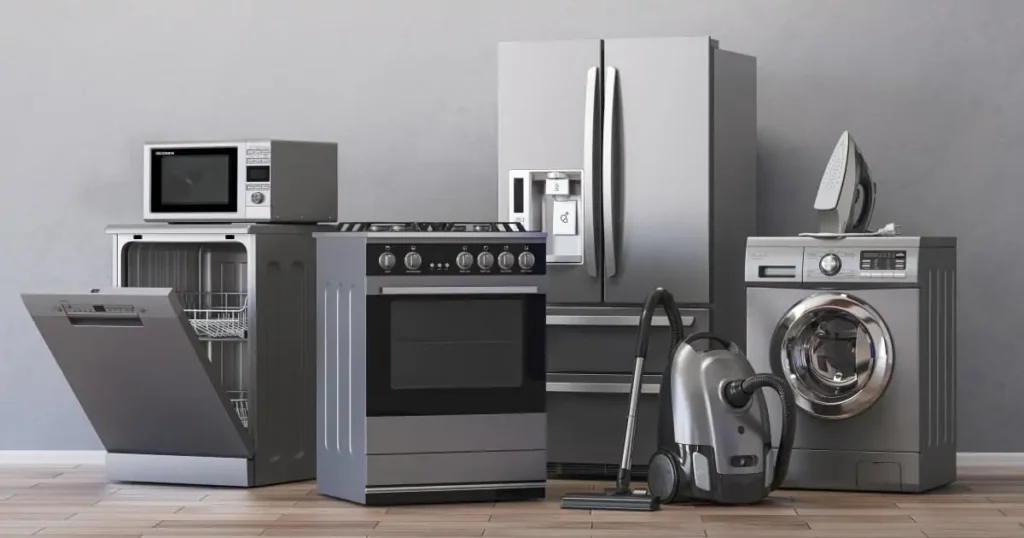
Batch welding and forming of housings, brackets, and hardware components

Joining and fillet welding of aluminum alloy and stainless steel profiles.
For more details on welding in the automotive industry, see the article: Laser Welding Machine for Automotive Parts: Applications, Benefits, and Selection Guide
The main difference between a 2000W Laser Welding Machine and a 3000W Laser Welding Machine is welding thickness, penetration depth, and application range. The 3000W model provides higher power output for thicker materials and heavier welding tasks.
| Comparison | 2000W Laser Welding Machine | 3000W Laser Welding Machine |
|---|---|---|
| Material Thickness | Suitable for medium-thickness plates | Suitable for thicker metal plates |
| Welding Penetration | Standard penetration depth | Deeper penetration for heavy welding |
| Application | General metal fabrication and daily welding work | Industrial welding and large metal components |
| Production Speed | Standard welding speed | Higher welding efficiency for production lines |
| Suitable Materials | Stainless steel, carbon steel, aluminum | Stainless steel, carbon steel, aluminum with greater thickness |
| Power Requirement | Lower energy consumption | Higher output for demanding welding tasks |
For thin and medium-thickness metal welding, a 2000W Laser Welding Machine is a practical choice. A 3000W Laser Welding Machine is more suitable for thicker materials, higher production requirements, and industrial applications.
A 3000W laser welding machine typically costs between $5,500 and $22,286+. The final price depends on the machine type, laser configuration, cooling system, and automation level.
Handheld laser welders have a lower purchase cost. CNC welding platforms and automated welding systems include motion control components and have higher equipment costs.
Air-cooled and water-cooled machines use different structures and configurations. Water-cooled models are often selected for thicker materials and longer operating hours.
Functions such as automatic wire feeding, dual-wire welding, oscillation welding, and laser cleaning increase equipment cost.
Material type, welding thickness, daily output, and working hours all influence machine selection and project cost.
The lowest price is not always the best option. Machine selection should match material thickness, production volume, and welding process requirements.
For detailed pricing, configuration comparisons, and purchasing information, read: Laser Welding Machine Price
Laser welding machines require regular maintenance for long-term use. For more details, see the article: Laser Welding Machine Maintenance Guide: Schedule, Troubleshooting & Warranty
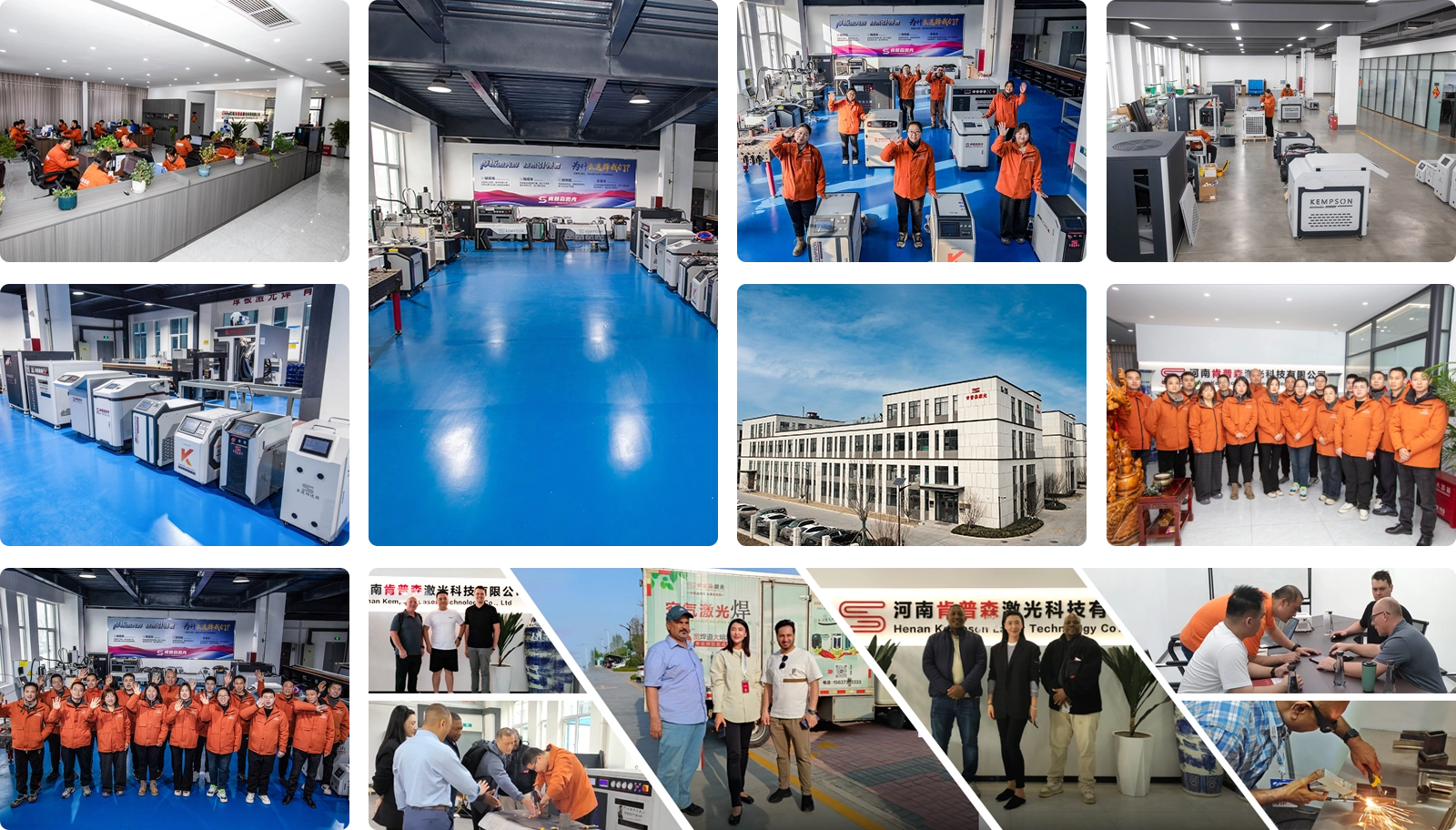
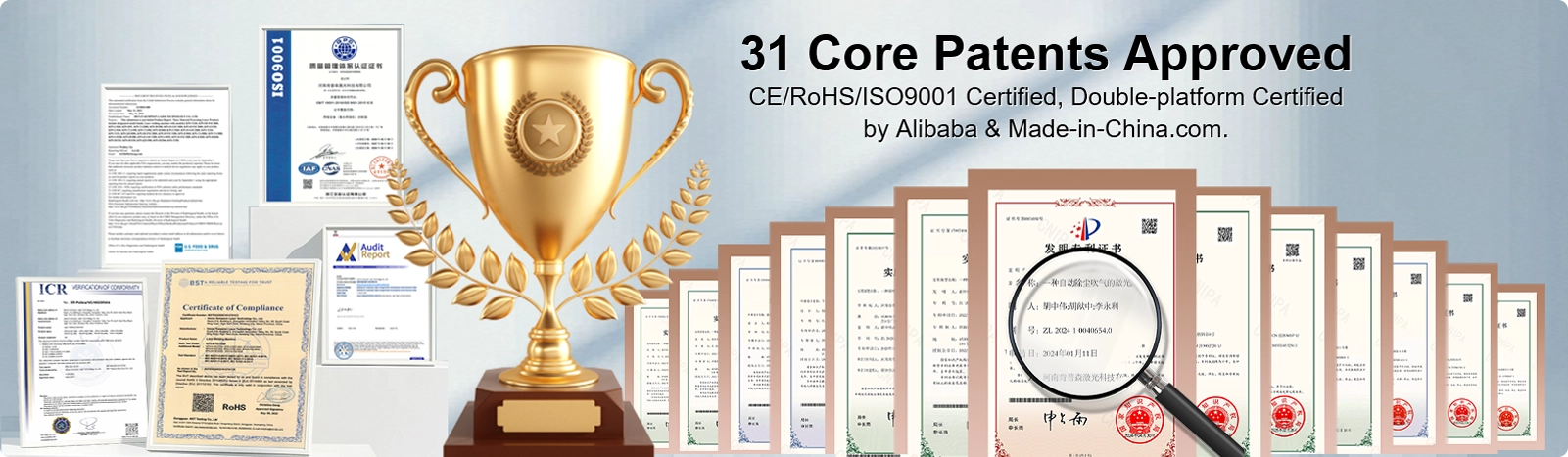
Kempson Laser is a professional laser welding machine manufacturer with a dedicated R&D team. Committed to technological innovation as its foundation, the company specializes in developing and manufacturing laser welding solutions. Investing over 30% of its annual revenue into R&D, Kempson has secured more than 30 core patents and obtained international certifications including ISO9001, CE, and FDA.
Kempson maintains a comprehensive service network with after-sales service centers in over 20 countries worldwide, providing customers with thorough after-sales support. Every laser equipment unit comes with a 3-year full warranty. If you are interested in our water-cooled laser welding machines, please contact us. We will provide the most suitable customized solutions based on your requirements.
A 3000W laser welding machine can weld stainless steel, carbon steel, aluminum, and galvanized steel. Welding brass and other reflective metals requires specific process testing.
A 3000W laser welding machine can weld metal plates up to 10 mm thick. Actual welding thickness varies by material, joint type, welding speed, and machine configuration.
A 2000W laser welding machine suits thin and medium-thickness materials. A 3000W model provides greater penetration capacity for thicker plates and demanding welding applications.
Yes. A 3000W laser welding machine can weld aluminum and aluminum alloys. Laser power, welding speed, wire feeding, and shielding gas must match the material thickness and joint design.
Cooling requirements depend on the machine model. KEMPSON offers different cooling configurations. Buyers should confirm whether the selected machine uses air cooling, integrated water cooling, or an external chiller.
The 3000W rating refers to laser output power, not total electrical consumption. Actual power consumption depends on the laser source, cooling system, and auxiliary equipment.
Handheld models suit flexible welding of different workpieces and joint positions. CNC models control the welding path automatically and suit repetitive workpieces and batch production.
Provide the material type, plate thickness, workpiece dimensions, joint type, production volume, and required welding configuration. Drawings or sample workpieces help determine the machine specifications.
Looking for a 3000W Laser Welding Machine?
Request a quote today, and our experts will help you choose the right model.
This article explains whether laser welding can fill gaps in metal parts and how it behaves under different joint conditions. It covers real-world welding tolerance, the effect of gap size on weld quality, and when additional filler wire or process adjustments are required. The guide also compares tight-fit laser welding with traditional welding methods and provides practical recommendations for improving weld consistency in industrial applications.
Continuous laser welding and pulsed laser welding are two common laser processing modes used in industrial applications. Continuous laser welding delivers a steady energy output for high-speed and deep penetration welding, while pulsed laser welding provides controlled energy bursts for precision work and heat-sensitive materials. This article explains how each process works, their key differences, and typical applications, helping users understand when to choose continuous laser welding or pulsed laser welding in real production environments.
A complete guide to 3-in-1 laser welding machines, including welding, cleaning, and cutting functions, key benefits, applications, pricing, and buying tips for industrial metal fabrication.
Injection mold parting lines and corners are critical areas that directly affect product quality and mold performance. Laser welding provides a high-precision, low-heat-input repair method for restoring worn, cracked, or damaged mold surfaces without compromising dimensional accuracy. This blog explores how laser welding works for mold repair, its advantages over traditional welding methods, and why it is widely used in precision mold maintenance industries.