Table of Contents
Introduction
Laser welding quality directly affects weld strength, appearance, and production efficiency. Even with advanced laser welding equipment, factors such as welding parameters, material condition, and operation methods can influence the final result. Understanding these key points helps manufacturers reduce welding defects and improve product consistency.
In this guide, I will explain the main factors affecting laser welding quality, including laser power, welding speed, focus position, shielding gas, material preparation, and equipment condition. Based on practical welding experience, this article provides a clear reference for improving weld performance in different metal fabrication applications.
Factors Affecting Laser Welding Quality
Laser welding quality depends on welding parameters, material properties, and operating conditions. Laser power, focus position, welding speed, shielding gas, and material condition directly affect weld strength, appearance, and stability.
- Laser Power Density: Laser power density controls how much energy is transferred to the material. Higher power density is used for deep penetration welding, while lower power density is suitable for surface melting and thin materials.
- Laser Pulse Waveform: Pulse waveform affects heat distribution during welding. A suitable waveform helps control melting and cooling, especially when welding thin metal parts.
- Focus Position: Focus position changes the energy concentration on the material. Negative defocus increases penetration depth, while positive defocus is commonly used for thin sheet welding.
- Welding Speed: Welding speed affects heat input and penetration. Excessive speed may cause shallow penetration, while slow speed can increase heat accumulation and deformation.
- Shielding Gas: Shielding gas protects the molten pool from oxidation. Gas type, flow rate, and coverage area affect weld color and surface quality. Argon is commonly used for stainless steel welding.
- Material Properties: Material composition, thickness, surface condition, and thermal properties influence welding performance. Different metals require different welding parameters to prevent cracks, pores, and deformation.
- Parameter Adjustment: Laser welding parameters need to be adjusted according to material type and thickness. Proper settings of power, speed, focus, and gas flow help maintain stable weld quality.
Laser welding quality is determined by the combination of equipment settings, material conditions, and welding operation. Selecting suitable parameters for each application is the key to obtaining reliable welds.
Laser Welding Parameters
Laser welding parameters directly affect weld penetration, appearance, and production efficiency. The main settings include laser power, welding speed, focus position, and laser beam stability. These parameters need to be adjusted according to material type, thickness, and welding requirements.
Laser Power: Controls Welding Depth
Laser power determines the amount of energy delivered to the workpiece. Higher power increases penetration depth, while insufficient power may cause incomplete fusion or weak welds. Excessive power can lead to burn-through and excessive melting.
| Laser Power Setting | Welding Result |
|---|---|
| Too Low | Shallow penetration, weak bonding, unstable weld |
| Suitable | Stable molten pool, good penetration and weld appearance |
| Too High | Overheating, burn-through, excessive deformation |
Choose laser power according to material thickness. Thin sheets usually require lower power, while thicker materials need higher power with slower welding speed or wire feeding.
Welding Speed: Controls Heat Input
Welding speed affects the heat input per unit length. Higher speed reduces heat input and may reduce penetration, while slower speed increases melting and deformation risk.
| Welding Speed | Effect on Weld |
|---|---|
| Too Fast | Narrow weld, insufficient penetration |
| Suitable | Balanced heat input and stable weld formation |
| Too Slow | Excessive melting, wider heat-affected zone |
Power and speed should be adjusted together. Increasing power while increasing speed can maintain welding efficiency without excessive heat accumulation.
Focus Position: Affects Penetration and Weld Shape
The focus position changes laser energy distribution on the material surface. The correct focus setting helps achieve the required penetration depth and weld width.
| Focus Position | Welding Effect |
|---|---|
| Positive Defocus | Wider weld width, lower penetration, suitable for thin sheets |
| Zero Focus | Highest energy concentration, suitable for general welding |
| Negative Defocus | Deeper penetration, suitable for thicker materials |
Focus position should be adjusted according to material thickness and joint type. Thick plates usually require deeper focus settings, while thin sheets need wider heat distribution.
Laser Beam Mode and Power Stability: Maintains Weld Consistency
Laser beam quality and output stability affect weld appearance and production consistency. A stable beam provides uniform energy distribution and reduces problems such as uneven penetration and spatter.
| Factor | Influence on Welding |
|---|---|
| Beam Mode | Determines energy distribution and focusing ability |
| Power Stability | Keeps penetration and weld shape consistent |
| Energy Waveform | Controls heat input for different materials and thicknesses |
For continuous production, stable laser output and suitable energy settings help maintain the same weld quality between different workpieces.
Proper adjustment of laser power, welding speed, focus position, and beam settings helps control heat input, penetration, and weld appearance, providing stable welding results for different materials and applications.
Material Factors Affecting Laser Welding Quality
Material properties have a direct impact on laser welding performance. Material type, thickness, and surface condition determine laser energy absorption, heat transfer, and weld formation.
1. Material Type
Different materials have different laser absorption rates, thermal conductivity, and weldability.
- Laser Absorption: Materials with higher absorption rates are easier to weld and require less energy. Stainless steel has good laser absorption, while copper and aluminum have higher reflectivity and need adjusted welding parameters.
- Thermal Conductivity: High thermal conductivity materials transfer heat quickly, which can reduce penetration depth and require higher laser power.
- Material Composition: Alloy elements and material uniformity affect weld stability. Some materials with higher crack sensitivity require careful control of heat input and cooling speed.
2. Material Thickness
Material thickness affects laser power, welding speed, and penetration requirements.
- Thin materials require lower heat input to avoid deformation or burn-through.
- Thicker materials need higher laser power, slower welding speed, or wire feeding to achieve sufficient penetration.
- 1500W laser welding equipment is commonly used for stainless steel around 1.5–2mm, while 3000W equipment can handle thicker sections around 3–4mm depending on welding conditions.
3. Material Surface Condition
Surface condition affects laser energy absorption and weld quality.
- Oil, dust, rust, and oxide layers can cause problems such as pores, discoloration, and poor fusion.
- High-reflective surfaces, such as copper and aluminum, reduce energy absorption and may require higher power or surface treatment.
- Cleaning the welding area before operation helps maintain stable weld formation.
Material type, thickness, and surface condition should be considered together when setting laser welding parameters. Proper material preparation and parameter adjustment help reduce defects and improve weld consistency.
Shielding Gas Selection
Shielding gas protects the molten pool from oxygen exposure during laser welding and affects weld appearance, penetration, and surface quality. The gas type and flow rate should be selected according to the material, welding speed, and application requirements.
| Shielding Gas | Characteristics | Common Applications |
| Argon (Ar) | Stable protection, low cost, and widely used for general metal welding | Stainless steel, carbon steel and common fabrication work |
| Helium (He) | Higher thermal conductivity and better penetration performance | High-power welding and materials requiring deeper penetration |
| Nitrogen (N₂) | Suitable for some stainless steel applications, helps maintain weld surface appearance | Stainless steel welding |
Important Notes
- Gas Flow Rate: Too low a flow rate cannot fully protect the molten pool and may cause oxidation or discoloration. Too high flow may disturb the weld pool and affect weld formation.
- Gas Coverage: The shielding area should cover the welding zone to reduce oxidation and surface defects.
- Material Matching: Stainless steel usually uses argon, while high-reflective or high-power welding applications may require different gas settings.
The suitable shielding gas and proper flow rate help protect the weld pool from oxidation and improve weld appearance.
For more details on laser welding gases, see the article: “Do Laser Welders Need Gas?”
Welding Wire and Feeding System
A welding wire and feeding system is used when additional filler material is needed during laser welding(Wire Feeder). It helps fill gaps, improve weld formation, and increase joint strength, especially when welding thicker materials or parts with uneven gaps.
| Factor | Description |
|---|---|
| Wire Diameter | Selected according to material thickness and welding requirements. Common sizes include 0.8 mm, 1.0 mm, 1.2 mm, and 1.6 mm. |
| Wire Feeding Speed | Affects filler material supply and weld formation. The speed should match laser power and welding speed. |
| Wire Material | Should match the base material to maintain weld strength and corrosion resistance. |
| Feeding Stability | Stable wire feeding helps reduce weld defects and keeps the weld bead uniform. |
Wire feeding is commonly used for stainless steel, aluminum, and thicker metal welding where direct laser welding cannot fill the joint. Choosing the right wire diameter, material, and feeding speed helps improve welding consistency.
Welding Equipment Factors
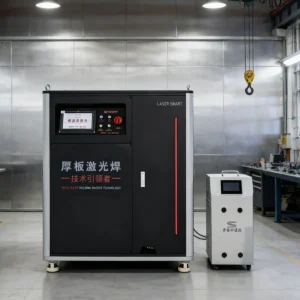
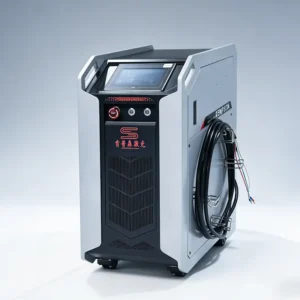
Laser welding equipment affects weld penetration, appearance, and operation stability. The main equipment factors include laser source, welding gun, and cooling system.
- Laser Source Stability: The laser source provides welding energy. Stable power output keeps the weld depth and bead shape consistent. Power changes during welding may cause uneven melting or poor weld formation.
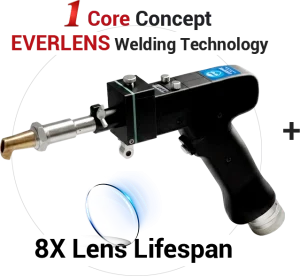
- Welding Gun Quality: The welding gun controls laser beam output and welding position. A precise welding gun helps keep the laser focus stable and reduces issues caused by lens damage or beam deviation.
- Cooling System Performance: The cooling system controls the temperature of the laser source and internal parts. Proper cooling prevents overheating during continuous welding and supports normal equipment operation.
The right equipment configuration helps maintain consistent welding results and reduces problems during production.
Common Laser Welding Quality Problems and Solutions
Laser welding is sensitive to welding parameters, material condition, and operation methods. Incorrect settings or poor preparation may cause defects such as weld deformation, cracks, pores, and uneven weld formation.
| Problem | Main Causes | Solutions |
|---|---|---|
| Weld Collapse | Welding speed too slow, excessive molten pool size, and poor metal support | Increase welding speed, adjust laser energy, and control molten pool size |
| Thermal Cracks | Excessive shrinkage stress during solidification, unsuitable heat input | Use proper parameters, filler wire, or preheating for crack-sensitive materials |
| Weld Misalignment | Incorrect positioning or poor alignment between laser beam and wire | Adjust workpiece positioning and optimize beam-wire alignment |
| Uneven Weld Seam | Unstable wire feeding or inconsistent laser output | Check wire feeding system and maintain stable laser power |
| Weld Reinforcement | Sudden changes in welding path or improper parameter settings | Optimize welding path and adjust parameters at corners |
| Surface Slag | Poor cleaning between multiple welding passes or uneven previous weld layer | Clean each welding layer and keep the surface smooth before the next pass |
| Porosity | Material moisture, surface contamination, or unstable molten pool | Clean and dry materials, improve shielding gas protection, and adjust welding parameters |
| Surface Burn or Discoloration | Excessive heat input, dirty surface or material oxidation | Reduce heat input, clean the welding area, and control welding temperature |
Most laser welding defects are caused by improper heat control, unclean materials, incorrect settings, or unstable operation. Cleaning the workpiece, adjusting welding parameters, and keeping wire feeding stable can improve weld appearance and strength.
How to Improve Laser Welding Quality?
Laser welding quality depends on parameter settings, material condition, and process control. Improving weld results mainly requires controlling heat input, reducing defects, and keeping the welding process stable.
Optimize Welding Parameters — Laser power, welding speed, focus position, and shielding gas directly affect weld penetration and formation. Adjust parameters according to material type and thickness to avoid defects such as cracks, pores, and incomplete fusion.
Improve Material Preparation — Clean the welding area before operation to remove oil, rust, and oxide layers. Proper joint gap control and material inspection help reduce welding problems.
Optimize Wire Feeding Process — For gap filling or thicker materials, wire feeding parameters should match laser power and welding speed. Stable wire feeding helps keep the weld bead uniform.
Monitor Welding Process — Real-time monitoring of laser output and molten pool changes helps detect abnormal conditions. Adjusting welding parameters during production improves weld consistency.
Test and Adjust Before Production — Different materials and structures require different welding settings. Sample testing before mass production helps determine suitable parameters and reduce defects.
Improving laser welding quality requires proper parameter adjustment, clean materials, and stable equipment operation. These factors work together to produce consistent welds.
Conclusion
Laser welding quality is affected by welding parameters, material properties, shielding gas, wire feeding, and equipment performance. Proper control of laser power, welding speed, focus position, and material preparation helps reduce defects and improve weld strength and appearance.
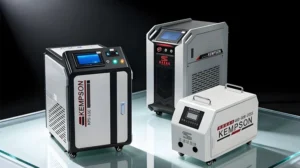
For different materials and applications, welding parameters need to be tested and adjusted based on actual conditions. KEMPSON provides laser welding solutions with suitable configurations and technical support to help customers achieve stable welding performance and reliable production results. Contact us to discuss your welding requirements and find the right solution for your production needs.
FAQ
What factors affect laser welding quality?
Laser welding quality is mainly affected by laser power, welding speed, focus position, shielding gas, material condition, wire feeding, and equipment stability.
How does laser power affect welding quality?
Laser power controls welding energy and penetration depth. Low power may cause incomplete fusion, while excessive power can lead to burn-through and deformation.
Does welding speed affect laser welding results?
Yes. Welding speed changes heat input and penetration. A speed that is too high may cause shallow penetration, while a slow speed may increase heat accumulation.
Why does my laser weld turn black?
Black or discolored welds are usually caused by oxidation, insufficient shielding gas protection, dirty material surfaces, or excessive heat input.
What shielding gas is used for laser welding?
Argon is commonly used for laser welding stainless steel and other metals. Helium and nitrogen may also be selected depending on the material and welding requirements.
How can I improve laser welding quality?
Improve weld quality by adjusting laser parameters, cleaning the material surface, selecting suitable shielding gas, and maintaining stable equipment operation.
What causes porosity in laser welding?
Porosity can result from surface contamination, moisture, unstable molten pools, improper shielding gas flow, or unsuitable welding parameters.
Does material thickness affect laser welding settings?
Yes. Thicker materials usually require higher laser power, slower welding speed, or wire feeding to achieve proper penetration. Thin materials need lower heat input to prevent deformation.