Table of Contents
Introduction
Stainless steel is widely used in fabrication, construction, food equipment, automotive parts, and many other industries due to its corrosion resistance and durability. With the development of fiber laser technology, laser welding stainless steel has become a practical welding method for manufacturers who need clean weld seams, low heat distortion, and high production efficiency.
In this guide, I will explain the points of stainless steel laser welding, including how the process works, suitable materials, recommended power and parameters, common welding problems, application areas, and machine selection. The information is based on practical welding experience and equipment knowledge to help you choose the right solution for different stainless steel welding requirements.
Can Stainless Steel Be Welded with a Laser?
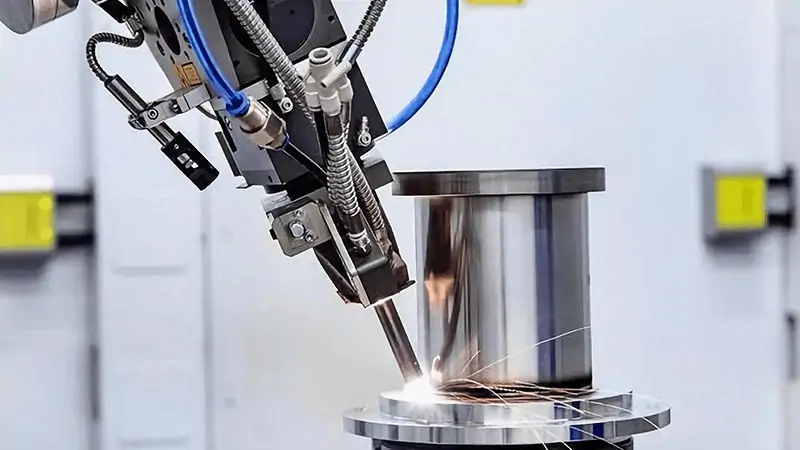
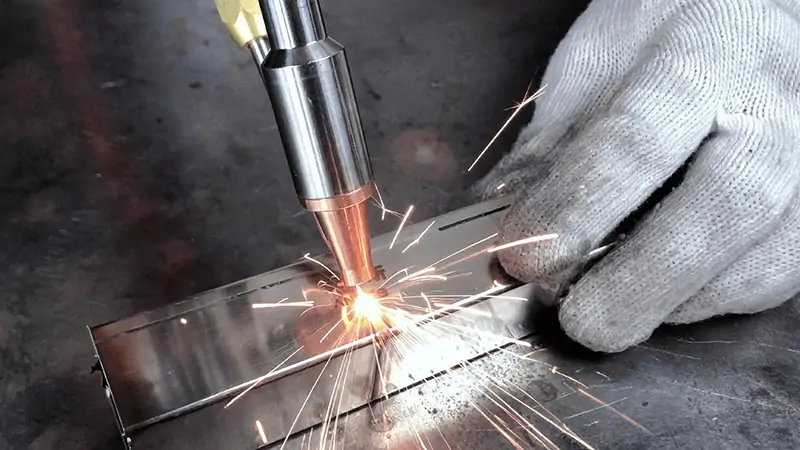
Yes, stainless steel can be welded with a laser. It is now widely used in metal fabrication because the laser beam provides precise heat control and a concentrated welding area. Compared with traditional welding methods, laser welding creates a smaller heat-affected zone, less deformation, and a cleaner weld surface.
Laser welding stainless steel is suitable for materials such as 304, 316, and other common stainless steel grades. It is widely applied in kitchen equipment, stainless steel cabinets, medical parts, automotive components, and custom metal products. By adjusting laser power, welding speed, shielding gas, and wire feeding settings, manufacturers can achieve strong and smooth weld joints for different thickness requirements.
How Does Laser Welding Stainless Steel Work?
Laser welding stainless steel uses a high-energy laser beam to melt and join stainless steel parts together. The laser beam is focused on a small welding area, creating a concentrated heat source that forms a molten pool. As the molten metal cools, it creates a strong and precise weld joint.
During the process, the laser power, welding speed, focus position, and shielding gas flow need to be adjusted according to the material thickness and welding requirements. For stainless steel, shielding gas is used to protect the weld area from oxidation and maintain a clean surface.
Compared with traditional welding methods, laser welding stainless steel produces a narrower heat-affected zone and less thermal deformation. The process is suitable for thin sheets, precision components, and stainless steel structures that require a smooth weld appearance and stable welding quality.
What Stainless Steel Can Be Laser Welded?
Laser welding can be used on a wide range of stainless steel grades. The welding process and parameter settings may vary depending on the material composition, thickness, and application requirements.
| Stainless Steel Type | Common Grades | Welding Features | Applications |
|---|---|---|---|
| Austenitic Stainless Steel | 304, 316, 316L | Easy to weld with smooth bead appearance and good corrosion resistance | Kitchen equipment, medical parts, stainless steel cabinets |
| Ferritic Stainless Steel | 430, T4003 | Requires controlled heat input to reduce grain growth after welding | Automotive parts, railway components, solar mounting systems |
| Martensitic Stainless Steel | 410, 420 | Higher hardness requires careful control of cooling speed to reduce cracking | Tools, shafts, mechanical parts |
| Duplex Stainless Steel | 2205, 2507 | Welding parameters need adjustment to maintain corrosion resistance and material properties | Chemical equipment, marine structures, pressure vessels |
| Precipitation Hardening Stainless Steel | 17-4PH | Usually requires heat treatment after welding to restore strength | Aerospace parts, high-strength components |
Before laser welding, the stainless steel surface should be free of oil, dust, and other contaminants. Selecting the right laser power, welding speed, shielding gas, and wire feeding method according to the material type helps achieve consistent weld results.
Welding Equipment
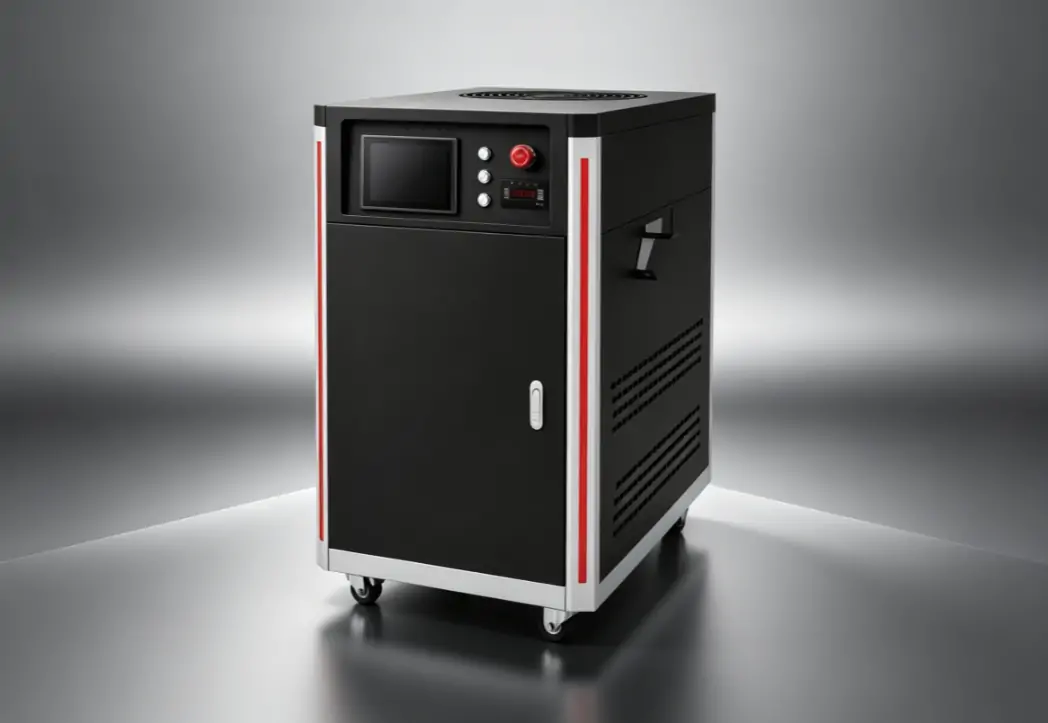
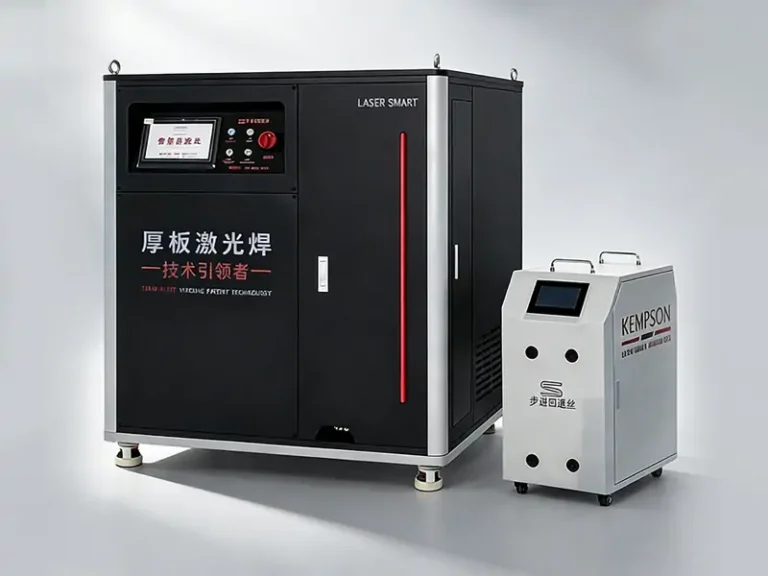
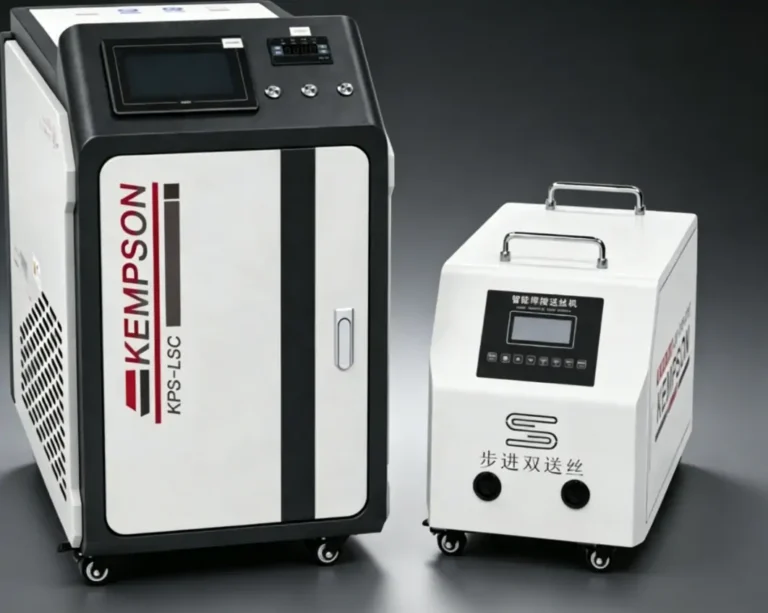
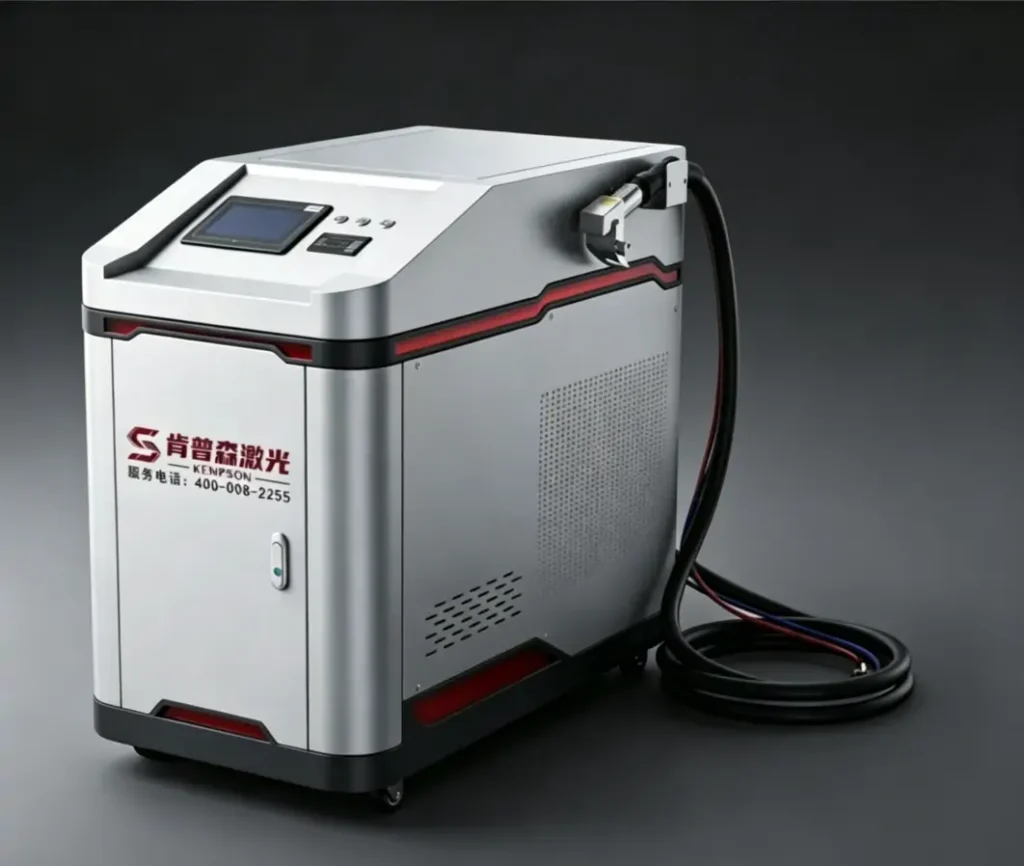
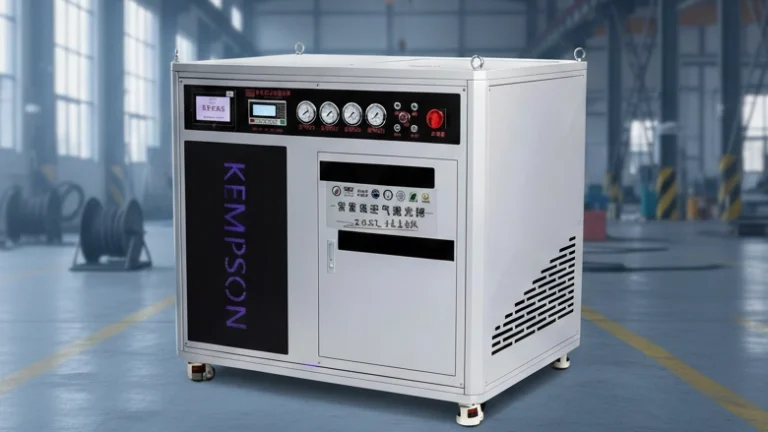
Laser Welding Parameters for Stainless Steel
Laser welding parameters for stainless steel mainly depend on material thickness, joint type, and laser power. The following values are common reference settings for stainless steel welding. Actual production parameters should be adjusted according to the specific material and welding conditions.
| Stainless Steel Thickness | Laser Power | Welding Speed | Welding Method | Shielding Gas | Notes |
|---|---|---|---|---|---|
| 0.5–1 mm | 1000–1500W | 0.5–1.5 m/min | Direct welding | Ar / He | Suitable for thin sheets, no filler wire required in most cases |
| 1–2 mm | 1500–2500W | 0.8–1.5 m/min | Direct welding or wire feeding | Ar / He | Wire feeding is recommended for larger gaps |
| 2–3 mm | 2500–3500W | 0.5–1.2 m/min | Direct welding or wire feeding | Ar / He | Suitable for medium-thickness stainless steel parts |
| 3–5 mm | 3500–4500W | 0.4–0.8 m/min | Wire feeding recommended | He / He-Ar | Requires higher power and better heat control |
| 5–8 mm | 4500–6000W+ | 0.3–0.6 m/min | Multi-pass welding with wire feeding | He | Thick plate welding may require groove preparation |
Note: Laser power affects penetration depth, while welding speed affects heat input and weld formation. Thin stainless steel usually uses higher speed with lower heat input, while thicker plates require higher power, slower speed, and proper wire feeding. Selecting suitable shielding gas and welding parameters helps reduce oxidation and improve weld appearance.
Advantages of Laser Welding Stainless Steel
Laser welding stainless steel uses a concentrated laser beam to join metal parts with controlled heat input. Compared with traditional welding methods, it provides better control of weld quality, production speed, and surface finish.
- Low Heat Input: The focused laser beam reduces heat transfer to surrounding areas, resulting in a smaller heat-affected zone and less deformation.
- Fast Welding Speed: High energy density allows faster welding, making it suitable for continuous production and large quantities of stainless steel parts.
- Smooth Weld Appearance: The weld seam is narrow, clean, and uniform, reducing the need for grinding and polishing after welding.
- High Welding Precision: The small laser spot provides accurate heat control for thin sheets and detailed components.
- Strong Weld Joint: Deep penetration welding forms a reliable connection with good mechanical strength.
- Less Post-Processing: Minimal spatter and lower surface oxidation help reduce finishing work after welding.
- Wide Material Application: Suitable for common stainless steel grades such as 304, 316, and 316L, as well as different sheet thicknesses.
Laser welding is widely used in stainless steel cabinets, kitchen equipment, medical parts, automotive components, and custom metal products where weld appearance and processing efficiency are important.
Laser Welding Stainless Steel vs TIG Welding
Laser welding and TIG welding are two common methods for stainless steel fabrication. The main differences are in heat input, welding speed, weld appearance, and application requirements. Laser welding uses a concentrated heat source for precise welding, while TIG welding relies more on manual operation and heat control.
| Comparison | Laser Welding Stainless Steel | TIG Welding Stainless Steel |
|---|---|---|
| Heat Input | Low heat input with a narrow heat-affected zone, around 60μm in some applications | Higher heat input with a wider heat-affected zone, which may reach about 1.3mm |
| Welding Speed | Faster welding speed, commonly 20–80 mm/s, suitable for high-volume production | Slower speed, usually around 5–15 mm/s, suitable for small batches and repair work |
| Weld Appearance | Smooth and clean weld seam with less spatter, often no additional polishing required | Weld surface may require grinding and polishing after welding |
| Weld Strength | Small weld structure and concentrated heat can provide high joint strength | Good strength but with a larger heat-affected area |
| Distortion Control | Less thermal deformation, suitable for thin stainless steel sheets | More heat accumulation, higher risk of sheet deformation |
| Corrosion Resistance | Rapid cooling helps reduce corrosion-related issues in many stainless steel applications | Higher heat input may affect corrosion resistance if parameters are not controlled properly |
| Operation Method | Easier for operators after parameter setup, suitable for continuous production | Requires skilled welders to maintain consistent welding quality |
| Material Fit | Best for thin and medium stainless steel parts with high appearance requirements | Suitable for complex structures, maintenance work and thicker materials |
| Equipment Cost | Higher initial investment but lower labor dependence | Lower equipment cost but relies heavily on operator experience |
Laser welding is widely used for stainless steel products that require fast production, low deformation and clean weld surfaces, such as cabinets, kitchen equipment and precision parts. TIG welding remains a practical choice for repair work, complex joints and applications where equipment flexibility is more important than welding speed.
Common Problems When Laser Welding Stainless Steel
Laser welding stainless steel provides clean and precise welds, but incorrect parameters, poor material preparation, or improper operation can cause welding defects.
Weld Discoloration
- Cause: Excessive heat input, insufficient shielding gas coverage, or contaminated material surface can cause the weld area to turn yellow, blue, or black.
- Solution: Clean the stainless steel surface before welding, adjust laser power and welding speed, and maintain proper shielding gas flow.
Porosity in Weld
- Cause: Oil, dust, moisture, or air trapped in the weld pool may create small pores inside the weld.
- Solution: Remove surface contaminants before welding and check the shielding gas supply to keep the welding area protected.
Insufficient Penetration
- Cause: Low laser power, excessive welding speed, or incorrect focus position can result in incomplete fusion.
- Solution: Increase laser power, reduce welding speed, or adjust the focus position according to material thickness.
Excessive Weld Spatter
- Cause: Unstable welding parameters, large gap between workpieces, or improper wire feeding settings may cause metal splashing.
- Solution: Adjust welding parameters, control assembly gaps, and select suitable wire feeding speed.
Welding Deformation
- Cause: Although laser welding has low heat input, improper settings on thin stainless steel sheets can still cause thermal deformation.
- Solution: Use suitable power settings, control heat input, and fix the workpiece properly during welding.
Cracking After Welding
- Cause: Some stainless steel grades with higher hardness or special compositions may develop cracks due to improper cooling or excessive stress.
- Solution: Select suitable welding parameters, control cooling speed, and use proper welding methods for different stainless steel grades.
Before welding, clean the material surface, set the right welding parameters, and choose suitable shielding gas according to the stainless steel type and thickness to maintain consistent weld quality.
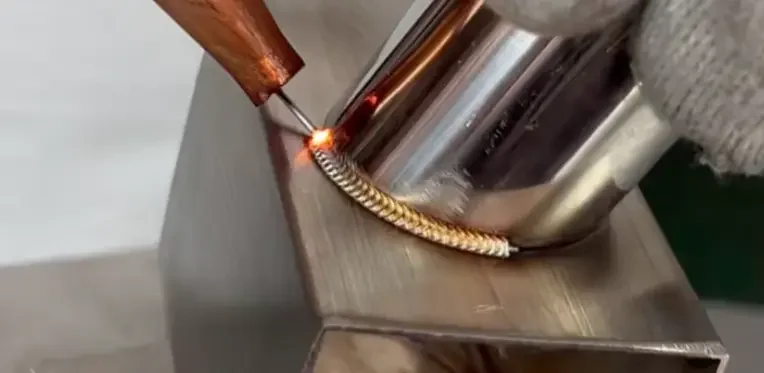
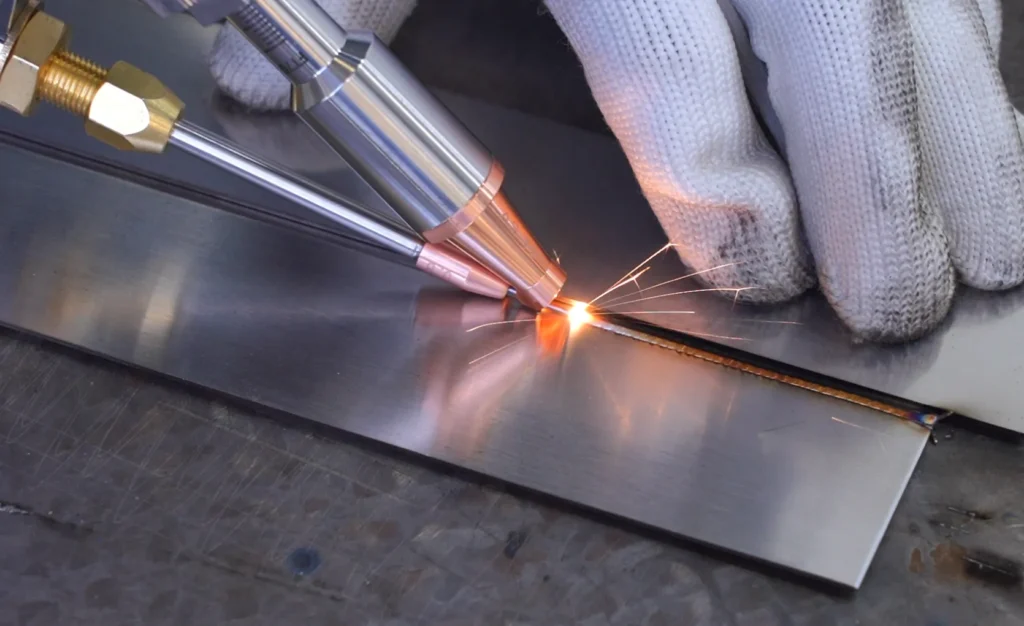
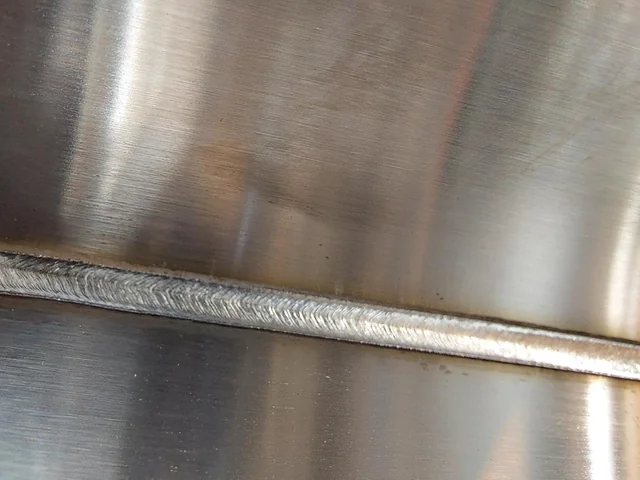
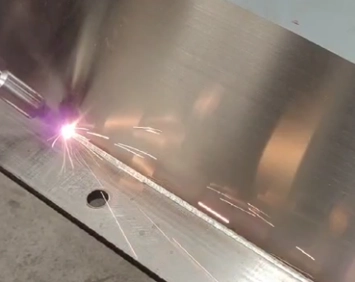
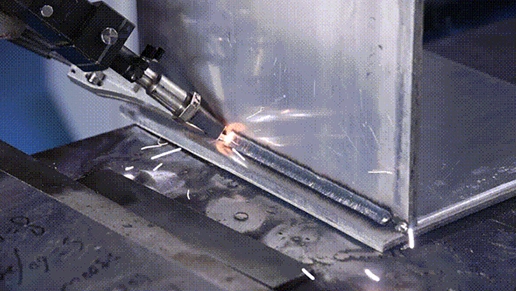
Welding Projects
Conclusion
Laser welding stainless steel provides a practical solution for applications that require clean welds, low deformation, and high production efficiency. By selecting the right laser power, welding parameters, and welding method according to material thickness and application requirements, manufacturers can achieve reliable weld quality.
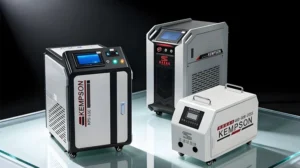
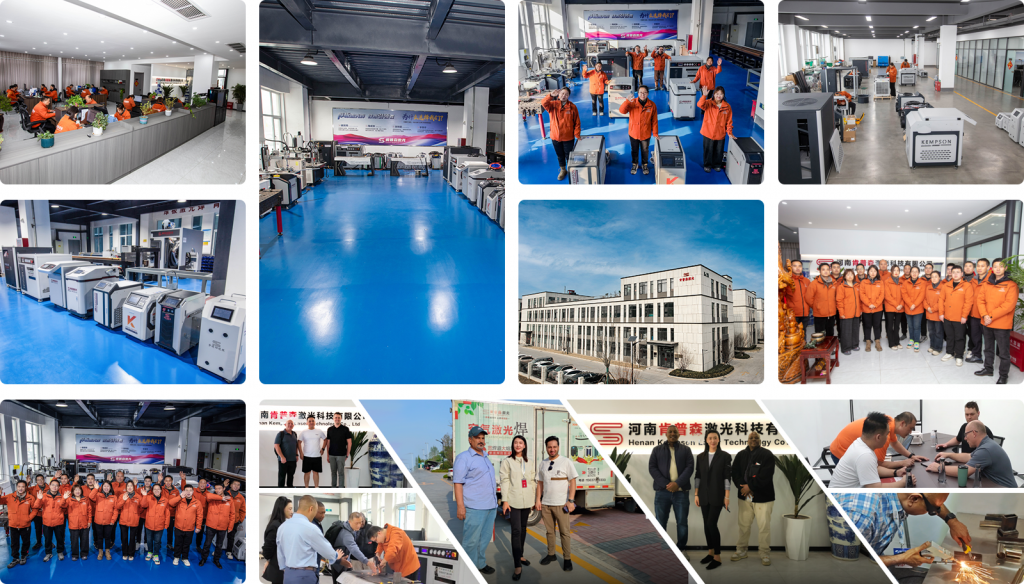
KEMPSON offers handheld laser welding machines for different stainless steel welding applications, including thin sheet fabrication, metal structures, and custom projects. Contact us to discuss your welding requirements and find a suitable laser welding solution.
FAQ
Can you laser weld stainless steel?
Yes, stainless steel can be welded with a laser. Laser welding is widely used for stainless steel sheets, tubes and components because it provides precise heat control, low deformation and clean weld seams.
What stainless steel grades can be laser welded?
Most common stainless steel grades can be laser welded, including 304, 316, 316L, 430, 410 and duplex stainless steel. The welding parameters should be adjusted according to the material type and application.
What thickness of stainless steel can a laser welder weld?
A laser welder can weld stainless steel from thin sheets around 0.5mm to thicker plates over 5mm. The actual welding thickness depends on laser power, joint design, and whether wire feeding is used.
Is laser welding stainless steel stronger than TIG?
Laser welding can provide high-strength weld joints with a smaller heat-affected zone and less thermal distortion. TIG welding is still suitable for complex joints and repair work, while laser welding is preferred for high-efficiency production.
What gas is used for stainless steel laser welding?
Argon and helium are commonly used as shielding gases for stainless steel laser welding. The gas type and flow rate depend on the material thickness, welding speed, and surface requirements.
What power laser is suitable for stainless steel?
The suitable laser power depends on stainless steel thickness and welding requirements. Generally, 1000W–1500W is suitable for thin sheets, 2000W–3000W for medium thickness materials, and higher power is used for thicker stainless steel parts.
Does laser welding stainless steel leave marks?
Laser welding produces smooth and narrow weld seams with less oxidation compared with traditional welding methods. With proper shielding gas and parameter settings, the weld surface can remain clean with minimal finishing work.
Can a handheld laser welder weld stainless steel?
Yes, a handheld laser welder can weld stainless steel. It is commonly used for stainless steel cabinets, doors, railings, kitchen equipment, and other metal fabrication projects due to its flexibility and easy operation.