Table of Contents
Introduction
Injection molds are the backbone of modern manufacturing, widely used in automotive parts, consumer products, medical devices, electronics, and packaging industries. However, during long-term production, molds inevitably suffer from wear, cracks, surface damage, and dimensional degradation.
Instead of replacing expensive molds, many manufacturers now rely on laser welding for injection mold repairing—a precision repair technology that restores mold performance with minimal heat distortion and high accuracy.
This guide explains the full process, advantages, applications, material compatibility, and practical engineering considerations of laser mold repair, helping you understand when and how to use this technology effectively.
What Is Laser Welding for Injection Mould Repair?
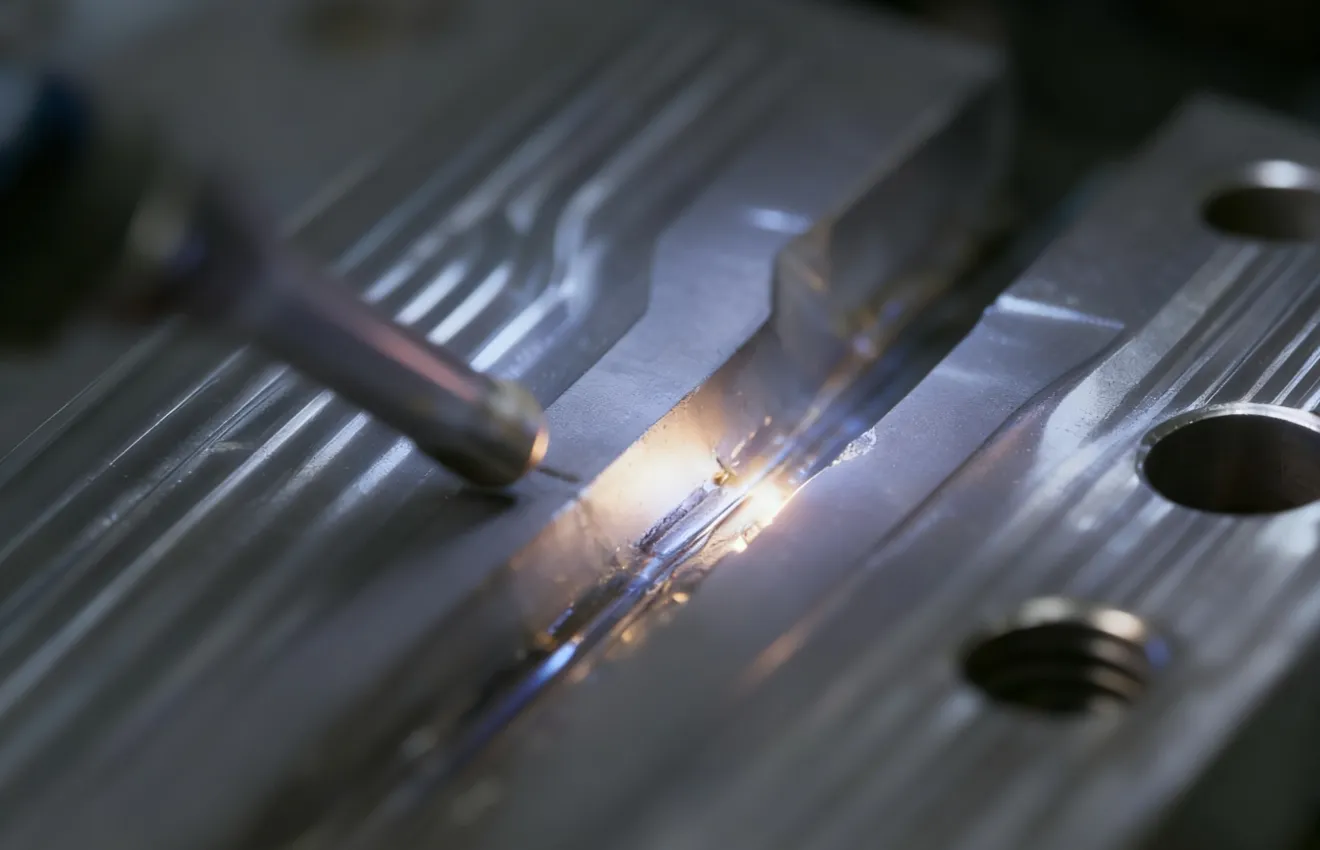
Laser welding for injection mould repairing is a precision metal restoration process that uses a highly focused laser beam to fuse damaged mould areas with compatible filler materials. The process creates a strong metallurgical bond between the base mould and repair material while minimising heat impact on surrounding structures. It is widely used for repairing cracks, worn edges, and precision mould surfaces in injection mold manufacturing and maintenance. To learn more about related equipment and applications, you can also read our article: How to Fix Die Mold Cracks, Mould Repair Laser Welding Machine.
Unlike traditional welding methods, laser welding delivers extremely localised energy input, allowing engineers to repair micro-cracks, worn edges, and fine cavity surfaces without significantly affecting mould geometry.
In real production environments, this technology is widely used for high-value injection moulds where dimensional accuracy is critical, such as automotive bumper moulds, precision housings, and medical components.
Why Injection Molds Need Repair Instead of Replacement
Injection molds are expensive precision tools, often costing thousands to hundreds of thousands of dollars depending on size and complexity. In addition, manufacturing a new mold may require weeks or even months, causing significant production downtime.
From practical industry experience, most mold failures do not require full replacement. Instead, localized damage such as cracks, wear, or surface defects can be effectively restored through laser welding.
In real factory operations, manufacturers often choose repair over replacement because:
- Mold replacement cost is significantly higher than repair (often 3–10 times)
- Production downtime directly impacts delivery schedules
- Mold steel structures remain usable after surface restoration
- Repair improves mold lifespan and reduces capital investment
For these reasons, laser welding has become a standard maintenance method in modern mold workshops.
Common Injection Mold Defects Repaired by Laser Welding
Laser welding is suitable for a wide range of mold defects. Below are the most common issues encountered in injection molding operations.
Mold Crack Repair
Cracks are typically caused by thermal stress, fatigue, or long-term high-pressure injection cycles. Laser welding can precisely fill and seal micro-cracks without damaging the surrounding steel.
Cavity Wear and Surface Damage
Repeated friction between molten plastic and mold surfaces leads to gradual wear. Laser welding restores the original surface profile and improves mold lifespan.
Edge and Parting Line Damage
Parting lines are highly sensitive areas in injection molds. Even small damage can affect product quality. Laser welding allows controlled rebuilding of edges with high precision.
EDM Overcut Correction
Electrical discharge machining (EDM) can sometimes remove excessive material. Laser welding is used to restore missing sections and recover dimensional accuracy.
Porosity and Surface Defects
Porosity or surface imperfections caused during mold manufacturing can be corrected through fine laser deposition welding.
Laser Welding Process for Injection Mold Repairing
A successful mold repair depends not only on equipment but also on a controlled and repeatable process. Below is the standard industrial workflow used in professional mold repair workshops.
Step 1: Mold Damage Inspection
The first step is identifying the type, depth, and location of damage. Engineers evaluate whether the mold is suitable for laser repair or requires structural modification.
In industrial practice, precise inspection prevents unnecessary overheating or incorrect repair depth.
Step 2: Surface Cleaning and Preparation
Before welding, the mold surface must be thoroughly cleaned to remove oil, oxide layers, and contaminants. Any residue can affect bonding quality and weld strength.
Step 3: Precision Laser Welding Repair
This is the core process. A focused laser beam melts filler material and base metal at the repair zone. The operator controls:
- Energy intensity
- Pulse frequency
- Welding depth
- Layer thickness
For high-precision molds, multi-layer micro welding is often used to ensure structural integrity and accuracy.
Step 4: Grinding and Polishing
After welding, excess material is removed through grinding and polishing to restore original mold geometry and surface smoothness.
Step 5: Quality Testing and Fit Check
Finally, the repaired mold undergoes dimensional inspection and trial molding to ensure performance stability and accuracy.
Laser Welding vs TIG Welding for Mold Repair
In many mold workshops, TIG welding has been the traditional choice for repair work due to its flexibility and relatively low equipment cost. However, as mold precision requirements continue to increase—especially in automotive, electronics, and precision injection industries—laser welding is becoming a more advanced alternative. Compared with TIG welding, laser welding offers much finer heat control, a smaller heat-affected zone, and significantly improved repair accuracy, making it ideal for high-value and high-precision mold restoration.
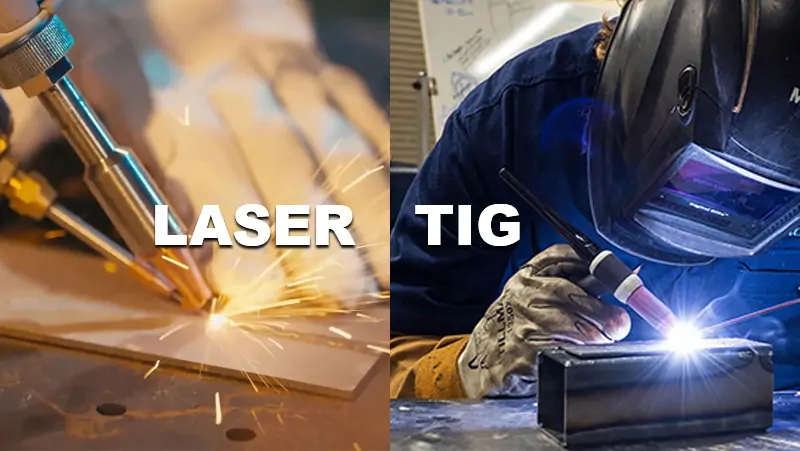
Below is a detailed comparison between laser welding and TIG welding for mold repair:
| Item | Laser Welding | TIG Welding |
|---|---|---|
| Welding Principle | Uses a focused laser beam to melt and fuse material with minimal heat input | Uses an electric arc between the tungsten electrode and the workpiece with filler wire |
| Heat Affected Zone (HAZ) | Very small, highly localised heat input | Relatively large heat-affected zone |
| Precision | Extremely high, suitable for micro and fine repairs | Moderate, depends heavily on operator skill |
| Surface Finish After Welding | Smooth, minimal post-processing required | Often requires grinding and polishing |
| Distortion Risk | Very low due to controlled heat input | Higher risk of deformation, especially on thin or precision molds |
| Repair of Fine Cracks | Excellent for micro-cracks and delicate features | Limited effectiveness for very small defects |
| Material Compatibility | Works well with tool steel, stainless steel, and precision alloys | Wide material range, but quality varies with skill |
| Operator Skill Requirement | Lower dependency on manual skill once parameters are set | Highly dependent on welder experience |
| Productivity | High precision reduces rework time | Slower due to finishing and correction steps |
| Equipment Cost | Higher initial investment | Lower equipment cost |
| Maintenance Cost | Moderate, depends on laser source usage | Relatively low |
| Typical Application | Precision molds, injection molds, electronics molds, and high-end repair | General mold repair, structural welding, heavy-duty repair |
Advantages of Laser Welding in Mold Repair
Laser welding is widely used in modern mold maintenance due to its high precision and low thermal impact. In real injection mold repair work, it is especially effective for restoring fine defects on high-value tooling while maintaining original mold accuracy and surface quality.
Minimal Heat Distortion
Laser welding delivers concentrated energy with very low heat input. In practice, this helps avoid mold deformation and preserves the hardness and structure of surrounding steel, even in thin or precision cavity areas.
High Precision Micro Repair
It is suitable for repairing microcracks, edge wear, and small surface defects that are difficult to control with TIG welding. Operators can perform localised repair without affecting adjacent fine details.
Extend Mold Lifespan
By repairing damaged zones instead of replacing the entire mold, laser welding helps extend service life. Many molds can continue stable production after multiple repair cycles.
Reduce Downtime
Repair speed is faster compared to traditional welding plus grinding processes. This helps reduce machine stoppage time and supports continuous production schedules.
Lower Long-Term Cost
Although the initial equipment cost is higher, reduced rework, less polishing, and longer mold life help lower overall maintenance costs in long-term use.
Compatible Mold Materials for Laser Welding
Laser welding is widely applied in mold repair because of its strong adaptability to different tool steels. In practical workshop use, it is commonly used for injection molds, die-casting molds, and precision molds where local damage needs to be repaired without affecting overall mold performance. Material selection is critical, as different steels require adjusted welding parameters to ensure proper fusion, hardness consistency, and crack resistance after repair.
- P20 Mold Steel (general-purpose molds)
- H13 Tool Steel (high-temperature molds)
- S136 Stainless Steel (corrosion-resistant molds)
- NAK80 Mold Steel (high-polish molds)
- SKD61 Steel (hot work applications)
When Should You Use Laser Welding for Mold Repair?
Laser welding is not a universal solution for all mold damage cases. In real production and maintenance environments, it is mainly used for localised, high-precision repairs where maintaining mold accuracy and surface quality is critical. It is especially effective when the goal is to extend mold life without affecting dimensional tolerance or production stability.
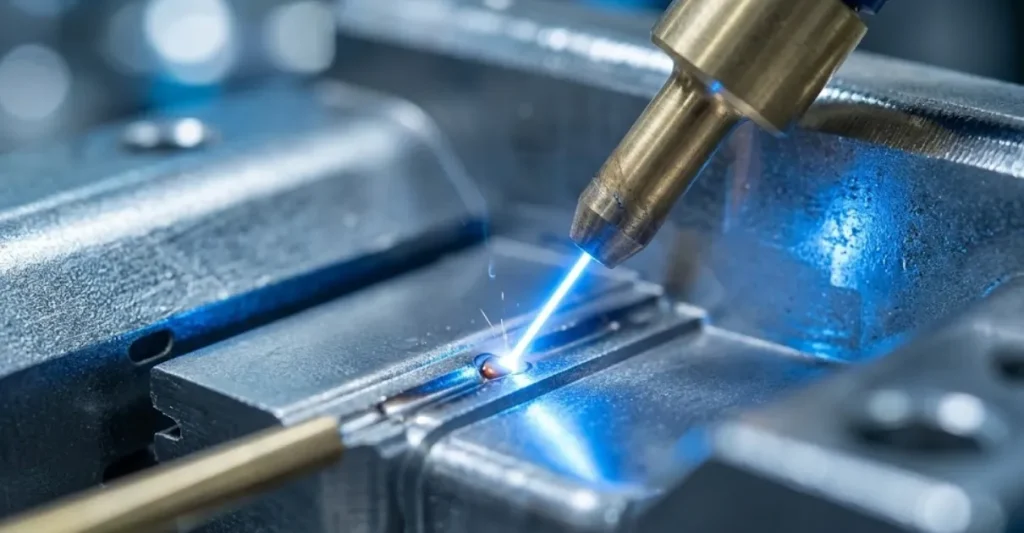
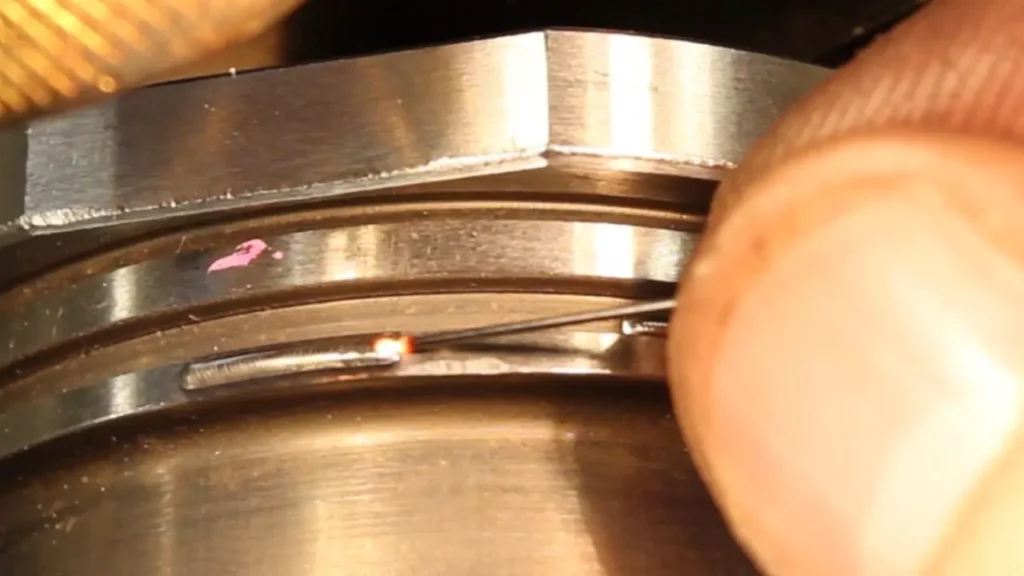
Typical Applications for Laser Welding
Microcracks and surface damage
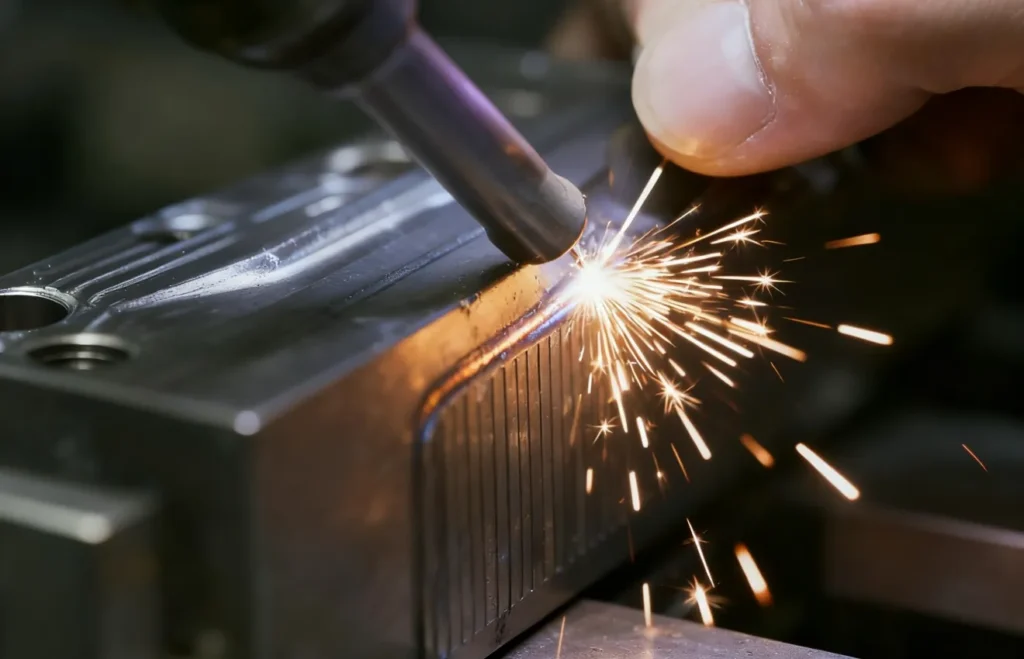
Laser welding is commonly used for hairline cracks, edge chipping, and small cavity defects. In workshop practice, these issues can often be repaired directly without dismantling the entire mold, saving significant downtime.
Precision injection molds with tight tolerances
For molds used in electronics, medical, or optical parts, even slight deformation is unacceptable. Laser welding provides controlled heat input, making it suitable for maintaining dimensional accuracy after repair.
High-value molds with high replacement cost
When mold replacement cost is very high, laser welding is preferred for localised restoration. In many real cases, it helps extend mold life by multiple production cycles instead of full replacement.
Repeated maintenance of production molds
For molds in continuous mass production, wear on specific areas is common. Laser welding allows repeated localised repair without degrading the overall mold structure.
Cosmetic surface restoration
It is also used for improving surface appearance before polishing, especially for high-gloss or visible plastic parts where surface quality directly affects product value.
Limitations of Laser Welding in Mold Repair
Despite its advantages, laser welding has clear application boundaries that must be understood in real industrial use:
Not suitable for large structural damage
If the mold has deep cracks, severe deformation, or large-area failure, laser welding is not sufficient. In such cases, re-machining or replacement is usually required.
Requires skilled parameter control
Although easier than traditional welding in some aspects, precise control of energy, pulse, and filler material is still necessary to avoid weak bonding or surface defects.
High initial equipment investment
Compared to TIG welding, laser systems require a higher upfront cost, which may not be suitable for low-frequency repair workshops.
Operator experience affects results
In real workshop environments, repair quality varies significantly depending on operator skill. Proper training and standardised process control are essential for stable outcomes.
Laser Welding Machine Solutions for Mould Repair
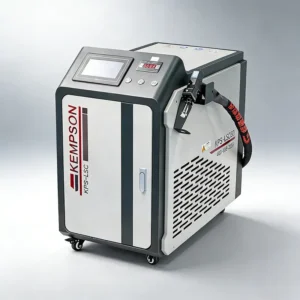
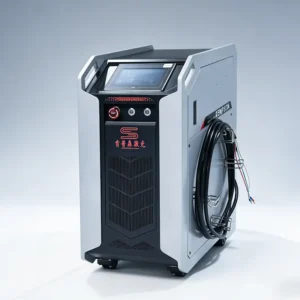
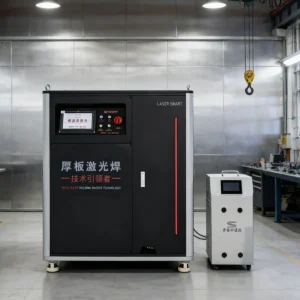
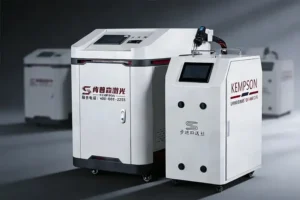
Kempson CNC Laser Welding Machine Platform for mould repair, with configurations that can be adjusted according to specific mould types and precision requirements. The core advantages of this equipment lie in its six-axis motion control and automated welding capabilities, making it suitable for repairing common defects such as chipped corners and worn sealing edges on mould surfaces.
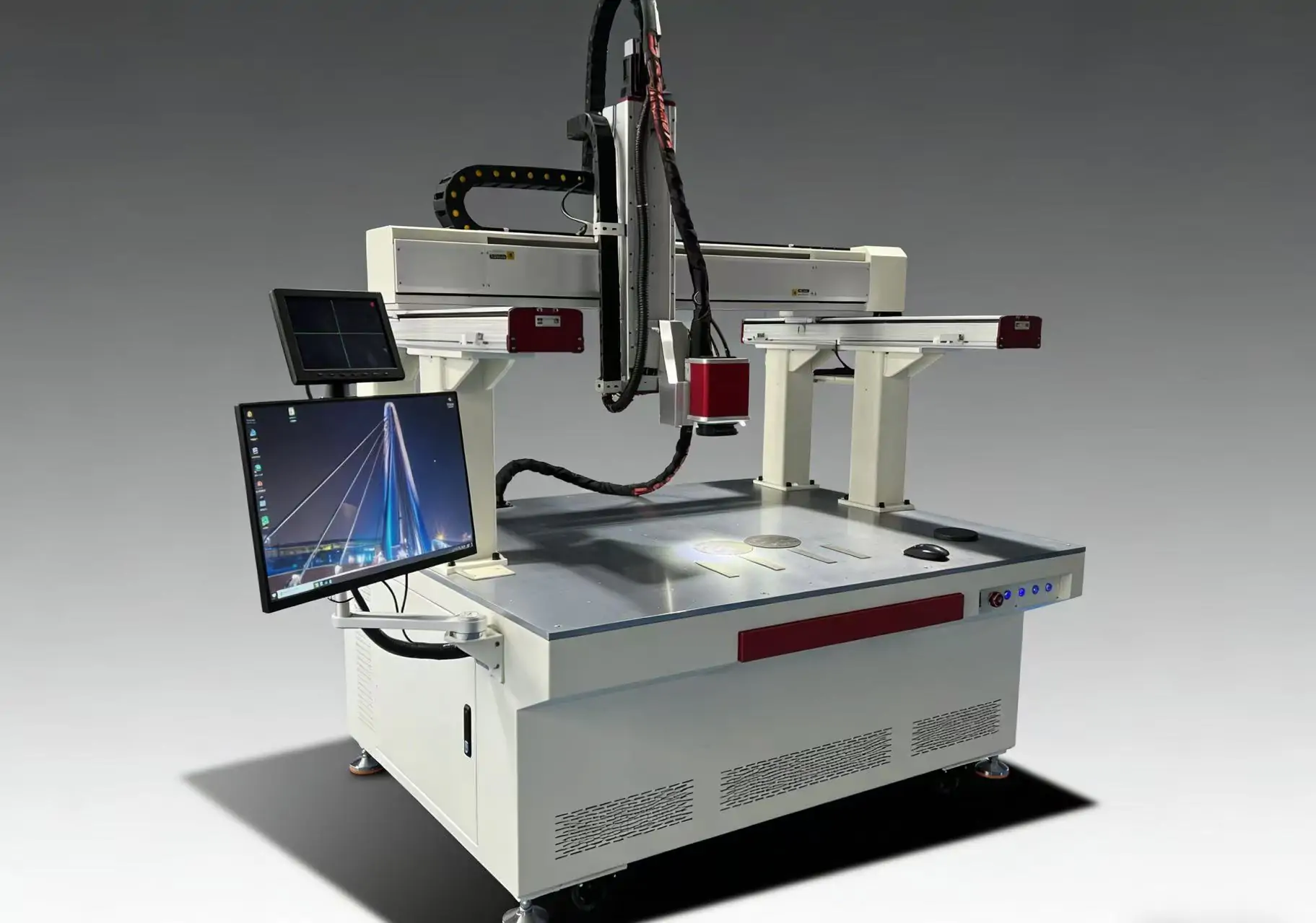
Mould Types: Suitable for routine repairs of large moulds used in the automotive and consumer electronics industries, such as crack filling or dimensional restoration of mould steels, including SKD11 and 718. The platform supports workpiece rotation and multi-dimensional welding, enabling localised repair welding on moulds with complex curved surfaces.
Precision Requirements: For the repair of micro-cracks smaller than 0.2 mm or mirror-finish moulds, additional high-magnification microscopy systems (such as 20–60x coaxial CCD) and pulsed laser modules are required to limit the heat-affected zone to within 0.1 mm.
Material compatibility: The equipment supports welding of common mould materials such as stainless steel and aluminium alloys; however, highly reflective materials such as beryllium copper or titanium alloys may require a green laser module (532 nm wavelength) to enhance absorption.
FAQ
What is laser welding for injection mold repairing?
It is a precision repair process that uses focused laser energy to restore damaged mold surfaces and structures.
Is laser welding better than traditional mold repair methods?
Yes, it offers higher precision, lower heat distortion, and better surface quality compared to TIG welding.
Can laser welding fix mold cracks permanently?
Yes, properly executed laser welding creates a strong metallurgical bond that can last throughout the mold’s service life.
What materials can be repaired using laser welding?
Common mold steels such as P20, H13, S136, NAK80, and SKD61 are fully compatible.
Will laser welding affect mold precision?
No, if properly controlled, laser welding minimises deformation and maintains dimensional accuracy.
How long does mold laser repair take?
Small repairs may take hours, while complex cavity restoration can take one to two days, depending on the damage level.
Is laser welding cost-effective for mold maintenance?
Yes, it significantly reduces downtime and avoids the high cost of mold replacement.
Conclusion
In summary, wear problems in the injection mold parting line and corner areas of injection molds are common, and these positions have a clear impact on product appearance and dimensional accuracy. Compared with traditional repair methods, laser welding fits better in heat-effect control, local accuracy, and complex structure handling. It can be used in various scenarios like parting line repair, corner weld padding, and detail restoration, seeing wider application in mold maintenance. In this field.
KEMPSON has long focused on mold laser welding equipment and process applications, possessing repair experience for different mold steels and complex structures. We can provide customers with technical support from equipment selection to process parameter matching, helping to improve mold maintenance efficiency and life cycles. If you are dealing with mold parting line or corner repair issues or need a more stable laser welding solution, feel free to contact us anytime for further technical support and solution proposals.
FAQ
What causes damage to the injection mold parting line?
It is mainly caused by long-term mold-closing wear, uneven pressure, and material fatigue. Common problems include flash, wear, and local misalignment.
Can laser welding repair the injection mold parting line effectively?
Yes, laser welding is suitable for local material padding repair of the injection mold parting line, capable of controlling heat effects and maintaining high dimensional accuracy.
Why do mold corners break or chip easily?
Corners belong to stress concentration areas, which are more prone to chipping or notching under repeated molding pressure and impacts.
Is laser welding better than TIG welding for mold repair?
It is more suitable for precision repair scenarios. Laser welding has lower heat input and provides more stable deformation control for parting lines and corners.
Will laser welding affect mold dimensions?
The impact is small. Because energy is concentrated in local areas, the risk of overall structural deformation is low, making it suitable for high-precision mold maintenance.
Which mold types are suitable for laser welding repair?
It is suitable for precision injection molds, automotive molds, home appliance molds, and medical molds, especially in scenarios where the injection molding parting line suffers frequent wear.