Table of Contents
Introduction
Aluminum is widely used in lightweight structures, automotive parts, and precision components because of its low density and good strength-to-weight ratio. However, aluminum laser welding porosity is a common aluminum laser welding problem that affects weld quality. During welding, trapped hydrogen, surface contamination, unstable keyhole behavior, and unsuitable welding parameters can cause pores inside the weld.
This article explains the main reasons behind porosity in aluminum laser welding and provides methods to reduce it. It covers surface preparation, shielding gas control, welding parameter adjustment, and common troubleshooting steps to help improve aluminum weld consistency in production.


What Causes Porosity in Aluminum Laser Welding?
Porosity occurs when gas bubbles are trapped inside the molten pool before the weld metal solidifies. In aluminum laser welding, most aluminum laser welding problems related to porosity come from hydrogen contamination, oxide layer issues, unstable keyhole behavior, and poor shielding protection. Identifying the defect source is the first step to selecting the right solution.
1. Moisture and Hydrogen Contamination
Hydrogen is the main cause of porosity in aluminum laser welding. Liquid aluminum can absorb hydrogen easily, but its solubility decreases significantly during solidification. The excess hydrogen forms bubbles, and these bubbles become pores if they cannot escape from the molten pool in time.
Hydrogen sources:
- Moisture on aluminum surfaces
- Oil and other contaminants
- Humidity in the working environment
- Dirty filler wire
Reducing Hydrogen-Induced Porosity:
- Clean aluminum surfaces before welding
- Remove oil, dust, and moisture from the joint area
- Store aluminum materials and filler wire in dry conditions
- Use clean welding consumables
2. Aluminum Oxide Layer
Aluminum naturally forms a strong oxide layer on its surface. This oxide layer has a much higher melting temperature than aluminum and can affect the stability of the welding process.
During laser welding, oxide breakdown may trap contaminants and create additional pore formation sites inside the weld pool.
Recommended practices:
- Remove excessive oxide before welding
- Clean the joint area carefully
- Avoid welding on contaminated or heavily oxidized surfaces
3. Unstable Keyhole and Molten Pool
Deep penetration laser welding relies on a stable keyhole to achieve consistent weld depth. When the keyhole becomes unstable and collapses, gas bubbles may be trapped before the molten metal solidifies.
Causes of this aluminum laser welding problem include:
- Excessive or insufficient laser power
- Incorrect welding speed
- Improper focus position
- Unstable beam oscillation settings
Improving keyhole stability requires proper adjustment of laser parameters, focus position, and beam movement conditions.
4. Poor Shielding Gas Protection
Shielding gas protects the molten pool from air contamination and helps maintain stable welding conditions. Incorrect gas protection can introduce additional gas into the weld and increase porosity.
Common problems include:
- Insufficient gas flow
- Incorrect nozzle position
- Gas hose leakage or contamination
- Strong airflow around the welding area
Recommended practices:
- Use high-purity argon shielding gas
- Check gas supply lines regularly
- Keep the welding area away from strong airflow
- Adjust nozzle distance and gas flow according to the joint design
Not all aluminum laser welding porosity has the same cause. Small and evenly distributed pores are often related to hydrogen contamination, while large irregular pores near the fusion zone usually indicate keyhole instability.
How to Reduce Porosity in Aluminum Laser Welding?
Reducing aluminum laser welding problems such as porosity requires controlling the entire welding process, from material preparation to laser parameter adjustment. Since most pores come from hydrogen, contamination, unstable keyhole behavior, and poor gas protection, improving weld quality starts with removing gas sources and maintaining a stable molten pool.
1. Improve Surface Preparation Before Welding
Surface contamination is one of the main sources of hydrogen-related porosity in aluminum laser welding. Moisture, oil, and oxide residues can release gas during heating and become trapped inside the weld pool.
| Problem | Solution |
|---|---|
| Oil contamination | Clean the welding area with a suitable solvent before welding |
| Oxide layer | Remove excessive oxide film from the joint area |
| Moisture | Keep aluminum materials dry before processing |
| Dirty filler wire | Use clean filler wire and avoid surface contamination |
For aluminum laser welding, cleaning should focus on the joint area rather than the entire workpiece. The cleaner the welding surface, the lower the risk of hydrogen entering the molten pool.
2. Optimize Laser Welding Parameters
Incorrect laser parameters can create unstable penetration and increase the chance of pore formation. Parameter optimization aims to maintain a stable keyhole and allow gas bubbles enough time to escape before solidification.
Laser Power
Laser power directly affects keyhole formation and weld penetration.
- Too low power:
The keyhole becomes unstable, causing incomplete penetration and gas entrapment. - Too high power:
Excessive evaporation and molten pool turbulence can increase keyhole fluctuations and pore formation.
The optimal power level depends on aluminum alloy type, thickness, joint design, and welding speed.
Welding Speed
Welding speed affects heat input and molten pool behavior.
- Too fast: Short melting time, Unstable keyhole formation, Higher risk of trapped gas
- Too slow: Excessive heat input, Larger molten pool size, Increased material evaporation and turbulence
A stable welding speed helps maintain consistent penetration and reduces internal defects.
Focus Position
Focus position affects laser energy distribution and keyhole stability.
Incorrect focus adjustment may cause:
- unstable penetration depth;
- excessive surface evaporation;
- irregular molten pool flow.
For aluminum welding, focus position should be adjusted according to material thickness, laser power, and joint type.
Wobble Parameters
For handheld laser welding, beam wobble parameters influence molten pool movement and gas release.
Important settings include:
- Wobble width: Controls weld width and heat distribution.
- Wobble frequency: Affects molten pool stability.
- Beam movement pattern: Influences filler mixing and pore escape.
Proper wobble settings can reduce localized overheating and improve weld appearance.
For more information on parameter settings and operating procedures, see: How to Weld Aluminum: Methods, Parameters & Laser Welding Guide, Laser Welding Aluminum: Process, Parameters & Best Practices
3. Optimize Shielding Gas Settings
Shielding gas protects the molten pool from atmospheric contamination and affects weld stability. Poor gas protection can introduce additional gas into the welding process.
Key control factors include:
| Parameter | Influence |
|---|---|
| Gas purity | Low-purity gas may introduce contamination |
| Flow rate | Insufficient flow reduces protection; excessive flow may disturb the molten pool |
| Nozzle distance | Incorrect distance weakens shielding coverage |
| Protection area | Strong airflow can expose the weld pool to oxygen and moisture |
For aluminum laser welding, high-purity argon is commonly used because it provides stable shielding and good weld appearance.
- Check gas hose leakage before welding
- Keep shielding gas flow stable
- Avoid welding in strong airflow environments
- Adjust nozzle position according to the joint structure
For information on the use of shielding gases and how to choose them, see: Argon vs. Nitrogen for Laser Welding: Which Gas Should You Use?
4. Control Joint Fit-Up
Joint preparation directly affects gas escape and molten pool stability. Excessive gaps or poor alignment create unstable welding conditions and increase porosity risk.
Joint problems:
- Excessive joint gap
- Uneven material alignment
- Poor edge preparation
Large gaps increase molten metal turbulence and make it difficult for trapped gas to escape before solidification.
Recommended practices:
- Maintain consistent joint clearance
- Maintain proper part alignment
- Use proper edge preparation for thicker aluminum parts
Porosity control depends on the defect type, not simply increasing laser power or shielding gas flow. Hydrogen pores require better cleaning and material control, while keyhole pores require parameter optimization and process stability. Proper control of surface preparation, laser settings, gas protection, and joint design improves aluminum laser welding quality.
Aluminum Laser Welding Porosity Troubleshooting Guide
Aluminum laser welding problems related to porosity have clear defect patterns. Pore size, location, and distribution show the possible causes, including hydrogen contamination, keyhole instability, shielding gas issues, and incorrect welding parameters.
| Problem | Cause | Solution |
|---|---|---|
| Small round pores, evenly distributed | Hydrogen from moisture, contamination, or filler wire | Clean and dry material; use clean filler wire and dry shielding gas |
| Large irregular pores near fusion line | Keyhole collapse and trapped gas | Adjust power, focus position, and beam movement |
| Unstable keyhole opening | Excessive melt pool fluctuation | Optimize beam oscillation and welding parameters |
| Porosity in thick aluminum plates | Unstable deep penetration keyhole | Use suitable laser mode or wider keyhole control |
| High porosity in hybrid welding | Droplet impact affects keyhole stability | Optimize heat input or apply magnetic assistance |
| Shielding gas-related pores | Gas entrainment during keyhole formation | Check gas type, purity, and flow rate |
| Porosity changes with welding speed | Speed affects melt flow and bubble escape | Adjust travel speed to stabilize molten pool behavior |
| Pores in T-joints | Uneven keyhole and incomplete penetration | Improve joint preparation and penetration control |
| Increased pores after poor surface preparation | Oxide layer or contamination | Remove oxide and clean the welding area |
| Porosity changes with laser power | Incorrect power range affects keyhole stability | Find the suitable power window |
| More pores after wire feed adjustment | Unstable filler-metal flow | Match wire feed speed with laser power and travel speed |
Pore morphology is the first indicator for troubleshooting. Small, round pores usually come from hydrogen and contamination, which require better cleaning, dry storage, and gas protection. Large, irregular pores near the fusion line are commonly caused by keyhole instability and require parameter adjustment.
Welding Parameters Affecting Aluminum Laser Weld Porosity
Aluminum laser welding parameters vary with material conditions and welding requirements. Fixed settings are not suitable for all applications. The correct parameter range depends on aluminum alloy, material thickness, joint design, laser power, and filler wire selection.
- Laser Power: Controls penetration depth and keyhole stability. Excessive or insufficient power can cause unstable melting behavior and increase pore formation.
- Welding Speed: Affects heat input and gas escape time. Incorrect speed can change molten pool behavior and increase the risk of trapped gas.
- Focus Position: Affects keyhole formation and weld penetration. Improper focus adjustment may cause unstable penetration and uneven weld formation.
- Wire Feeding Speed: Controls filler metal flow and molten pool stability. Incorrect wire feeding can disturb the welding process and increase defects.
- Shielding Gas Flow: Protects the molten pool from contamination. Proper gas flow maintains stable shielding during aluminum laser welding.
Parameter adjustment should focus on maintaining a stable keyhole and consistent molten pool behavior. Excessive power, unsuitable speed, incorrect focus position, or unstable wire feeding can increase the risk of pore formation.
Can Fiber Laser Welding Reduce Aluminum Porosity?
Fiber laser welding cannot completely remove porosity in aluminum welds. Weld quality depends on material preparation, joint design, shielding gas, and welding parameters. Stable laser output and precise parameter control reduce pore formation.
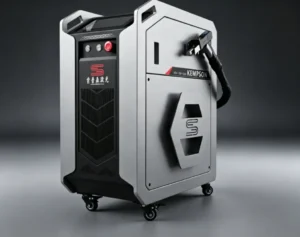
KEMPSON fiber laser welding machines feature stable beam control and adjustable welding parameters for aluminum, stainless steel, and carbon steel welding. Correct equipment settings and process control maintain consistent weld quality.
加入设备
Conclusion
Porosity in aluminum laser welding comes from gas entrapment, surface contamination, shielding gas issues, and unstable welding conditions. Identifying the defect source and adjusting the related process factors are the key steps for reducing weld pores.
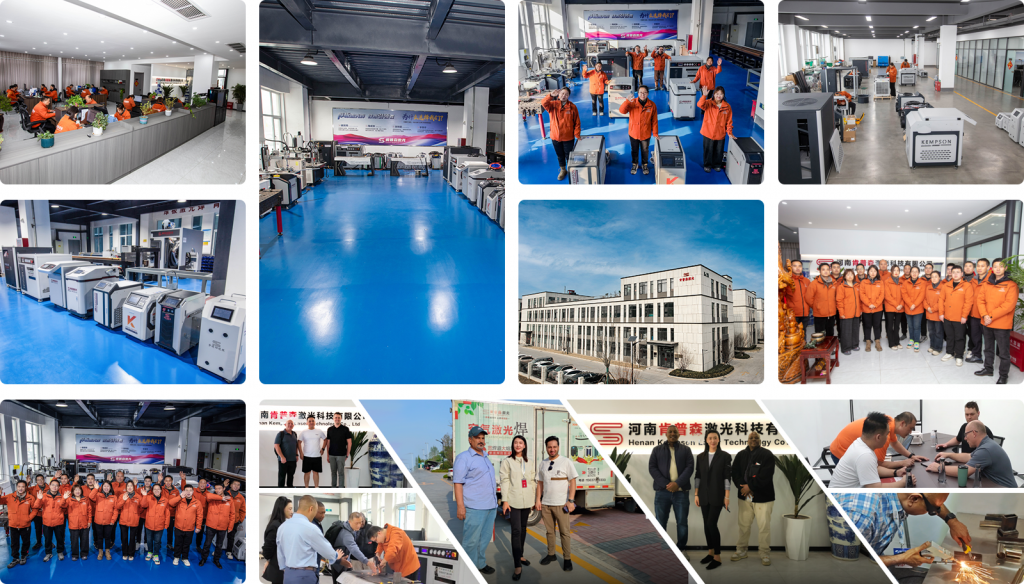
KEMPSON supplies fiber laser welding machines with customizable power options for aluminum, stainless steel, carbon steel, and other materials. Stable laser output, adjustable welding parameters, and application support meet different welding requirements. Contact us for a suitable laser welding solution for your production needs.
FAQ
Why does aluminum laser welding have porosity?
Porosity is one of the common aluminum laser welding problems. It mainly comes from hydrogen, surface contamination, oxide layers, unstable keyhole behavior, and poor shielding gas protection. Moisture, oil, and trapped gas inside the molten pool form pores when the weld metal solidifies.
How do you prevent pores in aluminum laser welding?
Preventing pores requires clean material preparation, stable shielding gas protection, and proper welding parameters. Remove moisture and contaminants, control laser power and speed, and maintain stable keyhole formation during welding.
Does aluminum need cleaning before laser welding?
Yes. Aluminum should be cleaned before laser welding to remove oil, moisture, dust, and excessive oxide layers. Surface contamination introduces hydrogen into the molten pool and increases the risk of porosity.
Does shielding gas affect aluminum laser welding quality?
Yes. Shielding gas affects molten pool protection and weld stability. Low gas purity, incorrect flow rate, or poor nozzle positioning can introduce contamination and increase porosity. High-purity argon is commonly used for aluminum laser welding.
What laser parameters affect porosity?
Laser power, welding speed, focus position, wobble parameters, and wire feeding speed affect porosity. These parameters control keyhole stability, heat input, and molten pool behavior during aluminum laser welding.
Can increasing laser power remove porosity?
Increasing laser power does not always reduce porosity. Excessive power can increase evaporation and molten pool turbulence, while low power can cause unstable penetration. The correct power range depends on material thickness, alloy type, and joint design.
Is filler wire helpful for reducing aluminum welding defects?
Filler wire can improve weld formation and joint filling, but it does not directly remove porosity. Clean filler wire, suitable feeding speed, and correct process matching are required to avoid additional defects.
Can handheld laser welders weld aluminum without porosity?
Handheld laser welders can weld aluminum with low porosity when the material preparation, shielding gas, and welding parameters are properly controlled. Laser power, wobble settings, and operator technique affect final weld quality.