Table of Contents
Introduction
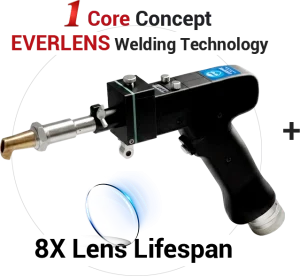
A laser welding gun is the part that guides the laser beam to the workpiece and completes the welding operation. It combines optical parts, protective components, and control functions in one unit, playing an important role in weld quality and daily operation.
In this article, I will explain the structure and working process of a laser welding gun, including its main components, different types, applications, common faults, and maintenance methods. The guide also covers key points for selecting a suitable welding gun for different materials and welding tasks.
What Is a Laser Welding Gun?
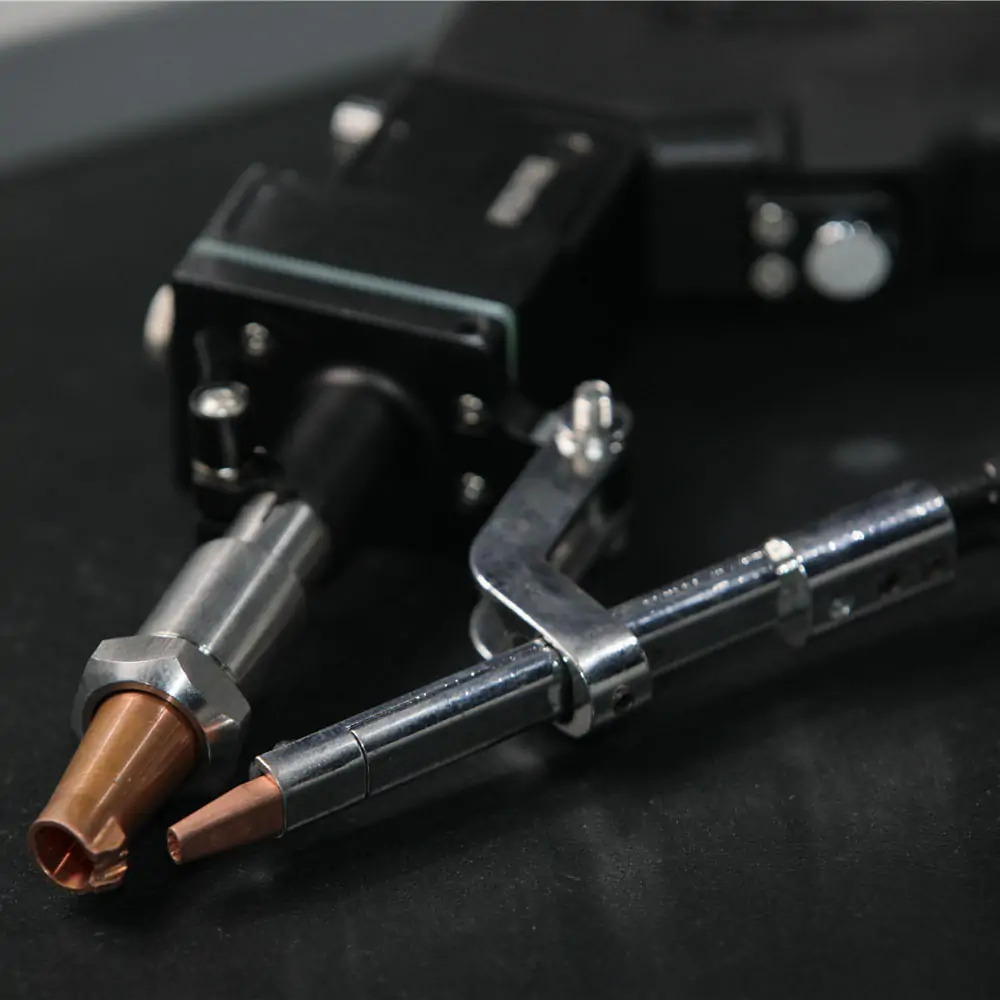
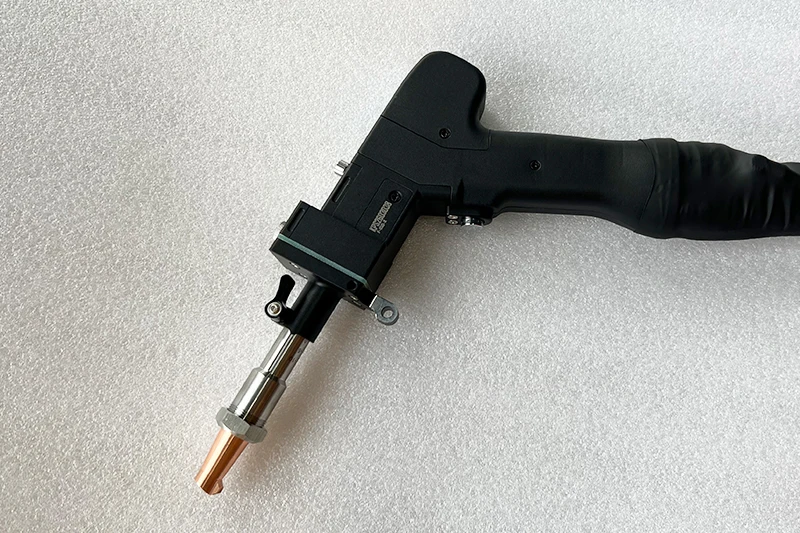
A laser welding gun is a handheld or automated welding head used to guide the laser beam to the workpiece surface. It transfers laser energy to the welding area and controls the welding path during operation. The gun integrates optical components, protective parts, and control functions to complete the welding process.
The main functions of a laser welding gun include delivering the laser beam, controlling welding direction, protecting internal optical parts, and supporting filler wire welding when used with a wire feeder. Its design affects welding operation, weld formation and equipment reliability.
Laser welding guns are widely used for stainless steel welding, aluminum welding, carbon steel welding, sheet metal fabrication and machinery repair applications.
Parts
A laser welding gun consists of optical, mechanical, and control parts. Each component has a specific role in laser delivery, welding operation, and safety protection.
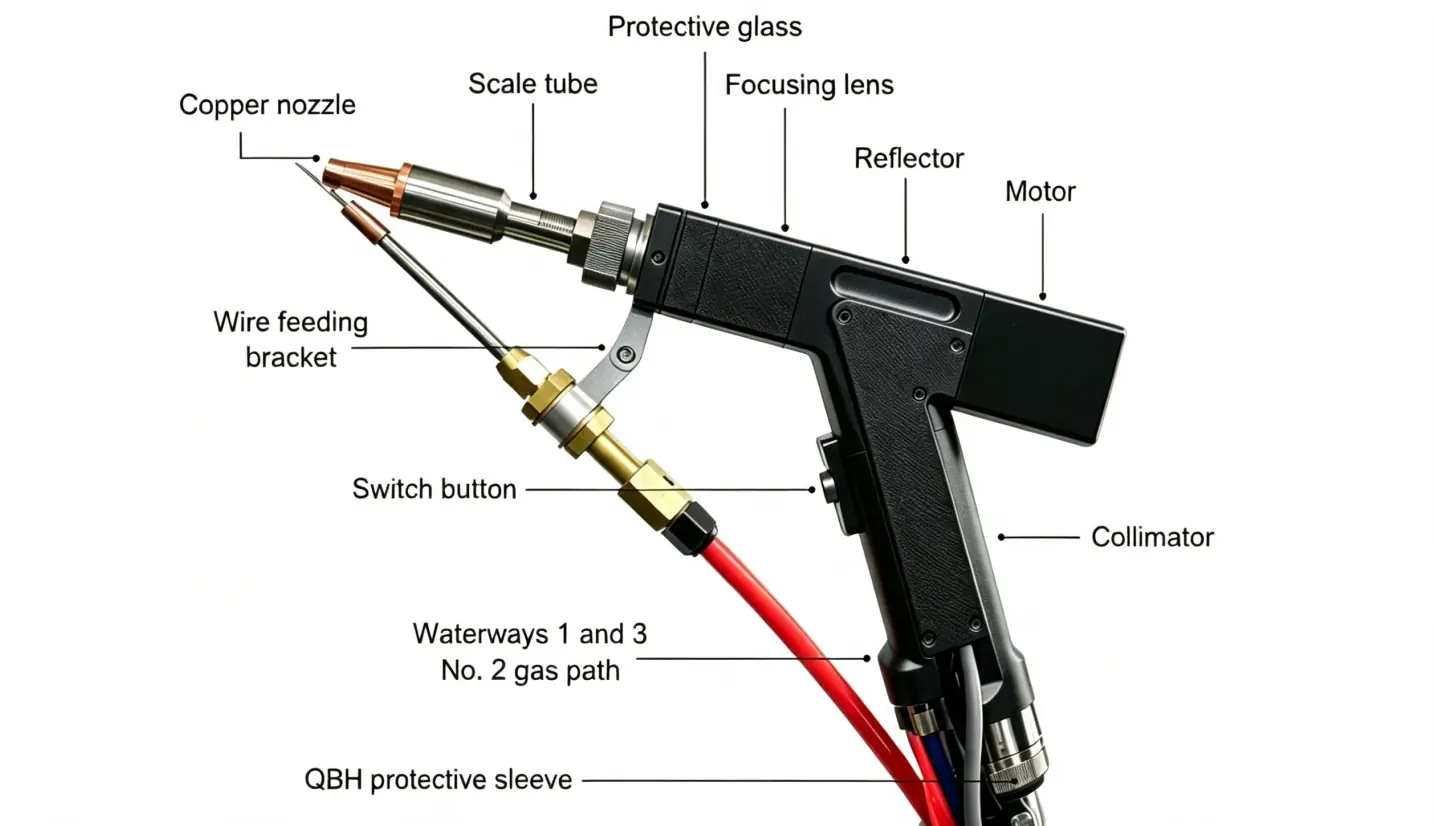
- Laser Welding Head: The welding head focuses and guides the laser beam to the welding area through the internal optical system. It also protects the optical path from dust and welding spatter.
- Copper Nozzle: The copper nozzle delivers shielding gas to protect the molten pool from oxidation. Different nozzle sizes are selected for different welding applications.
- Wire Feeding System: The wire feeding system supplies filler wire during welding. It is used for gap filling, thick plate welding, and applications requiring additional weld material.
- Safety Interlock Device: The safety interlock controls laser output. The laser is activated only when the welding gun contacts the workpiece correctly.
- Red Light Positioning System: The red light positioning system marks the welding path before operation. It helps operators set the correct welding position.
- Fiber Optic Cable: The fiber optic cable transfers the laser beam from the source to the welding gun. Its flexible design allows easier handheld operation.
- Cooling System: The cooling system controls the temperature of the welding gun. Air cooling is used for standard power, while water cooling is used for high-power welding.
- Control Interface: The control interface connects the welding gun with the laser welding machine. It controls functions such as laser power and wire feeding settings.
The laser welding gun combines laser transmission, welding control, and safety functions in one system. Proper maintenance of each part helps keep welding performance stable.
Learn more about the Wobble Welding Head: Wobble Welding Head: How It Works, Patterns & Applications
How Does a Laser Welding Gun Work?
A laser welding gun works by delivering focused laser energy to the workpiece and creating a molten pool at the welding point. The gun controls the laser beam, shielding gas, and filler wire supply to complete the welding process.
- 1. Laser Beam Delivery: The laser source sends the beam through the fiber optic cable to the welding gun. The internal optical system guides the beam toward the welding area.
- 2. Laser Beam Focusing: The focusing lens concentrates the laser energy into a small spot on the metal surface. The high energy density melts the material quickly.
- 3. Molten Pool Formation: The laser heat melts the base metal and forms a molten pool. When filler wire is used, the wire is melted into the pool to fill gaps or increase weld material.
- 4. Shielding Gas Protection: The nozzle releases shielding gas around the welding area. The gas protects the molten metal from oxidation and improves weld appearance.
- 5. Weld Formation: As the welding gun moves along the joint, the molten metal cools and forms a solid weld seam. The laser power, welding speed, and wire feeding settings affect the final weld quality.
A laser welding gun controls laser delivery, heat input, and filler material during welding. Proper parameter settings help achieve stable weld formation for different metal applications.
Types of Laser Welding Guns
Laser welding guns are available in different designs according to welding method, automation level, and application requirements. The main types include handheld welding guns, automatic welding heads, and wire feeding welding guns.
Handheld Laser Welding Gun
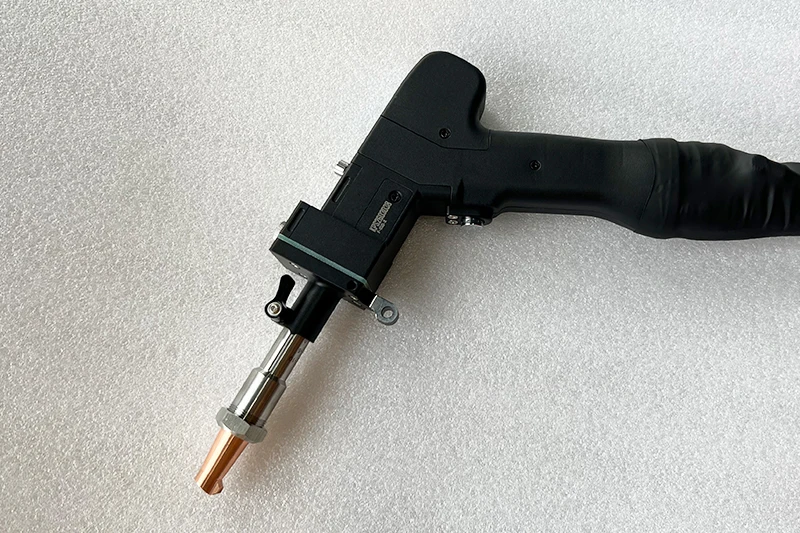
A handheld laser welding gun is the most common type for flexible welding operations. It is operated manually and suitable for sheet metal fabrication, equipment repair, and small-batch production. Most handheld guns are designed with a lightweight structure and safety functions for easier operation.
- Laser Power: 1000–3000W
- Operation Mode: Manual Welding
- Application: Stainless steel, aluminum, carbon steel welding
- Welding Thickness: Up to 8 mm (depending on power and material)
Automatic Laser Welding Head
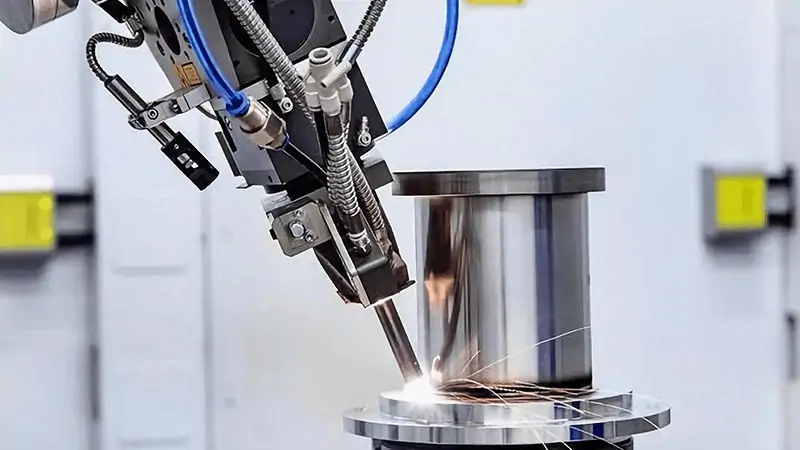
An automatic laser welding head is integrated with CNC welding systems for continuous production. It controls welding movement, speed, and parameters through an automation system, making it suitable for applications that require high repeatability.
- Operation Mode: Robotic / CNC Integration
- Application: Automotive parts, electronic components, industrial production
- Welding Control: Automatic motion and parameter adjustment
- Suitable for: High-volume welding processes
Wire Feeding Laser Welding Gun
A wire feeding laser welding gun is equipped with a filler wire system for applications that require additional welding material. It is used for thick plates, larger gaps, and weld joints that need more filling capacity.
- Wire Diameter: 0.8 / 1.0 / 1.2 / 1.6 mm
- Application: Thick plate welding, gap filling, repair welding
- Compatible Materials: Stainless steel, carbon steel, aluminum
- Suitable Power Range: 1000–3000W
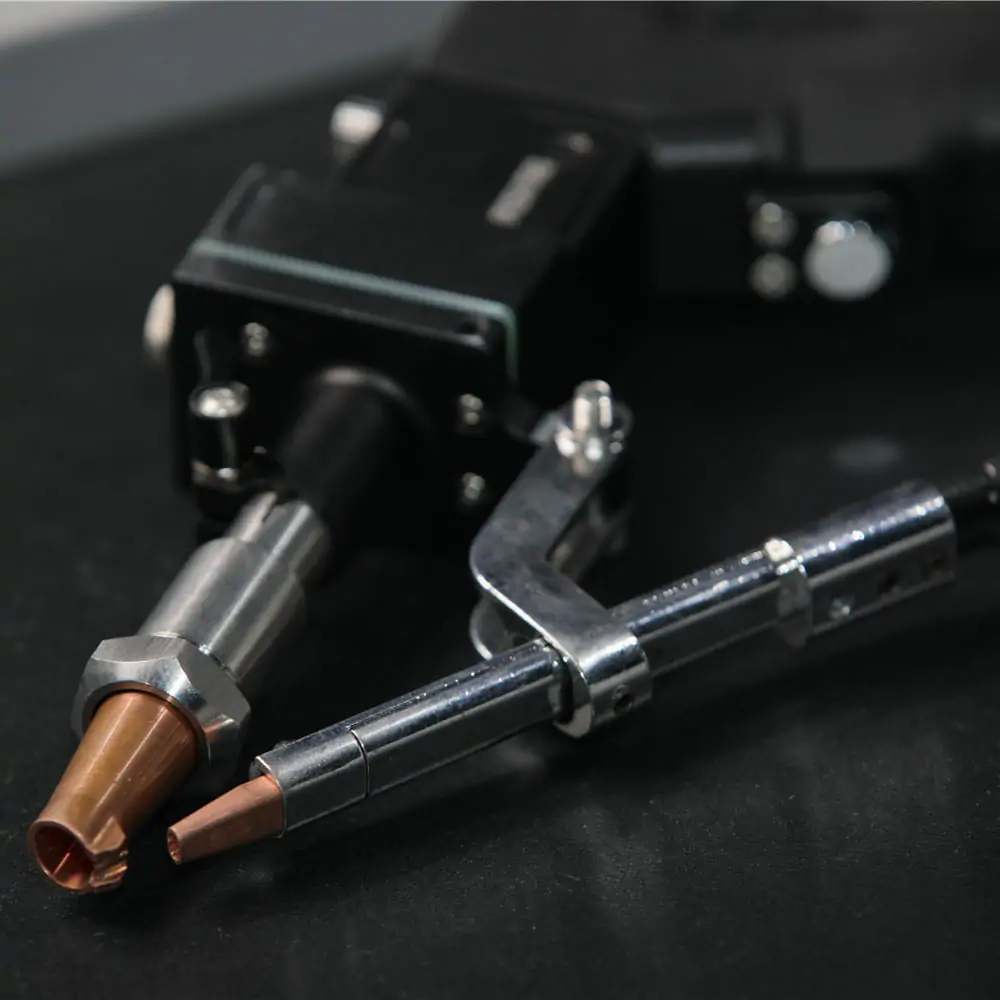
Handheld welding guns are suitable for flexible welding tasks, automatic welding heads fit production lines, and wire feeding welding guns are used for applications requiring extra filler material. The right type depends on welding requirements, material thickness, and production method.
Specification
| Parameter | Specification |
|---|---|
| Laser Power | 1000W–6000W |
| Welding Mode | Handheld / Automatic |
| Cooling Method | Air Cooling / Water Cooling |
| Laser Interface | QBH Fiber Interface |
| Welding Type | Self-fusion Welding / Wire Feeding Welding |
| Wire Diameter Support | 0.8 / 1.0 / 1.2 / 1.6 mm |
| Nozzle Type | Different sizes for various welding applications |
| Lens Type | Protective Lens / Focusing Lens |
| Applicable Materials | Stainless Steel, Aluminum, Carbon Steel, Copper |
| Application | Sheet Metal, Machinery Parts, Automotive Components, Metal Fabrication |
Common Problems With Laser Welding Guns
Laser welding gun problems are usually related to optical components, consumable parts, cooling systems, and welding settings. Regular inspection and proper operation help reduce welding failures.
Protective Lens Damage
A damaged or dirty protective lens can reduce laser transmission and affect weld quality.
- Causes: Welding spatter, dust, and excessive heat may contaminate or damage the lens during operation.
- Solution: Clean the lens regularly and replace it when scratches, burns, or cracks appear.
Unstable Laser Output
Unstable laser output may cause uneven welds, poor penetration, or inconsistent welding results.
- Causes: The issue can come from dirty optical components, incorrect lens installation, or problems with the fiber connection.
- Solution: Check the optical path, clean related parts, and confirm the fiber connection is secure.
Welding Gun Overheating
Overheating can affect welding performance and shorten the service life of internal components.
- Causes: Long continuous operation, insufficient cooling, or cooling system failure may increase the gun temperature.
- Solution: Check the cooling system, maintain proper coolant flow, and avoid operation beyond the recommended working conditions.
Poor Weld Formation
Poor weld appearance, insufficient penetration, or excessive spatter may occur during welding.
- Causes: Incorrect laser power, focus position, welding speed, or nozzle selection can affect the weld result.
- Solution: Adjust welding parameters according to material thickness and check the condition of the welding gun components.
Wire Feeding Problems
For wire-feeding welding guns, unstable wire delivery can cause uneven weld beads and incomplete filling.
- Causes: Common causes include worn feeding parts, blocked wire paths, or incorrect wire diameter selection.
- Solution: Check the wire feeder, clean the feeding path, and use suitable welding wire specifications.
Regular checks of lenses, cooling parts, wire feeding components, and welding settings can reduce common gun issues and keep the welding process running smoothly.
How to Choose a Laser Welding Gun?
Selecting a laser welding gun requires matching the gun with the laser source, material type, and welding process. The main factors include power, application, cooling method, and system compatibility.
- Match the Laser Power: The welding gun should match the laser power of the machine. Low-power guns are suitable for thin sheet welding, while higher-power guns are used for thicker materials and larger weld joints.
- Consider Welding Materials: Different metals require different welding settings and gun configurations. The welding gun should be suitable for materials such as stainless steel, aluminum, carbon steel, and copper.
- Select the Right Welding Type: Choose the gun according to the welding method. Handheld guns are suitable for flexible welding tasks, automatic heads are used in robotic production lines, and wire feeding guns fit thick plates and gap filling applications.
- Check Cooling Method: The cooling system affects the working time and equipment durability. Air-cooled guns are used for standard welding, while water-cooled guns are preferred for high-power and long-duration operations.
- Confirm System Compatibility: Before selection, check the connection between the welding gun and the laser system, including fiber interface, control signals, and wire feeder compatibility. Proper matching helps maintain stable welding performance.
Choosing the right laser welding gun requires checking laser power, material compatibility, welding method, and system connection. A suitable gun helps maintain stable operation and consistent weld quality.
Maintenance Tips for Laser Welding Guns
Regular maintenance helps keep the laser welding gun working properly and reduces welding failures. Maintenance tasks include cleaning, inspection, and replacement of worn parts.
Clean the Welding Gun — Remove dust, spatter, and metal residue from the gun surface, nozzle, and other parts after use to keep the equipment clean.
Check Wire Feeding Parts — Inspect the nozzle, feeding tube, and liner for wear or blockage. Clean or replace damaged parts to maintain smooth wire delivery.
Protect Optical Components — Check the protective lens regularly. Clean contamination and replace damaged lenses to prevent laser power loss and welding defects.
Maintain Cooling System — Check coolant level and circulation for water-cooled guns. Use antifreeze protection in low-temperature environments.
Replace Wear Parts — Replace worn nozzles, lenses, and feeding components on time to maintain welding performance.
Inspect Connections — Check screws, cables, and moving parts regularly. Tighten loose connections to avoid operational problems.
Test After Maintenance — Carry out a test weld after maintenance to confirm laser output, wire feeding, and weld quality.
Regular cleaning, inspection and part replacement help maintain stable performance and extend the service life of a laser welding gun.
Conclusion
A laser welding gun plays an important role in laser welding performance, with its structure, components and operation directly affecting weld quality. Understanding its working principle, types, selection factors and maintenance methods helps users choose and use the right equipment.
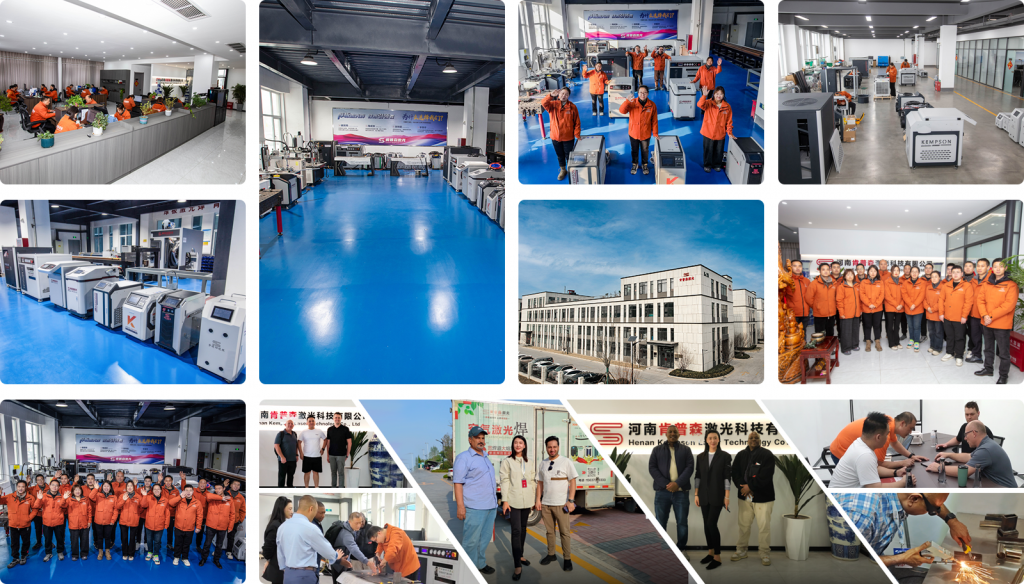
KEMPSON provides high-quality laser welding guns compatible with different laser welding systems. With professional manufacturing experience, strict quality control, and technical support, we offer reliable welding solutions for stainless steel, aluminum, carbon steel, and other metal applications.
Contact us for suitable laser welding gun solutions, product details, and technical support for your welding needs.
FAQ
What is a laser welding gun?
A laser welding gun is a welding head used to deliver and focus the laser beam onto the workpiece. It controls the welding position and combines optical, protective, and control components to complete the welding process.
How does a laser welding gun work?
A laser welding gun guides the laser beam through the internal optical system and focuses the energy on the metal surface. The laser melts the base material, while shielding gas and filler wire can be used to form the weld joint.
What are the main components of a laser welding gun?
The main components include the welding head, protective lens, focusing lens, copper nozzle, fiber optic cable, cooling system, safety interlock device, and control interface.
What types of laser welding guns are available?
Common types include handheld laser welding guns, automatic laser welding heads and wire feeding laser welding guns. The suitable type depends on the welding method, production needs and material requirements.
How long does a laser welding gun last?
The service life depends on operating conditions, maintenance, and replacement of wear parts. Regular cleaning, lens protection, and proper use can extend the working life of the welding gun.
What laser power can a welding gun support?
Laser welding guns are commonly used with power ranges from 1000W to 6000W. The suitable power depends on material thickness, welding speed, and application requirements.
Can a laser welding gun work with a wire feeder?
Yes. A laser welding gun can connect with a wire feeder to add filler wire during welding. This setup is suitable for thick plates, large gaps, and applications requiring additional weld material.
How do I maintain a laser welding gun?
Maintenance includes cleaning the nozzle and surface, checking the protective lens, inspecting cooling parts, and replacing worn components. Regular inspection helps keep welding performance stable.