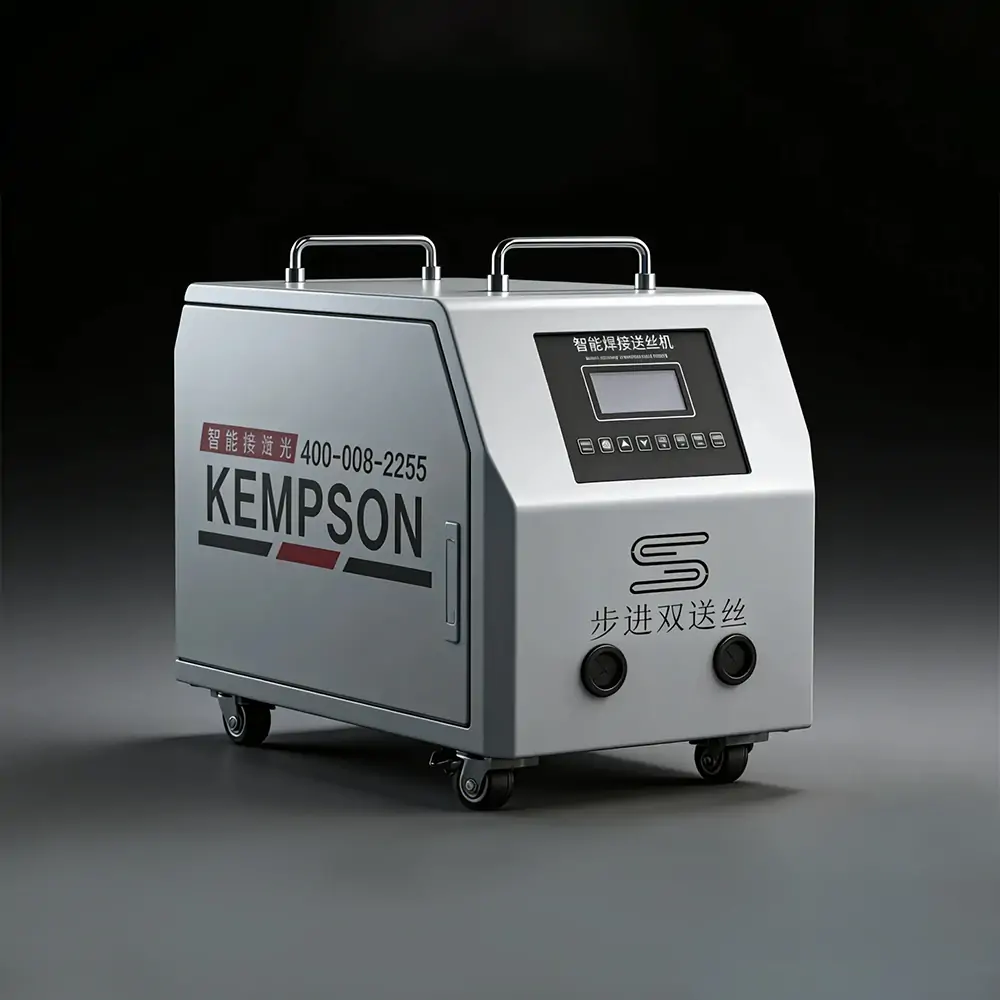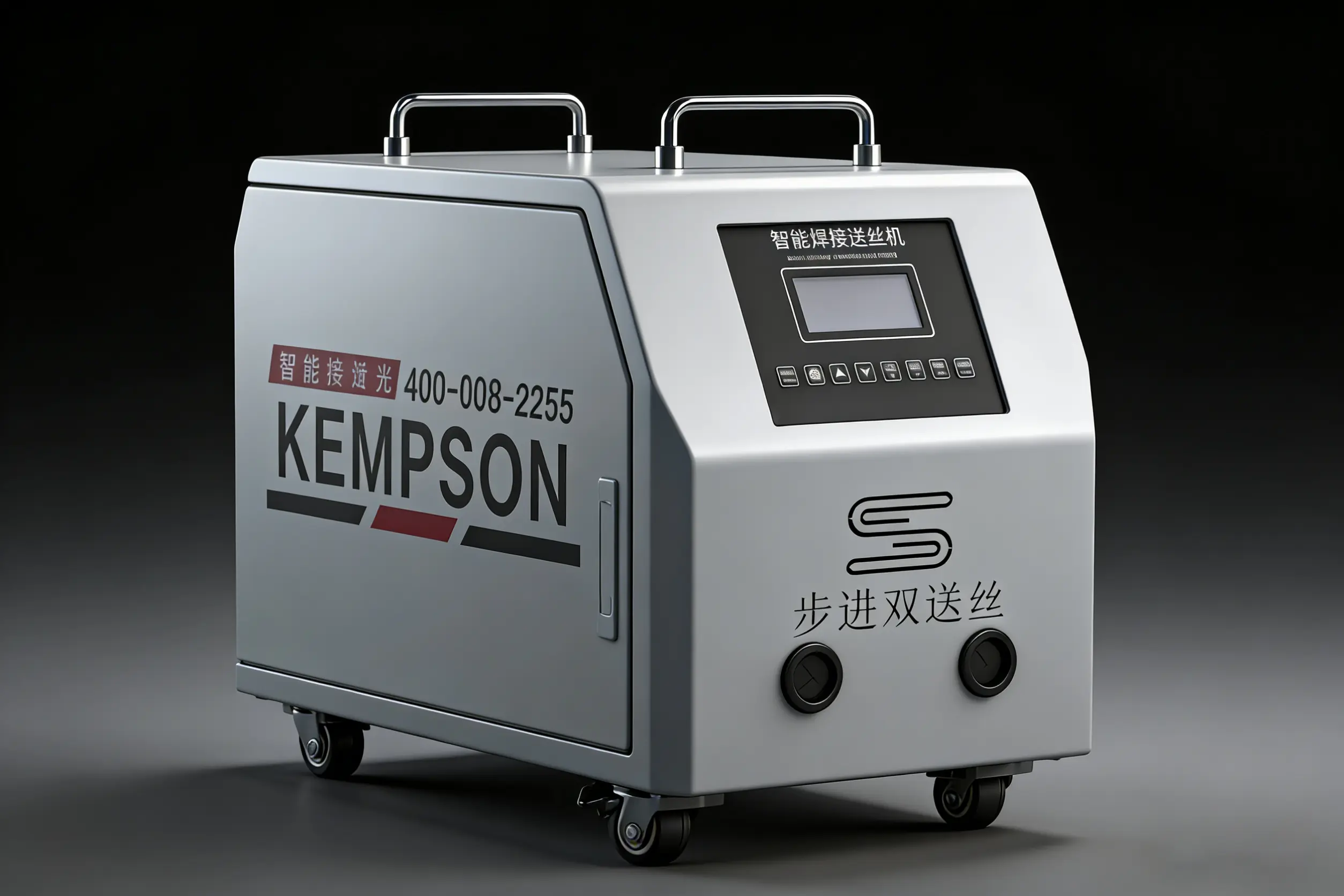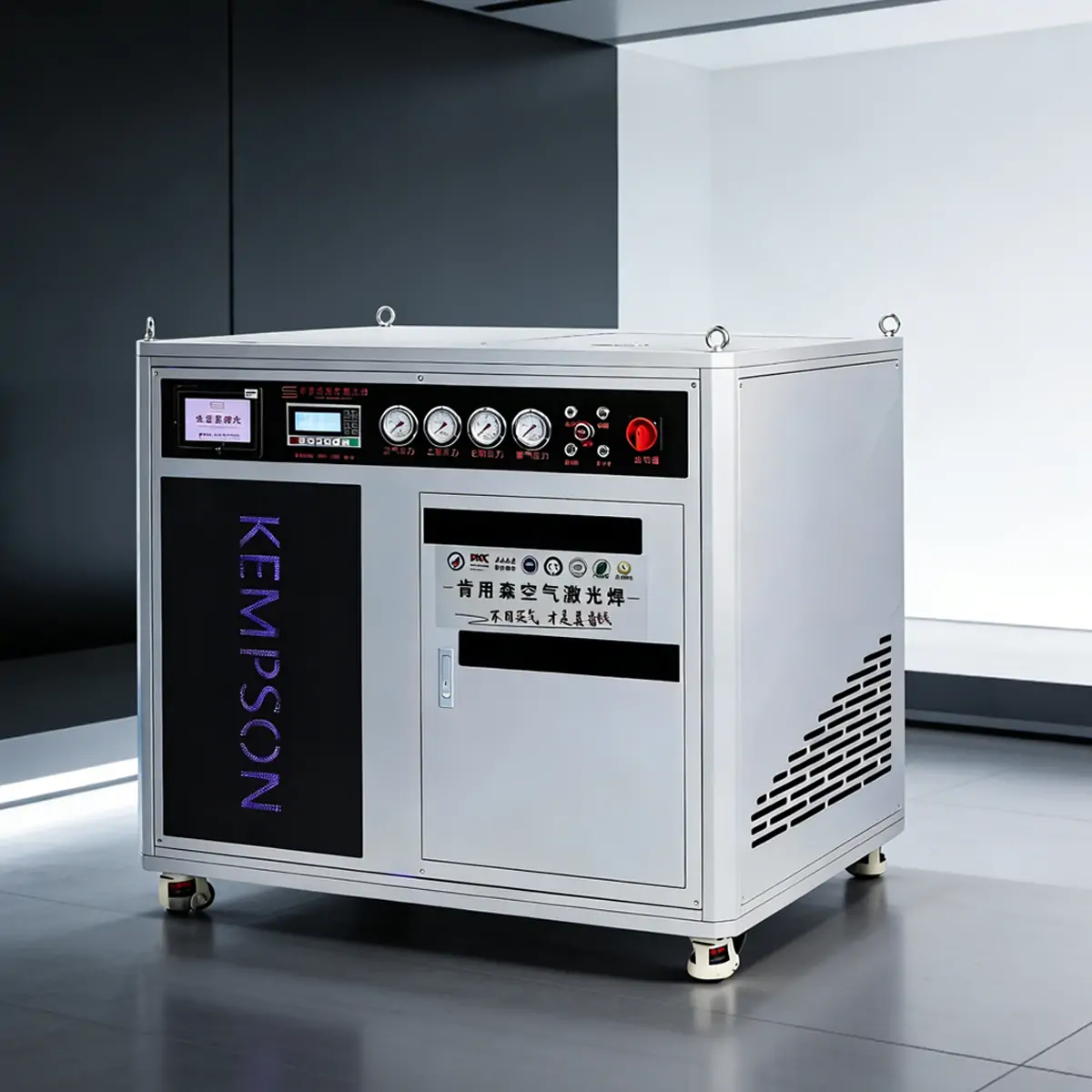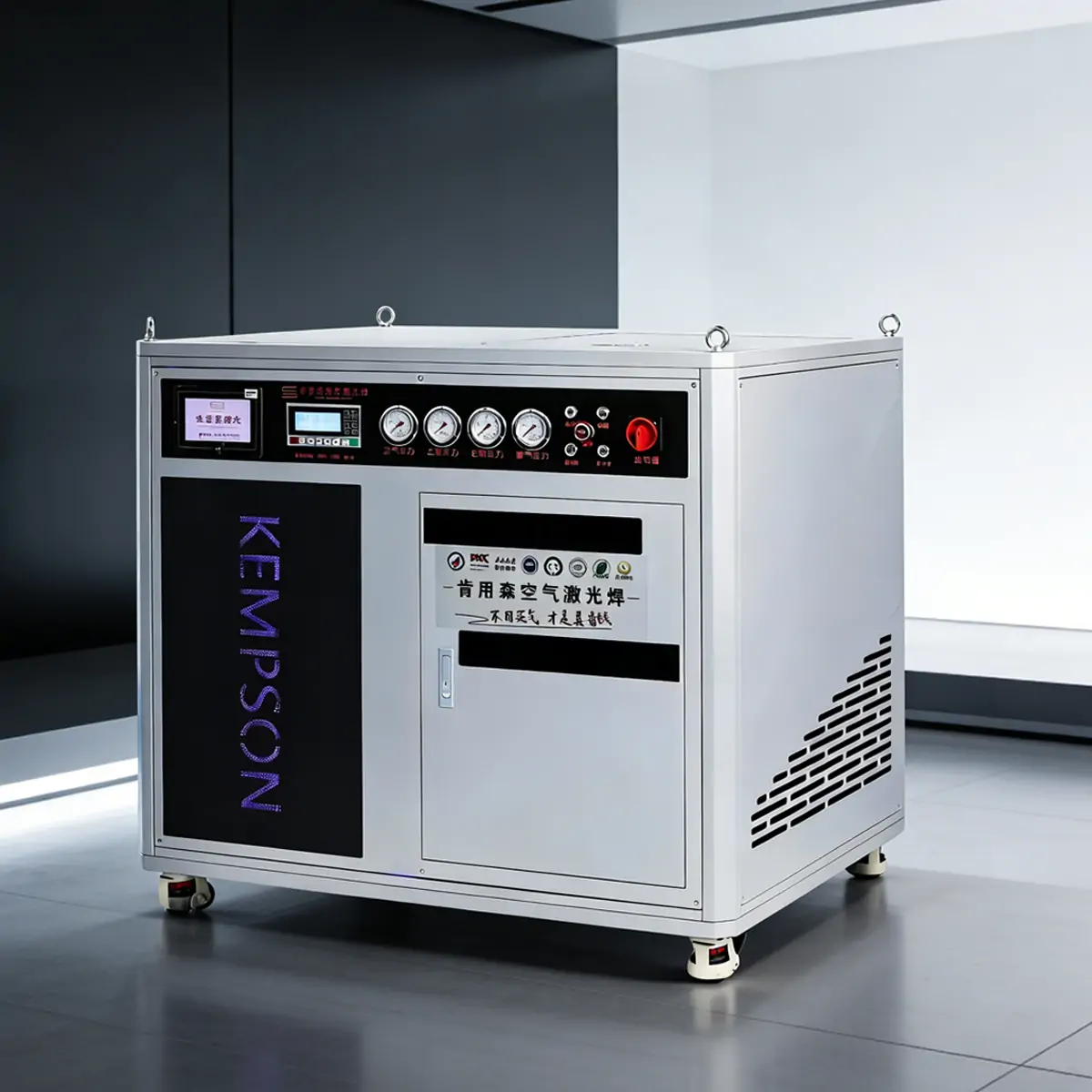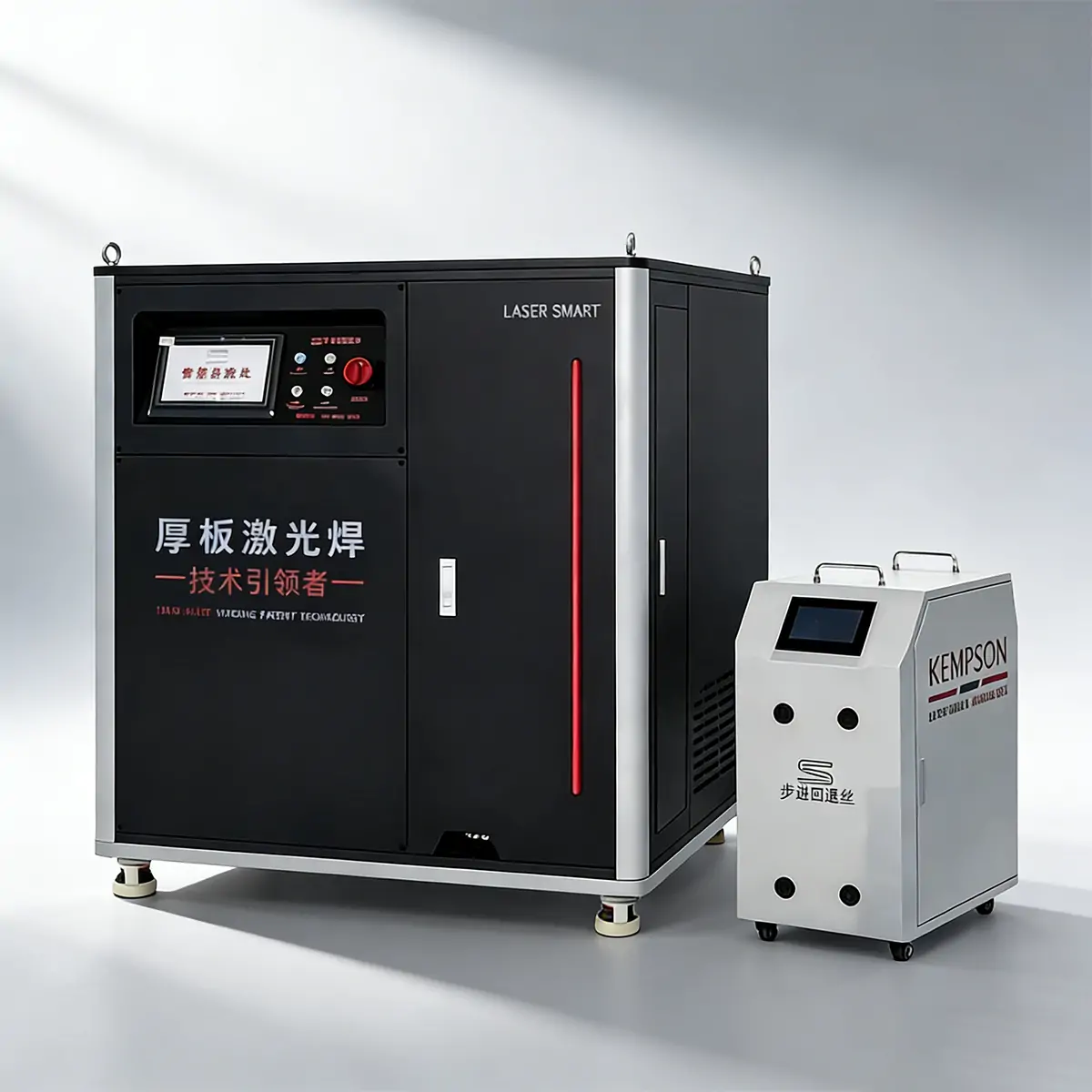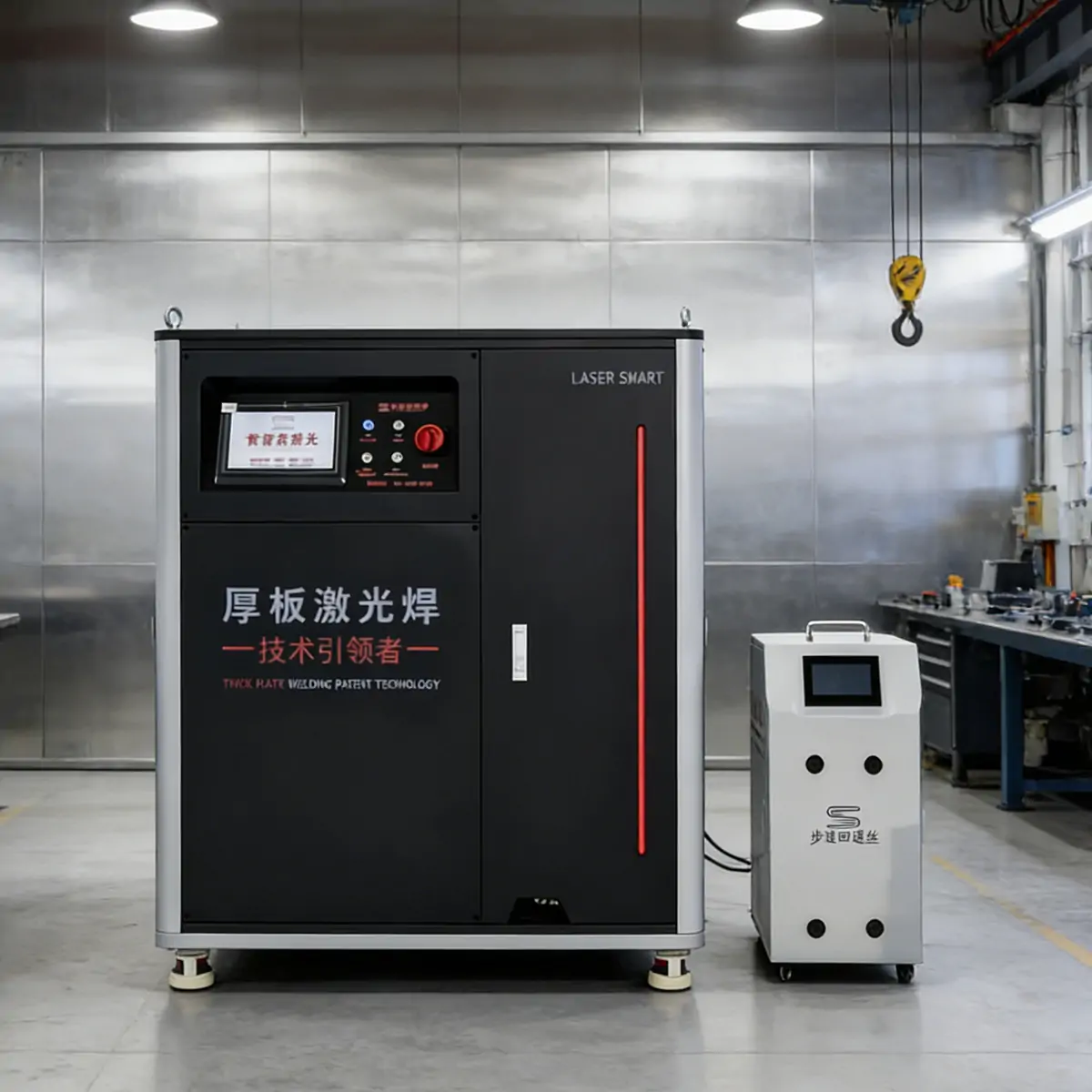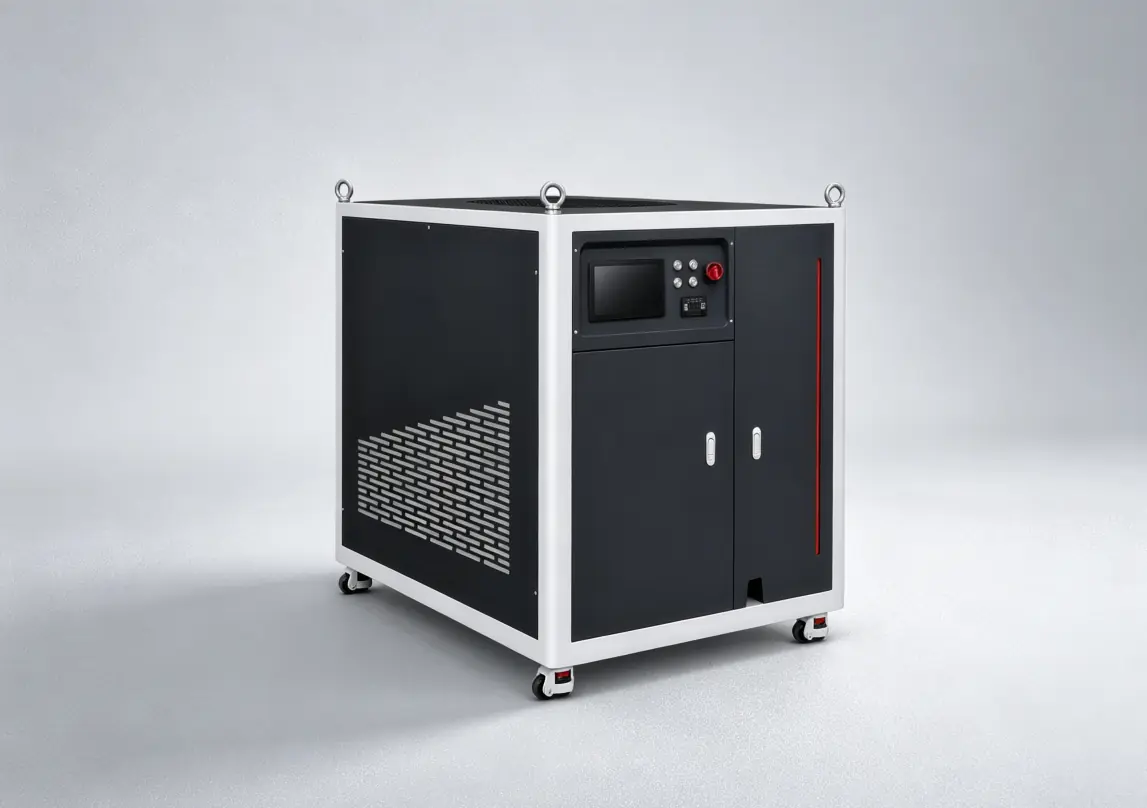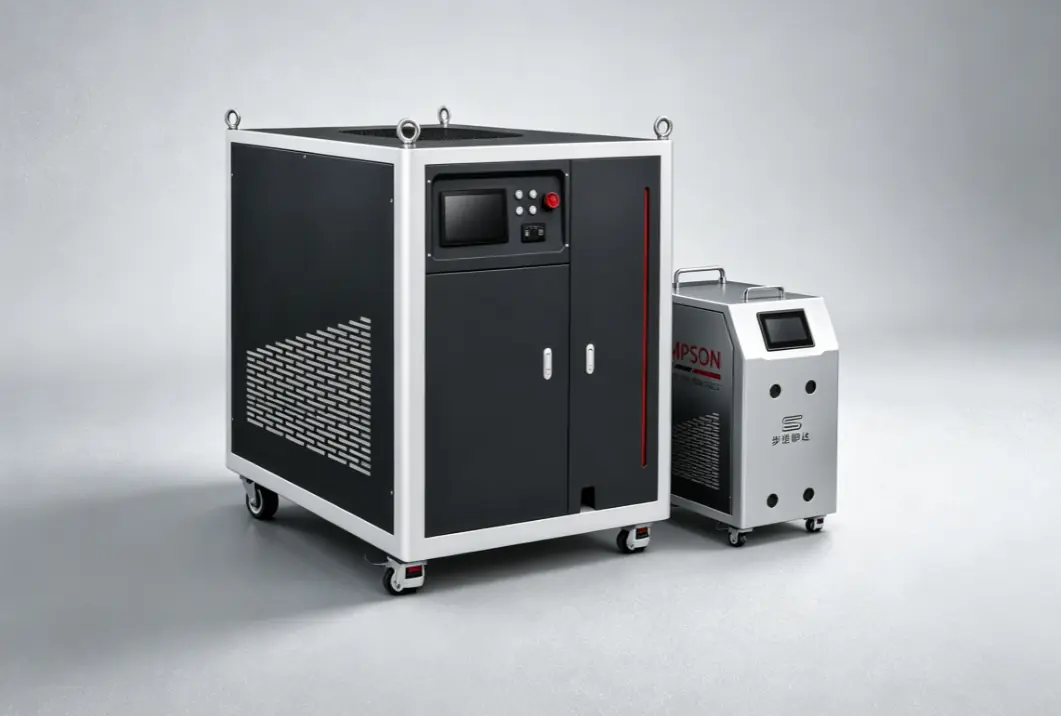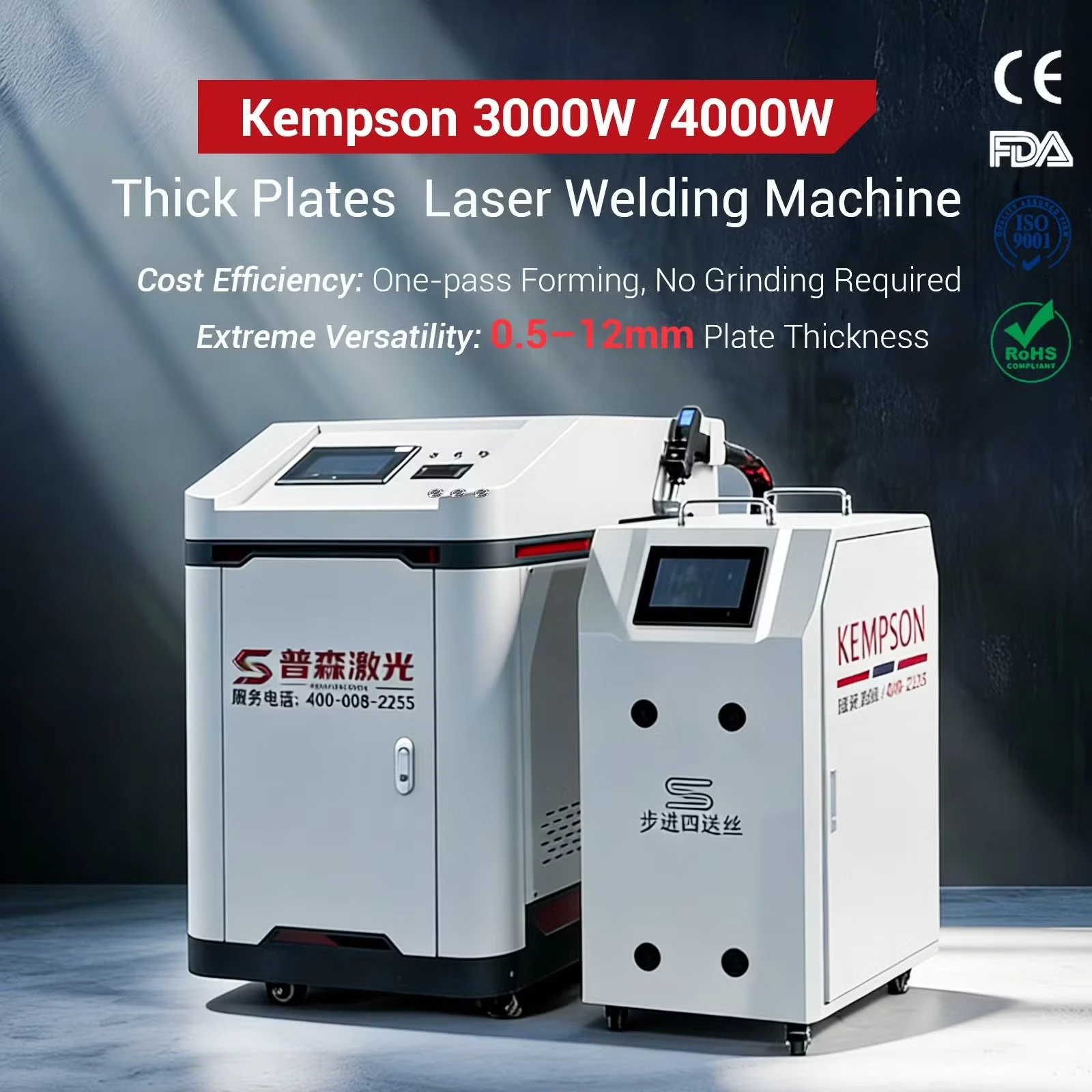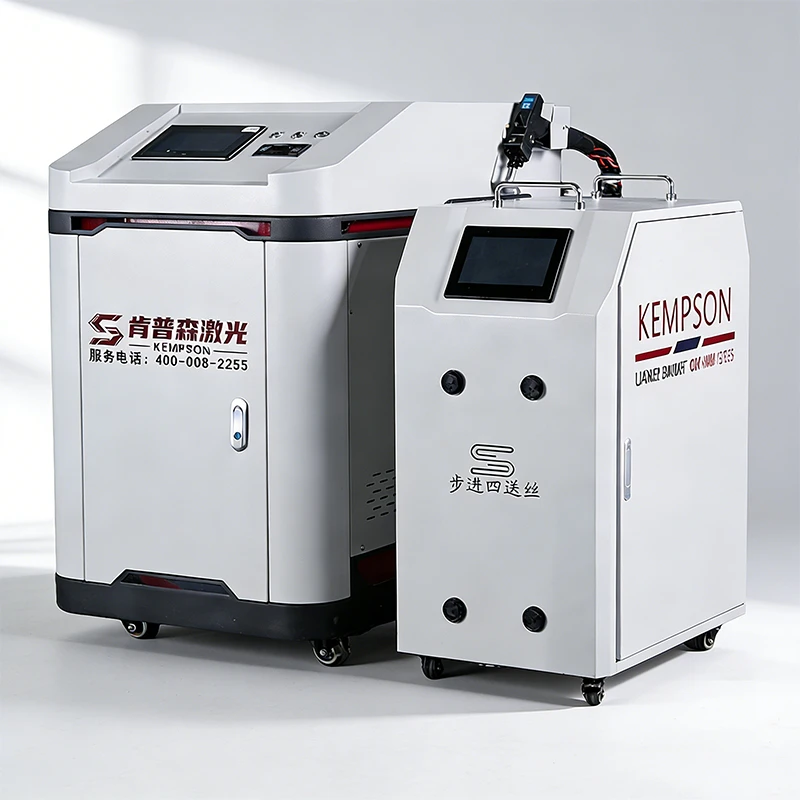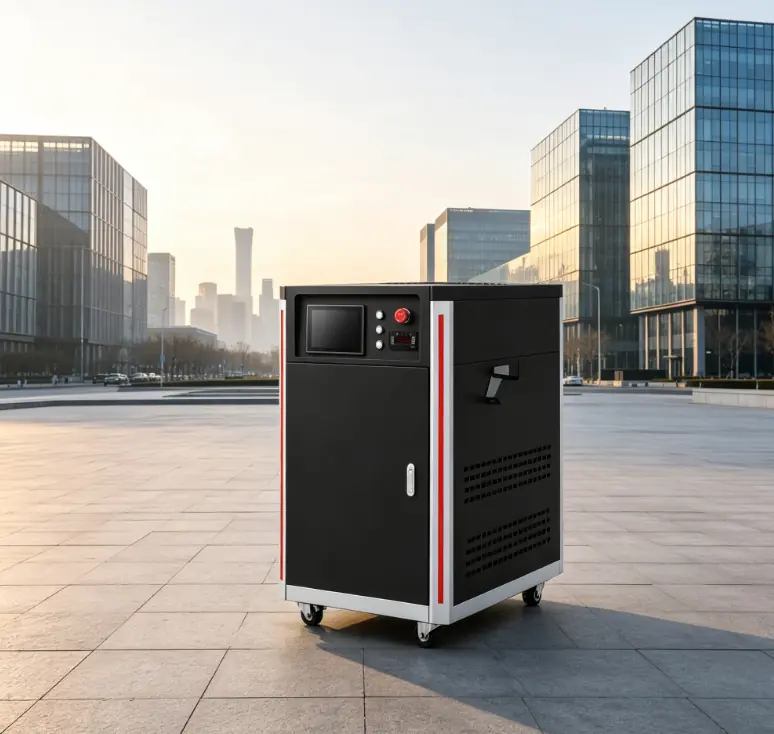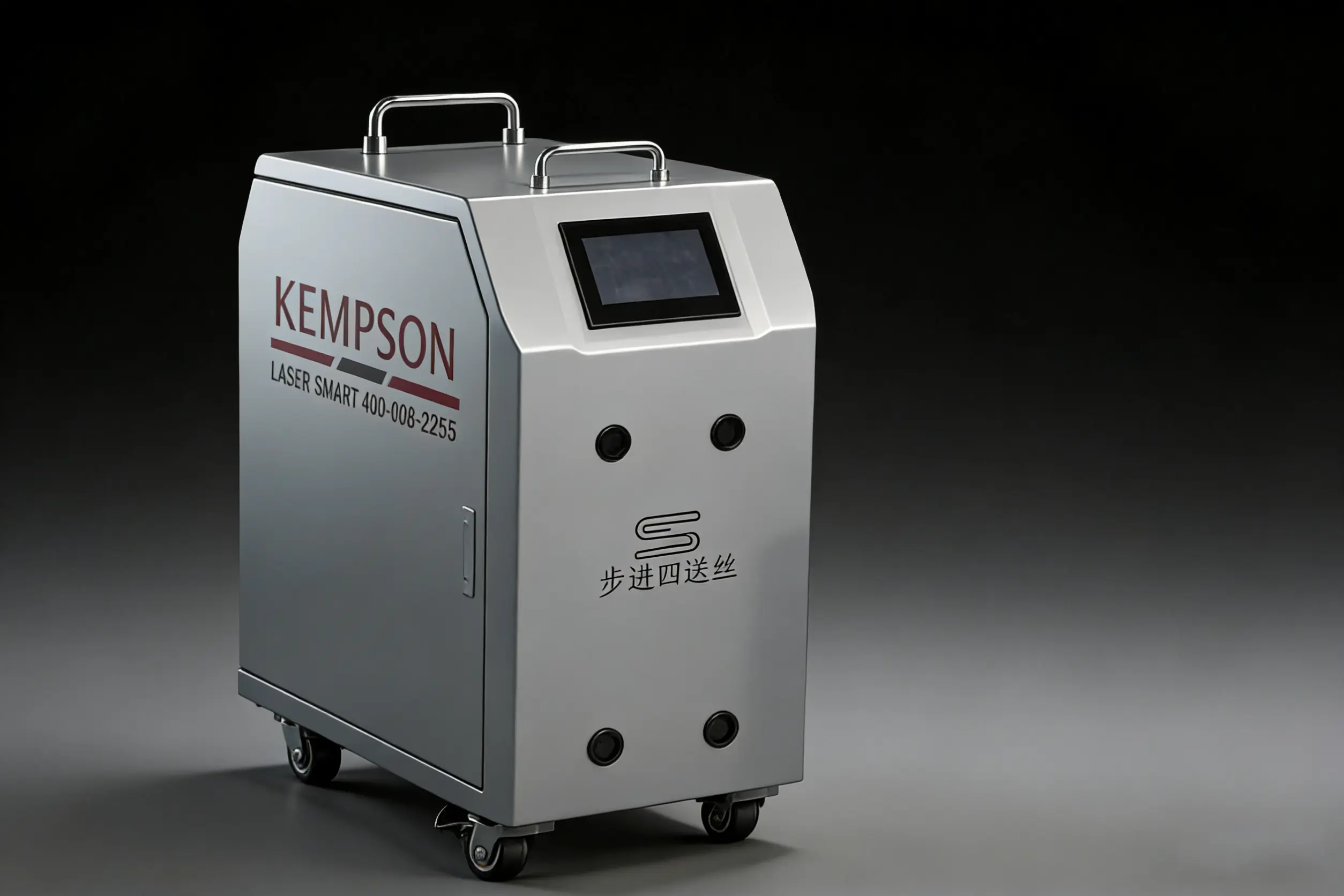
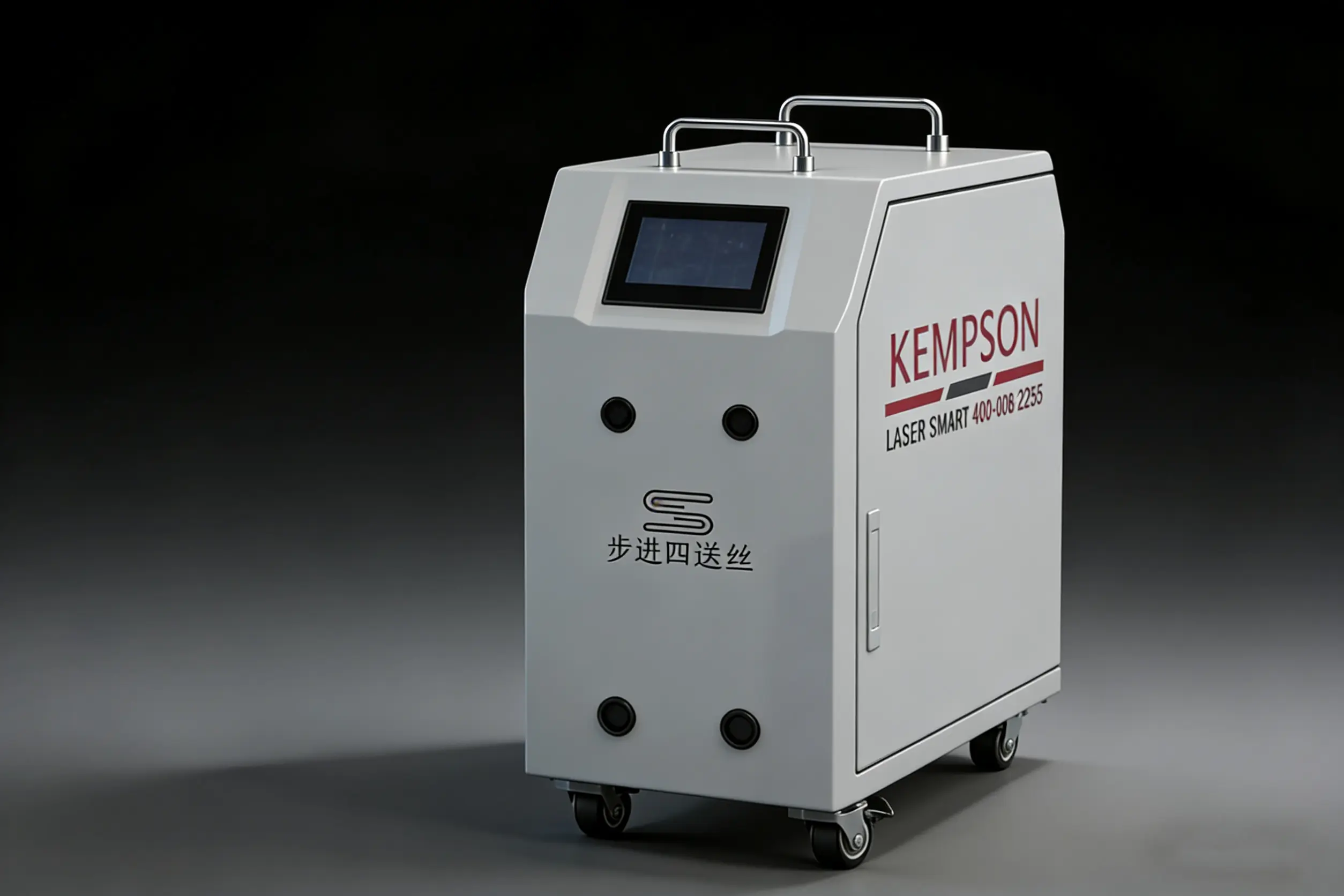


Four-Drive Triple Laser Welder Wire Feeder is a wire feeding device used with laser welding systems. It uses four driven rollers with upper and lower gear linkage to push welding wire through the feeding tube.
Compared with standard wire feeders, the four-drive structure provides stronger feeding force for thicker wires and longer feeding distances. The triple-wire design increases filler wire input and is suitable for wide weld seams and thick material welding.
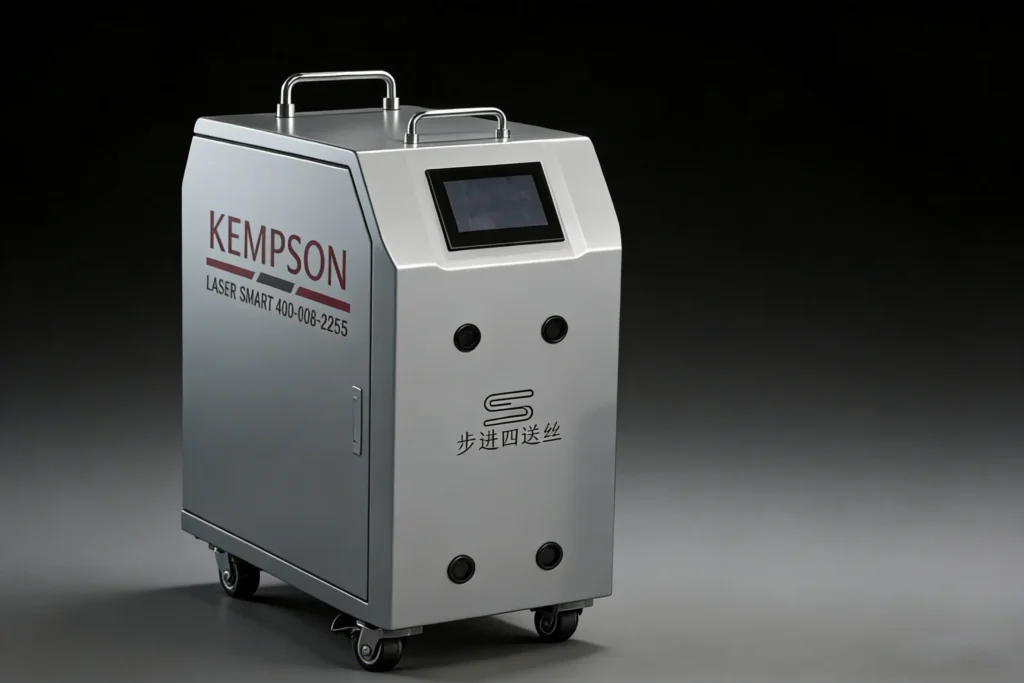
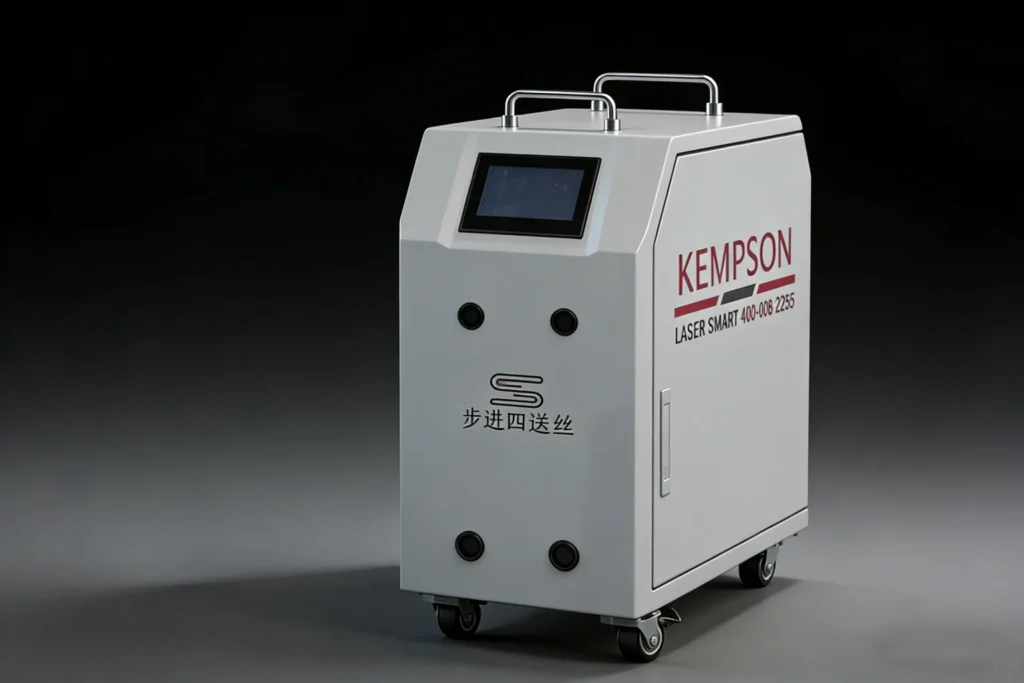
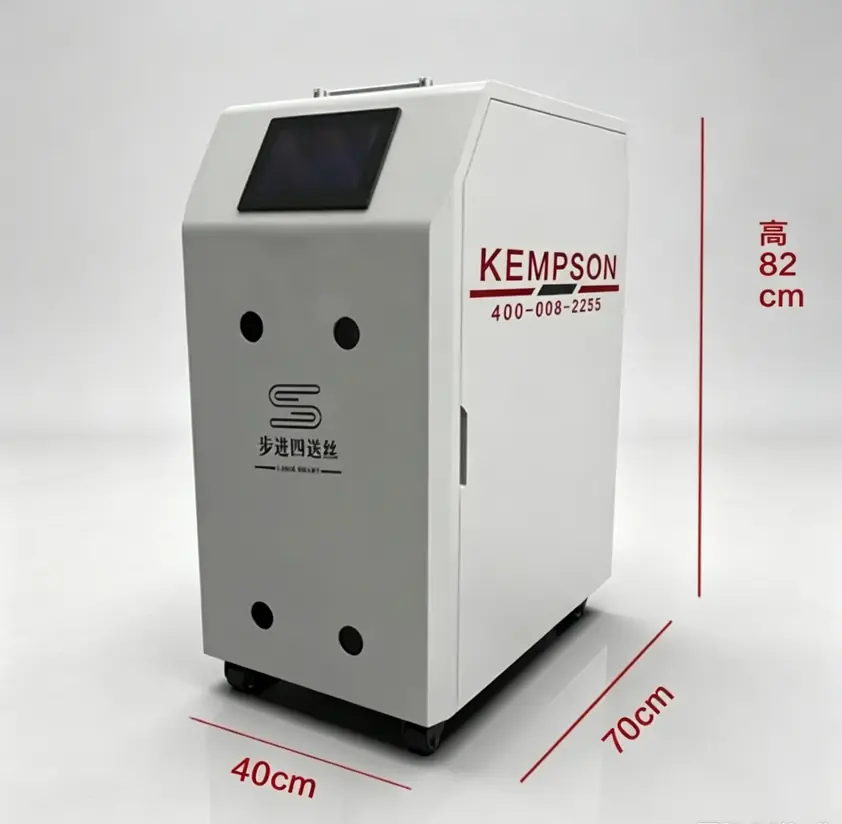
The Four-Drive Triple Laser Welder Wire Feeder features a compact industrial design with overall dimensions of 820 × 400 × 720 mm (H×W×D), suitable for installation with handheld laser welding systems.

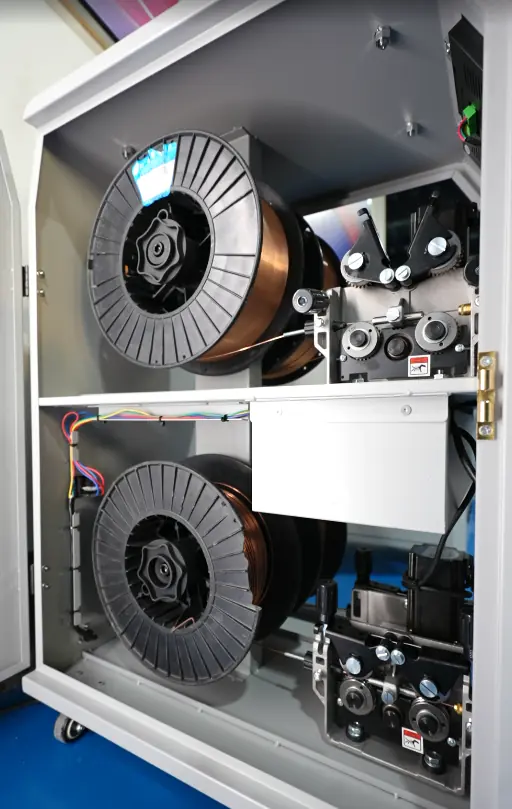
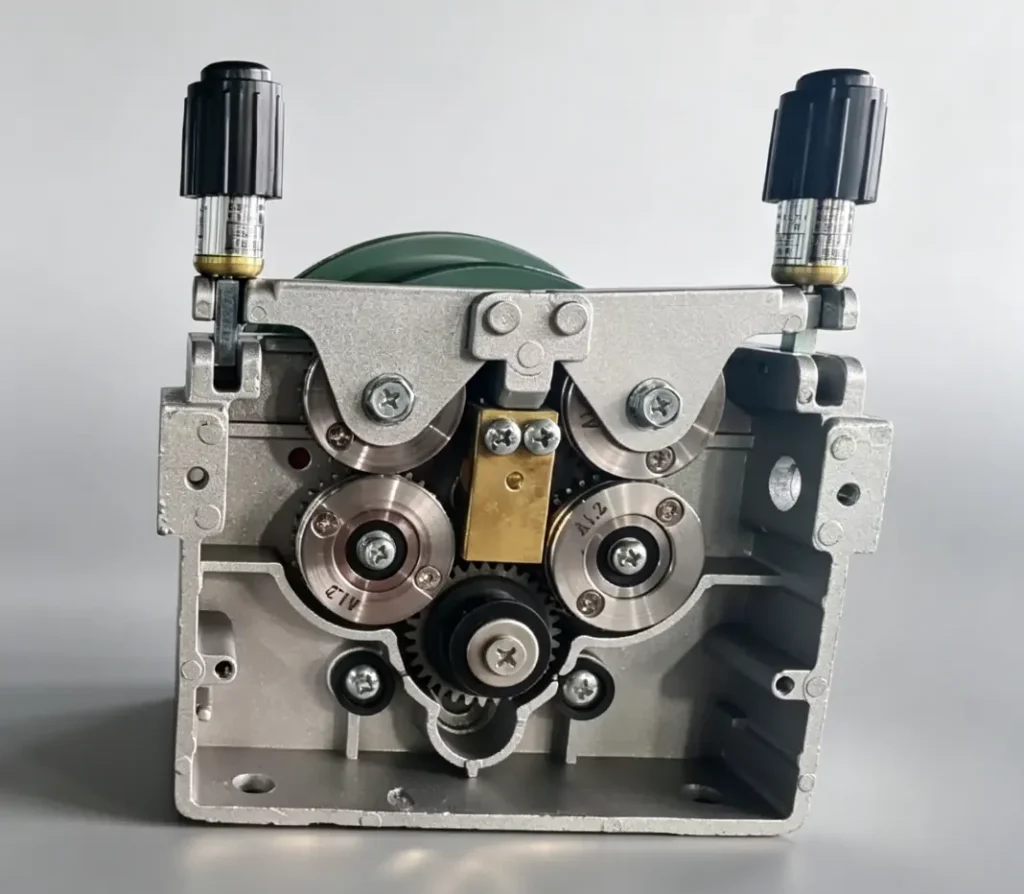
The internal structure includes the four-drive feeding unit, motor, gear transmission, control system, and wire feeding components. The components are arranged for stable operation and convenient maintenance.
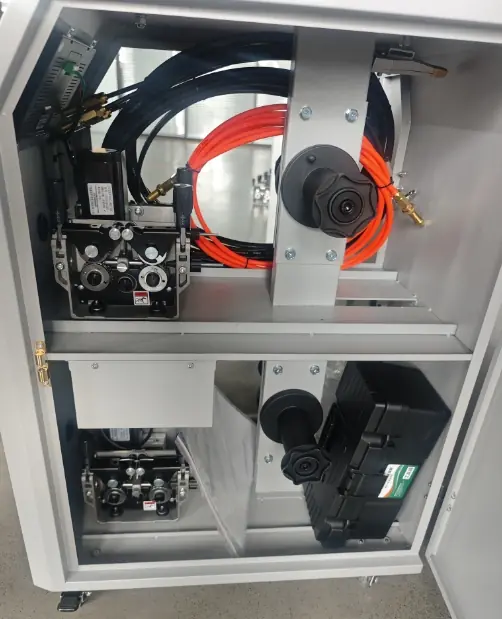
The triple wire feeding tube guides three welding wires from the feeder to the welding torch and keeps the wire delivery path stable during welding.
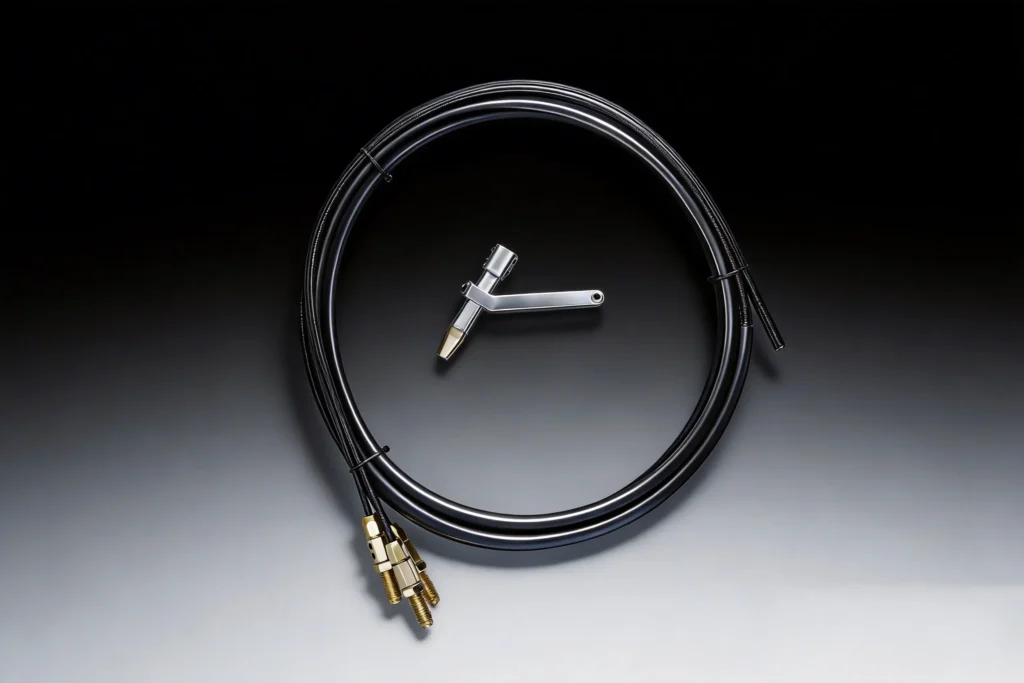
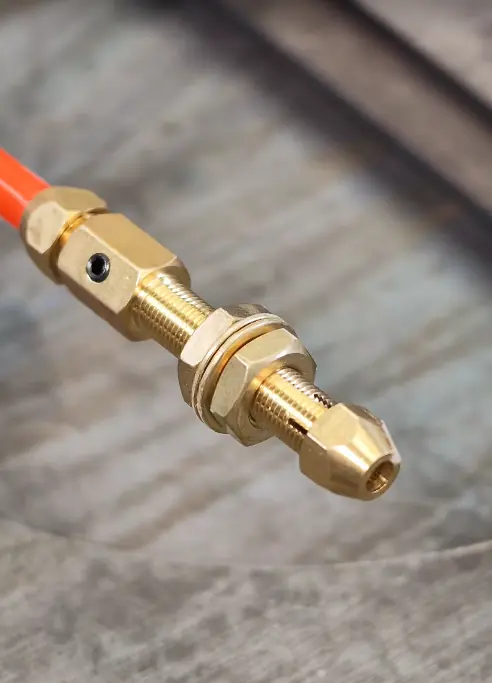
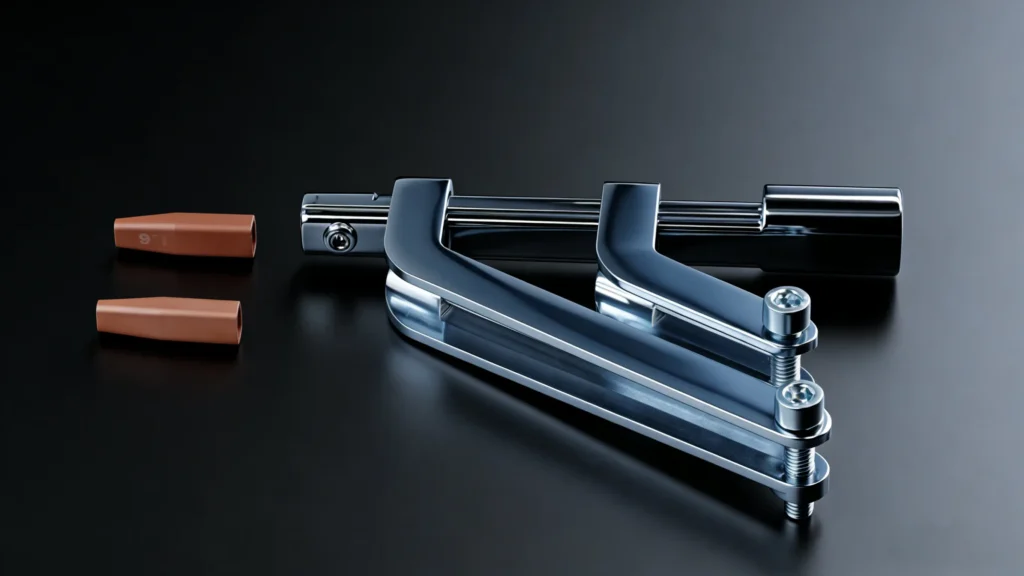
The wire feeding bracket supports and fixes the feeding tube, maintaining the correct position between the feeder and welding torch.
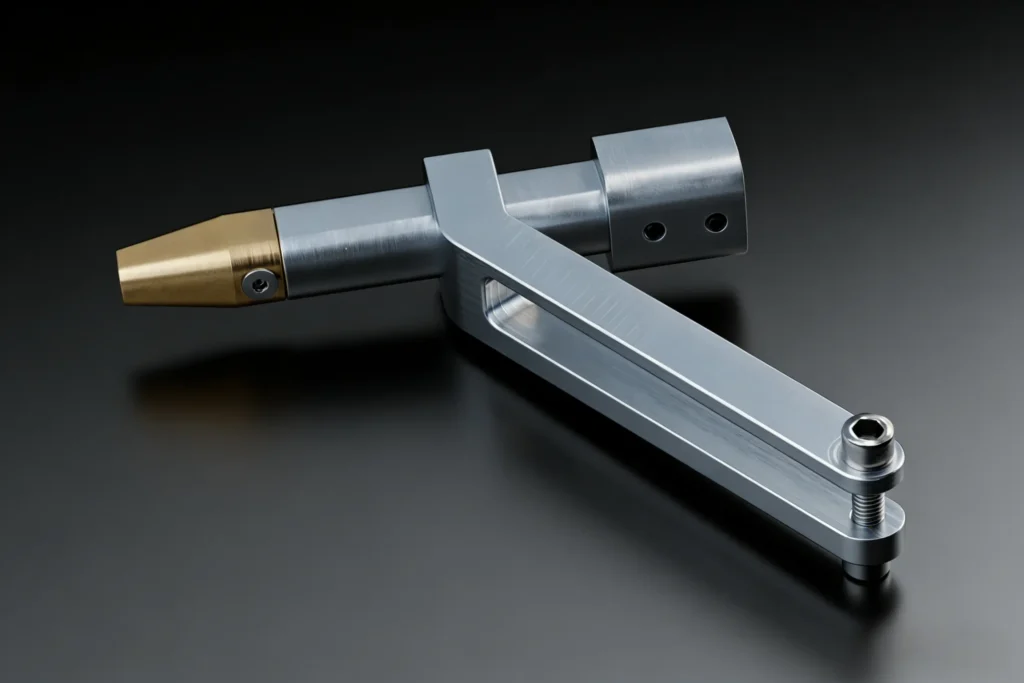
The Four-Drive Triple Wire Feeder uses four driven rollers with an upper and lower gear linkage structure to feed welding wire. The rollers clamp and push the wire through the feeding tube, providing stable wire movement during welding.
The wire straightening unit corrects wire bending before feeding and keeps the wire aligned during delivery. The system supports three-wire feeding for applications requiring larger filler wire input, such as thick plate welding and wide weld bead forming.
The control panel allows adjustment of wire feeding speed, wire retract length, compensation length, and pulse feeding parameters according to welding process requirements.
The wire feeder can be switched between single-wire and dual-wire modes to meet welding requirements. To learn about the differences between single-wire and dual-wire modes, see the article: Single vs. Dual Wire Feeding for Laser Welding: What’s the Difference?
When using a wire feeder to weld wide gaps and thick plates, the wire feeding speed significantly affects the welding results. For more details, see: Laser Welding Wire Feeding Speed: How to Set the Right Parameters
| Item | Specification |
|---|---|
| Model | PHTP-WF-B-04 |
| Feeding Structure | Four-Drive Gear Linked System |
| Wire Feeding Type | Triple Wire Feeding |
| Wire Diameter | 0.8 / 1.0 / 1.2 / 1.6 mm |
| Wire Feeding Speed | 5-300 cm/min |
| Power Supply | DC24V 3.5A |
| Wire Reel Diameter | ≤300 mm |
| Wire Reel Weight | ≤15 kg |
| Wire Retract Function | Supported |
| Pulse Wire Feeding | Supported |
| Control Method | Digital Control Panel |
| Parameter Adjustment | Feeding Speed, Retract Length, Compensation Length, Delay Time |
| Wire Straightening System | Physical Wire Straightening Technology |
| Application | Handheld Laser Welding Machine / Industrial Laser Welding System |
Welding materials, thicknesses, and seam widths all require the selection of suitable welding consumables. For information on selecting welding wire materials and sizes, see the article: How to Choose Welding Wire for Laser Welding: Material, Diameter & Applications
Different wire feeding structures affect filler wire input, feeding force, and suitable welding applications. The comparison below shows the main differences between four-drive triple wire feeders and dual wire feeders in terms of wire quantity, drive structure, welding application, and control functions.
| Comparison | Dual Wire Feeder | Four-Drive Triple Wire Feeder |
|---|---|---|
| Wire Quantity | Two welding wires | Three welding wires |
| Feeding Structure | Dual wire feeding system | Four-drive gear-linked feeding system |
| Drive Method | Standard dual wire drive | Upper and lower gear-linked four-drive structure |
| Wire Feeding Force | Suitable for general filling requirements | Suitable for larger filler wire input and thicker materials |
| Wire Straightening | Usually not equipped | Equipped with physical wire straightening system |
| Weld Filling | Suitable for thick plate and large gap filling | Suitable for wider weld beads and larger weld joints |
| Application | General industrial welding, thick plate welding | Heavy structure welding, wide bead forming, large-scale metal fabrication |
| Control Function | Wire speed adjustment and basic settings | Wire speed, retract length, compensation length, pulse feeding adjustment |
The dual wire feeder is suitable for welding applications that require increased filler wire input compared with single wire feeding. The Four-Drive Triple Wire Feeder uses three-wire feeding and a four-drive structure for applications requiring larger weld filling capacity, wider weld beads, and more stable wire delivery during industrial welding.
Different welding scenarios require different wire feeders depending on the required gap depth. To learn about wire feeder types and how to select the right one, see the article: “What Is a Laser Welding Wire Feeder? Types, Working Principle & Selection Guide”
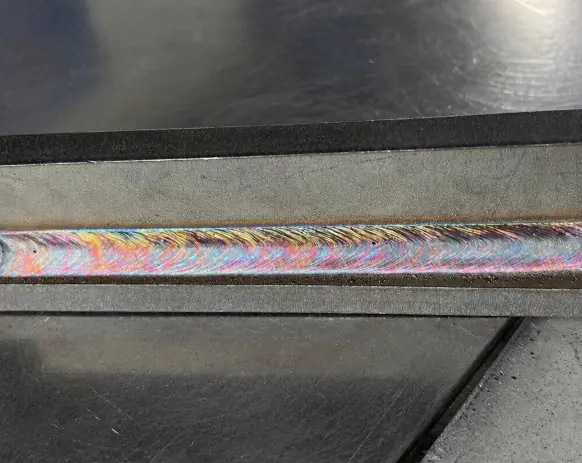
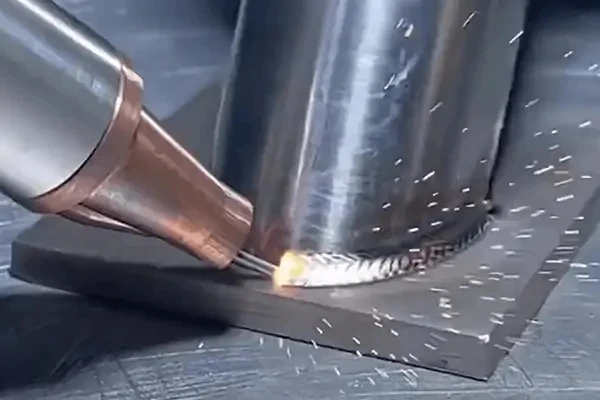
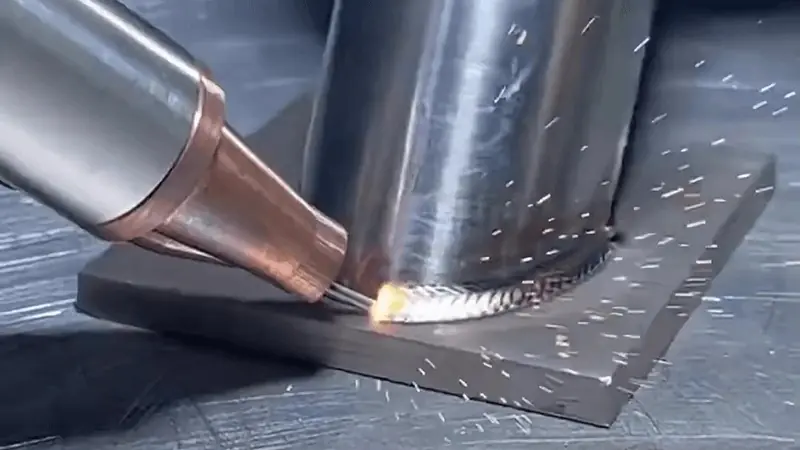
KEMPSON produces Four-Drive Triple Laser Welder Wire Feeder systems for handheld laser welding machines and industrial laser welding equipment. The feeder adopts a four-drive gear-linked structure with physical wire straightening technology, suitable for thick plate welding, wide weld bead forming, and large joint filling.
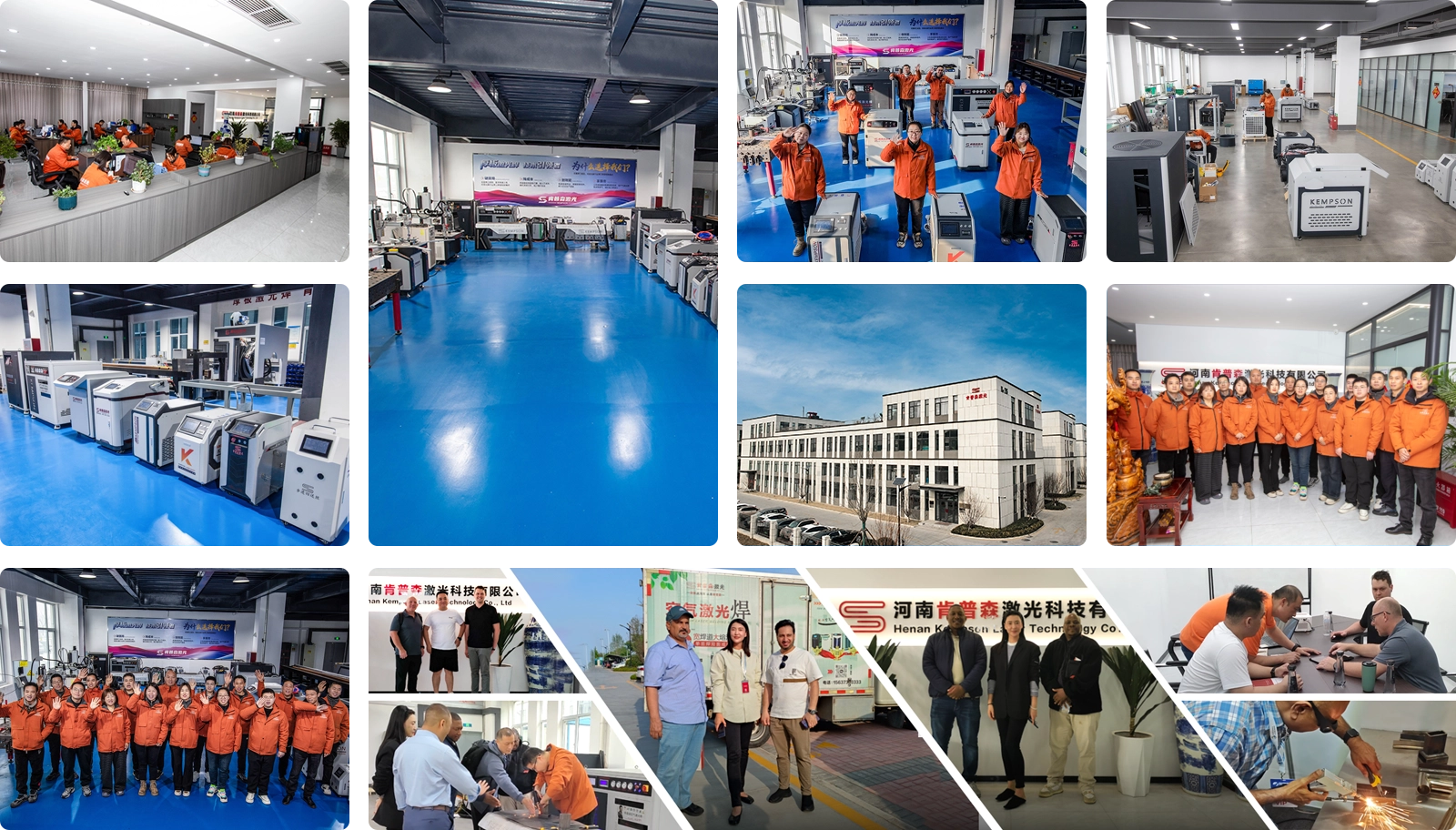
KEMPSON provides laser welding accessories, equipment matching support, and technical service for different welding applications. The Four-Drive Triple Laser Welder Wire Feeder can be configured according to welding wire size, feeding requirements, and laser welding system specifications. Contact us for product details and technical information.

A Laser Welder Wire Feeder is a device that supplies welding wire to a laser welding machine during the welding process.
The KEMPSON Four-Drive Triple Wire Feeder supports 0.8mm, 1.0mm, 1.2mm, and 1.6mm welding wires.
The four-drive structure provides stronger wire feeding force and reduces wire slipping during welding.
It is a mechanical structure that corrects welding wire curvature before feeding.
Yes. It is designed for handheld laser welding machines and industrial laser welding systems.
The feeder supports wire reels with a diameter of up to 300mm and weight up to 15kg.
Yes. The system supports pulse feeding parameter adjustment.
Yes. KEMPSON provides laser welding accessories and technical support according to different welding equipment requirements.
Looking for a Laser Welder Wire Feeder?
Check our Laser Welder Wire Feeder
Laser beam welding is an advanced fusion welding process that uses a focused laser beam as a heat source to melt and join materials. It provides high welding speed, low heat input, small deformation, and precise control, making it widely used in automotive, aerospace, electronics, battery manufacturing, and precision industries.
This article explains whether laser welding is strong, covering weld strength, penetration depth, joint durability, influencing factors, and comparisons with traditional welding methods. It also introduces suitable materials and industrial applications to help users understand if laser welding meets their production requirements.
Laser beam welding uses a high-energy laser beam to generate concentrated heat, melt materials, and create a strong welded joint. This article explains how laser beam welding works, including its working principle, welding mechanisms, key components, advantages, and applications in modern manufacturing.
Proper maintenance is essential for keeping laser welding equipment operating efficiently and producing consistent weld quality. This guide covers the most important maintenance practices, including optical component cleaning, cooling system inspection, shielding gas management, electrical checks, and preventive maintenance planning. It also provides practical maintenance checklists and troubleshooting tips to help reduce downtime, lower repair costs, and extend equipment service life.